Best Cast Iron Cookware Brands
Picture this: A grandmother’s cast iron skillet, seasoned over decades, passed down through three generations, still producing the crispiest fried chicken and most perfectly seared steaks. That’s the magic of cast iron cookware, it doesn’t just survive; it improves with age, becoming a cherished kitchen heirloom.
In 2026, as home cooks increasingly seek sustainable, chemical-free alternatives to modern nonstick pans, understanding the Best Cast Iron Cookware Brands has never been more critical.
This comprehensive guide explores the top manufacturers, their unique offerings, and why investing in quality cast iron represents one of the smartest decisions any serious cook can make.
Key Takeaways
- Premium brands like Le Creuset and Finex offer heirloom-quality enameled and traditional cast iron with superior craftsmanship, while budget options like Lodge provide exceptional value without sacrificing performance
- American-made manufacturers including Field Company and Lancaster Cast Iron are revolutionizing the industry with lightweight designs, sustainable practices, and innovative micro-textured surfaces
- Proper seasoning and maintenance transform cast iron into naturally nonstick cookware that outperforms chemical-coated alternatives while lasting generations
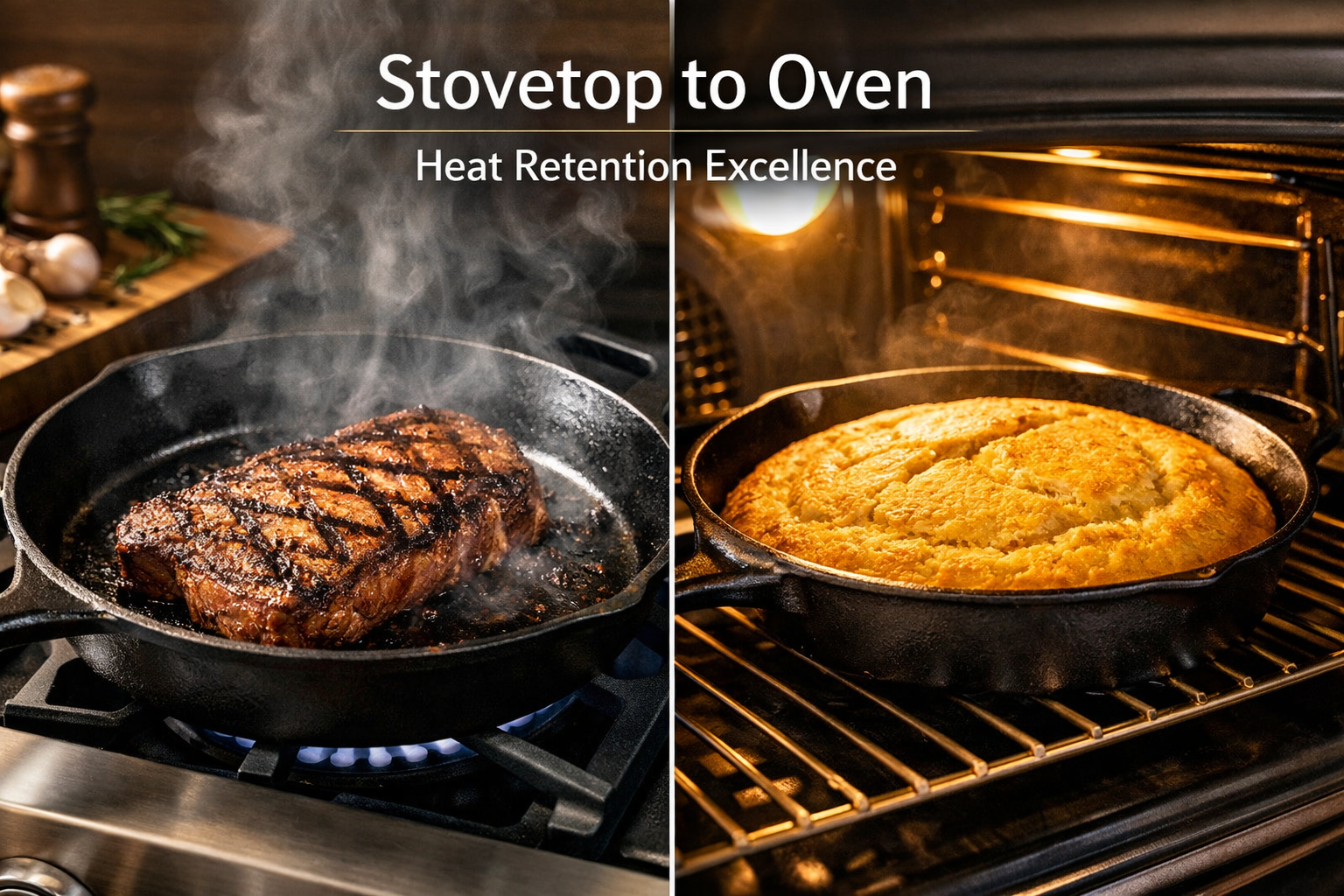
- Cast iron’s superior heat retention and versatility from stovetop to oven make it indispensable for techniques ranging from searing steaks to baking cornbread
- Long-term value proposition of cast iron far exceeds disposable cookware, with proper care ensuring cookware that appreciates rather than depreciates over time
Understanding Cast Iron: Why Material Matters
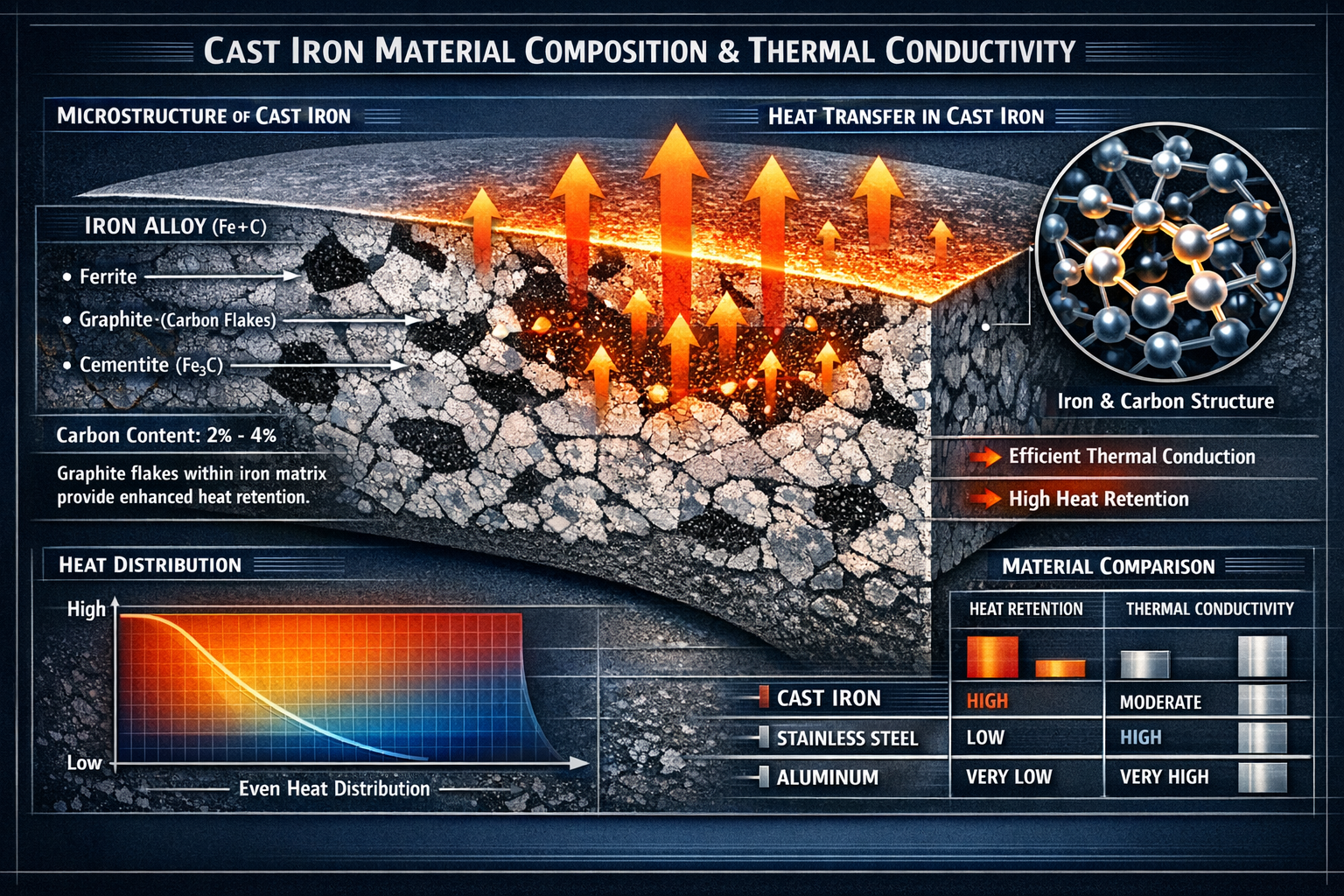
Cast iron cookware represents one of humanity’s oldest cooking technologies, yet its relevance has only grown stronger in modern kitchens. The fundamental appeal lies in cast iron’s unique metallurgical properties: exceptional heat retention, unparalleled durability, and the ability to develop a natural nonstick surface through proper seasoning.
The Science Behind Superior Performance
Unlike aluminum or thin stainless steel, cast iron’s thick walls and dense molecular structure absorb and distribute heat evenly across the entire cooking surface.
Once heated, cast iron maintains consistent temperatures even when cold food is added, a critical advantage when searing proteins or achieving restaurant-quality results at home. This heat conductivity superiority means fewer hot spots, more even cooking, and better browning.
The seasoning process, applying thin layers of polymerized oil, creates a slick, naturally nonstick patina that improves with use. Unlike synthetic coatings that degrade over time, cast iron’s seasoning becomes more robust through regular cooking, especially with fats and oils.
This makes cast iron an excellent choice for those seeking cookware for healthy cooking choices without chemical additives.
Environmental and Health Advantages
In 2026, sustainability-conscious cooks recognize cast iron as the ultimate eco-friendly cookware. A single cast iron skillet can replace dozens of disposable nonstick pans over a lifetime, dramatically reducing kitchen waste.
Many premium manufacturers now use recycled iron and sustainable production methods, further minimizing environmental impact.
From a health perspective, cast iron eliminates concerns about PFAS, PTFE, and other chemicals found in conventional nonstick coatings. The trace amounts of iron that transfer to food actually provide nutritional benefits, particularly valuable for those with iron deficiencies.
For more information on avoiding harmful chemicals, explore our guide on cookware free of PFAS risks.
Best Cast Iron Cookware Brands: Premium Tier
The premium cast iron market offers exceptional craftsmanship, innovative designs, and cookware built to become family heirlooms. These brands justify their higher price points through superior materials, meticulous manufacturing processes, and uncompromising quality standards.
Le Creuset: The Gold Standard in Enameled Cast Iron
Le Creuset has dominated the premium enameled cast iron market for nearly a century, and for good reason. The Le Creuset 5-Piece Enameled Cast Iron Signature Cookware Set, recognized by Good Housekeeping as the top cast iron option, retails at $600 but delivers lifetime performance with exceptional browning and heat retention[5].
What sets Le Creuset apart:
- Proprietary enamel coating resistant to chipping, staining, and dulling
- Superior heat distribution through precision sand-casting techniques
- Vibrant color options that maintain their appearance through decades of use
- Lifetime warranty backing the brand’s confidence in durability
- Oven-safe to 500°F for maximum cooking versatility
The enameled interior eliminates the need for traditional seasoning while providing excellent release properties. Le Creuset’s signature Dutch ovens excel at braising, baking bread, and slow-cooking, while their skillets deliver restaurant-quality sears.
For those interested in enameled options from other manufacturers, the Tramontina enameled cast iron skillet offers similar benefits at a lower price point.
Finex: Hand-Polished Heirloom Quality
Manufactured in Portland, Oregon, Finex represents the pinnacle of traditional cast iron craftsmanship. Each Finex skillet features hand-polished cooking surfaces, ergonomic speed-cool handles, and octagonal designs that provide superior pouring control[3].
Finex distinguishes itself through:
- Hand-finished surfaces smoother than vintage Griswold or Wagner
- Stainless steel spring handles that stay cooler during stovetop cooking
- Geometric design with eight pour spouts for ambidextrous convenience
- Matching cast iron lids available for all sizes (12″, 10″, 8″)
- Made in USA with American iron and craftsmanship
The hand-polishing process creates an ultra-smooth surface that seasons faster and releases food more easily than rough-textured competitors. While Finex skillets command premium prices ($150-250), serious cooks appreciate the superior cooking experience and stunning aesthetic that makes these pieces worthy of display.
Unilloy: Japanese Precision Engineering
The Unilloy 26cm cast iron pan, priced at £139, earned top honors from The Independent’s food writer as the best overall cast iron option for 2026[2].
This Japanese manufacturer applies precision engineering principles to traditional cast iron, resulting in exceptionally consistent thickness, perfectly balanced weight distribution, and flawless seasoning.
Unilloy’s advantages include:
- Precision casting ensuring uniform heat distribution
- Optimal weight balance reducing arm fatigue during cooking
- Factory pre-seasoning ready for immediate use
- Refined aesthetic appealing to minimalist kitchen designs
- Superior quality control with rigorous inspection standards
Japanese manufacturing philosophy emphasizes continuous improvement and attention to detail, evident in every Unilloy piece. The brand bridges the gap between traditional cast iron functionality and modern design sensibilities.
Best Cast Iron Cookware Brands: American Heritage Manufacturers
The resurgence of American-made cast iron reflects growing consumer demand for domestic manufacturing, sustainable practices, and support for local economies. These brands honor cast iron’s heritage while incorporating modern innovations.
Lodge: America’s Cast Iron Institution
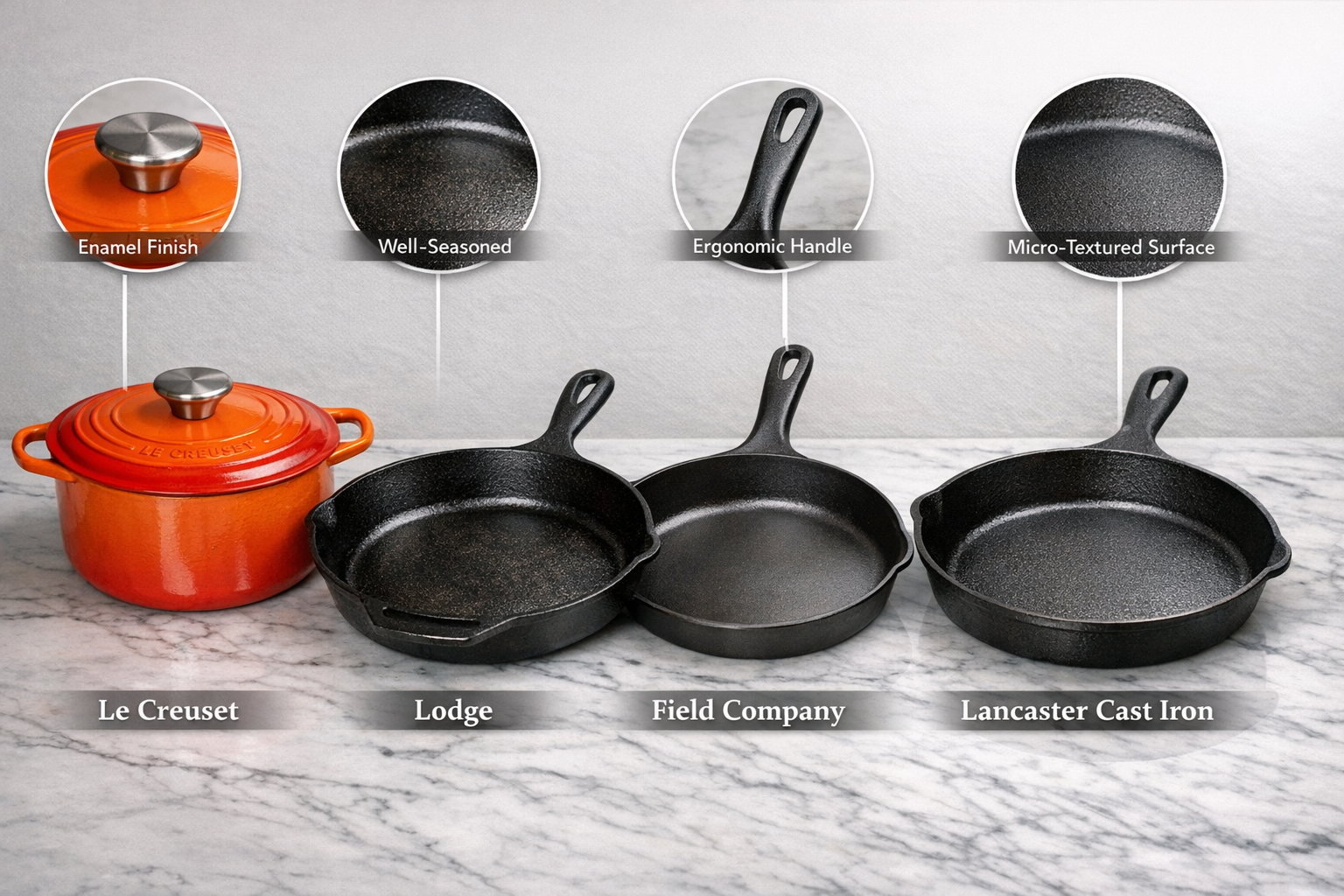
Lodge Cast Iron has manufactured cookware in South Pittsburg, Tennessee, since 1896, making it America’s oldest family-owned cookware foundry. Lodge skillets consistently rank among top recommendations for their exceptional heat retention, even cooking performance, and unbeatable value[1].
Lodge market position stems from:
- Affordable pricing making cast iron accessible to all cooks
- Pre-seasoned finish using vegetable oil for immediate use
- Extensive product range from 3.5″ mini skillets to 17″ camp ovens
- American manufacturing supporting domestic jobs and economy
- Proven reliability trusted by generations of home cooks
The textured cooking surface, while rougher than premium hand-polished competitors, seasons beautifully with use. Many cooks appreciate that Lodge skillets improve dramatically over time, developing smooth, naturally nonstick patinas through regular cooking. At price points often under $30 for a 12″ skillet, Lodge Cast Iron Cookware represents extraordinary value.
Field Company: Vintage-Inspired Innovation
Field Company emerged in 2016 with a mission to recreate the lightweight, smooth-surfaced skillets that made vintage Griswold and Wagner pieces so coveted. Manufacturing 100% in the USA using recycled iron from American vendors, Field employs green sand casting methods that minimize environmental impact[3].
Field Company innovations include:
- Lighter weight (20-30% less than Lodge equivalents)
- Machined smooth surfaces requiring minimal break-in period
- Sustainable materials using recycled American iron
- Vintage-inspired design with helper handles and elegant lines
- Direct-to-consumer model eliminating retail markup
The lighter weight particularly appeals to cooks who found traditional cast iron too heavy for comfortable handling. Field’s smooth cooking surface rivals hand-polished premium brands while maintaining accessible pricing ($100-150 for skillets).
The company’s commitment to sustainability and American manufacturing resonates with environmentally conscious consumers seeking sustainable cookware for everyday use.
Lancaster Cast Iron: Amish Craftsmanship Meets Modern Technology
Lancaster Cast Iron combines Pennsylvania Dutch heritage with innovative manufacturing techniques. The brand’s proprietary micro-textured surface promotes nonstick cooking and easier cleanup while maintaining traditional cast iron functionality[3].
Lancaster’s unique offerings:
- Micro-textured cooking surface for superior release properties
- Hand-carved wooden utensils from local Amish craftsmen
- Sustainably harvested hardwoods for complementary accessories
- Pre-seasoned with organic flaxseed oil for health-conscious cooks
- American manufacturing supporting regional artisans
The partnership with Amish craftsmen creates a complete cooking ecosystem, pairing skillets with beautifully hand-carved spatulas, spoons, and trivets made from sustainably harvested hardwoods.
This holistic approach appeals to cooks who value traditional craftsmanship and sustainable practices. Lancaster’s micro-textured surface represents genuine innovation, creating tiny peaks and valleys that prevent food contact across the entire surface area, dramatically improving nonstick performance.
Best Cast Iron Cookware Brands: Value and Budget Options
Quality cast iron doesn’t require premium prices. Several manufacturers deliver excellent performance at accessible price points, making cast iron cooking available to everyone.
Calphalon: Best Value Uncoated Cast Iron
Consumer Reports identified Calphalon’s Pre-Seasoned Cast Iron frying pan as offering exceptional performance at an affordable price point. The pan earned excellent marks in searing tests and very good ratings for baking, cooking evenness, and cleanup[4].
Calphalon’s value proposition includes:
- Affordable pricing competitive with Lodge
- Excellent searing performance rivaling premium brands
- Even heat distribution for consistent cooking results
- 10-year warranty providing long-term confidence
- 6.5-pound weight manageable for most cooks
The combination of performance, warranty coverage, and accessible pricing makes Calphalon an intelligent choice for budget-conscious cooks who refuse to compromise on results. The pre-seasoned finish performs admirably out of the box, though it improves significantly with regular use and proper care.
VonHaus VonShef: Budget-Friendly Complete Set
The Independent recommends the VonHaus VonShef cast iron cookware set at £24.98 as the best budget buy for 2026[2]. This remarkably affordable set provides multiple pieces for less than the cost of a single premium skillet, making it ideal for those beginning their cast iron journey or outfitting rental properties.
Budget set advantages:
- Extremely affordable entry point for cast iron cooking
- Multiple pieces providing cooking versatility
- Pre-seasoned surfaces ready for immediate use
- Basic functionality covering essential cooking needs
- Low-risk investment for cast iron newcomers
While budget sets may lack the refined finishes and precise manufacturing of premium brands, they deliver the fundamental benefits of cast iron cooking: superior heat retention, durability, and chemical-free cooking surfaces. Many professional chefs started with budget cast iron, proving that technique matters more than price tags.
Our Place: Modern Aesthetic Meets Traditional Function
Our Place Cast Iron Always Pan represents a contemporary approach to traditional cookware, combining cast iron performance with modern design sensibilities. Featured in recent 2026 product reviews, Our Place appeals to younger cooks seeking Instagram-worthy aesthetics without sacrificing functionality[1].
Our Place differentiates through:
- Contemporary color options beyond traditional black
- Ergonomic handle design for comfortable grip
- Versatile shape suitable for multiple cooking techniques
- Pre-seasoned finish using plant-based oils
- Social media appeal driving brand awareness
The brand successfully markets cast iron to demographics traditionally drawn to nonstick convenience, introducing new audiences to cast iron’s benefits. While priced higher than budget options but below premium tiers ($100-150), Our Place balances performance, aesthetics, and value.
Mastering Cast Iron Seasoning and Maintenance
The longevity and performance of cast iron cookware depend entirely on proper seasoning and maintenance. Understanding these processes transforms cast iron from decent cookware into exceptional, naturally nonstick cooking surfaces that improve with age.
The Science of Seasoning
Seasoning isn’t simply oil coating, it’s a chemical transformation called polymerization. When oil is heated beyond its smoke point in the presence of iron, the fat molecules break down and reorganize into a hard, slick, plastic-like coating bonded to the metal surface. Multiple thin layers create increasingly durable, nonstick finishes.
Step-by-step seasoning process:
- Clean thoroughly – Scrub the pan with hot water and dish soap (yes, soap is fine for this initial cleaning)
- Dry completely – Heat on stovetop until all moisture evaporates
- Apply thin oil layer – Use flaxseed, grapeseed, or vegetable oil; wipe until surface appears dry
- Heat upside-down – Place in 450-500°F oven for one hour
- Cool slowly – Leave in oven as it cools to room temperature
- Repeat 3-6 times – Multiple layers build superior seasoning
The key is applying extremely thin layers, excess oil creates sticky, uneven coatings rather than smooth seasoning. For comprehensive seasoning guidance, consult our detailed cast iron seasoning guide.
Daily Maintenance Best Practices
Contrary to popular myth, cast iron maintenance isn’t complicated or time-consuming. Simple daily practices preserve seasoning and prevent rust:
After each use:
- Clean while warm – Hot water and stiff brush remove food residue
- Avoid prolonged soaking – Brief rinses prevent rust formation
- Dry immediately – Heat on stovetop to evaporate all moisture
- Apply light oil coat – Thin layer prevents oxidation between uses
- Store properly – Ensure complete dryness; paper towels between stacked pieces
When soap is appropriate:
Modern dish soaps don’t contain lye (which damages seasoning), making occasional soap use perfectly safe for well-seasoned pans. The key is avoiding abrasive scrubbers that physically remove seasoning layers.
Addressing common issues:
- Sticky residue – Too much oil during seasoning; scrub and re-season with thinner layers
- Rust spots – Scrub with steel wool, re-season affected areas
- Food sticking – Build seasoning through high-fat cooking (bacon, sausage)
- Uneven seasoning – Strip completely and re-season from scratch
Restoration and Re-Seasoning
Even neglected, rusty cast iron can be fully restored. The process involves:
- Remove rust and old seasoning – Use electrolysis, lye bath, or self-cleaning oven cycle
- Scrub to bare metal – Steel wool or wire brush until gray iron appears
- Season from scratch – Follow complete seasoning process above
- Build layers gradually – Cook high-fat foods to accelerate seasoning development
This restoration capability represents cast iron’s ultimate sustainability advantage,pieces can be rescued from any condition and returned to perfect functionality.
Cast Iron Cooking Techniques: Maximizing Performance
Cast iron’s unique properties enable cooking techniques impossible with other materials. Understanding these methods unlocks the full potential of quality cast iron cookware.
Searing and High-Heat Cooking
Cast iron’s exceptional heat retention makes it ideal for achieving restaurant-quality sears on steaks, chops, and fish. The key is patience, properly preheating the pan ensures consistent results.
Perfect searing technique:
- Preheat thoroughly – 5-10 minutes over medium-high heat
- Test temperature – Water droplets should immediately evaporate
- Dry protein surface – Pat completely dry for maximum crust
- Use high smoke-point oil – Avocado, grapeseed, or refined vegetable oil
- Don’t move food – Allow crust to develop before flipping
- Finish in oven – Transfer to 400°F oven for thick cuts
The thermal mass of cast iron maintains surface temperature even when cold meat is added, preventing the temperature drop that causes steaming instead of searing. For detailed searing guidance, see our article on pan searing steak.
Baking and Oven Applications
Cast iron’s oven-safe construction (up to 500°F+) and superior heat distribution make it exceptional for baking. Cornbread, frittatas, deep-dish pizzas, and even cakes achieve superior results in cast iron.
Baking advantages:
- Even browning – Consistent heat eliminates hot spots
- Crispy edges – Excellent heat conduction creates perfect crusts
- Moisture retention – Tight-fitting lids trap steam for tender results
- Versatility – Stovetop to oven transitions without pan changes
Dutch ovens particularly excel at bread baking, creating steam-trap environments that produce professional-quality artisan loaves with crispy crusts and tender crumb structures.
Stovetop to Oven Versatility
The seamless transition from stovetop to oven represents one of cast iron’s greatest advantages. Start dishes on the stovetop for browning, then finish in the oven for even cooking, all in one pan.
Ideal stovetop-to-oven dishes:
- Skillet chicken – Sear skin-side down, flip, finish in oven
- Braised short ribs – Brown meat, add liquid, braise covered
- Frittatas – Cook base on stovetop, finish top in oven
- Pot roasts – Sear meat, add vegetables, slow-cook covered
This versatility reduces cleanup, preserves fond (flavorful browned bits), and simplifies complex recipes. Unlike nonstick pans with plastic handles or aluminum cookware that warps at high temperatures, cast iron handles any heat source from campfires to 500°F ovens.
Comparing Cast Iron to Alternative Cookware
Understanding cast iron’s advantages and limitations relative to other materials helps cooks build balanced, versatile cookware collections.
Cast Iron vs. Stainless Steel
Both materials offer durability and versatility, but with different strengths:
| Feature | Cast Iron | Stainless Steel |
|---|---|---|
| Heat retention | Excellent | Moderate |
| Heat responsiveness | Slow | Fast |
| Nonstick properties | Develops naturally | Requires technique |
| Maintenance | Seasoning required | Minimal |
| Weight | Heavy | Light to moderate |
| Reactivity | Minimal when seasoned | Non-reactive |
| Price range | $20-250 | $50-500+ |
Stainless steel excels at dishes requiring precise temperature control or acidic ingredients (tomato sauces, wine reductions), while cast iron dominates high-heat applications and dishes benefiting from heat retention.
Many professional kitchens maintain both materials for different applications. For more on stainless steel options, explore our guide to top stainless steel cookware brands.
Cast Iron vs. Nonstick Coatings
The nonstick comparison reveals fundamental philosophical differences:
Cast iron advantages:
- Chemical-free – No PFAS, PTFE, or synthetic coatings
- Improves with age – Seasoning strengthens over time
- High-heat capable – No coating degradation concerns
- Lifetime durability – Outlasts multiple nonstick pan replacements
- Repairable – Can be restored from any condition
Nonstick advantages:
- Immediate release – No break-in period required
- Lower fat cooking – Minimal oil needed
- Lightweight – Easier handling and maneuvering
- Easy cleanup – Simple wiping often sufficient
For health-conscious cooks, cast iron eliminates concerns about coating degradation and chemical exposure. The comparison between Teflon and ceramic cookware highlights similar trade-offs between convenience and long-term health considerations.
Cast Iron vs. Copper and Other Premium Materials
Premium cookware materials each offer unique benefits:
Copper provides unmatched heat responsiveness and precise temperature control, ideal for delicate sauces and candy-making. However, copper requires frequent polishing, costs significantly more, and needs careful maintenance. Learn more about copper cookware benefits.
Carbon steel offers similar properties to cast iron with lighter weight and faster seasoning development. It lacks cast iron’s thermal mass but responds more quickly to temperature changes.
Enameled cast iron combines cast iron’s heat retention with easy-care enamel surfaces that don’t require seasoning and handle acidic foods without reactivity concerns.
The ideal cookware collection includes multiple materials, each selected for specific cooking tasks and personal preferences.
Building Your Cast Iron Collection: Strategic Purchasing
Thoughtful cast iron collection building ensures maximum versatility without unnecessary redundancy or expense.
Essential First Pieces
Start with a 10-12″ skillet – This size handles 90% of cooking tasks from breakfast eggs to dinner proteins. The Lodge 12″ skillet ($30) or Field Company No. 10 ($130) represent excellent entry points at different price tiers.
Add a Dutch oven second – A 5-7 quart enameled or traditional Dutch oven enables braising, bread baking, and one-pot meals. Le Creuset sets the standard, but budget alternatives like Lodge enameled Dutch ovens (~$70) deliver excellent performance.
Consider a griddle third – Flat griddles excel at pancakes, grilled cheese, and breakfast for crowds. Reversible grill/griddle combinations maximize versatility.
Specialty Pieces for Expanding Collections
Once basics are covered, specialty pieces address specific cooking needs:
- Small 6-8″ skillet – Perfect for single servings, eggs, or side dishes
- Deep skillet/chicken fryer – Higher walls for frying and braising
- Cornbread pan – Creates individual portions with maximum crust
- Pizza pan – Preheated cast iron produces pizzeria-quality crusts
- Wok – Cast iron woks excel at stir-frying with superior heat retention
Investment Strategy: Budget vs. Premium
Budget approach: Start with Lodge or Calphalon basics, upgrade to premium pieces as skills develop and preferences emerge. Total investment: $100-200 for complete basic collection.
Premium approach: Invest in Field Company or Finex for daily drivers, supplement with budget pieces for specialty applications. Total investment: $300-500 for curated collection.
Hybrid approach: Mix price points strategically—premium skillet for frequent use, budget Dutch oven for occasional braising, vintage finds for specialty pieces. Total investment: $200-350 for balanced collection.
The beauty of cast iron is that even budget pieces, properly maintained, deliver exceptional performance and lifetime durability. For those working with limited budgets, explore our guide to affordable cookware sets under $100.
Cultural and Historical Significance of Cast Iron Cookware
Cast iron cookware carries profound cultural significance beyond mere functionality, representing culinary heritage, family traditions, and connections to cooking’s past.
Generational Cooking Traditions
Cast iron skillets frequently become family heirlooms, passed from grandmothers to mothers to daughters, carrying decades of seasoning and memories. These pieces connect modern cooks to ancestral culinary traditions, maintaining tangible links to family history.
The psychological value of cooking with grandmother’s skillet, the same pan that produced countless family meals, adds immeasurable satisfaction beyond cooking performance. This emotional connection drives many cooks to seek vintage Griswold, Wagner, or Birmingham Stove & Range pieces, valuing their heritage as much as their functionality.
International Cast Iron Traditions
While American cast iron dominates modern markets, cast iron cooking traditions span cultures:
Japanese tetsu-nabe – Traditional cast iron pots for nabemono (hot pot) cooking, prized for heat retention during communal dining.
Chinese wok culture – Cast iron woks remain preferred by traditional cooks despite lighter alternatives, valued for superior heat retention during high-temperature stir-frying.
European cocotte tradition – French cocottes (Dutch ovens) established enameled cast iron’s culinary prestige, with Le Creuset becoming synonymous with quality.
Southern American heritage – Cast iron skillets represent essential tools in Southern cooking traditions, from cornbread to fried chicken to biscuits.
These diverse traditions demonstrate cast iron’s universal appeal and adaptability across cooking styles and cultures.
Sustainability as Cultural Value
In 2026, sustainability consciousness has elevated cast iron from practical cookware to environmental statement. Choosing cast iron signals commitment to:
- Waste reduction – One pan replacing dozens of disposable alternatives
- Chemical avoidance – Rejecting synthetic coatings and their environmental impacts
- Local manufacturing – Supporting domestic production and reducing shipping emissions
- Repair culture – Embracing restoration over replacement
This alignment with contemporary values explains cast iron’s resurgence among younger cooks who might otherwise gravitate toward modern nonstick convenience. The cookware becomes part of personal identity and value expression.
Health Benefits and Nutritional Considerations
Beyond eliminating chemical coating concerns, cast iron offers genuine nutritional benefits that appeal to health-conscious cooks.
Iron Supplementation Through Cooking
Cooking in cast iron increases the iron content of food, particularly beneficial for:
- Menstruating women – Replacing monthly iron losses
- Vegetarians and vegans – Supplementing plant-based diets often lower in bioavailable iron
- Children and adolescents – Supporting growth and development
- Athletes – Meeting increased iron demands from training
Acidic foods (tomato sauce, chili) and longer cooking times increase iron transfer. While not a replacement for dietary iron or supplements when medically necessary, cast iron cooking provides meaningful supplementation for many people.
Chemical-Free Cooking Surface
The absence of PFAS, PTFE, and other synthetic chemicals eliminates concerns about:
- Coating degradation – No flaking or peeling into food
- High-heat breakdown – No toxic fume release at elevated temperatures
- Manufacturing chemicals – No PFOA or similar compounds used in production
- Unknown long-term effects – Avoiding relatively new materials with limited safety data
For families prioritizing non-toxic cookware sets, properly seasoned cast iron represents the ultimate chemical-free cooking surface—just iron and polymerized plant oils.
Healthy Cooking Techniques Enabled
Cast iron’s properties facilitate healthier cooking methods:
- Reduced oil requirements – Well-seasoned pans need minimal fat
- Superior browning – Maillard reactions without deep frying
- Moisture retention – Covered cooking preserves nutrients
- Versatile preparation – Supports roasting, baking, sautéing without specialized pans
The ability to use minimal oil while achieving excellent food release makes cast iron valuable for health-conscious cooking without sacrificing flavor or texture.
Expert Tips for Cast Iron Success
Professional chefs and experienced home cooks share insights that accelerate the cast iron learning curve.
Temperature Management Mastery
Preheat properly – Cast iron requires 5-10 minutes preheating for even heat distribution. Rushing this step creates hot spots and uneven cooking.
Use medium heat – Cast iron’s heat retention means medium settings often suffice where other pans require high heat. Excessive heat damages seasoning and causes food to stick.
Monitor with water test – Sprinkle water drops to gauge temperature; immediate evaporation indicates readiness for searing.
Seasoning Acceleration Techniques
Cook bacon frequently – The combination of fat and salt accelerates seasoning development dramatically.
Avoid acidic foods initially – Tomatoes, vinegar, and citrus can strip new seasoning; wait until seasoning is well-established.
Use flaxseed oil for durability – While controversial, many cooks report flaxseed oil creates the hardest, most durable seasoning layers.
Oven-season between uses – Occasional oven seasoning sessions supplement daily cooking seasoning.
Common Mistakes to Avoid
❌ Soaking cast iron – Extended water exposure causes rust; clean promptly and dry immediately
❌ Using metal utensils aggressively – While cast iron handles metal tools, excessive scraping damages seasoning
❌ Storing while damp – Even minimal moisture causes rust; ensure complete dryness
❌ Dishwasher use – Harsh detergents and extended moisture exposure destroy seasoning
❌ Cooking acidic foods in new pans – Build seasoning first with high-fat, neutral foods
✅ Do use cast iron frequently – Regular use builds and maintains seasoning better than any other method
✅ Do heat gradually – Thermal shock from rapid heating can crack cast iron
✅ Do embrace imperfection – Seasoning develops unevenly; accept the process
Special Considerations for Modern Kitchens
Contemporary cooking environments present unique challenges and opportunities for cast iron cookware.
Induction Cooktop Compatibility
Cast iron’s ferromagnetic properties make it naturally compatible with induction cooking. The magnetic field induces heat directly in the iron, creating efficient, responsive heating. However, consider:
- Flat bottom requirement – Warped or uneven pans reduce contact and efficiency
- Scratching potential – Heavy cast iron can scratch glass cooktop surfaces; lift rather than slide
- Size matching – Pan diameter should match or slightly exceed induction zone for optimal performance
For comprehensive induction guidance, see our essential cookware for induction stovetops guide.
Glass Top Stove Considerations
Cast iron works excellently on glass top stoves but requires care:
- Prevent scratching – Lift pans rather than sliding across surface
- Avoid dropping – Cast iron’s weight can crack glass cooktops
- Check for flatness – Warped pans create hot spots and reduce efficiency
- Use appropriate sizes – Oversized pans may damage heating elements
Despite these precautions, cast iron remains among the best cookware for glass top stoves due to superior heat retention and distribution.
Small Kitchen Storage Solutions
Cast iron’s bulk challenges small kitchen storage, but creative solutions help:
- Vertical storage – Wall-mounted racks display while saving cabinet space
- Hanging pot racks – Ceiling-mounted systems utilize unused space
- Oven storage – Keep frequently-used pieces in oven (remove before preheating!)
- Stackable organization – Paper towels between pieces prevent scratching
For additional space-saving strategies, explore our cookware ideas for small kitchens.
The Economic Value Proposition: Lifetime Cost Analysis
Understanding cast iron’s true cost requires lifetime analysis rather than initial purchase price comparison.
Initial Investment vs. Replacement Costs
Budget nonstick pan: $25 initial cost, 2-3 year lifespan = $125-250 over 20 years (5-10 replacements)
Quality cast iron skillet: $30-150 initial cost, lifetime durability = $30-150 over 20+ years (zero replacements)
Premium enameled cast iron: $200-400 initial cost, lifetime durability with proper care = $200-400 over 30+ years
The mathematics clearly favor cast iron, even at premium price points. Factor in improved cooking performance, health benefits, and sustainability advantages, and the value proposition becomes overwhelming.
Performance Appreciation vs. Depreciation
Unlike virtually all other cookware that degrades with use, properly maintained cast iron improves over time. The seasoning becomes smoother, more nonstick, and more durable with each use. This appreciation rather than depreciation represents unique value in the cookware market.
Vintage cast iron often commands premium prices specifically because decades of seasoning create superior cooking surfaces. A $30 Lodge skillet used and maintained for 20 years may actually increase in value, both functionally and monetarily.
Environmental Cost Savings
Sustainability represents economic value beyond purchase price:
- Reduced replacement frequency – Fewer purchases over lifetime
- Eliminated disposal costs – No contribution to landfills
- Lower manufacturing impact – Single production event vs. multiple replacements
- Repairable nature – Restoration extends usable life indefinitely
For environmentally conscious consumers, these factors represent genuine economic value that justifies higher initial investments in quality cast iron.
Conclusion: Investing in Cast Iron Excellence
The journey through the Best Cast Iron Cookware Brands reveals a cookware category that transcends mere kitchen tools, offering lifetime performance, health benefits, environmental sustainability, and connections to culinary heritage.
Whether choosing premium American-made Field Company skillets, budget-friendly Lodge classics, or heirloom-quality Le Creuset enameled pieces, cast iron represents one of the smartest investments any serious cook can make.
The brands highlighted in this guid, from established manufacturers like Lodge and Le Creuset to innovative newcomers like Field Company and Lancaster Cast Iron, demonstrate that quality cast iron remains available at every price point. The key is understanding personal cooking needs, maintenance commitment, and value priorities.
Your Next Steps
For beginners: Start with a Lodge 12″ skillet ($25-35) to learn cast iron fundamentals without significant financial risk. Practice seasoning, maintenance, and basic techniques before expanding your collection.
For intermediate cooks: Invest in a premium American-made skillet (Field Company, Lancaster, or Finex) for daily cooking, supplemented by budget pieces for specialty applications. Add an enameled Dutch oven for braising and bread baking.
For serious enthusiasts: Build a curated collection mixing premium traditional skillets, enameled pieces for acidic dishes, and specialty items for specific techniques. Consider vintage pieces for unique sizes and superior machining.
Immediate action items:
- Assess current cookware – Identify gaps that cast iron fills best
- Choose first piece – Select appropriate size and brand for your needs and budget
- Master seasoning – Follow our comprehensive seasoning guide for optimal results
- Practice techniques – Start with simple recipes to build confidence
- Commit to maintenance – Establish daily care routines that preserve your investment
Cast iron cookware offers something increasingly rare in modern kitchens: products that improve with age, last for generations, and create tangible connections to cooking traditions spanning centuries.
In 2026, as consumers increasingly question disposable culture and chemical-laden convenience, cast iron stands as a testament to the enduring value of quality, sustainability, and craftsmanship.
The skillet you purchase today may serve your grandchildren decades from now, carrying forward not just exceptional cooking performance but family memories, culinary heritage, and proof that some things genuinely are built to last.
That’s the true promise of the Best Cast Iron Cookware Brands—not just superior cooking tools, but lifetime kitchen companions worthy of the investment.
Check Latest Deals
References
[1] Watch – https://www.youtube.com/watch?v=d1FVC_pzH_o
[2] Best Cast Iron Skillet B2661380 – https://www.the-independent.com/extras/indybest/house-garden/kitchen-accessories/best-cast-iron-skillet-b2661380.html
[3] Cast Iron – https://www.prettyorganicgirl.com/cast-iron
[4] Best Frying Pans Of The Year A7222946160 – https://www.consumerreports.org/home-garden/cookware/best-frying-pans-of-the-year-a7222946160/
[5] Best Cookware Sets – https://www.goodhousekeeping.com/cooking-tools/cookware-reviews/g61915457/best-cookware-sets/

2 responses to “Best Cast Iron Cookware Brands: Expert Guide 2026”
[…] journey with Lodge Cast Iron Cookware represents more than acquiring kitchen tools. It’s an invitation to participate in cooking […]
[…] (bare) cast iron cookware leaches small amounts of dietary iron into food, which can be beneficial for people with iron […]