
Why Is My Non Stick Pan Sticking
Latest Update: March 6th 2026
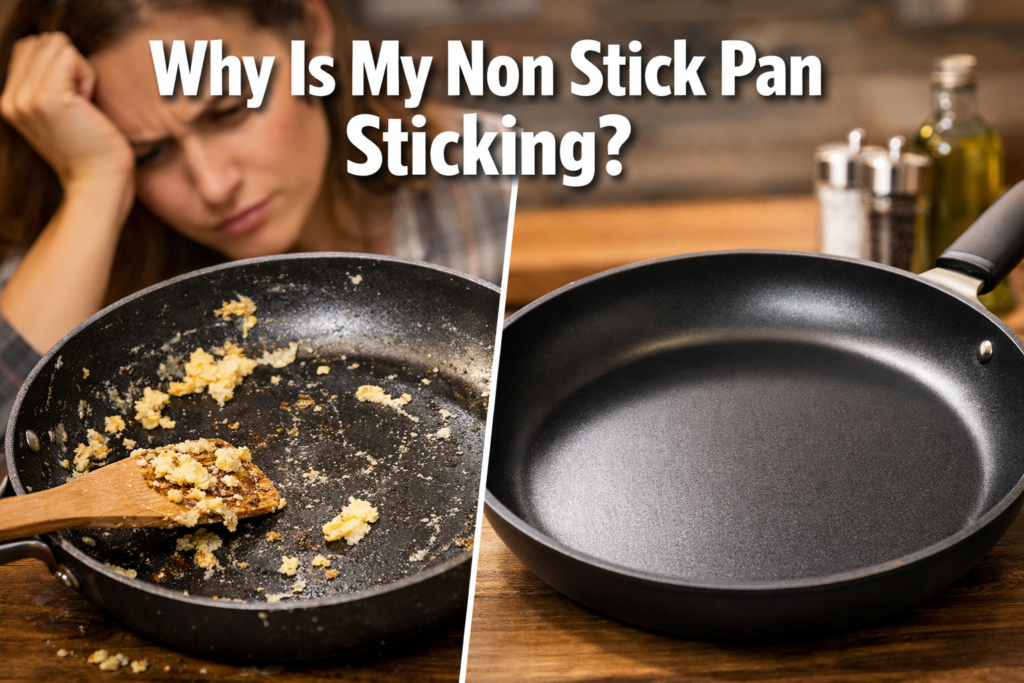
I’ll never forget the morning I cracked three eggs into my supposedly “non-stick” pan, only to watch them cement themselves to the surface like they’d been glued there.
After years of perfect performance, my favorite skillet had betrayed me.
If you’re wondering “Why Is My Non Stick Pan Sticking,” you’re not alone—and more importantly, there’s hope for your cookware.
Non-stick pans are kitchen workhorses, but they don’t last forever. Understanding why your once-reliable pan has turned sticky is the first step toward fixing it or knowing when it’s time to invest in a replacement.
In this comprehensive guide, I’ll walk you through the science behind coating failure, the common mistakes that accelerate damage, and the proven techniques that can restore or extend your pan’s life.
Key Takeaways
- Heat is the primary culprit: Temperatures above 400°F break down non-stick coatings permanently, causing irreversible sticking issues
- Cooking sprays create invisible buildup: Aerosol sprays leave sticky residue that accumulates over time, even with regular washing
- Proper maintenance extends lifespan: Hand washing, using appropriate utensils, and adequate oil coverage can double your pan’s usable life
- Some damage is reversible: Minor wear can be temporarily restored through re-seasoning techniques, but deep scratches and flaking require replacement
- Prevention beats restoration: Understanding proper heat management and cleaning methods prevents most sticking problems before they start
Understanding Why Is My Non Stick Pan Sticking: The Science Behind Coating Failure
The frustration of food sticking to non-stick pans stems from fundamental changes in the coating’s molecular structure. Modern non-stick surfaces rely on polytetrafluoroethylene (PTFE) or ceramic compounds that create an ultra-smooth, low-friction barrier between your food and the metal beneath.
When this barrier degrades, the performance you’ve come to expect vanishes overnight.
The Chemistry of Coating Breakdown
Non-stick coatings work through a simple principle: they’re so smooth at a microscopic level that food can’t grab onto them. PTFE coatings, commonly known by the brand name Teflon, have one of the lowest coefficients of friction of any solid material.
Ceramic coatings achieve similar results through a silica-based gel that hardens into an incredibly smooth surface.
However, both types are vulnerable to specific forms of damage. Heat exposure above 400°F causes PTFE molecules to break their bonds and release from the pan surface.
For ceramic coatings, high heat causes micro-cracking as the material expands and contracts. According to materials science research, even brief exposure to temperatures exceeding 500°F can permanently compromise coating integrity.
The damage isn’t always visible to the naked eye. Long before you see obvious scratches or flaking, the coating’s molecular structure has begun deteriorating.
This explains why pans sometimes lose their non-stick pan properties seemingly overnight, the cumulative damage finally reaches a tipping point where the coating can no longer function properly.

Common Causes of Sticking Problems
When clients ask me why their durable non-stick frying pan has stopped performing, I start with a diagnostic checklist. Here are the most frequent culprits:
Excessive Heat Exposure 🔥
Using high heat settings is the number one destroyer of non-stick coatings. Many home cooks assume higher heat means faster cooking, but non-stick cookware performs best at low to medium temperatures.
When you crank the burner to high, you’re literally cooking your pan’s coating along with your food.
Cooking Spray Residue
This one surprises most people. Aerosol cooking sprays contain propellants, emulsifiers, and additives that don’t fully evaporate during cooking. Instead, they polymerize (essentially bake onto the surface) creating an invisible sticky film that accumulates with each use.
Over time, this buildup becomes thick enough to trap food particles and create sticking issues.
Inadequate Fat Coverage
Even the best non-stick pans benefit from a thin layer of oil or butter. The fat creates an additional barrier and helps conduct heat evenly across the cooking surface. Skipping this step—especially with delicate proteins like eggs or fish—sets you up for sticking problems.
Metal Utensil Damage
Every scratch from a metal spatula or fork removes a portion of the coating, exposing the bare metal underneath. These exposed areas have high friction coefficients and create anchor points where food can stick. Worse, scratches propagate outward as the coating delaminates from the damaged area.
Thermal Shock and Warping
Running a hot pan under cold water or placing it on a cool surface causes rapid temperature changes that warp the metal base. A warped pan doesn’t sit flat on your burner, creating hot spots where food burns and sticks while other areas remain undercooked.
The Hidden Culprits: Why Is My Non Stick Pan Sticking Despite Regular Care?
You wash your pan after every use, never use metal utensils, and still find yourself scraping stuck eggs off the surface. What gives? The answer often lies in less obvious maintenance mistakes that slowly degrade your cookware’s performance.
Grease Buildup: The Invisible Enemy
Here’s something I learned the hard way: regular dish soap doesn’t always remove the microscopic grease layer that accumulates on non-stick surfaces.
Even if your pan looks clean, a thin film of polymerized oil can remain, creating a tacky surface that attracts and holds food particles.
This buildup is particularly common if you frequently cook fatty foods like bacon or sausage. The oils from these proteins bond with the pan surface at a molecular level, and standard washing doesn’t break these bonds.
Over weeks and months, the layers accumulate until your “non-stick” pan has essentially become a sticky pan.
The Baking Soda Solution
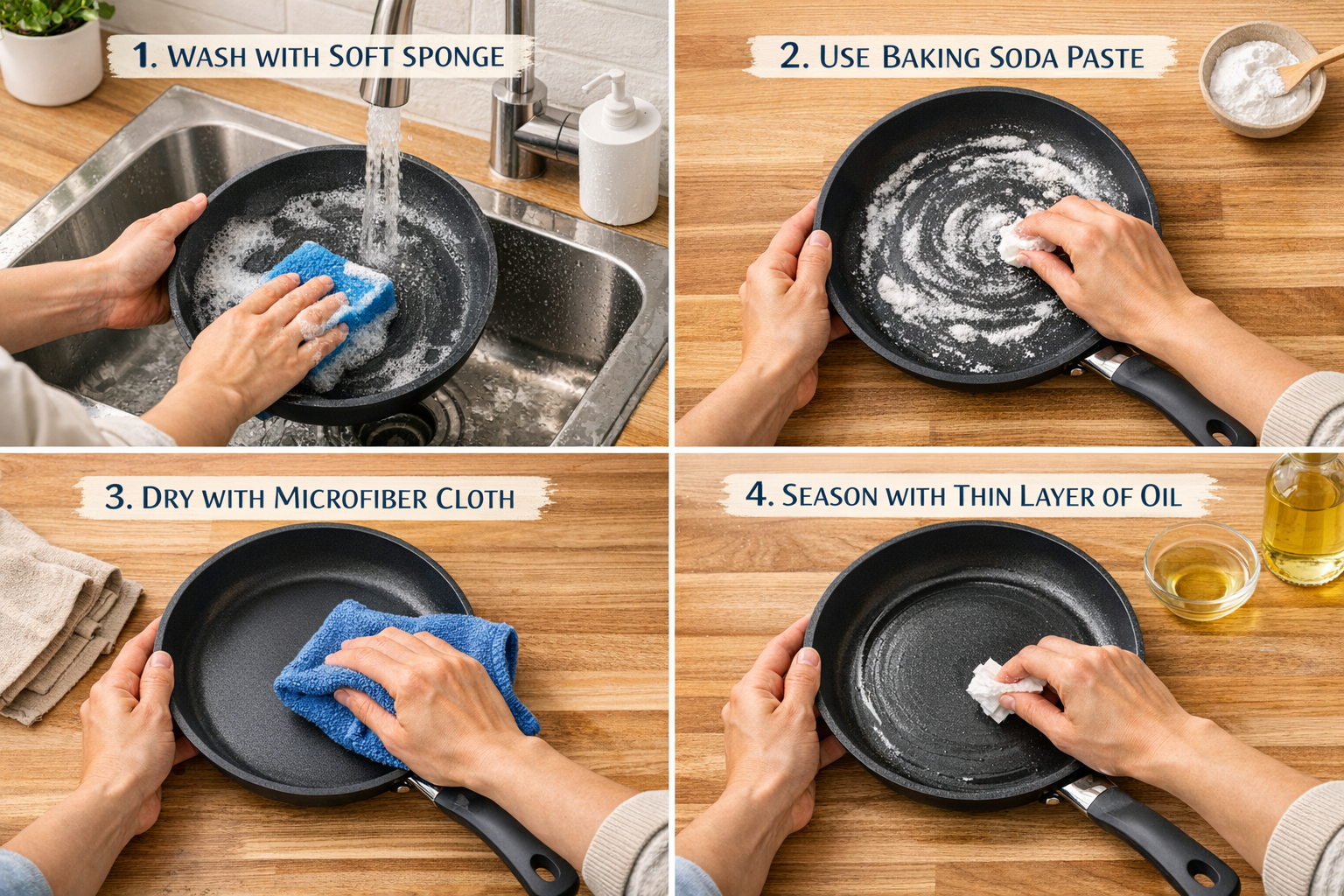
I’ve found that a paste made from baking soda and water works wonders for removing this stubborn residue. The mild abrasiveness lifts the grease without damaging the coating. Simply:
- Mix 3 tablespoons of baking soda with 1 tablespoon of water to form a paste
- Apply the paste to the entire cooking surface using a soft sponge
- Gently scrub in circular motions for 2-3 minutes
- Rinse thoroughly with warm water and dry completely
This deep-cleaning process should be performed monthly for pans used daily, or whenever you notice performance declining. For those interested in maintaining other types of cookware, our guide on caring for stainless steel pans offers complementary techniques.
Dishwasher Damage: Convenience at a Cost
Manufacturers may claim their pans are “dishwasher safe,” but that doesn’t mean dishwashers are safe for the pans.
The combination of harsh detergents, high-pressure water jets, and extreme heat creates the perfect storm for coating degradation.
Dishwasher detergents contain alkaline compounds and enzymes designed to break down stuck-on food. Unfortunately, these same chemicals attack the polymer bonds in non-stick coatings.
Each dishwasher cycle strips away microscopic layers of the coating, accelerating wear that would normally take years to develop.
The high-pressure spray also contributes to damage. Water jets hitting the pan at force can work their way under tiny imperfections in the coating, causing delamination that spreads over time.
I’ve seen pans that were dishwasher-cleaned daily fail within 18 months, while hand-washed equivalents lasted 5+ years.
Acidic Foods and Coating Erosion
Cooking tomato-based sauces, citrus reductions, or wine-braised dishes in your non-stick pan? You might be unknowingly accelerating coating breakdown.
Acidic ingredients at high temperatures create a chemical environment that degrades both PTFE and ceramic coatings.
The acid reacts with the coating’s surface, breaking molecular bonds and creating microscopic pitting. While a single batch of marinara won’t ruin your pan, repeated exposure to acidic foods, especially at temperatures above 350°F—compounds the damage.
This is why many professional chefs reserve their ceramic non-stick cookware for eggs and delicate proteins, using stainless steel or enameled cast iron for acidic dishes.
Restoration Techniques: Can You Fix a Sticking Non-Stick Pan?
The million-dollar question: once your pan starts sticking, can you bring it back to life? The answer depends entirely on the extent of the damage.
Minor wear and surface buildup are often reversible, while deep scratches and flaking coatings signal the end of your pan’s useful life.
The Re-Seasoning Method for Minor Wear
If your pan has lost some of its non-stick properties but shows no visible scratches or flaking, re-seasoning can provide a temporary performance boost. This technique works by filling microscopic imperfections in the coating with a thin layer of polymerized oil, creating a smoother surface.
Re-Seasoning Process:
- Clean thoroughly – Remove all grease buildup using the baking soda method described earlier
- Dry completely – Any moisture will prevent proper oil adhesion
- Apply oil – Use a paper towel to apply a very thin layer of vegetable, canola, or grapeseed oil across the entire cooking surface
- Heat gently – Place the pan on your stovetop over low heat for 5 minutes
- Cool and wipe – Let the pan cool completely, then wipe away any excess oil with a clean paper towel
The key word here is “thin.” You want barely enough oil to create a sheen, excess oil will polymerize into a sticky coating rather than a smooth one. This process can be repeated every few weeks to maintain performance in pans showing early signs of wear.
I’ve successfully used this technique to extend the life of several pans by 6-12 months. However, it’s important to set realistic expectations: re-seasoning is a temporary fix that addresses surface-level issues, not structural coating damage.
When Restoration Isn’t Possible
Some damage simply can’t be undone. If you observe any of these signs, it’s time to start shopping for a replacement:
- Visible flaking or peeling of the coating
- Deep scratches that expose the metal base
- Discoloration that doesn’t respond to cleaning (often indicates heat damage)
- Warping that prevents the pan from sitting flat
- Persistent sticking despite thorough cleaning and re-seasoning
Continuing to use a pan with compromised coating isn’t just frustrating, it can pose health concerns. Flaking coatings may contaminate your food with coating particles, and exposed metal can react with acidic ingredients to create off-flavors or potentially harmful compounds.
For those evaluating replacement options, our comprehensive reviews of affordable non-stick pans can help you find quality cookware without breaking the bank.
Professional Chef Techniques for Maximum Longevity
Professional kitchens get remarkable lifespans from their non-stick cookware by following strict protocols. Here are the insider techniques that separate amateur from professional pan care:
Temperature Management
Chefs never preheat empty non-stick pans. Instead, they add oil or butter first, then heat gradually. The fat serves as both a temperature indicator (when it shimmers, the pan is ready) and a protective barrier that prevents direct heat damage to the coating.
The Right Oil Matters
High smoke-point oils like avocado (520°F), grapeseed (420°F), or refined coconut oil (450°F) provide better protection than butter (350°F) or extra virgin olive oil (375°F). When the oil breaks down and smokes, it creates sticky residue and accelerates coating damage.
Strategic Tool Selection
Professional kitchens use silicone, wood, or heat-resistant nylon utensils exclusively with non-stick cookware. Many chefs keep a dedicated set of tools for non-stick pans, preventing accidental metal utensil use.
Proper Storage
Stacking pans directly on top of each other causes scratching. Professionals either hang pans or use pan protectors (soft fabric or felt separators) between stacked pieces. This simple step prevents storage-related damage that accumulates over months.
Prevention Strategies: Keeping Your Non-Stick Pan in Peak Condition
An ounce of prevention truly is worth a pound of cure when it comes to non-stick cookware. By implementing these strategies from day one, you can double or even triple your pan’s usable lifespan.
Heat Management Best Practices
Understanding proper temperature control is fundamental to non-stick pan longevity. Here’s my recommended heating protocol:
For Stovetop Cooking:
- Start with low heat and gradually increase to medium if needed
- Never exceed medium-high heat (approximately 350-375°F)
- Allow 2-3 minutes for gradual preheating with oil already in the pan
- Use an infrared thermometer to verify surface temperature stays below 400°F
For Oven Use:
- Check manufacturer specifications—most non-stick cookware maxes out at 400-450°F
- Remove silicone or plastic handles before oven use
- Avoid broiling, which can create temperature spikes above safe limits
I learned this lesson after ruining a perfectly good non-stick pizza pan by preheating it at 500°F. The coating developed a permanent brown discoloration and lost all non-stick properties within a single use.
The Cooking Spray Controversy
If there’s one piece of advice I could give every non-stick pan owner, it’s this: ditch the aerosol cooking spray. The convenience simply isn’t worth the coating damage.
Cooking sprays contain lecithin (an emulsifier), dimethyl silicone (an anti-foaming agent), and various propellants. These additives don’t evaporate during cooking; instead, they carbonize onto your pan’s surface at temperatures as low as 250°F.
This creates a nearly invisible brown film that’s incredibly difficult to remove and destroys non-stick performance.
Better Alternatives:
- Refillable oil misters – Fill with your preferred cooking oil and spray as needed
- The paper towel method – Dip a folded paper towel in oil and wipe across the surface
- Measured pours – Use 1-2 teaspoons of oil and swirl to coat the pan
These methods provide adequate fat coverage without the coating-destroying additives found in aerosol sprays. For those interested in sustainable cookware practices, eliminating disposable aerosol cans also reduces environmental impact.
Cleaning and Maintenance Schedule
Establishing a regular maintenance routine prevents the gradual performance decline that catches most people by surprise. Here’s the schedule I recommend:
After Every Use:
- Let the pan cool completely before washing (prevents thermal shock)
- Hand wash with warm water and mild dish soap
- Use soft sponges or dishcloths only—never abrasive scrubbers
- Dry thoroughly with a soft towel to prevent water spots
Weekly (for daily-use pans):
- Inspect for scratches, discoloration, or coating damage
- Check that the pan sits flat on your cooktop (warping indicator)
- Verify that food releases easily during cooking
Monthly:
- Perform deep cleaning with baking soda paste
- Re-season if you notice any decline in performance
- Evaluate whether the pan needs replacement
Quarterly:
- Assess overall cookware collection and rotate pans to distribute wear
- Review and update cooking techniques based on pan performance
- Consider whether it’s time to invest in new cookware
This proactive approach helps you catch problems early, when they’re still fixable. For comprehensive guidance on maintaining your entire cookware collection, our beginner’s guide to durable cookware provides valuable insights.
Making the Replacement Decision: When to Invest in New Cookware
Eventually, every non-stick pan reaches the end of its functional life. Knowing when to replace rather than restore saves you frustration and ensures you’re cooking with safe, effective equipment.
Cost-Benefit Analysis: Repair vs. Replace
I’ve developed a simple framework for deciding whether to attempt restoration or invest in replacement:
Consider Restoration If:
- The pan is less than 2 years old
- No visible scratches or coating damage exist
- Performance decline is recent and gradual
- The pan was a premium purchase ($50+)
- Only minor grease buildup or residue is present
Replace Immediately If:
- Any coating is flaking or peeling
- Deep scratches expose the metal base
- The pan is warped or doesn’t sit flat
- It’s been in service for 3+ years with heavy use
- Restoration attempts have failed
From a pure cost perspective, budget-friendly non-stick pans ($20-30) aren’t worth extensive restoration efforts. The time and materials invested in deep cleaning and re-seasoning often exceed the replacement cost. However, premium pans from quality manufacturers justify more aggressive restoration attempts.
Choosing Your Next Non-Stick Pan
If you’ve determined replacement is necessary, use this opportunity to upgrade your selection based on lessons learned. Modern non-stick technology has advanced significantly, offering better durability and performance than pans from just a few years ago.
Key Features to Prioritize:
- Reinforced coatings – Look for terms like “titanium-reinforced” or “diamond-infused” which indicate harder, more durable surfaces
- Heavy-gauge construction – Thicker pans (3mm+) resist warping and provide better heat distribution
- Oven-safe ratings – Higher temperature limits (450°F+) indicate more robust coating chemistry
- PFOA-free certification – Ensures the coating was manufactured without harmful chemicals
For those prioritizing health and environmental concerns, our guides to non-toxic cookware sets and ceramic cookware pros and cons provide detailed comparisons of safer alternatives.
Understanding Cookware Lifespan Expectations
Setting realistic expectations about pan longevity prevents disappointment and helps you budget appropriately. Here’s what you can reasonably expect:
| Pan Type | Daily Use Lifespan | Occasional Use Lifespan |
|---|---|---|
| Budget Non-Stick ($20-40) | 1-2 years | 3-4 years |
| Mid-Range Non-Stick ($40-80) | 2-4 years | 5-6 years |
| Premium Non-Stick ($80-150) | 4-6 years | 7-10 years |
| Ceramic Non-Stick | 1-3 years | 3-5 years |
These estimates assume proper care and maintenance. Abuse through high heat, metal utensils, or dishwasher cleaning can reduce these timeframes by 50% or more. Conversely, meticulous care following the protocols outlined in this guide can extend lifespan significantly.
It’s worth noting that even with perfect care, non-stick coatings are inherently consumable.
Unlike cast iron that improves with age or stainless steel that lasts decades, non-stick pans have a finite useful life. Building this reality into your cookware budget prevents sticker shock when replacement becomes necessary.
Conclusion
Understanding why your non-stick pan is sticking empowers you to take corrective action and prevent future problems.
Whether your pan suffers from heat damage, cooking spray buildup, inadequate maintenance, or simple age-related wear, you now have the knowledge to diagnose the issue and determine the appropriate solution.
The key takeaways bear repeating: manage your heat carefully, abandon aerosol cooking sprays, implement proper cleaning protocols, and set realistic expectations about cookware lifespan.
These fundamental practices will dramatically extend the life of your current pans and ensure better performance from future purchases.
Your Next Steps:
- Assess your current cookware – Inspect each pan for damage and performance issues
- Implement the baking soda deep clean – Remove accumulated grease buildup this weekend
- Try re-seasoning – Give worn but undamaged pans a performance boost
- Replace compromised pans – Don’t continue cooking with damaged coatings
- Adopt prevention strategies – Start using proper heat management and cleaning techniques today
Remember, even the best non-stick pan is a tool with a limited lifespan.
By understanding the science behind coating failure and implementing professional maintenance techniques, you’ll maximize your investment and enjoy superior cooking performance for years to come.
For more insights on maintaining your entire cookware collection, explore our guides on simple bakeware cleanup tips and healthy non-toxic bakeware options.
Your kitchen deserves cookware that performs reliably, and now you have the knowledge to make that happen.

3 responses to “Why Is My Non Stick Pan Sticking: Fix & Prevention Guide”
[…] most obvious indicators that you need to replace your non stick cookware are visible damage signs. According to Breann Chai, who leads cookware testing at Consumer […]
[…] never forget the morning I cracked an egg into my favorite non stick pan, only to watch it stubbornly cling to the surface despite adding […]
[…] Can You Put Non Stick Pans in the Dishwasher? In many cases, yes, but that doesn’t mean you should. The dishwasher may be […]