
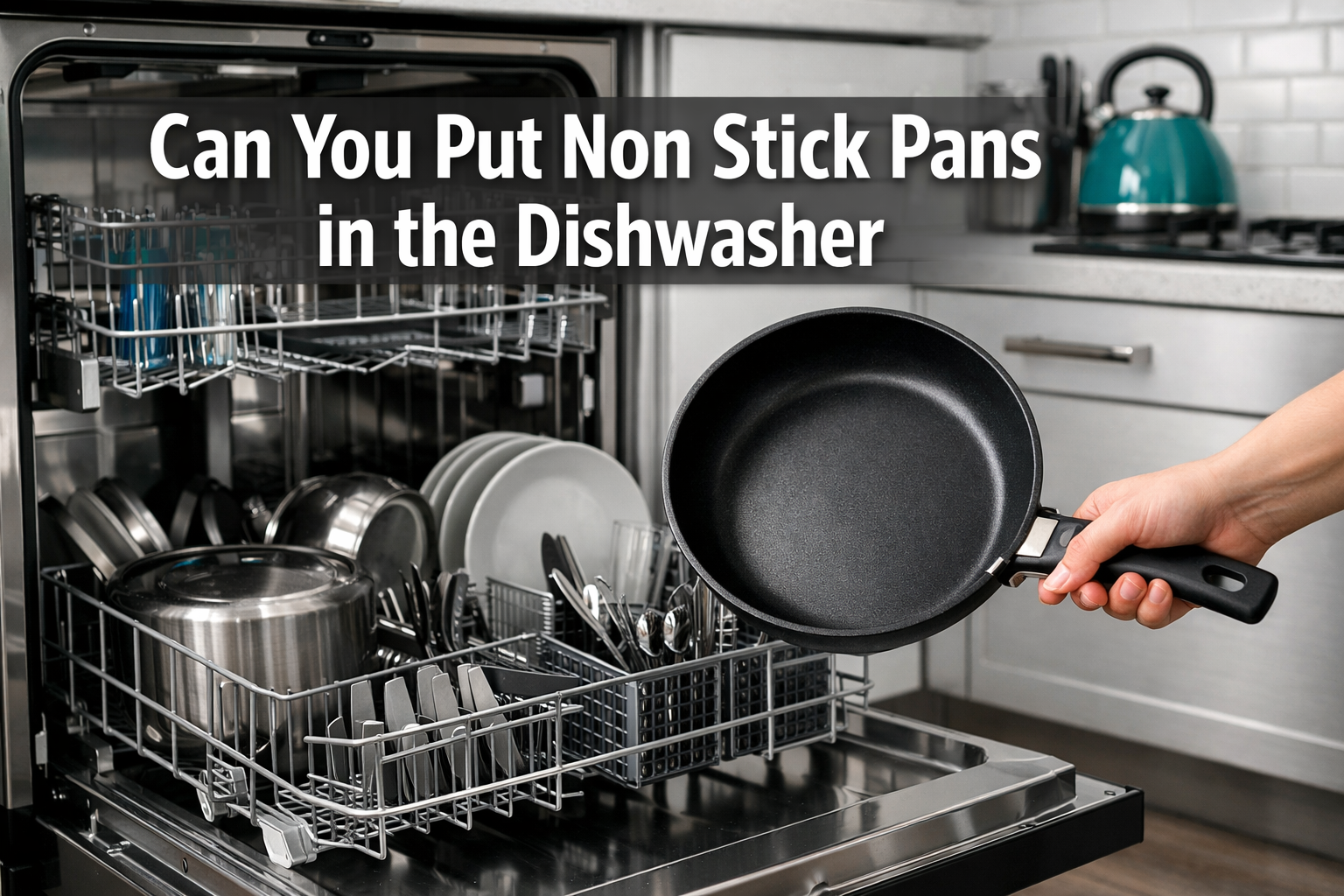
Can You Put Non Stick Pans in the Dishwasher
You load the dishwasher after dinner, hold your skillet over the rack, and pause. Can You Put Non Stick Pans in the Dishwasher? The short answer is: sometimes, but usually you shouldn’t.
Many modern pans are labeled dishwasher safe cookware, yet repeated dishwasher cycles can slowly reduce cooking surface durability and shorten the life of the coating.
I’ve seen this happen in my own kitchen. A pan that once released eggs perfectly started gripping food after months of “easy cleanup” in the dishwasher.
It didn’t fail overnight, it faded little by little. That’s exactly why smart nonstick cookware maintenance matters.
Key Takeaways
- Yes, some nonstick pans are dishwasher safe, but hand washing is still the best method.
- Dishwasher heat, harsh detergents, and water pressure can wear down the coating over time.
- Manufacturer recommendations matter more than generic dishwasher-safe claims.
- Different coatings need different care, especially PTFE, ceramic, and hybrid pans.
- Gentle cleaning helps preserve nonstick coating and extend pan lifespan.
Can You Put Non Stick Pans in the Dishwasher? What the Label Really Means
A “dishwasher-safe” label does not always mean “best for long-term use.” In many cases, it simply means the pan can survive dishwasher use without immediate failure. That is very different from saying the dishwasher is ideal for cooking surface protection.
Quick answer for featured snippet
How to tell if a nonstick pan is dishwasher safe:
- Check the bottom of the pan for a dishwasher-safe symbol.
- Read the care section in the box or manual.
- Visit the manufacturer’s product page if the label is unclear.
- Look for wording like “dishwasher safe” versus “hand wash recommended.”
- If instructions conflict, follow the more cautious advice: hand wash.
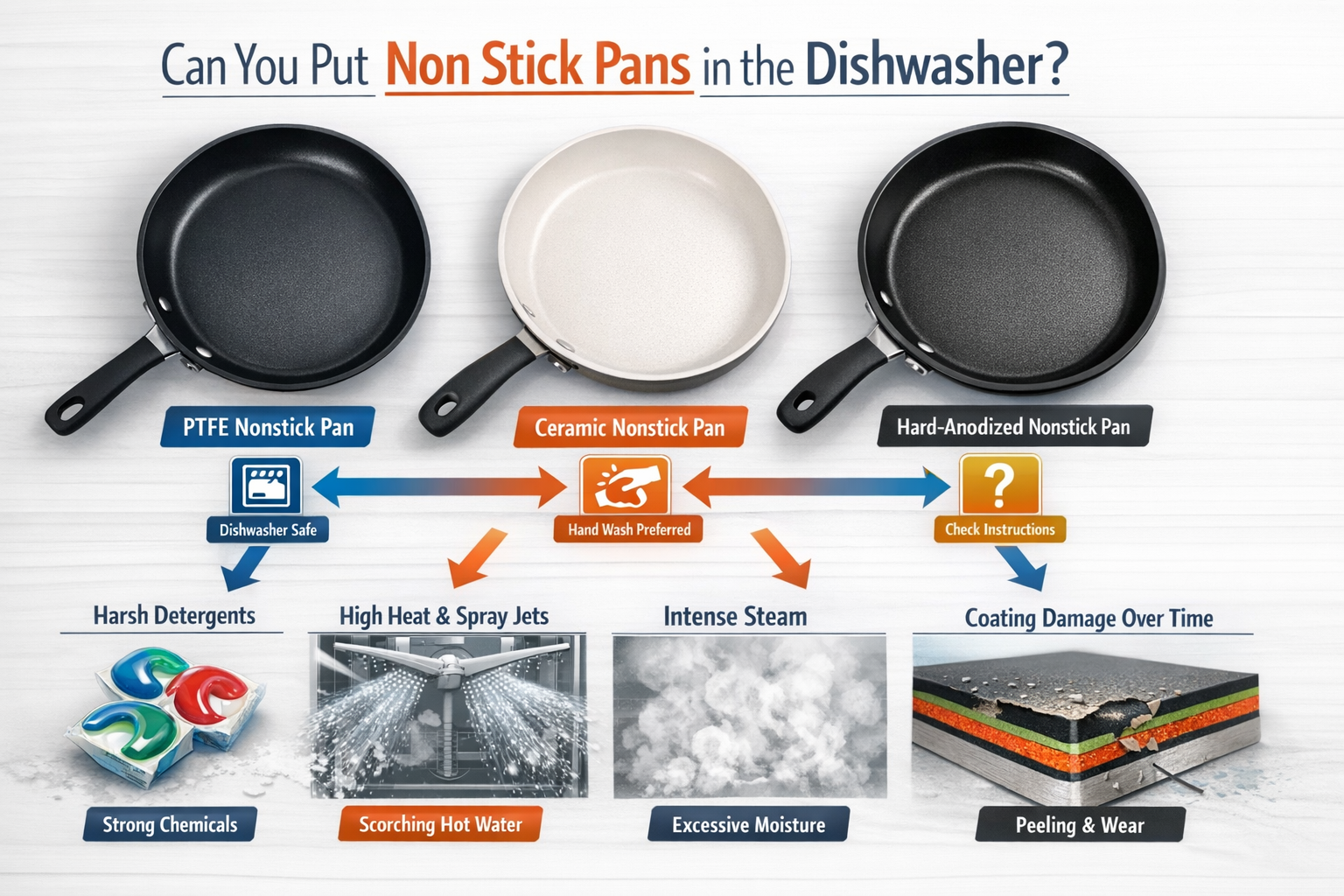
Many newer pans, including some hard-anodized aluminum, stainless-based hybrids, and ceramic-coated products, are marketed as dishwasher safe. But brands often still recommend hand washing to support cookware surface preservation.
Why dishwashers can damage nonstick pans
Dishwashers create a rough environment for delicate coatings:
- High heat can stress bonded layers
- Strong detergent can dull or weaken surface finishes
- Water jets can knock pans against other items
- Mineral deposits can leave films that affect release
- Long exposure to moisture can impact edges, rivets, and bases
Chef’s rule of thumb: “If a pan’s performance matters to you, wash it by hand.”
That advice lines up with professional kitchen practices. In most working kitchens, cooks don’t put premium nonstick skillets through dishwashers because they want reliable release and better kitchen tool longevity.
Different materials, different dishwasher tolerance
Here’s a simple comparison:
| Nonstick type | Dishwasher tolerance | Best practice | Risk level |
|---|---|---|---|
| PTFE-coated | Often labeled safe | Hand wash | Medium |
| Ceramic nonstick | Some are dishwasher safe | Hand wash preferred | Medium to high |
| Hard-anodized nonstick | More tolerant | Hand wash for lifespan | Medium |
| Hybrid nonstick | Often more durable | Follow maker instructions | Low to medium |
If you’re comparing materials, our guide to ceramic cookware pros and cons and this deep dive on ceramic nonstick durability can help.
Best Cleaning Method: How to Clean Nonstick Pans Without Damage
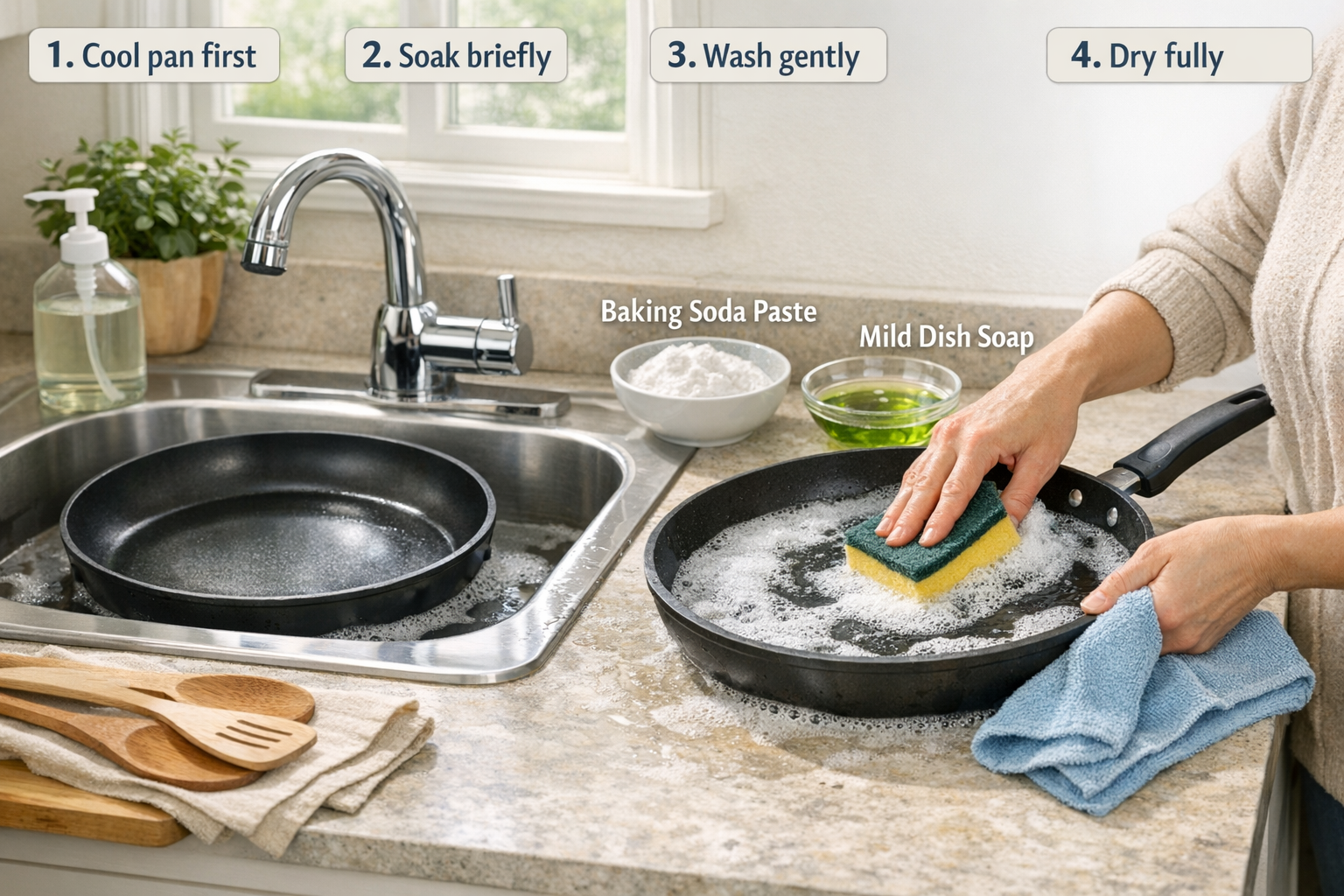
If your goal is to preserve nonstick coating, the best routine is simple: cool, wash gently, dry fully, store carefully.
Quick answer for featured snippet
Best cleaning method for nonstick pans:
- Let the pan cool completely.
- Wash with warm water and mild dish soap.
- Use a soft sponge or cloth only.
- Rinse well and dry right away.
- Avoid steel wool, scouring powder, and harsh dishwasher detergents.
Step-by-step nonstick pan care
1. Let the pan cool first
Never dunk a hot pan into cold water. Sudden temperature change can warp the base and stress the nonstick layer.
2. Use warm, soapy water
Mild soap is enough for most residue. This is the foundation of good kitchen cleaning techniques.
3. Choose the right sponge
Use:
- Soft sponge
- Non-abrasive scrub pad
- Microfiber cloth
Avoid:
- Steel wool
- Metal scrubbers
- Melamine “eraser” pads unless approved by the brand
4. Soak briefly for stuck-on food
A 10–15 minute soak is better than aggressive scrubbing.
5. Dry immediately
This helps prevent spotting, mineral buildup, and wear around exposed edges.
Specific cleaning solutions for different coatings
This is where many articles stay too general. Different coatings respond better to different methods:
PTFE nonstick
- Use mild dish soap and a soft sponge
- For grease film, wipe with diluted white vinegar, then rinse
- Avoid abrasive baking soda pastes unless the brand allows it
Ceramic nonstick pan care
- Use warm water, gentle soap, and a soft cloth
- For brown stains, try a light baking soda paste
- Don’t use harsh alkaline cleaners; they can dull release faster
Hybrid or reinforced nonstick
- Usually more scratch resistant
- Still avoid harsh dishwasher cycles if you want better long-term performance
- Follow manufacturer instructions closely
For broader buying help, see our picks for the best affordable nonstick pans and our review of a durable non-stick frying pan.
Hand washing vs dishwasher: the cost-benefit reality
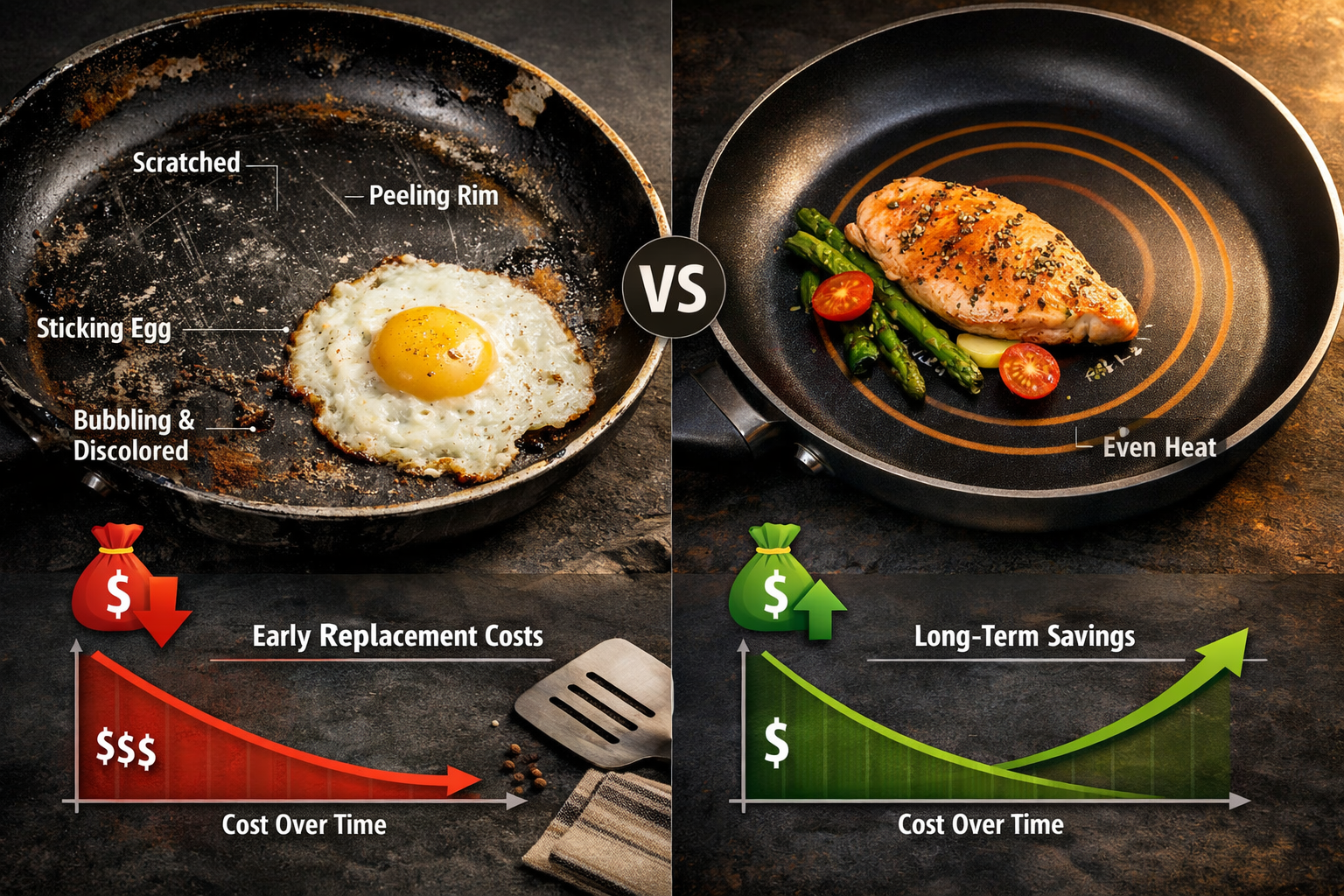
Hand washing takes about 1–2 minutes. Replacing a worn-out pan can cost $25 to $150+ depending on the brand. That’s the simplest cost argument I can give: a tiny daily habit protects your investment and supports culinary equipment care.
There’s also an environmental angle 🌱. Replacing cookware more often means more manufacturing, packaging, and waste. Better kitchen cookware maintenance is usually the more sustainable choice. If sustainability matters to you, explore these eco-friendly cookware options and this guide to non-toxic cookware sets.
Can You Put Non Stick Pans in the Dishwasher Repeatedly? Signs, Risks, and What to Do
One dishwasher cycle may not ruin a pan. Repeated cycles are the real issue. The long-term impact is usually a steady drop in release, even heating, and overall cooking satisfaction.
Signs of nonstick coating damage
Watch for these warning signs:
- Food starts sticking more than before
- Surface looks dull, chalky, or uneven
- Scratches or scuffs appear
- Coating bubbles, flakes, or peels
- Pan warps and spins on the burner
- Discoloration around the center or rim
- Oil pools strangely instead of spreading evenly
Quick answer for featured snippet
Signs your nonstick pan is deteriorating:
- Eggs and pancakes start sticking
- The surface loses its smooth shine
- You see scratches, chips, or peeling
- The pan heats unevenly or warps
- Cleanup gets harder after every use
Troubleshooting common problems
“My pan is dishwasher safe but food now sticks.”
The coating may be worn or covered with residue. Try a gentle hand wash with mild soap, then test with a small amount of oil. If sticking continues, the release layer may be fading.
“There’s a cloudy film on the pan.”
That’s often detergent or mineral residue. Wash by hand and rinse thoroughly. Dry immediately.
“The pan looks fine, but performance dropped.”
Nonstick failure is often microscopic before it is visible. Surface roughness increases, and food release declines. This is one reason hand washing vs dishwasher matters over time.
“Can I restore a nonstick coating?”
Not really. You may improve cleanliness, but once the coating has degraded, you cannot fully rebuild the original performance.
How to extend the life of nonstick cookware
Here are the habits I recommend to extend pan lifespan:
- Hand wash whenever possible
- Use silicone, wood, or nylon utensils
- Cook on low to medium heat
- Avoid aerosol cooking sprays if your brand advises against them
- Don’t stack pans without a towel or protector
- Follow the maker’s oven-safe and care limits
- Replace the pan if coating peels or flakes
For complete kitchen tool maintenance, you may also like our guides on smart cookware storage solutions, what to consider when selecting cookware, and healthy non-toxic bakeware in 2026.
A practical rule you can actually use
If the pan is:
- Cheap and rarely used → dishwasher use may be acceptable
- Mid-range and used often → hand wash to protect performance
- Premium or favorite daily pan → always hand wash
That’s the balance between convenience and longevity.
Conclusion
So, Can You Put Non Stick Pans in the Dishwasher? In many cases, yes, but that doesn’t mean you should. The dishwasher may be safe in the short term, yet repeated cycles can reduce release, dull the finish, and lead to earlier replacement.
The best answer for most buyers is simple: follow manufacturer recommendations, but hand wash when you want the best long-term results.
If you want to preserve cooking performance, prevent nonstick coating damage, and protect your investment, start with one habit tonight: wash your nonstick pan gently by hand, dry it fully, and store it carefully.
It’s the easiest way to keep a good pan good.


3 responses to “Can You Put Non Stick Pans in the Dishwasher: Yes or No”
[…] frustration of food sticking to non-stick pans stems from fundamental changes in the coating’s molecular structure. Modern non-stick […]
[…] non-stick properties through seasoning and actually improve with age, the opposite of coated non-stick cookware. For guidance on maintaining these alternatives, see our cast iron seasoning […]
[…] diving into cleaning methods, it’s helpful to understand the chemistry behind burnt […]