Hard Anodized Bakeware
Last updated: March 21, 2026
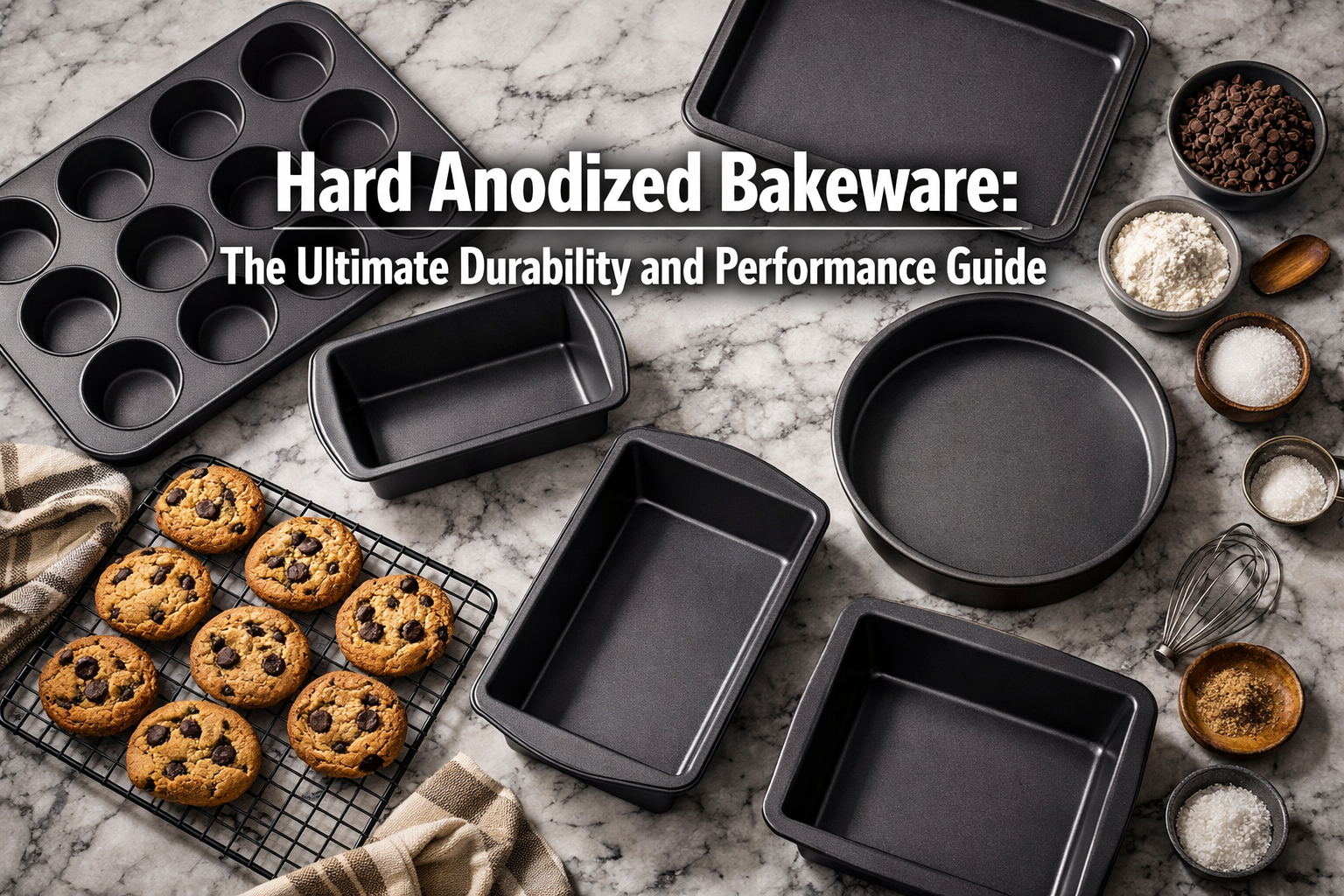
Quick Answer: Hard Anodized Bakeware is aluminum that has been electrochemically treated to create a surface that is significantly harder than stainless steel, highly resistant to scratches and corrosion, and capable of distributing heat evenly.
It’s the right choice for bakers who want pans that last years without warping, staining, or degrading, especially if you bake frequently at high temperatures.
Key Takeaways
- Hard anodized aluminum is two to three times harder than standard aluminum, making it one of the most durable bakeware materials available.
- The anodized surface is non-reactive, so acidic foods like citrus, tomatoes, and vinegar-based batters won’t affect flavor or leach metals.
- Heat distribution is more even than standard aluminum, reducing hot spots that cause uneven browning.
- Most hard anodized bakeware is not dishwasher-safe — hand washing extends the life of the finish significantly.
- It works well in conventional ovens but is generally not compatible with induction cooktops unless the base includes a magnetic layer.
- Hard anodized pans are heavier than standard aluminum but lighter than cast iron, making them a practical middle ground for most home bakers.
- Price points vary widely; quality hard anodized bakeware is available at both budget and premium tiers.
- If you’re building out a complete baking setup, pairing hard anodized pans with quality accessories makes a measurable difference in results — see bakeware essentials for new bakers for a full checklist.
What Is Hard Anodized Bakeware and Why Does It Matter?
Hard anodized bakeware is made from aluminum that has been submerged in an electrolytic acid bath and subjected to electrical current. This process converts the outer layer of the aluminum into aluminum oxide, a material that is denser, harder, and more corrosion-resistant than the base metal beneath it.
The result is a pan that holds up to daily use far better than standard aluminum or thin nonstick-coated pans. The surface doesn’t chip, peel, or flake because it isn’t a coating applied on top of the metal, it is the metal, transformed at a molecular level.
For bakers who have dealt with warped sheet pans, stained loaf tins, or peeling nonstick surfaces, hard anodized bakeware solves most of those frustrations in one purchase.
Quick Comparison Table
| Product | Price | Material | Dishwasher Safe | Heat Tolerance | Best For |
|---|---|---|---|---|---|
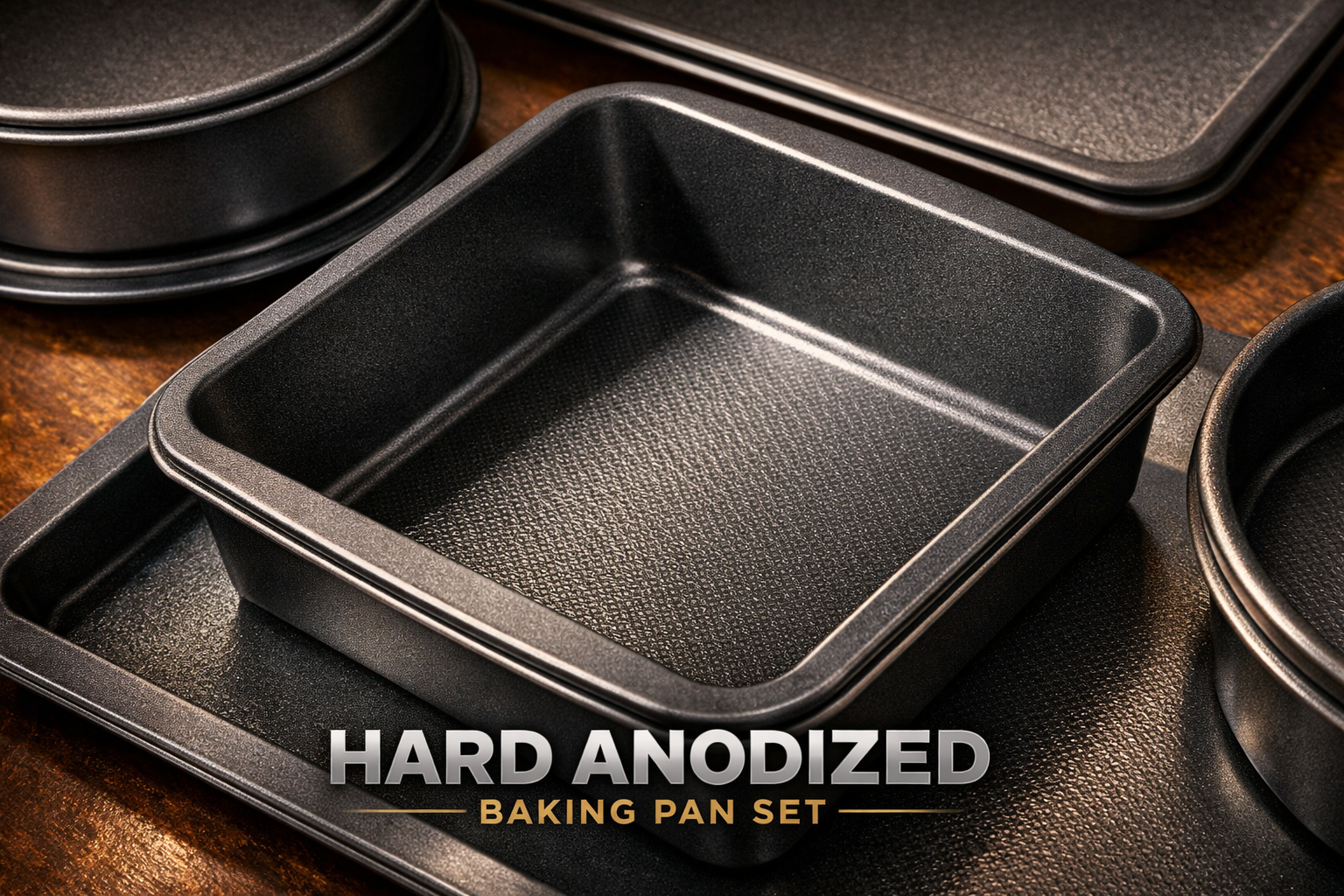
| Hard Anodized Bakeware (Standard) | Not specified | Hard anodized aluminum | No (hand wash recommended) | Up to 450°F (est.) | Everyday baking, high-frequency use |
Hard Anodized vs. Other Bakeware Materials: How Does It Compare?
Hard anodized aluminum outperforms standard aluminum on durability and surface integrity, but the comparison with other materials depends on what you prioritize.
Standard aluminum is lighter and less expensive, but it reacts with acidic foods, scratches easily, and warps at high temperatures over time. Hard anodized aluminum eliminates all three of those weaknesses.
Stainless steel is dishwasher-safe and non-reactive, but it distributes heat less evenly than aluminum. You’ll often see hot spots with stainless steel baking sheets that you won’t get with hard anodized pans.
Cast iron is extremely durable and retains heat well, but it’s heavy, requires seasoning, and takes longer to heat up. Hard anodized pans heat faster and are significantly lighter.
Ceramic-coated bakeware offers an attractive finish and is often marketed as non-toxic, but the ceramic layer can chip and degrade over time.
Hard anodized surfaces don’t have this problem because there’s no separate coating to fail. For a deeper look at ceramic options, see ceramic cookware pros and cons.
Nonstick (PTFE-coated) pans are convenient but require careful handling to avoid scratching the coating, and they have temperature limits. Hard anodized pans can handle higher oven temperatures without concern.
Detailed Review: Hard Anodized Bakeware
Hard Anodized Bakeware, as a category, represents a specific manufacturing approach rather than a single brand. Understanding what to look for within this category helps you identify quality options regardless of which manufacturer you’re evaluating.
Key Features
- Electrochemically hardened surface: The anodized layer is integral to the metal, not a separate coating, which means it won’t peel or flake under normal use.
- Even heat distribution: Aluminum’s natural conductivity is preserved and enhanced by the anodizing process, reducing hot spots across the pan surface.
- Non-reactive surface: The aluminum oxide layer prevents the metal from interacting with acidic or alkaline ingredients, keeping flavors clean.
- Temperature tolerance: Most hard anodized bakeware handles oven temperatures up to 400–450°F without issue. Always verify the specific manufacturer’s rating.
- Weight: Heavier than standard aluminum sheet pans, but the added mass contributes to stability and warp resistance.
✅ Pros
- Extremely durable — resists scratches, dents, and surface degradation far better than standard aluminum or nonstick pans
- Non-reactive with acidic foods, so no metallic taste in lemon bars, tomato-based dishes, or vinegar-glazed items
- Heats evenly and quickly, producing consistent browning across the entire baking surface
- No coating to chip or peel, making it a safer long-term option compared to traditional nonstick
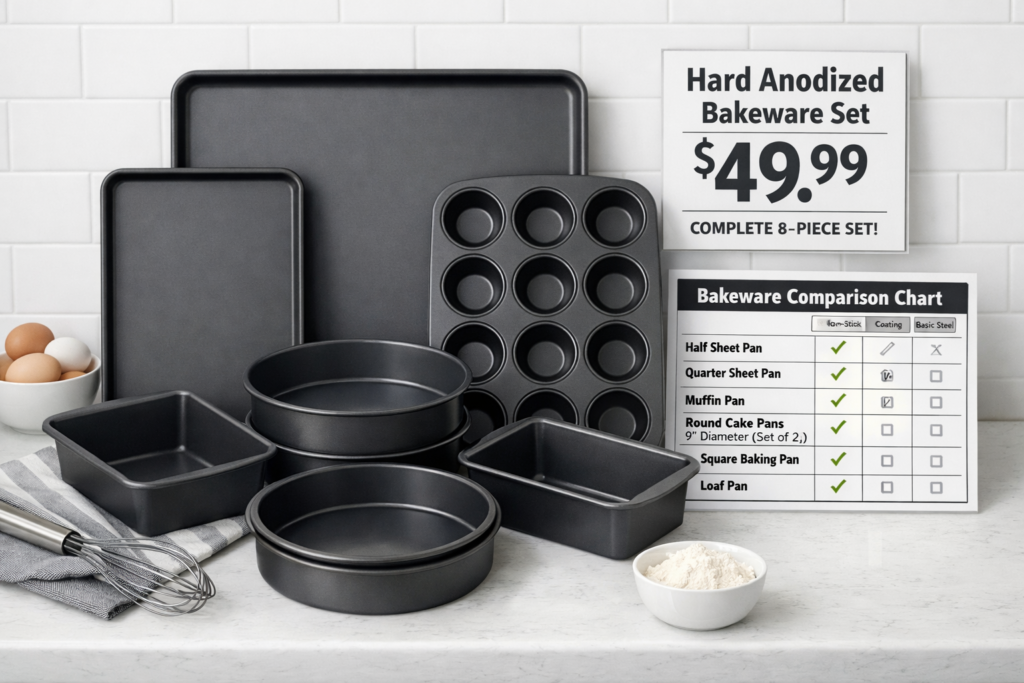
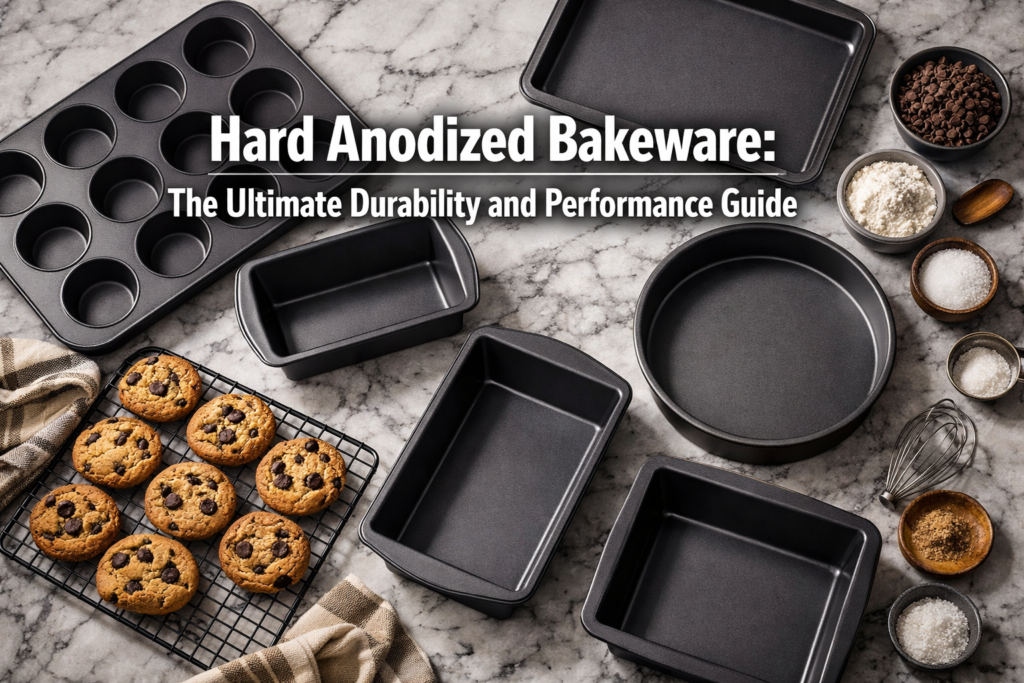
- Works across a wide range of baking applications, sheet pans, cake pans, muffin tins, loaf pans, and more
- Typically lighter than stainless steel or cast iron alternatives
❌ Cons
- Not dishwasher-safe in most cases, the harsh detergents and high heat of dishwashers can dull or damage the anodized finish over time
- Not compatible with induction cooktops unless the pan has a magnetic base layer (relevant if you’re using bakeware on a stovetop as well)
- The dark surface can make it harder to visually monitor browning on the bottom of baked goods without lifting the pan
- Higher upfront cost compared to standard aluminum or basic nonstick options
- Some bakers find the dark interior makes it difficult to judge doneness by color alone
Who It’s Best For
Hard Anodized Bakeware is the right choice for home bakers who bake at least a few times per week and want pans that will last for years without replacement.
It’s also a strong pick for anyone who has had frustrating experiences with warped sheet pans, peeling nonstick coatings, or uneven browning. If you’re building a kitchen from scratch and want to invest once rather than replace budget pans every year or two, hard anodized is a logical starting point.
For budget-conscious shoppers who still want durability, check out affordable baking tools to try for complementary options.
What Should You Look for When Buying Hard Anodized Bakeware?
Choosing hard anodized bakeware comes down to five practical criteria. Price alone isn’t a reliable guide, a mid-range pan from a reputable manufacturer will often outperform a premium-priced pan from a lesser-known brand.
1. Gauge (thickness) of the aluminum
Thicker aluminum means better heat distribution and greater warp resistance. Look for pans described as “heavy gauge” or “commercial gauge.” Thin pans, even if hard anodized, can still warp at high temperatures over time.
2. Rim and edge construction
Rolled edges add structural rigidity and make pans easier to grip. Flat-edged pans are more prone to warping under repeated high-heat use.
3. Oven temperature rating
Most quality hard anodized bakeware is rated to at least 400°F. If you regularly bake bread, pizza, or roast vegetables at higher temperatures, look for pans rated to 450°F or above.
4. Handle and grip design
For bakeware like cake pans and loaf pans, consider how the pan feels when full and hot. Wider, ergonomic rims or integrated handles make a real difference in safety and usability.
5. Manufacturer warranty
Reputable hard anodized bakeware manufacturers typically offer at least a limited lifetime warranty. A short or absent warranty is a signal about the manufacturer’s confidence in their product’s longevity.
Common mistake: Buying hard anodized pans and then running them through the dishwasher. Even pans labeled “dishwasher safe” tend to degrade faster with repeated machine washing. Hand washing with warm soapy water and a soft sponge is the standard care recommendation.
For more guidance on building a complete baking kit without overspending, see affordable cookware sets under $100.
How Do You Care for Hard Anodized Bakeware Properly?
Proper care extends the life of hard anodized bakeware significantly. The surface is durable, but a few habits will keep it performing well for years.
- Wash by hand with warm water, mild dish soap, and a soft cloth or non-abrasive sponge. Avoid steel wool or abrasive scrubbers.
- Dry immediately after washing to prevent water spots and mineral buildup.
- Avoid harsh detergents — bleach-based cleaners and highly alkaline soaps can dull the anodized surface over time.
- Use silicone, wooden, or nylon utensils when cutting or serving from the pan. Metal utensils won’t damage the anodized surface the way they damage nonstick coatings, but they can leave marks.
- Store carefully — stack pans with a cloth or paper towel between them to prevent surface contact scratches.
- For stuck-on food, soak the pan in warm soapy water for 15–20 minutes before washing. Avoid prolonged soaking as a regular habit.
If you’re dealing with stubborn residue on any bakeware type, clean burnt baking pans easily covers practical removal methods that won’t damage the surface.
Is Hard Anodized Bakeware Safe and Non-Toxic?
Hard Anodized Bakeware is considered safe for food contact. The anodizing process seals the aluminum surface, preventing the metal from leaching into food under normal cooking and baking conditions. The aluminum oxide layer is chemically stable and does not react with food.
Unlike some nonstick coatings, hard anodized surfaces do not contain PTFE or PFAS compounds unless a separate nonstick layer has been applied on top of the anodized base.
If you’re specifically looking for PFAS-free options, verify with the manufacturer whether any additional coating has been applied. For more on this topic, cookware free of PFAS risks provides a useful breakdown of what to look for on product labels.
The surface is also non-reactive with acidic foods, a known concern with uncoated aluminum, which makes it a safer and more flavor-neutral choice for a wide range of recipes.
FAQ
Is hard anodized bakeware the same as nonstick?
No. Hard anodized refers to the surface treatment of the aluminum itself. Nonstick refers to a separate coating (usually PTFE-based) applied over the metal. Some hard anodized pans have an additional nonstick coating, but the two terms describe different things. Hard anodized pans without a nonstick coating are not naturally nonstick, they require greasing like any other uncoated pan.
Can hard anodized bakeware go in the dishwasher?
Most manufacturers recommend hand washing only. Dishwasher detergents are alkaline and abrasive, and repeated machine washing can dull or damage the anodized finish over time. Even pans marketed as dishwasher-safe will last longer with hand washing.
Does hard anodized bakeware work on induction cooktops?
Standard hard anodized aluminum is not induction-compatible because aluminum is not magnetic. Some manufacturers add a magnetic stainless steel base layer to make their pans induction-ready. Check the product specifications before purchasing if induction compatibility matters to you.
How long does hard anodized bakeware last?
With proper care, quality hard anodized bakeware can last 10 to 20 years or more. The anodized surface does not peel or chip, and the aluminum base is highly resistant to warping when the pan is thick-gauge. Longevity depends heavily on gauge thickness, care habits, and whether the pan is run through a dishwasher regularly.
Is hard anodized bakeware better than stainless steel?
For most baking applications, yes, primarily because aluminum distributes heat more evenly than stainless steel. Stainless steel has the advantage of being dishwasher-safe and induction-compatible, but it’s more prone to hot spots that cause uneven browning. The right choice depends on your priorities.
Can you use metal utensils on hard anodized bakeware?
The anodized surface is harder than standard aluminum and won’t be damaged by metal utensils the way a nonstick coating would. That said, metal utensils can leave visible marks or scratches on the surface over time. Silicone or wooden utensils are the safer long-term choice.
Why does food sometimes stick to hard anodized pans?
Hard anodized surfaces without a nonstick coating are not inherently nonstick. Greasing the pan with butter, oil, or a cooking spray before use is necessary for most baking applications. Some foods, particularly high-sugar batters, will stick to any uncoated surface without adequate greasing.
Final Verdict
Hard anodized bakeware earns its reputation as one of the most durable and practical choices for serious home bakers. The surface treatment solves the most common bakeware frustrations — warping, uneven browning, reactive surfaces, and peeling coatings — in a single material choice.
The trade-offs are real but manageable: hand washing is non-negotiable if you want the finish to last, and the dark surface requires a small adjustment in how you judge doneness. Neither of these is a dealbreaker for most bakers.
Choose hard anodized bakeware if you bake regularly, want pans that will last for a decade or more, and are willing to hand wash. It’s a genuine long-term investment that pays off in consistent results and avoided replacement costs.
Consider alternatives if you need dishwasher compatibility above all else, bake infrequently and don’t want to spend more upfront, or specifically need induction-compatible bakeware without adding a magnetic base.
For anyone building out a complete baking setup, bakeware essentials for new bakers is a practical companion guide to help you prioritize which pieces to buy first.
Check Prices and Availability at Amazon
Related reading: Healthy non-toxic bakeware | Durable muffin tins for baking | Budget-friendly baking pans

One response to “Hard Anodized Bakeware: Ultimate Durability and Performance Guide 2026”
[…] top of the ultimate hard anodized body, T-fal applies its titanium-reinforced nonstick coating. This isn’t the same PTFE […]