Bakeware Material Safety Comparison
Every bakeware material handles heat, food, and time differently — and “non-toxic” means different things depending on what a pan is made of and how it’s coated. This chart compares the nine most common bakeware materials side by side on the things that actually matter: safe oven temperature, whether they contain PFAS or other coatings of concern, how they react with acidic foods, durability, and everyday care.
Last reviewed: August 2026
The comparison at a glance
| Material | Max oven temp* | PFAS / coating status | Reacts with acidic food? | Durability | Care level | Best for |
|---|---|---|---|---|---|---|
| Stainless steel | 500°F+ (260°C+) | None — uncoated metal | No — inert | Excellent | Low | Sheet pans, roasting, all-round baking |
| Cast iron (bare) | 500°F+ (260°C+) | None — seasoned metal | Yes — can leach iron / strip seasoning | Excellent (lifetime) | High (season, hand-wash) | Bread, cornbread, high-heat searing |
| Enameled cast iron | ~450°F (232°C)** | None — glass enamel | No — enamel is inert | Excellent | Low–medium | Braising, casseroles, no-knead bread |
| Carbon steel | 500°F+ (260°C+) | None — seasoned metal | Yes — like cast iron | Excellent | High (season, hand-wash) | Baguette pans, high-heat baking sheets |
| Aluminized / aluminum (uncoated) | ~450°F (232°C) | None — uncoated metal | Yes — can react & pit; avoid acidic foods | Good (can warp/dent) | Low | Even-browning cake & cookie pans |
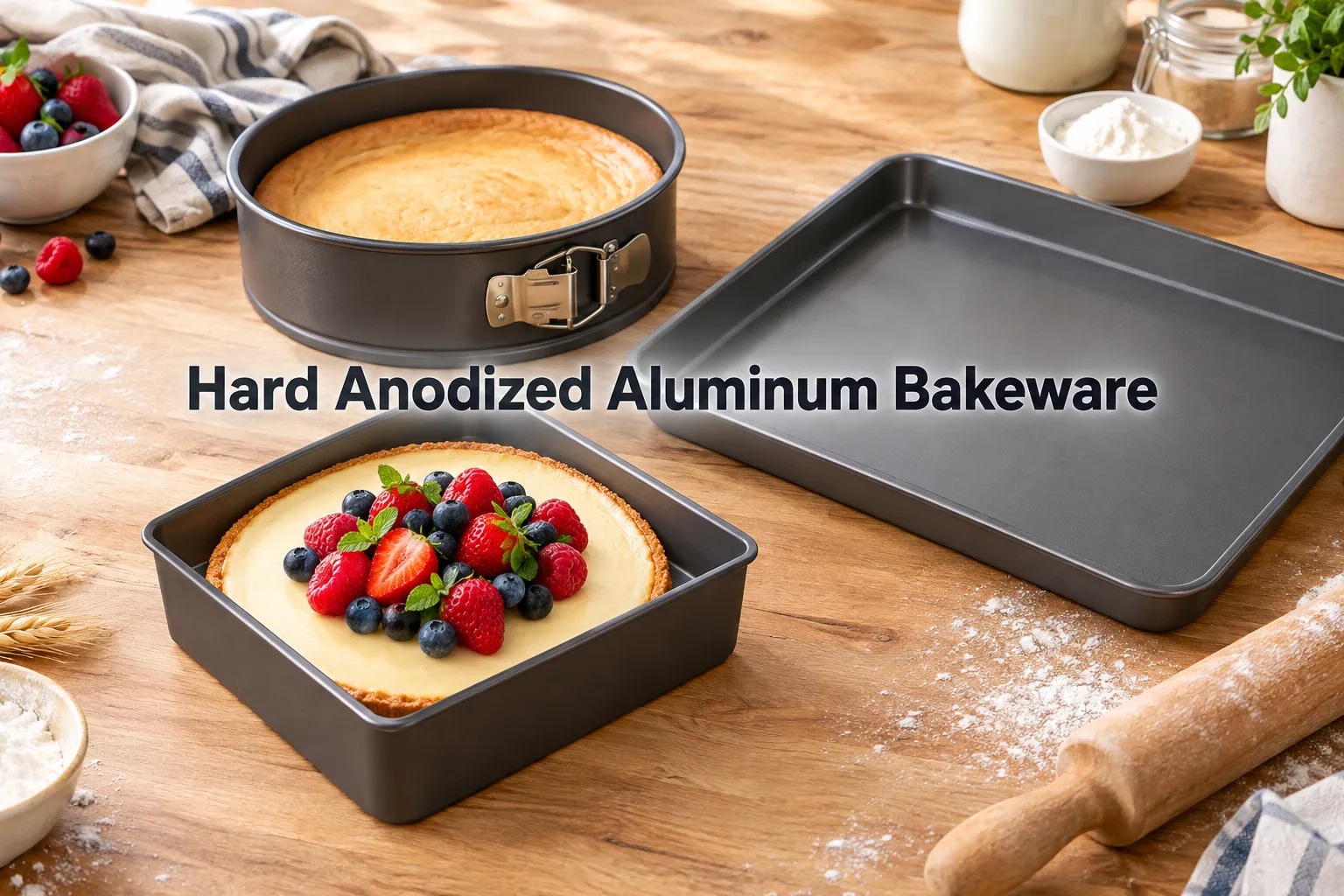
| Anodized aluminum | ~450°F (232°C) | None — sealed oxide layer | No — anodizing seals surface | Very good | Low–medium | Durable cake & loaf pans |
| Tempered glass | ~450°F (232°C)** | None — inert glass | No — fully inert | Good (can shatter on shock) | Low | Casseroles, brownies, custards |
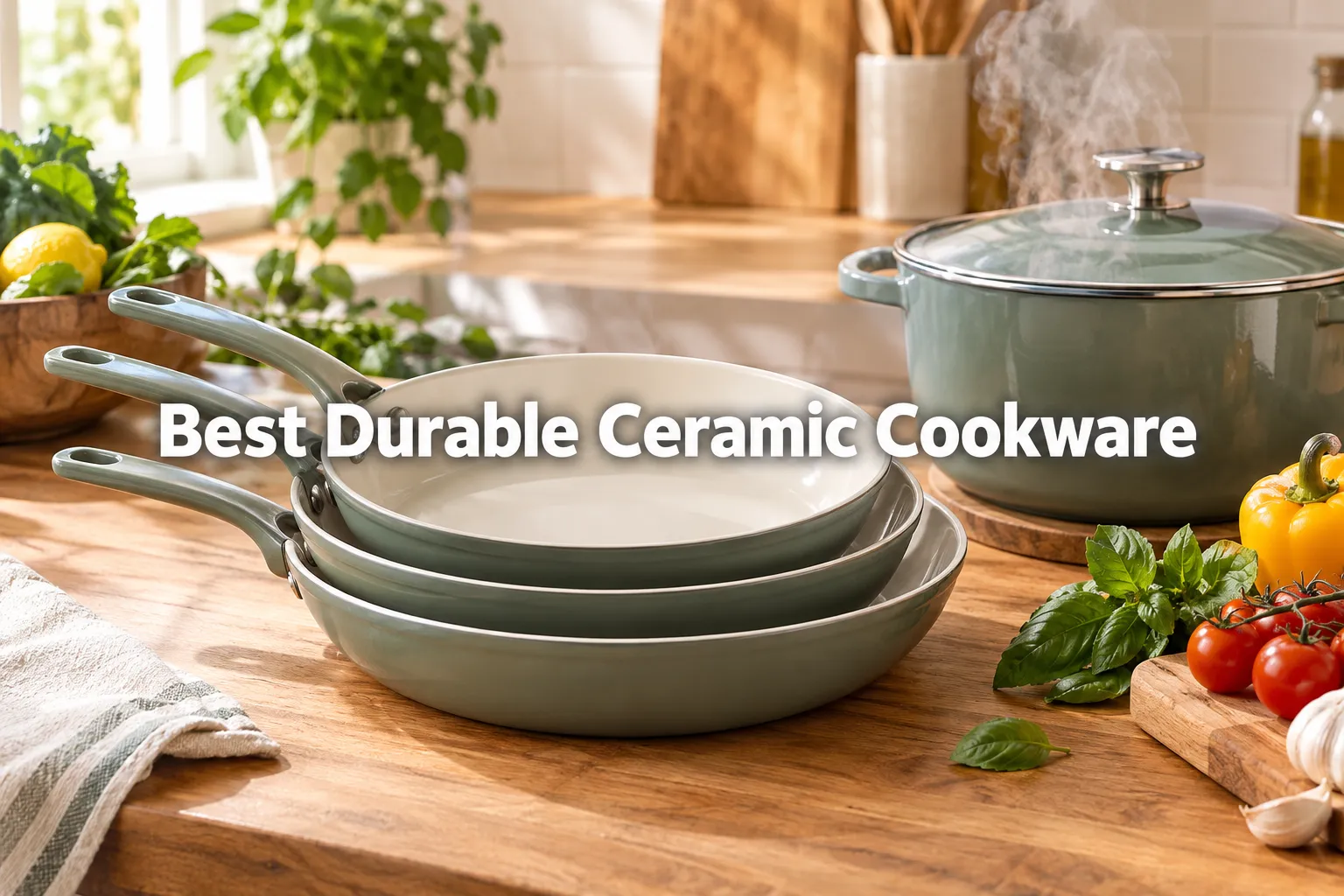
| Ceramic / stoneware | ~450°F (232°C)** | None (natural glaze) — see note | No — glazed surface is inert | Good (chips/cracks) | Low–medium | Baking dishes, pie, rustic bakes |
| Silicone (food-grade) | ~425°F (218°C) | PFAS-free; use quality food-grade | No — inert | Good (flexible, can tear) | Low | Muffins, molds, easy release |
| PTFE non-stick (Teflon-type) | ~400–450°F (204–232°C) | Contains PTFE; buy PFOA-free | No | Fair (coating wears) | Low (no metal utensils, no high heat) | Easy-release cakes at moderate heat |
*Practical safe oven limits for the pan itself; individual products vary — always follow the manufacturer’s rating. **Glass, enamel, ceramic and stoneware can crack from thermal shock (a sudden temperature change), so avoid moving them straight from fridge or freezer into a hot oven.
Bakeware Material Safety Comparison
How to read this chart
Safe oven temperature is the practical ceiling for the pan itself. Bare metals (stainless, cast iron, carbon steel) tolerate the highest heat, which is why they’re favoured for bread and roasting. Coated, glass, and flexible materials have lower ceilings and should never be pushed past their rating.
PFAS / coating status tells you whether the surface relies on a synthetic coating. “None” means the safety of the pan comes from the base material itself. PTFE non-stick is the one row where a coating does the work — modern versions are PFOA-free and safe at normal baking temperatures, but they degrade if overheated or scratched.
Reactivity matters for acidic recipes (tomato, citrus, buttermilk). Bare aluminum, cast iron, and carbon steel can react with acid, affecting flavour and, over time, the pan. Inert materials — stainless, glass, enamel, glazed ceramic, silicone — don’t.
Which material should you choose?
For the safest, most durable all-round bakeware, uncoated stainless steel and seasoned cast iron are hard to beat — no coating to wear out, decades of life, and the highest heat tolerance. Fuss-free release, food-grade silicone and PFOA-free non-stick are convenient as long as you respect their lower heat limits. Casseroles and rustic bakes, glass and quality glazed ceramic are inert and easy to clean. The material to be most careful with is bargain-bin non-stick and unbranded glazed ceramic, where coating quality is the variable that matters most.
Learn more
For deeper dives into specific materials and safe options, see our related guides:
- How to choose healthy, non-toxic bakeware
- Understanding glass bakeware safety and thermal shock
- Teflon vs ceramic coatings, explained
- Why stainless steel bakeware lasts a lifetime
- The complete cast iron seasoning guide
Frequently asked questions
- Is non-stick bakeware safe to use?
- Modern PTFE non-stick made after the PFOA phase-out is considered safe at normal baking temperatures (up to roughly 400–450°F). The risks come from overheating it or scratching the coating with metal utensils, which is why bare metals are preferred for high-heat baking.
- What is the safest bakeware material overall?
- Uncoated stainless steel, seasoned cast iron, tempered glass, and quality glazed ceramic are the most common picks for “safest,” because their safety comes from an inert base material rather than a coating that can degrade over time.
- Does ceramic bakeware contain PFAS?
- Natural glazed ceramic and stoneware contain no PFAS. Note that some products marketed as “ceramic non-stick” are actually a ceramic-based sol-gel coating on metal — different from solid ceramic, though still typically PFAS-free. The concern with cheap ceramics is glaze quality (lead/cadmium), so buy certified food-safe brands.
- Can I put glass or ceramic bakeware in a very hot oven?
- Within their rated temperature, yes — but avoid thermal shock. Don’t move glass, ceramic, or stoneware directly from the fridge or freezer into a hot oven, and don’t set hot glass on a cold or wet surface, as the sudden change can crack it.
This comparison is provided for general informational purposes and reflects typical material properties; individual products vary, so always follow the manufacturer’s temperature ratings and care instructions. Bakeware Pans is reader-supported and may earn a commission from qualifying purchases, which never affects our assessments.

One response to “Bakeware Material Safety Comparison”
[…] conventional bakeware materials can release harmful chemicals into food or into the air in your kitchen, particularly when heated […]