What is a Pullman Loaf Pan
Picture this: you’re making sandwiches for a family picnic, and every slice of bread is perfectly uniform, with crisp corners and no wasted crusts.
The secret behind this bakery-quality perfection lies in understanding what is a pullman loaf pan and how this specialized baking tool transforms ordinary bread into architectural masterpieces. 🍞
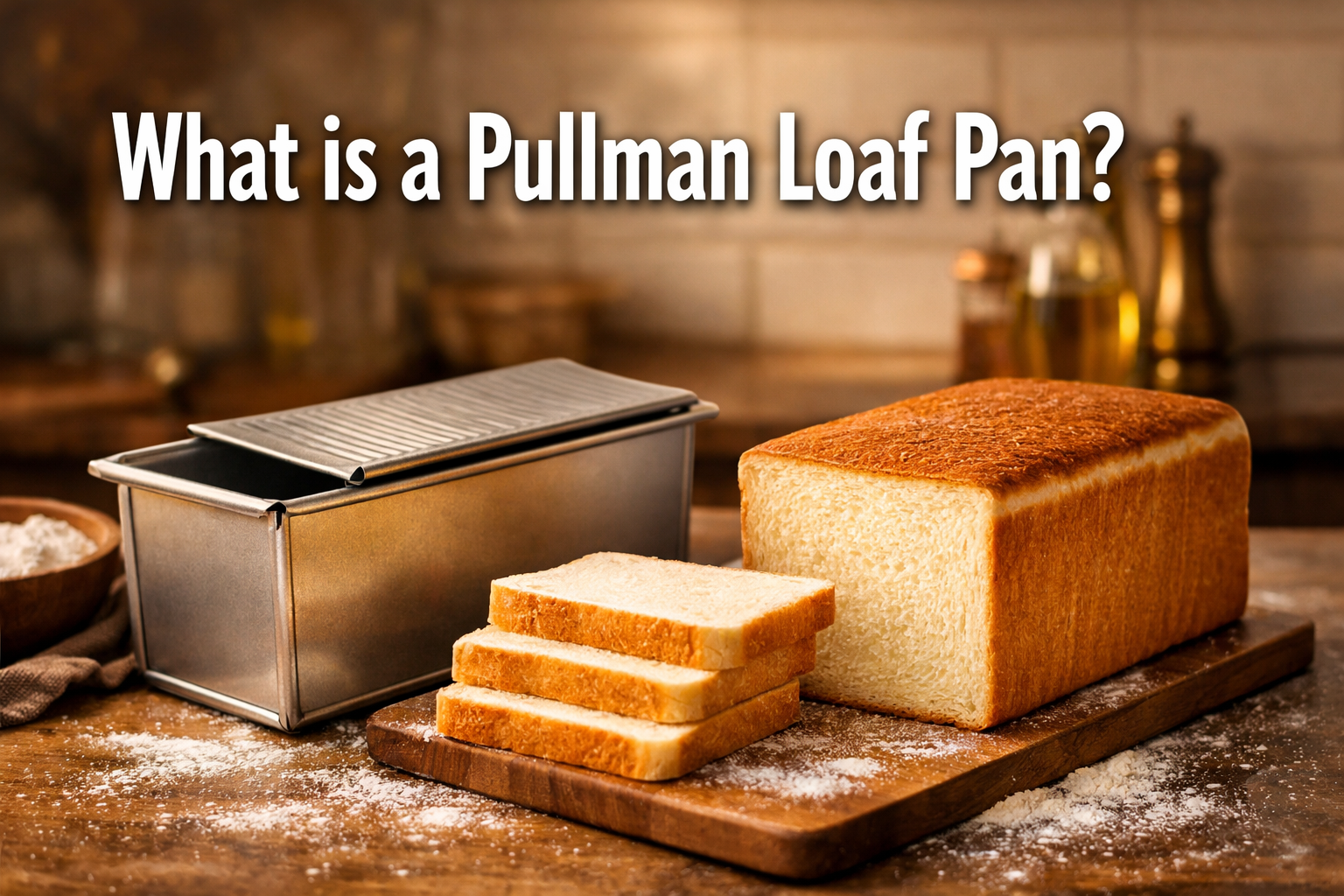
A pullman loaf pan, also known as a pain de mie pan, is a rectangular baking pan with a distinctive sliding lid that creates perfectly square, evenly-textured bread loaves.
Named after the luxurious Pullman train cars of the early 1900s, this pan produces the same type of refined, uniform sandwich bread that was served in those elegant dining cars.
Key Takeaways
• Pullman loaf pans feature a sliding lid that compresses the dough during baking, creating perfectly square loaves with fine, even crumb structure
• The pan produces minimal waste since the uniform shape eliminates the rounded dome top found in traditional bread loaves
• Professional bakers prefer pullman pans for sandwich bread, pain de mie, and any recipe requiring consistent slice dimensions
• These pans come in various sizes ranging from 8-inch to 16-inch lengths to accommodate different household needs
• Proper technique is essential for achieving the characteristic dense, fine texture that makes pullman bread ideal for elegant sandwiches and canapés
Understanding What is a Pullman Loaf Pan: Design and Construction
The Unique Architecture of Pullman Pans
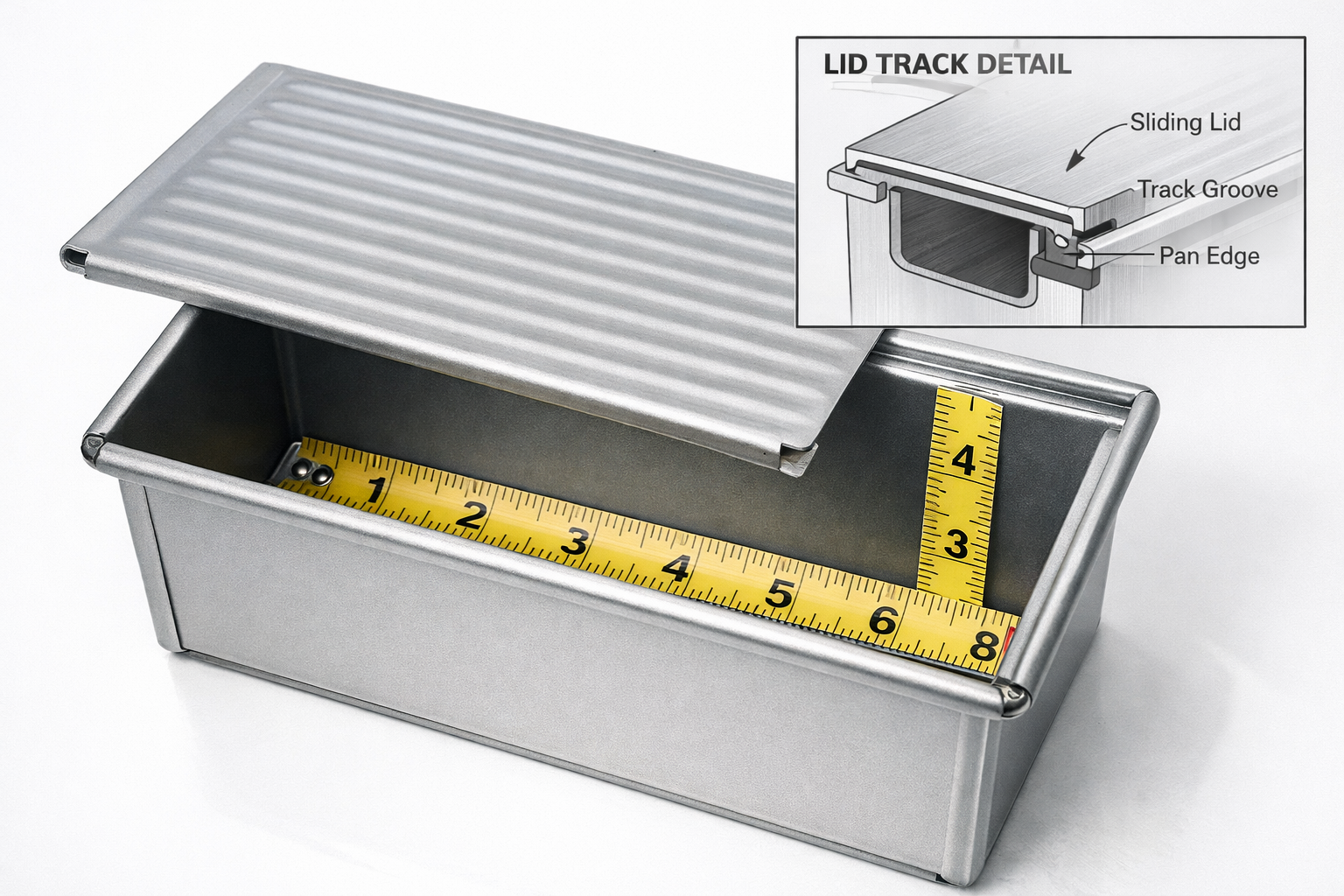
When exploring what is a pullman loaf pan, the most striking feature is its rectangular construction with a sliding lid mechanism. Unlike traditional loaf pans that allow bread to rise freely and form a dome, pullman pans constrain the dough’s upward expansion, forcing it to bake into a perfect rectangular prism.
The pan typically measures 4 inches wide by 4 inches deep, with lengths varying from 8 to 16 inches. The sliding lid is the defining characteristic that sets pullman pans apart from regular bakeware.
This lid slides along grooved tracks on the pan’s sides, creating an enclosed baking environment that fundamentally changes how bread develops during the baking process.
Materials and Construction Quality
Most professional-grade pullman loaf pans are constructed from heavy-gauge aluminum or carbon steel, materials chosen for their excellent heat conduction and durability.
The thickness of the metal is crucial – thinner pans may warp under the pressure of the expanding dough against the lid, while properly constructed pans maintain their shape through hundreds of baking cycles.
The sliding mechanism requires precise engineering. Quality pans feature smooth-operating tracks that allow the lid to slide effortlessly while maintaining a tight seal during baking.
Some premium models include reinforced corners and rolled edges that prevent warping and ensure longevity.
For bakers seeking budget-friendly baking pans, entry-level pullman pans offer an affordable introduction to this specialized baking technique, though professional bakers often invest in higher-quality options for consistent results.
Size Variations and Capacity
Understanding what is a pullman loaf pan includes knowing the standard sizing options:
| Pan Length | Dough Capacity | Slice Count | Best For |
|---|---|---|---|
| 8 inches | 1.5 lbs | 16-20 slices | Small households |
| 10 inches | 2 lbs | 20-24 slices | Standard families |
| 13 inches | 2.5 lbs | 26-30 slices | Large families |
| 16 inches | 3+ lbs | 32+ slices | Commercial use |
The 13-inch pullman pan is considered the gold standard for home baking, producing approximately 2.5 pounds of finished bread – perfect for a week’s worth of sandwiches for a typical family.
What is a Pullman Loaf Pan Used For: Applications and Benefits
The Science Behind Pullman Bread
The magic of understanding what is a pullman loaf pan lies in the science of constrained baking.
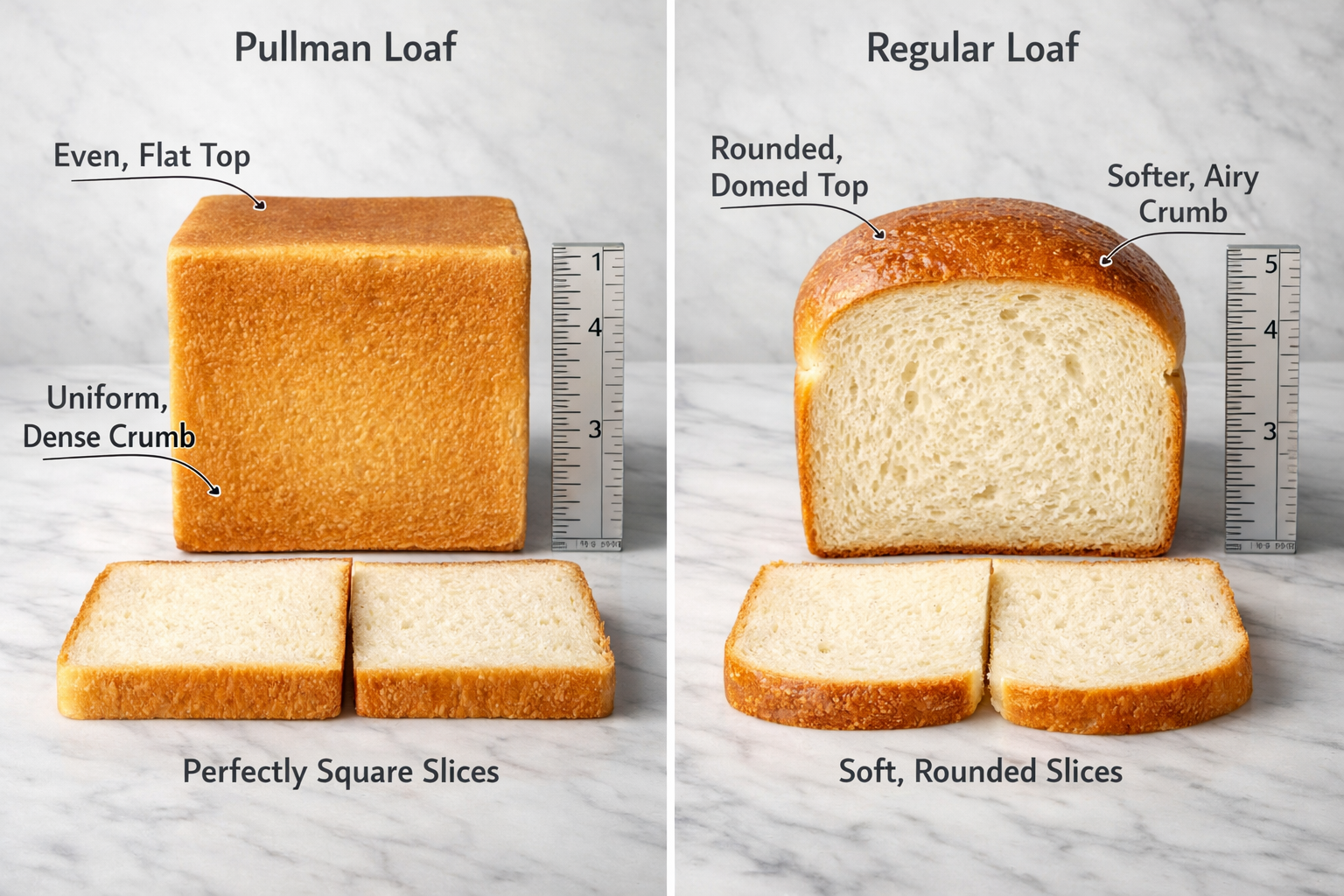
When bread dough bakes in a traditional loaf pan, steam and gases from fermentation escape upward, creating the familiar dome shape.
The pullman lid prevents this vertical expansion, forcing the dough to develop a dense, fine crumb structure with minimal air pockets.
This compression creates several distinct advantages:
- Uniform slice dimensions for professional-looking sandwiches
- Reduced waste from uneven heel pieces
- Extended shelf life due to the tight crumb structure
- Superior toasting properties with even browning across the entire surface
Professional Applications
Bakeries and restaurants rely on pullman pans for specific applications where consistency matters.
Pain de mie, the French sandwich bread traditionally served at high-end establishments, requires the precise texture that only pullman baking can achieve.
The dense crumb structure holds delicate fillings without falling apart, making it ideal for:
- Elegant tea sandwiches with cucumber or smoked salmon
- Canapé bases that maintain structural integrity
- French toast with superior custard absorption
- Bread puddings requiring uniform texture distribution
For home bakers interested in expanding their skills, exploring bakeware essentials for new bakers can provide context for how pullman pans fit into a well-rounded baking arsenal.
Comparing Pullman vs. Traditional Loaf Pans
The differences between pullman and traditional loaf pans extend beyond mere aesthetics:
Pullman Advantages:
- Perfect geometric shape for efficient storage
- Consistent slice thickness throughout the loaf
- Professional appearance suitable for entertaining
- Minimal crust waste
Traditional Loaf Advantages:
- Larger, airier crumb structure
- Distinctive artisanal appearance
- No special technique required
- Generally more affordable
Understanding these trade-offs helps bakers determine when investing in specialized equipment like pullman pans makes sense for their baking goals.
Recipe Adaptations for Pullman Baking
Not every bread recipe works well in pullman pans. The constrained environment requires specific dough characteristics:
Ideal Dough Properties:
- Lower hydration (60-65%) to prevent excessive spreading
- Moderate gluten development for structure without toughness
- Controlled fermentation to prevent over-proofing under the lid
- Enriched formulas with eggs, butter, or milk for tenderness
Recipe Modifications:
- Reduce liquid by 10-15% compared to traditional loaf recipes
- Increase fat content slightly for improved texture
- Use bread flour for better structure
- Monitor fermentation carefully to prevent over-rising
Mastering Pullman Pan Techniques: What is a Pullman Loaf Pan’s Proper Use
Essential Preparation Steps
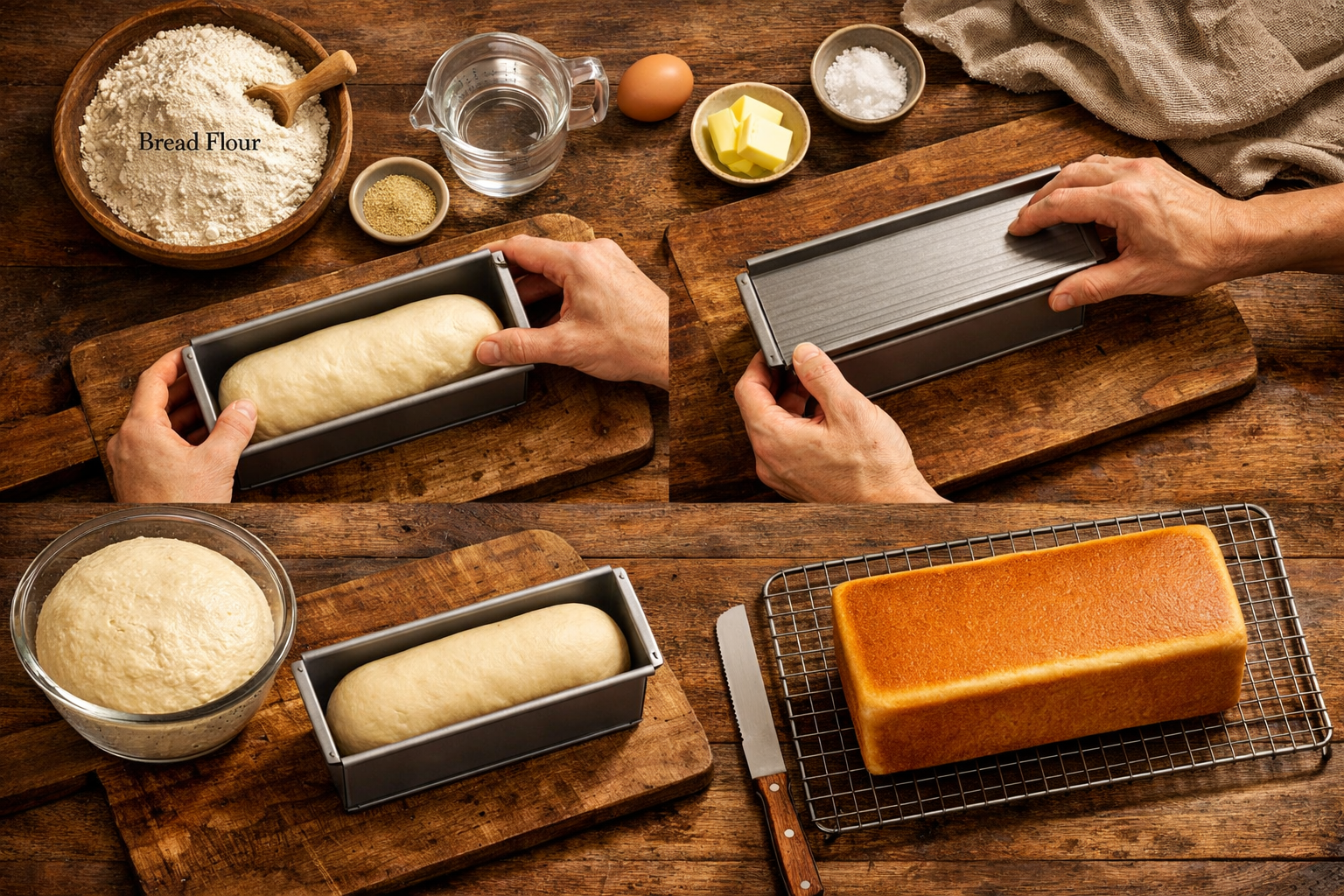
Successfully using a pullman loaf pan requires attention to detail from the very beginning. Proper greasing is crucial since the enclosed environment can cause sticking issues.
Many professional bakers recommend a combination of butter and flour, ensuring complete coverage of both the pan interior and the sliding lid.
The dough quantity must be precisely calculated. Too little dough results in a loaf that doesn’t fill the corners properly, while too much can cause the lid to bow or the bread to develop an uneven texture.
A general rule suggests filling the pan approximately 60-65% full before adding the lid.
The Critical Lid Placement
Understanding what is a pullman loaf pan includes mastering the timing of lid placement. The lid should be positioned when the dough has completed its first rise and been shaped into the pan.
Some bakers prefer to wait until the dough begins its final proof, allowing for slight expansion before constraining it.
Lid Positioning Tips:
- Ensure the lid slides smoothly before adding dough
- Apply light greasing to the lid’s interior surface
- Check that the lid sits flush with the pan edges
- Avoid forcing the lid if resistance is encountered
Baking Temperature and Timing Adjustments
Pullman pans require modified baking parameters compared to traditional loaf pans. The enclosed environment affects heat circulation and moisture retention, necessitating adjustments to both temperature and timing.
Recommended Baking Guidelines:
- Temperature: 375°F (190°C) – slightly lower than traditional loaves
- Initial baking: 25-30 minutes with lid in place
- Lid removal: Final 10-15 minutes for crust development
- Internal temperature: 190°F (88°C) for proper doneness
The two-stage baking process is essential for achieving the characteristic pullman texture while ensuring proper crust formation. Removing the lid during the final phase allows the top surface to brown and develop the slight crust that makes slicing easier.
Troubleshooting Common Issues
Even experienced bakers encounter challenges when learning what is a pullman loaf pan requires for optimal results. Common issues include:
Dense, Heavy Texture:
- Often caused by over-proofing or excessive dough quantity
- Solution: Reduce dough amount by 10% and monitor fermentation carefully
Uneven Shape:
- Usually results from improper dough distribution or inadequate pan preparation
- Solution: Ensure even dough spreading and thorough greasing
Lid Sticking:
- Caused by insufficient greasing or dough over-rising
- Solution: Increase lubrication and monitor dough expansion
Poor Crust Development:
- Results from inadequate final baking without the lid
- Solution: Extend uncovered baking time and increase oven temperature slightly
Storage and Maintenance
Proper care extends the life of pullman pans significantly. The sliding mechanism requires particular attention, as flour and grease buildup can impair smooth operation.
After each use, thorough cleaning with warm, soapy water and careful drying prevents rust formation on carbon steel models.
For those working with bakeware for small kitchens, pullman pans offer excellent space efficiency due to their stackable design and the uniform shape of the bread they produce.
Maintenance Best Practices:
- Immediate cleaning after each use prevents stuck-on residue
- Thorough drying prevents rust on steel pans
- Light oiling of the sliding mechanism maintains smooth operation
- Proper storage with the lid slightly open allows air circulation
Advanced Techniques and Variations
Experienced bakers often experiment with creative applications for pullman pans beyond traditional sandwich bread. Layered breads with different colored doughs create striking visual effects when sliced.
Sweet applications like brioche or challah benefit from the uniform texture pullman baking provides.
Creative Applications:
- Marble rye with distinct swirl patterns
- Whole grain combinations for health-conscious consumers
- Holiday breads with dried fruits and nuts
- Savory options incorporating herbs and cheese
Understanding these advanced techniques demonstrates the versatility inherent in mastering what is a pullman loaf pan can accomplish beyond basic sandwich bread production.
For bakers interested in expanding their repertoire, exploring mini loaf pan recipe ideas can provide inspiration for adapting pullman techniques to smaller formats.
Conclusion
Understanding what is a pullman loaf pan opens doors to a world of precise, professional-quality bread baking that transforms ordinary ingredients into architectural masterpieces.
This specialized tool, with its distinctive sliding lid and rectangular design, produces the uniform, fine-textured bread that elevates everything from simple sandwiches to elegant canapés.
The investment in a quality pullman pan pays dividends for serious home bakers who value consistency, minimal waste, and professional results.
While the technique requires some adjustment from traditional bread baking methods, the learning curve is manageable with proper attention to dough hydration, fermentation timing, and the two-stage baking process.
Your Next Steps:
- Choose the right size pullman pan based on your household’s bread consumption
- Practice with a basic white bread recipe to master the fundamental techniques
- Experiment with timing for lid removal to achieve your preferred crust development
- Explore creative applications once you’ve mastered the basic pullman method
Whether you’re aiming to impress dinner guests with perfectly uniform sandwich bread or simply want to reduce waste in your daily bread consumption, mastering the pullman loaf pan technique represents a valuable addition to any serious baker’s skill set.
The precision and consistency this tool provides will elevate your baking from good to genuinely professional quality.
For those ready to expand their baking toolkit further, consider exploring other essential bakeware options that complement the precision and quality that pullman pans bring to your kitchen.


4 responses to “What is a Pullman Loaf Pan: The Complete Guide to Perfect Square Bread”
[…] visual guide to the key elements for achieving culinary perfection with pan-seared […]
[…] journey to finding the perfect loaf pan often involves trial, error, and more than a few stuck loaves. Professional bakers have long […]
[…] sourdough proofing baskets provide that support, transforming aspiration into achievement, one perfectly proofed loaf at a […]
[…] Loaf pans for breads and pound cakes […]