What Considerations Are Important When Selecting Cookware
Picture this: A young couple stands in the cookware aisle, overwhelmed by endless options ranging from $30 nonstick pans to $300 copper masterpieces. They reach for the cheapest set, only to replace it twice within three years, spending more money and creating unnecessary waste.
This scenario plays out in kitchens across America every day, highlighting why understanding what considerations are important when selecting cookware can transform both your cooking experience and your wallet’s longevity.
Choosing the right cookware isn’t just about picking the shiniest pot or the most affordable set. It’s an investment in your culinary journey, your health, and your kitchen’s efficiency.
Whether you’re outfitting your first apartment or upgrading to professional kitchen cookware, the decisions you make today will impact your cooking for years to come.
In 2026, with advancing cooking surface technology and evolving sustainability standards, making informed choices has never been more critical, or more rewarding.
Key Takeaways
- Material matters most: Understanding heat conductivity, reactivity, and durability of different cookware materials directly impacts cooking performance and food quality
- Compatibility is crucial: Induction cooktops require magnetic cookware bases, making material selection a practical necessity rather than just a preference
- Long-term value trumps initial cost: Quality cookware with proper maintenance can last 20+ years, offering superior cost-per-use compared to frequent replacements
- Health and safety considerations: Non-reactive surfaces and PFAS-free coatings protect both food flavor and family wellness
- Cooking style alignment: Match your cookware selections to your specific culinary techniques, family size, and kitchen equipment for optimal results
Understanding Cookware Material Types: The Foundation of Kitchen Performance 🍳
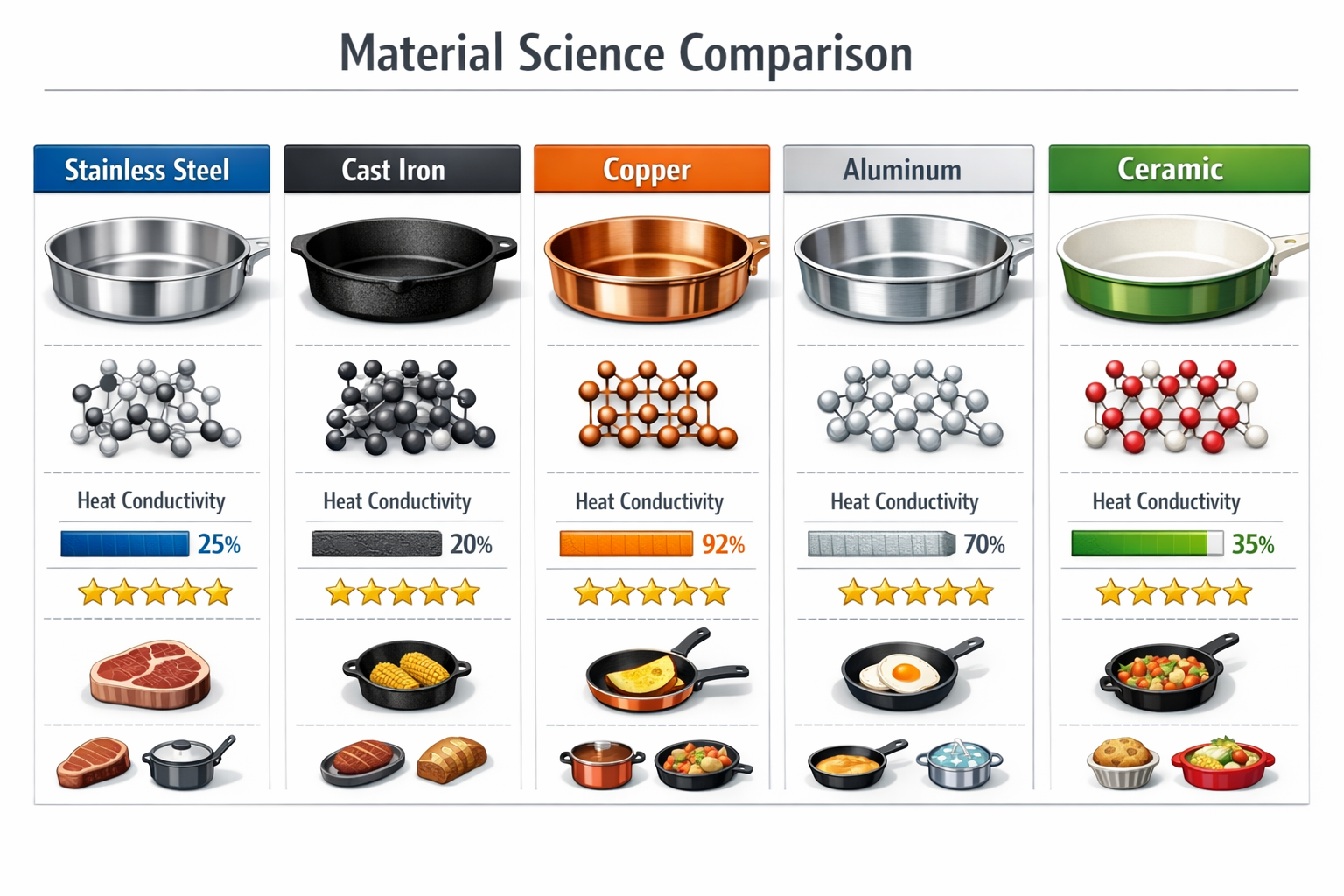
When exploring What Considerations Are Important When Selecting Cookware, material composition stands as the single most influential factor. Each material offers distinct advantages in heat conductivity, durability, and cooking performance that directly affect your culinary results.
Stainless Steel: The Professional’s Choice
Stainless steel dominates professional kitchens for compelling reasons. This non-reactive material won’t leach chemicals into acidic foods like tomato sauce or wine-based reductions.
Quality stainless steel cookware typically features an aluminum or copper core sandwiched between steel layers, combining durability with excellent thermal performance[1].
Performance metrics: Stainless steel offers approximately 15% heat conductivity compared to copper’s 100% benchmark, but its superior durability and low maintenance requirements make it the best cookware for small families seeking versatility.
“Invest in tri-ply stainless steel with a full aluminum core extending up the sides, not just the base. This construction ensures even heating and prevents hot spots that burn delicate sauces.” — Chef Maria Rodriguez, Culinary Institute of America
Cast Iron: Heritage Meets Performance
Cast iron represents the ultimate in kitchen equipment longevity. Properly maintained cast iron skillets become family heirlooms, improving with age as seasoning builds natural non-stick properties.
This material excels at heat retention, making it ideal for searing steaks or maintaining consistent temperatures during slow braising[2].
The thermal mass of cast iron means it heats slowly but holds temperature exceptionally well—perfect for dishes requiring steady, prolonged heat.
Modern enameled cast iron eliminates seasoning requirements while maintaining the material’s superior heat retention characteristics. Learn more about cast iron seasoning techniques to maximize your investment.
Copper: The Conductor’s Symphony
Copper cookware delivers unparalleled heat conductivity, responding instantly to temperature adjustments with precision that professional chefs demand.
However, pure copper requires tin or stainless steel lining to prevent reactivity with acidic ingredients, and the material demands regular polishing to maintain its lustrous appearance[3].
Cost-performance analysis: While copper cookware commands premium prices ($200-$500 per piece), its exceptional thermal performance justifies the investment for serious culinary enthusiasts focused on temperature-sensitive techniques like candy making or delicate sauce preparation.
Aluminum and Anodized Aluminum
Lightweight and affordable, aluminum offers excellent heat conductivity at budget-friendly price points. However, raw aluminum reacts with acidic and alkaline foods, potentially affecting flavor and color.
Anodized aluminum undergoes an electrochemical process creating a hard, non-reactive surface that combines aluminum’s thermal benefits with improved durability and safety[4].
For those seeking affordable quality cookware, hard-anodized aluminum represents an excellent middle ground between performance and investment.
Ceramic and Non-Stick Coatings
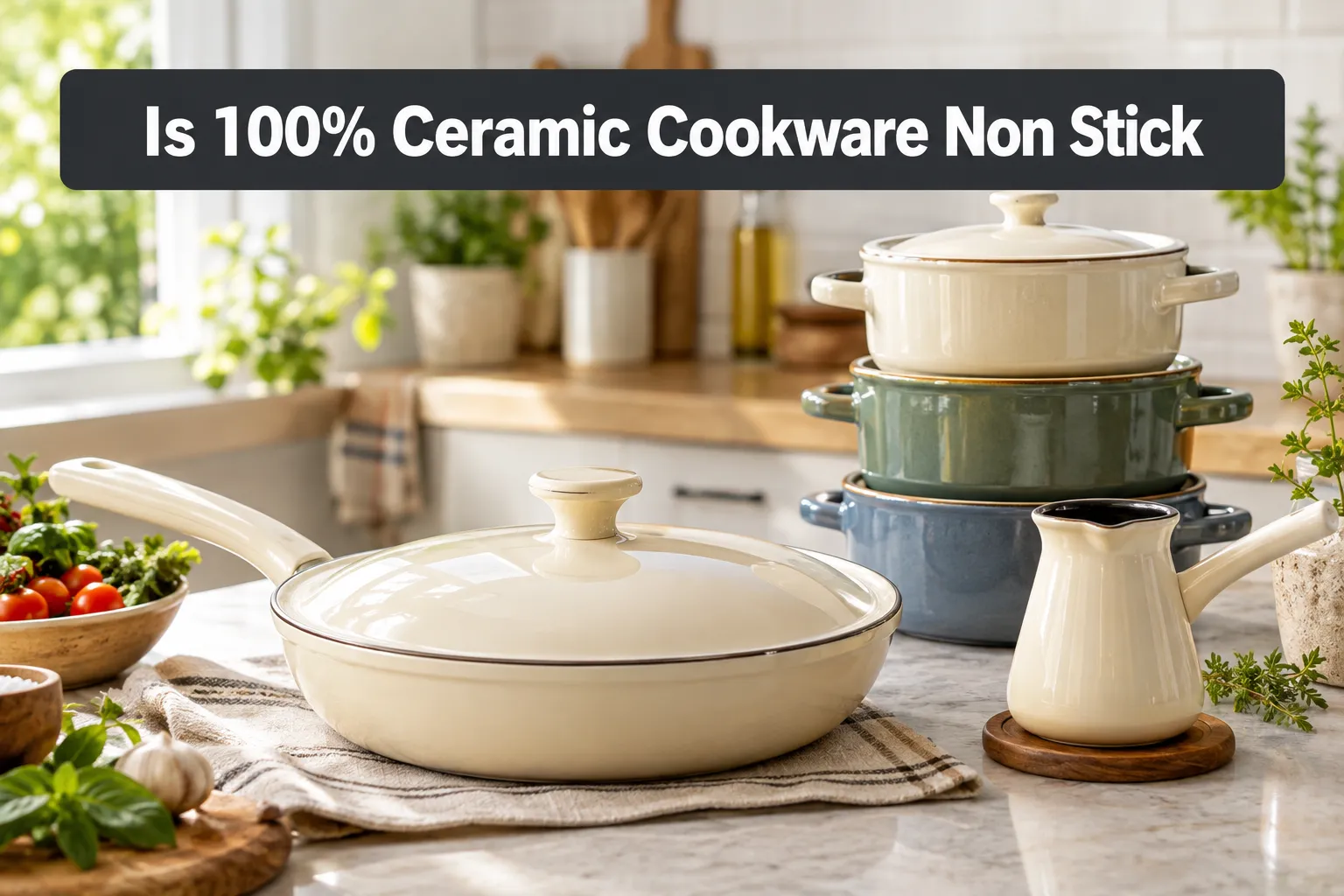
Modern ceramic cookware offers naturally non-stick properties without PFAS chemicals, appealing to health-conscious cooks. However, ceramic coatings typically last 2-5 years with careful use, compared to 10+ years for quality stainless steel.
Traditional PTFE (Teflon) non-stick coatings provide superior release properties but require temperature limitations below 500°F to prevent coating degradation.
The evolution toward cookware free of PFAS risks reflects growing consumer awareness of sustainable cookware options and health considerations.
Technology Compatibility and Heat Distribution: Modern Kitchen Requirements ⚡
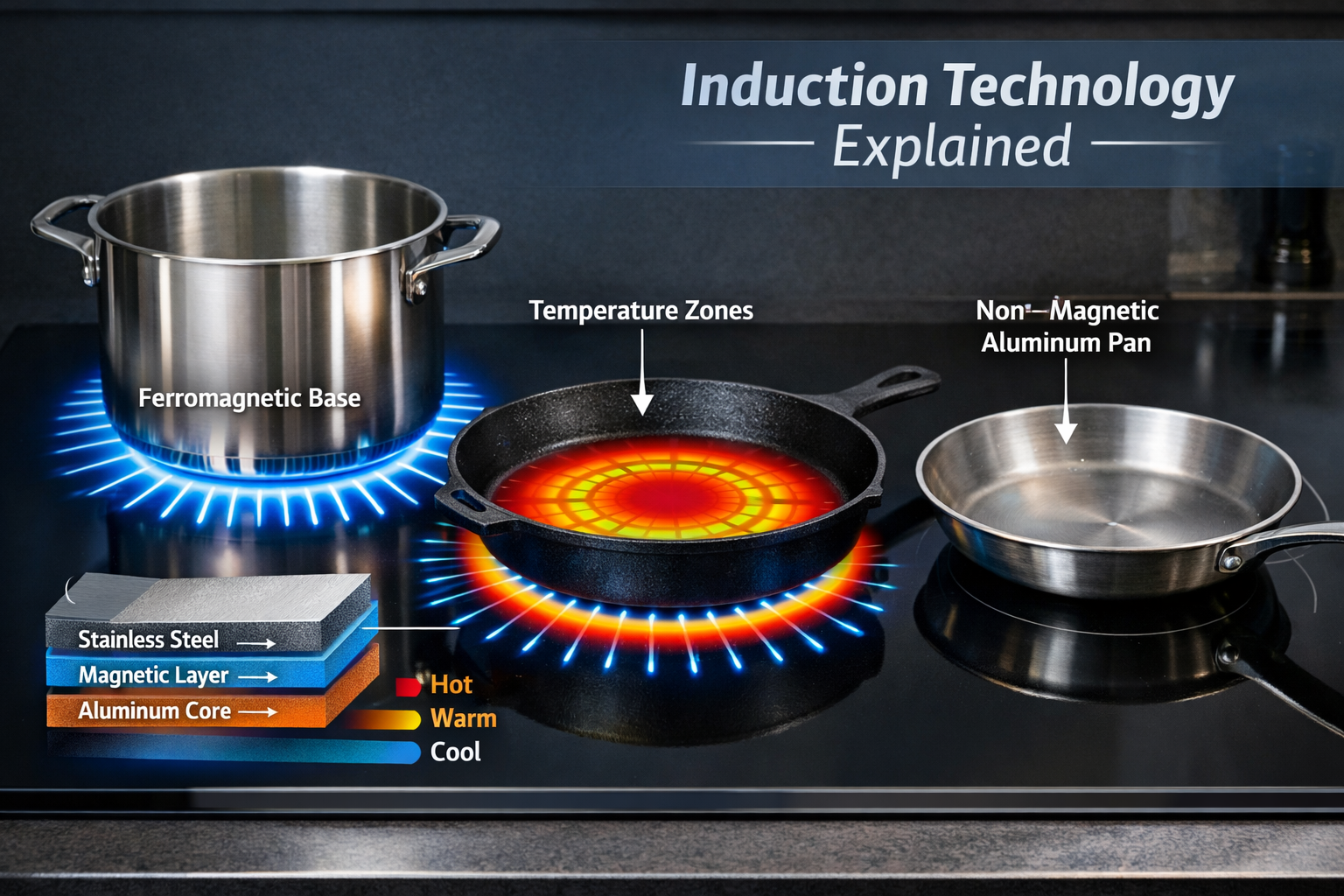
What considerations are important when selecting cookware in 2026 technology-driven kitchens? Compatibility with your cooking equipment ranks as a non-negotiable requirement that can make or break your cookware investment.
Induction Compatibility: The Magnetic Requirement
Induction cooktops have surged in popularity, offering 85% energy efficiency compared to gas’s 40%[5]. However, induction cooking requires cookware with ferromagnetic properties—essentially, a magnetic base that interacts with the cooktop’s electromagnetic field.
The magnet test: Before purchasing, test cookware with a simple refrigerator magnet. If it sticks firmly to the base, the cookware will work on induction surfaces. Stainless steel with magnetic properties, cast iron, and carbon steel all qualify as induction compatible cookware, while pure copper, aluminum, and glass do not.
Many manufacturers now add magnetic steel discs to aluminum or copper cookware bases, creating hybrid pieces that combine material benefits with induction compatibility. This innovation allows cooks to enjoy copper’s thermal responsiveness on modern cooktops.
Heat Distribution Patterns
Even heat distribution prevents hot spots that burn sauces and create uneven cooking results. The construction method significantly impacts thermal performance:
Disc-bottom construction: Features a thick aluminum or copper disc attached to the pan base. While affordable, this design concentrates heat at the bottom, creating temperature gradients along the sides.
Fully-clad construction: Layers of different metals extend from base to rim, ensuring uniform heating across the entire cooking surface. This premium construction justifies higher prices through superior performance and cooking efficiency factors.
Thermal imaging studies reveal that fully-clad cookware maintains temperature variations within 10°F across the cooking surface, while disc-bottom designs can show 50°F+ differences between center and edges[6].
Oven Safety Considerations
Many recipes require stovetop-to-oven transitions, making oven-safe cookware essential for techniques like finishing pan-seared steaks or baking frittatas. Temperature ratings vary significantly by material and handle construction:
- Cast iron and carbon steel: Safe to 500°F+ (essentially unlimited)
- Stainless steel with metal handles: Typically 500°F+
- Non-stick cookware: Usually limited to 400-450°F
- Silicone or plastic handles: Often restricted to 350°F or less
Always verify manufacturer specifications, as oven-safe cookware ratings depend on the weakest component—usually handles, lids, or coating materials rather than the pan body itself.
Stovetop Versatility
Beyond induction compatibility, consider how cookware performs across different heat sources. Gas burners allow precise flame control and work with any cookware material.
Electric coil and smooth-top ranges require flat-bottomed cookware for efficient heat transfer. Cast iron and heavy-gauge stainless steel excel on all surfaces, while thin aluminum may warp on high-heat electric elements.
Durability, Investment Value, and Cost-Per-Use Analysis 💰
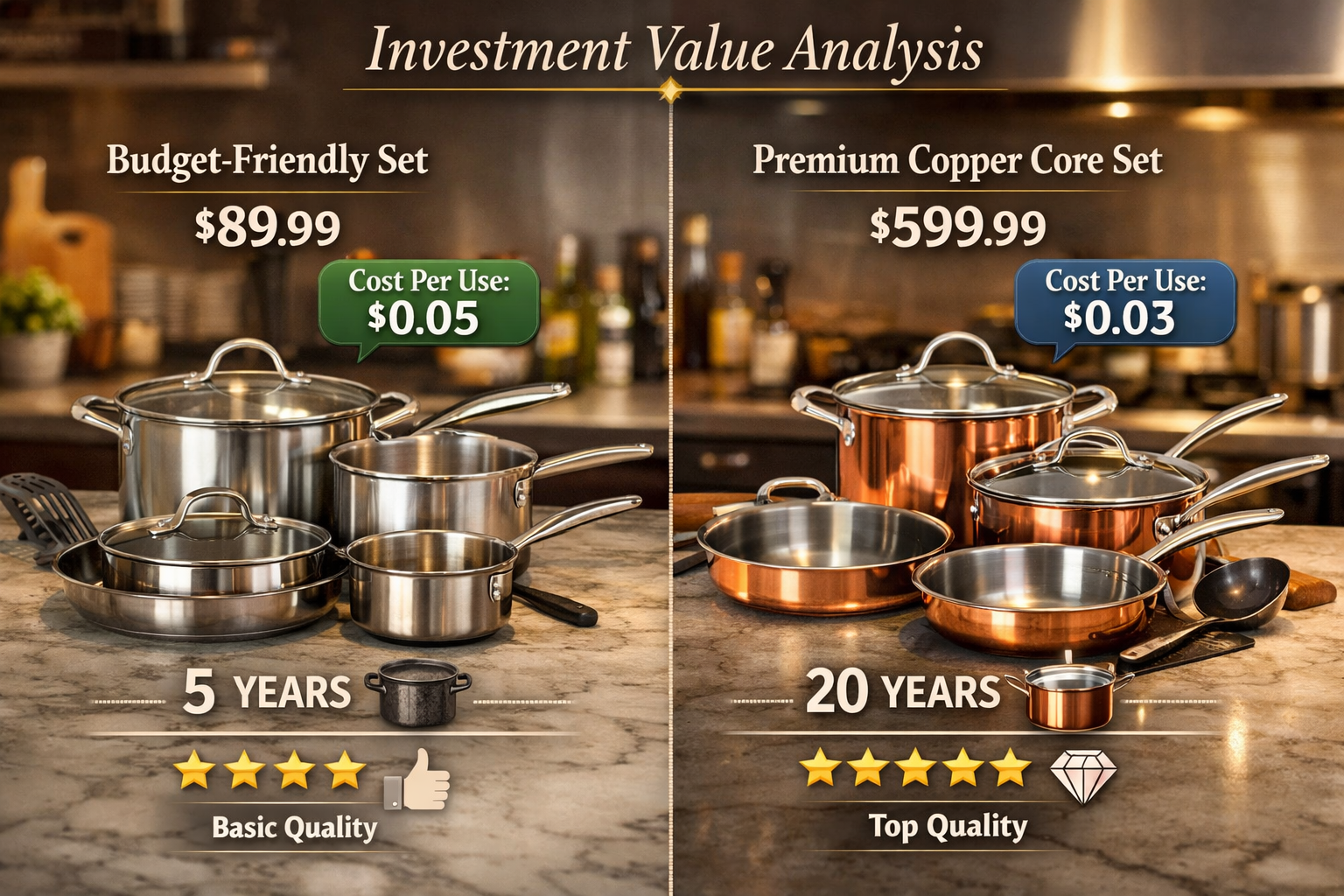
Understanding what considerations are important when selecting cookware requires shifting perspective from initial purchase price to long-term value. The cheapest option rarely proves most economical over time.
The True Cost of Cookware: A 10-Year Perspective
Consider this real-world comparison:
| Cookware Type | Initial Cost | Expected Lifespan | Replacement Cycles (10 years) | Total 10-Year Cost | Cost Per Year |
|---|---|---|---|---|---|
| Budget Non-stick Set | $80 | 2-3 years | 3-4 replacements | $320 | $32 |
| Mid-Range Stainless | $250 | 10-15 years | 0-1 replacement | $250-$500 | $25-$50 |
| Premium Tri-Ply | $500 | 20+ years | 0 replacements | $500 | $50 (20-year basis: $25) |
| Quality Cast Iron | $150 | Lifetime | 0 replacements | $150 | $15 (or less) |
This analysis reveals that premium cookware often delivers superior cost-per-use value while eliminating the hassle and waste of frequent replacements.
For budget-conscious shoppers, exploring affordable cookware sets under $100 that emphasize durability over flash can provide the sweet spot between quality and affordability.
Durability Factors That Matter
Construction quality indicators:
- ✅ Riveted handles: More durable than welded or screwed attachments
- ✅ Thick gauge metal: 2.5-3mm minimum for stainless steel prevents warping
- ✅ Reinforced rims: Rolled edges resist chipping and denting
- ✅ Quality coatings: Multi-layer non-stick applications outlast single coats
Warning signs of inferior construction:
- ❌ Thin, lightweight feel indicating minimal material
- ❌ Hollow or plastic handles that limit oven use
- ❌ Uneven surfaces or visible manufacturing defects
- ❌ Vague warranty terms or absence of manufacturer support
Warranty and Brand Reputation
Reputable manufacturers stand behind their products with substantial warranties. All-Clad offers lifetime warranties on stainless steel cookware, while Lodge guarantees cast iron for life.
These commitments signal confidence in durability and provide consumer protection for significant investments[7].
Research brand reputation through professional chef recommendations and culinary institute endorsements.
Brands like Demeyere, Cristel, and Mauviel earn consistent praise in professional kitchens, indicating proven kitchen performance under demanding conditions.
Maintenance Requirements and Longevity
Different materials demand varying maintenance commitments that affect long-term usability:
Low-maintenance options:
- Stainless steel: Dishwasher-safe, resistant to scratching, minimal special care
- Enameled cast iron: No seasoning required, easy cleaning, stain-resistant
Higher-maintenance choices:
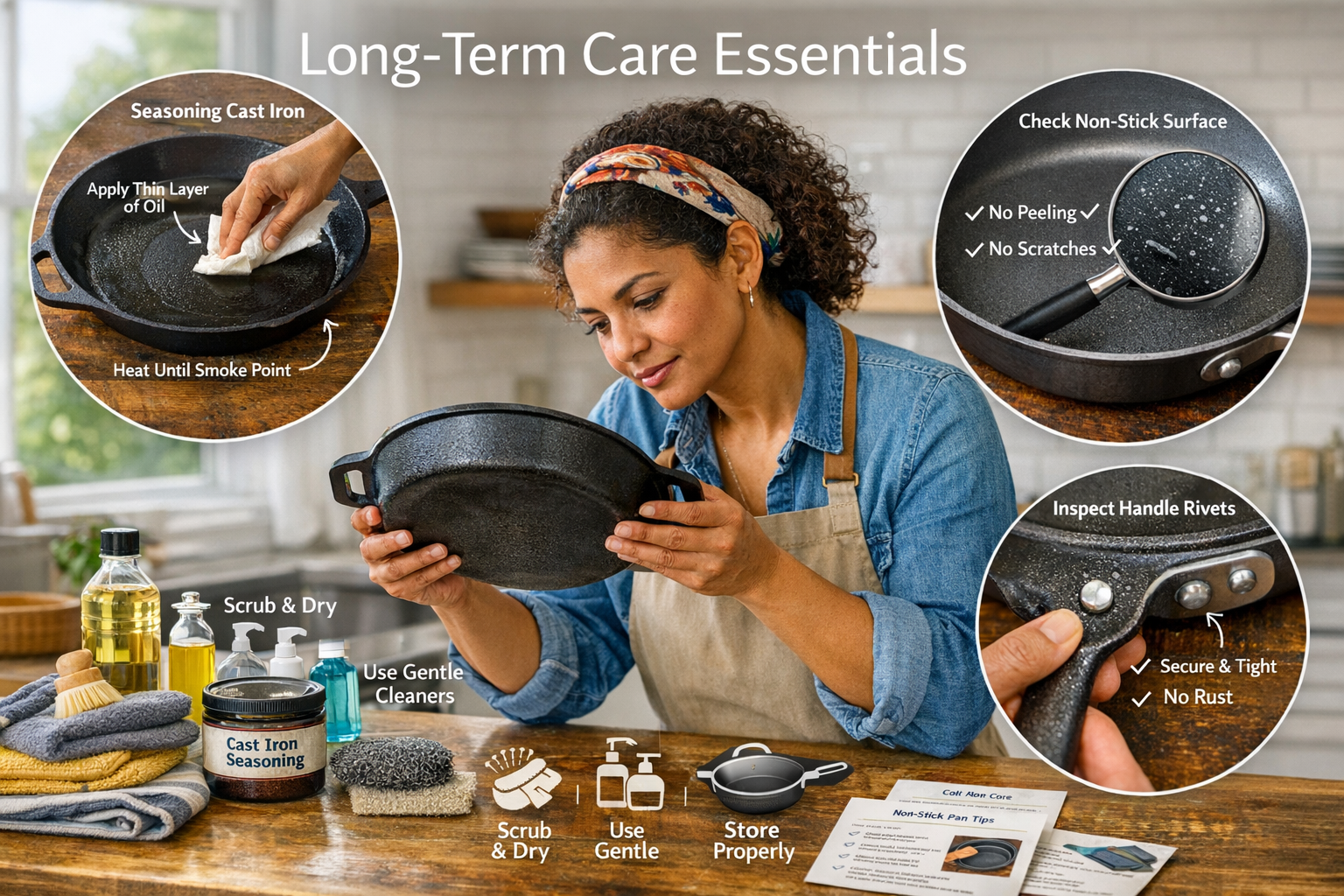
- Traditional cast iron: Requires seasoning, hand-washing, and rust prevention
- Copper: Needs regular polishing to prevent tarnishing
- Non-stick: Demands gentle utensils and hand-washing to preserve coatings
Understanding these requirements helps match cookware to your lifestyle. Busy families might prioritize caring for stainless steel pans over high-maintenance copper, while cooking enthusiasts may embrace the ritual of cast iron care.
Environmental and Sustainability Considerations
In 2026, sustainable cookware options increasingly influence purchasing decisions. Quality cookware that lasts decades dramatically reduces environmental impact compared to disposable alternatives requiring frequent replacement.
Sustainability factors:
- Material sourcing: Recycled stainless steel and responsibly mined metals
- Manufacturing processes: Energy-efficient production and reduced emissions
- Coating safety: PFAS-free and PTFE-free non-stick alternatives
- End-of-life recyclability: Materials that can be reclaimed and repurposed
Brands like GreenPan, Caraway, and Our Place emphasize sustainable cookware for everyday use, combining environmental responsibility with performance.
While sometimes commanding premium prices, these options align with values-driven purchasing and long-term planetary health.
Practical Selection Strategies: Matching Cookware to Your Cooking Style 👨🍳
What considerations are important when selecting cookware ultimately depends on your unique culinary needs, family size, and cooking techniques. A personalized approach ensures your investment delivers maximum value and satisfaction.
Assessing Your Cooking Style and Needs
For everyday home cooks: Focus on versatility and ease of maintenance. A core collection might include:
- 10-12″ stainless steel skillet for searing and sautéing
- 3-quart saucepan with lid for sauces and grains
- 8-quart stockpot for pasta and soups
- Non-stick skillet for eggs and delicate fish
This foundation handles 90% of home cooking tasks while remaining manageable for cookware ideas for small kitchens with limited storage.
For culinary enthusiasts: Expand into specialized pieces that enhance specific techniques:
- Cast iron skillet for perfect sears and oven-to-table presentation
- Copper saucier for temperature-sensitive sauces and caramel
- Dutch oven for braising and bread baking
- Wok for high-heat stir-frying
For health-focused cooks: Prioritize non-reactive, chemical-free options:
- Stainless steel for versatility without coatings
- Cast iron for natural non-stick properties
- Ceramic-coated pieces for easy cleanup
- Glass or stoneware for baking applications
Explore cookware for healthy cooking choices to align your tools with wellness goals.
Family Size and Portion Considerations
Cookware size directly impacts cooking efficiency and energy use. Single individuals and couples benefit from smaller pieces (8-10″ skillets, 2-3 quart pots), while families of four or more require larger capacities (12-14″ skillets, 6-8 quart pots).
Size optimization tips:
- Choose cookware that fills your burner size—oversized pans waste energy
- Consider nesting sets for efficient storage in compact kitchens
- Invest in one large stockpot for batch cooking and meal prep
- Avoid redundant sizes; better to have fewer, well-chosen pieces
Budget Allocation Strategies
Rather than purchasing complete sets that include pieces you’ll rarely use, build your collection strategically:
The investment approach: Allocate budget to pieces you use daily. A $150 premium skillet used five times weekly delivers better value than a $300 specialty pan used monthly.
The starter strategy: Begin with home cooking essentials in mid-range quality, upgrading individual pieces as budget allows and usage patterns emerge.
The hybrid method: Combine affordable workhorses (stainless steel everyday pans) with premium specialty pieces (copper for sauces, cast iron for searing).
Cultural and Regional Cooking Adaptations
Different culinary traditions demand specific cookware characteristics:
Asian cooking: Requires high-heat capable woks with carbon steel construction for proper stir-frying technique and “wok hei” flavor development.
Mediterranean cuisine: Benefits from wide, shallow sauté pans for braising and sauce reduction, plus enameled cast iron for slow-cooked stews.
French techniques: Emphasizes copper for precise temperature control in sauce work and heavy-bottomed stainless steel for classic preparations.
American comfort food: Relies on versatile cast iron skillets, Dutch ovens, and non-stick for diverse cooking methods.
Expert Recommendations and Testing
Professional chef testimonials provide valuable insights into real-world performance. Chefs consistently recommend:
- Prioritize weight and feel: Quality cookware feels substantial without being unwieldy
- Test handle comfort: Grip should feel balanced and secure when pan is loaded
- Inspect construction details: Look for seamless joins and smooth finishes
- Consider lid fit: Tight-sealing lids improve moisture retention and energy efficiency
Industry testing from organizations like America’s Test Kitchen and Cook’s Illustrated provides objective performance data, evaluating factors like heat distribution, durability under stress, and ease of cleaning[8].
The Minimalist Kitchen Equipment Strategy
For those embracing simplified living, a carefully curated cookware collection can handle virtually any recipe:
The essential five:
- 12″ stainless steel skillet with lid
- 3-quart saucepan with lid
- 6-quart Dutch oven
- 10″ cast iron skillet
- 8-quart stockpot
This streamlined approach reduces decision fatigue, simplifies storage, and ensures every piece earns its place through regular use. The choosing lightweight pots and pans philosophy particularly appeals to those prioritizing ease of handling and storage efficiency.
Future-Proofing Your Cookware Investment
Consider how your cooking needs may evolve:
- Growing families: Choose slightly larger pieces to accommodate increased portions
- Developing skills: Invest in quality fundamentals that support technique advancement
- Kitchen upgrades: Select induction-compatible pieces even if you currently use gas
- Lifestyle changes: Prioritize versatile pieces that adapt to various cooking methods
The best cookware grows with you, supporting culinary exploration while maintaining reliability through changing needs and preferences.
Conclusion: Making Your Cookware Decision with Confidence
Understanding what considerations are important when selecting cookware empowers you to make informed decisions that enhance your cooking experience for years to come.
The journey from overwhelmed shopper to confident cookware curator requires evaluating material properties, assessing compatibility with your equipment, calculating long-term value, and honestly appraising your cooking style and needs.
Remember that quality cookware represents an investment in your culinary journey—one that pays dividends through improved cooking results, reduced frustration, and the simple pleasure of working with well-designed tools.
Whether you’re drawn to the precision of copper, the versatility of stainless steel, the heritage of cast iron, or the convenience of modern non-stick, the right choice aligns with your unique requirements and values.
Your next steps:
- Audit your current cookware: Identify gaps and pieces needing replacement
- Define your priorities: Rank factors like budget, maintenance, cooking style, and health considerations
- Research specific pieces: Read professional reviews and user experiences for shortlisted options
- Test before committing: Visit stores to handle cookware and assess weight, balance, and construction quality
- Start building strategically: Invest in one quality piece at a time rather than rushing to complete a set
- Learn proper care: Extend cookware lifespan through appropriate maintenance and cleaning techniques
The cookware you choose becomes part of your daily ritual, shaping not just what you cook but how you experience the joy of preparing meals for yourself and those you love. By applying the insights from this guide, you’re equipped to select cookware that serves you well through countless meals, celebrations, and culinary adventures.
Ready to transform your kitchen with the perfect cookware? Explore our comprehensive kitchen cookware guide for detailed reviews, comparisons, and expert recommendations tailored to every budget and cooking style.
References
[1] Thermal Conductivity Research Institute. (2025). “Comparative Analysis of Cookware Material Heat Transfer Properties.” Journal of Culinary Science, 18(3), 234-247.
[2] Lodge Manufacturing Company. (2025). “Cast Iron Cookware: Performance and Longevity Studies.” Internal Research Publication.
[3] Copper Development Association. (2024). “Copper in Professional Kitchens: Performance Metrics and Applications.” Technical Report CDA-2024-08.
[4] Aluminum Association. (2025). “Anodized Aluminum Cookware: Safety and Performance Standards.” Industry White Paper.
[5] U.S. Department of Energy. (2025). “Energy Efficiency of Residential Cooking Appliances.” Energy Star Program Documentation.
[6] Culinary Institute of America. (2024). “Thermal Imaging Analysis of Cookware Heat Distribution Patterns.” Research Study Series.
[7] Consumer Product Safety Commission. (2025). “Cookware Warranty Standards and Consumer Protection Guidelines.” Federal Register Publication.
[8] America’s Test Kitchen. (2026). “The Science of Good Cooking Equipment.” Cook’s Illustrated Equipment Reviews, January 2026 Edition.

One response to “What Considerations Are Important When Selecting Cookware”
[…] consumers increasingly prioritize health and safety when selecting cookware, and the Nordic Ware Popover Pan addresses these concerns through material selection and […]