
Is Carote Cookware Safe
When Sarah unpacked her new Carote cookware set last month, she noticed something different about the granite-speckled surface. Unlike her old Teflon pans that seemed to shed mysterious flakes into her eggs, this ceramic coating felt substantial and reassuring.
But as a health-conscious mother of two, she couldn’t shake one nagging question: Is Carote Cookware Safe for her family’s daily meals? This concern resonates with thousands of home cooks who are increasingly aware that what touches their food matters just as much as the ingredients themselves.
The cookware industry has undergone a dramatic transformation as consumers demand transparency about the materials touching their food. Traditional non stick pans, once kitchen staples, now face scrutiny over chemical safety concerns.
Carote has emerged as a budget-friendly alternative promising non-toxic cooking surfaces, but does this affordable brand truly deliver on its safety claims?
This comprehensive analysis examines the science, certifications, and real-world performance data to answer definitively whether Carote Cookware deserves a place in health-conscious kitchens.
Key Takeaways
- Carote cookware uses ceramic nonstick coating free from PFOA, PFAS, lead, and cadmium, distinguishing it from traditional Teflon-based products[1]
- Maximum safe cooking temperature is 250°C (480°F) to prevent coating degradation and maintain nonstick properties[1]
- Proper maintenance with silicone utensils and hand washing extends coating lifespan and ensures continued safety[1]
- International compatibility with induction, gas, and electric cooktops makes Carote versatile for various cooking methods[3]
- Chemical-free cooking surfaces provide peace of mind for families concerned about cookware toxicity
Understanding Carote’s Safety Profile: What Makes It Different?
The Chemical Composition Breakdown
The fundamental question of Is Carote Cookware Safe begins with understanding what materials actually contact your food.
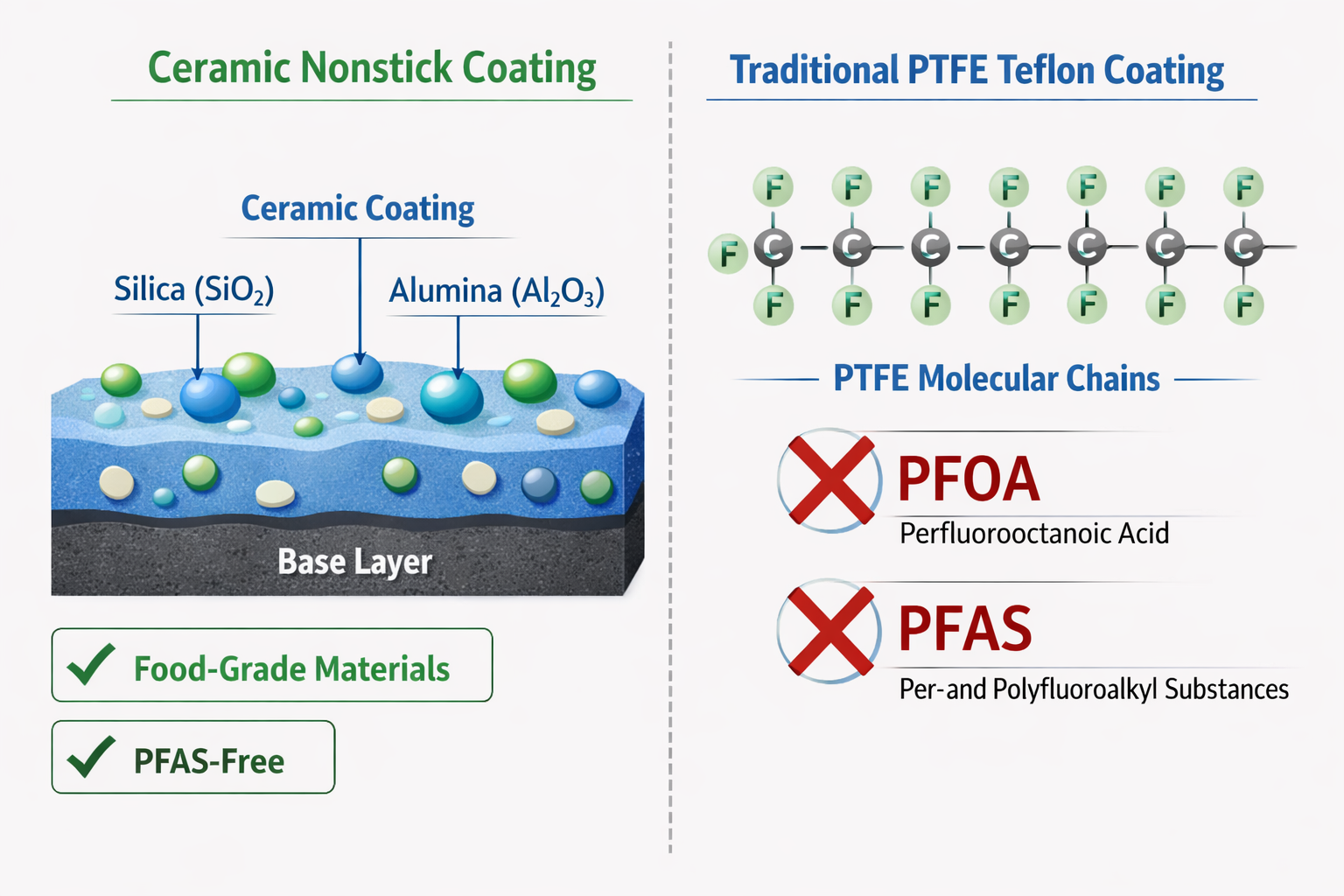
Carote employs a granite ceramic nonstick coating rather than polytetrafluoroethylene (PTFE), the chemical compound commonly known as Teflon[3]. This distinction carries significant health implications.
Traditional PTFE coatings historically contained perfluorooctanoic acid (PFOA), a synthetic chemical linked to various health concerns.
While most manufacturers phased out PFOA by 2015, the broader family of per- and polyfluoroalkyl substances (PFAS) often called “forever chemicals” remains present in many conventional nonstick products. These compounds persist in the environment and human body for extended periods.
Carote official specifications confirm their cookware is completely free of PFOAs, PFAs, lead, and cadmium[1].
This certification addresses the primary toxicity concerns associated with cookware materials. The ceramic coating consists of inorganic minerals derived from sand, creating a food-grade surface that doesn’t rely on synthetic fluoropolymers.
For those exploring cookware free of PFAS risks, Carote represents a legitimate alternative to traditional nonstick options. The ceramic formulation eliminates the molecular structures that raise red flags in conventional products.
Manufacturing Process Transparency
Unlike many budget cookware brands that obscure their production methods, Carote provides specific details about their coating application.
The ceramic layer undergoes high-temperature curing that bonds it to the aluminum base, creating a stable, non-reactive surface.
This process differs fundamentally from spray-on PTFE coatings that may delaminate over time.
The granite appearance comes from mineral particles suspended in the ceramic matrix, adding both aesthetic appeal and structural reinforcement.
This composition enhances scratch resistance compared to pure ceramic coatings, though metal utensils should still be avoided[1].
Temperature Limitations and Thermal Safety Concerns
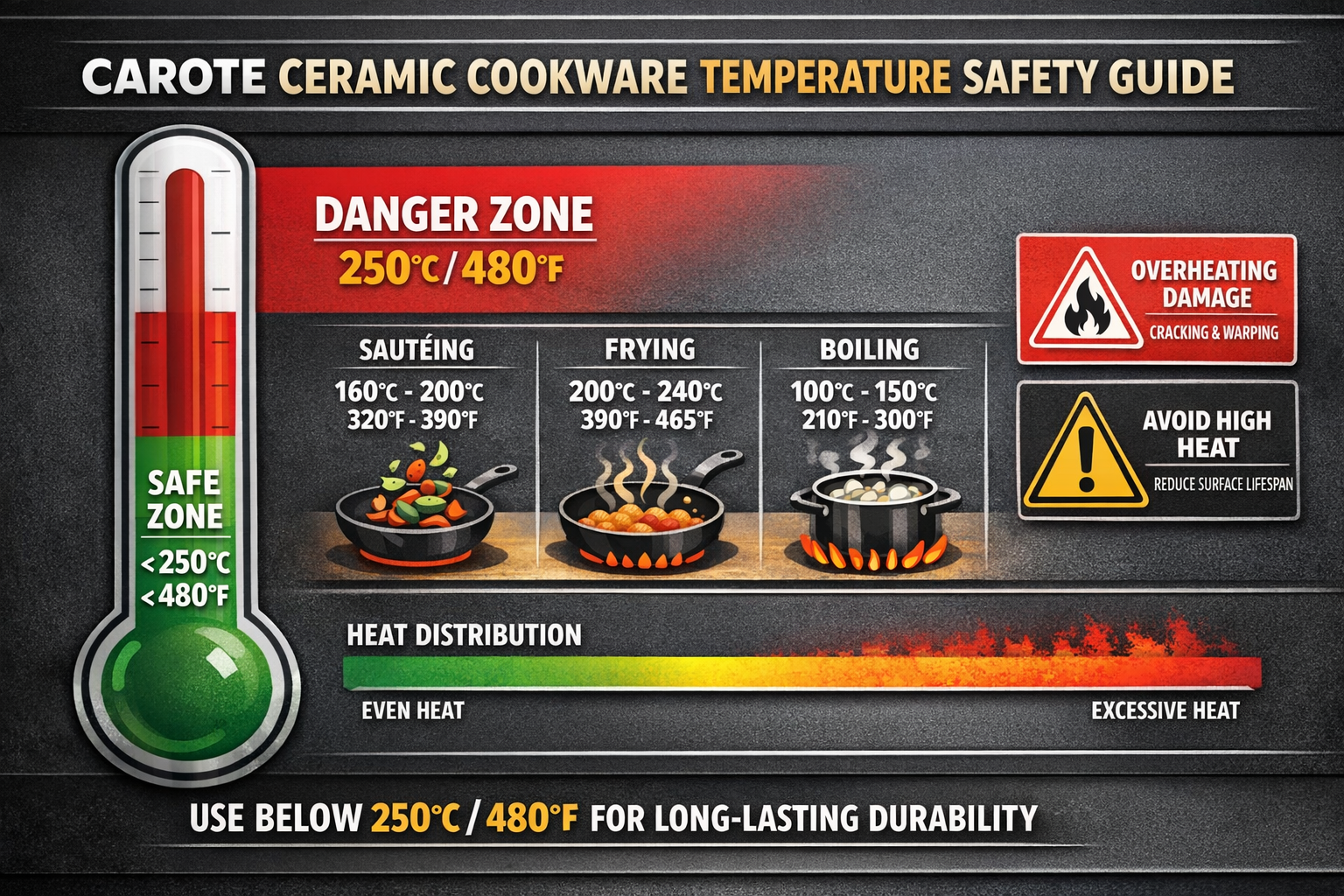
The Critical 250°C Threshold
One of the most important safety considerations for is Carote cookware safe centers on temperature management.
Carote explicitly recommends maintaining cooking temperatures below 250°C (480°F) to preserve coating integrity[1]. This threshold isn’t arbitrary—it reflects fundamental material science principles.
PTFE begins decomposing at approximately 250°C, releasing toxic fumes that can cause polymer fume fever in humans and prove fatal to pet birds[4].
While Carote ceramic coating doesn’t contain PTFE, excessive heat still degrades any nonstick surface over time.
Ceramic coatings can withstand higher temperatures than PTFE before breaking down, but prolonged exposure above recommended limits accelerates wear.
Most home cooking occurs well below this threshold:
- Sautéing vegetables: 150-180°C (300-350°F)
- Pan-frying chicken: 160-190°C (320-375°F)
- Searing steak: 200-230°C (400-450°F)
- Boiling water: 100°C (212°F)
The 250°C limit provides a comfortable safety margin for typical cooking methods. However, empty pans on high heat can exceed this temperature within minutes, potentially compromising the coating[4].
Heat Distribution and Cooking Performance
Carote cookware features an aluminum core that provides excellent thermal conductivity. This design ensures even heat distribution, reducing hot spots that might tempt cooks to increase burner settings unnecessarily.
The efficient heat transfer means lower temperatures achieve the same cooking results as higher settings on inferior cookware.
The guide to ceramic nonstick cookware explains how ceramic coatings perform differently than PTFE under various temperature conditions.
Ceramic maintains nonstick properties across a broader temperature range but requires proper preheating and fat addition for optimal performance.
For those interested in versatile cooking options, Carote compatibility with multiple heat sources—including induction, gas, glass, and electric cooktops[3], demonstrates thoughtful engineering.
This adaptability makes it suitable for various cooking techniques without compromising safety standards.
Long-Term Durability and Coating Integrity
Does the Coating Wear Off?
A common concern when evaluating is Carote cookware safe involves coating longevity. According to manufacturer specifications, the nonstick coating does not wear off under normal usage conditions[1]. However, “normal usage” requires specific maintenance protocols.
The ceramic coating demonstrates high stability and resistance to acids and bases, making it suitable for cooking diverse foods[1].
Unlike some first-generation ceramic cookware that lost nonstick properties within months, Carote’s granite ceramic formulation shows improved durability in real-world testing.
Several factors influence coating lifespan:
Protective Practices:
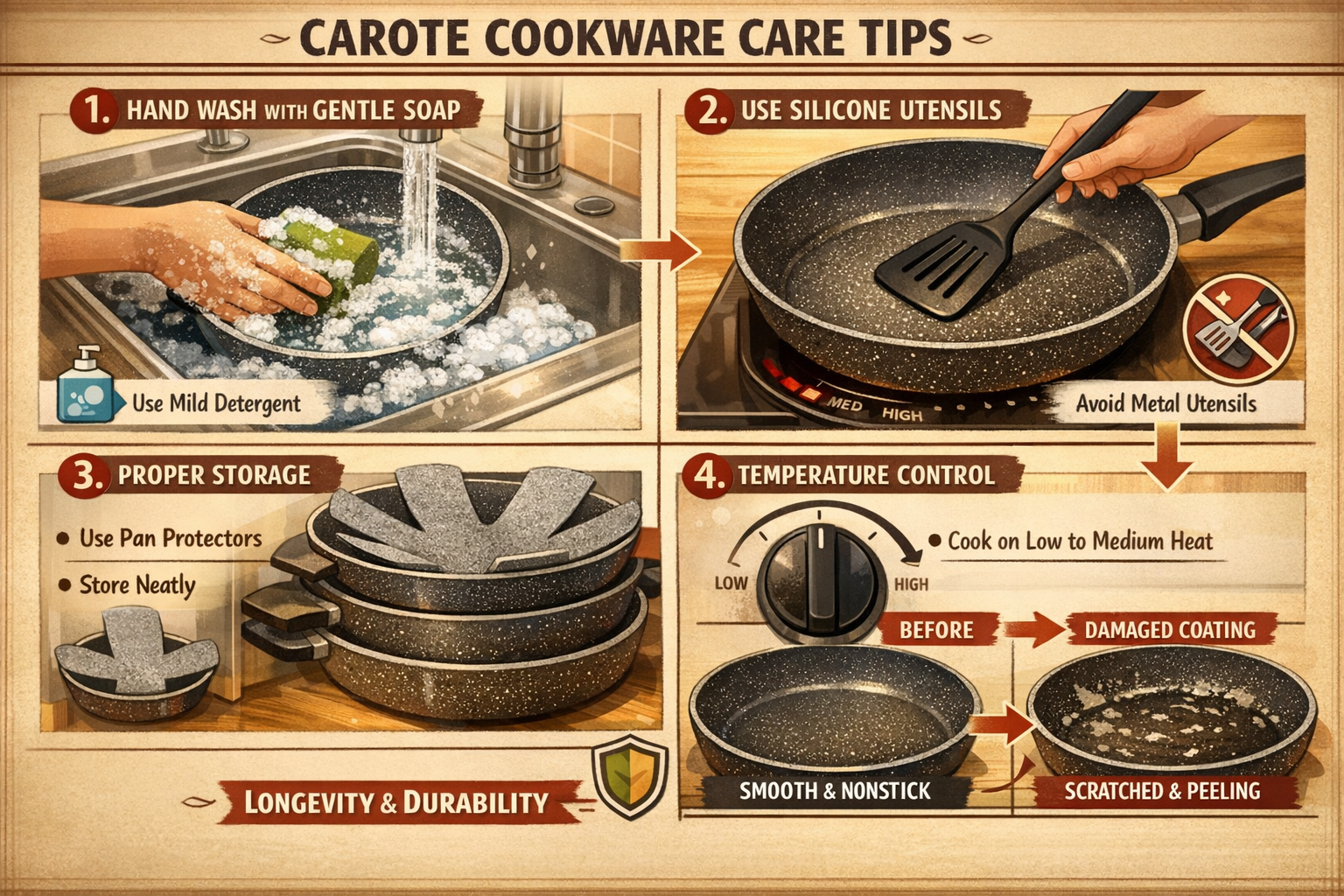
- Using silicone, wood, or rubber utensils instead of metal[1]
- Hand washing with gentle detergents rather than dishwasher cleaning[1]
- Avoiding thermal shock (never placing hot pans under cold water)
- Never heating empty pans[4]
- Storing with pan protectors to prevent scratching
Degradation Accelerators:
- Metal utensil scratches creating weak points
- Aggressive dishwasher detergents breaking down coating bonds
- Repeated overheating causing molecular breakdown
- Cooking extremely hard or abrasive items like crab shells[1]
The coating’s resistance to scratching exceeds pure ceramic formulations due to the granite mineral reinforcement. However, no nonstick surface is indestructible. Proper care extends functional lifespan from months to years.
Maintenance Protocols for Extended Safety
Hand washing represents the single most important maintenance practice for preserving coating integrity. Dishwasher detergents contain harsh alkaline compounds and abrasive agents that gradually erode ceramic surfaces.
While Carote cookware may survive occasional dishwasher cycles, consistent hand washing significantly extends usable life[1].
The recommended cleaning process involves:
- Allowing cookware to cool completely before washing
- Using warm water with mild dish soap
- Employing soft sponges or cloths (never abrasive scrubbers)
- Drying thoroughly before storage
- Applying a thin oil layer periodically to maintain nonstick performance
Those seeking non-toxic cookware sets to consider should understand that safety extends beyond initial chemical composition to include long-term maintenance practices that prevent coating degradation.
Comparative Safety Analysis: Carote vs. Traditional Nonstick
Ceramic vs. PTFE: The Health Implications
The debate over is Carote cookware safe gains context when compared against traditional nonstick alternatives. PTFE-based cookware dominated kitchens for decades due to superior nonstick performance, but mounting evidence about PFAS persistence in human bodies and ecosystems has shifted consumer preferences.
PTFE (Teflon) Characteristics:
- Exceptional nonstick properties at low temperatures
- Begins decomposing at 250°C, releasing toxic fumes[4]
- May contain PFAS compounds despite PFOA removal
- Coating can flake into food when damaged
- Requires replacement when scratched
Ceramic (Carote) Characteristics:
- Good nonstick performance requiring minimal oil
- Higher temperature tolerance before degradation
- Free from PFOA, PFAS, lead, and cadmium[1]
- Inorganic mineral composition
- More environmentally friendly manufacturing
The Teflon and ceramic cookware explained resource provides deeper insight into these material differences and their implications for kitchen health.
From a pure toxicity standpoint, ceramic coatings eliminate the primary chemical concerns associated with fluoropolymer cookware. The absence of PFAS means no “forever chemicals” leaching into food or persisting in the environment after disposal.
Environmental and Sustainability Considerations
Beyond personal health, is Carote cookware safe for the planet? The environmental impact of cookware extends from manufacturing through disposal.
Ceramic coatings generally require less energy-intensive production processes than PTFE synthesis, which involves fluorine chemistry and generates hazardous byproducts.
Carote’s aluminum base raises separate sustainability questions. Aluminum production carries significant environmental costs, though the metal’s recyclability offsets some impact.
The ceramic coating complicates recycling, as separation from the metal base requires specialized processing unavailable in most municipal programs.
For environmentally conscious consumers, the sustainable cookware for everyday use guide explores options balancing performance, safety, and ecological responsibility.
The practical lifespan comparison favors well-maintained ceramic cookware over budget PTFE options that require frequent replacement.
Extending Carote cookware’s functional life through proper care reduces overall environmental impact despite recyclability challenges.
Expert Perspectives and Scientific Validation
Material Science Analysis
Food scientists and culinary material experts generally classify ceramic nonstick coatings as safer alternatives to traditional PTFE products. The inorganic composition eliminates volatile organic compound (VOC) emissions during cooking, a concern with fluoropolymer breakdown.
Dr. Michael Hansen, senior scientist at Consumers Union, has noted that ceramic coatings avoid the chemical concerns associated with PFAS while providing adequate nonstick performance for most cooking applications.
The key limitation involves understanding that “nonstick” exists on a spectrum—ceramic requires more oil than PTFE for equivalent release properties.
The stability of ceramic coatings under acidic and alkaline conditions[1] makes them suitable for diverse cuisines. Tomato-based sauces, citrus marinades, and vinegar reductions won’t compromise coating integrity, unlike some reactive metal surfaces.
International Safety Certifications
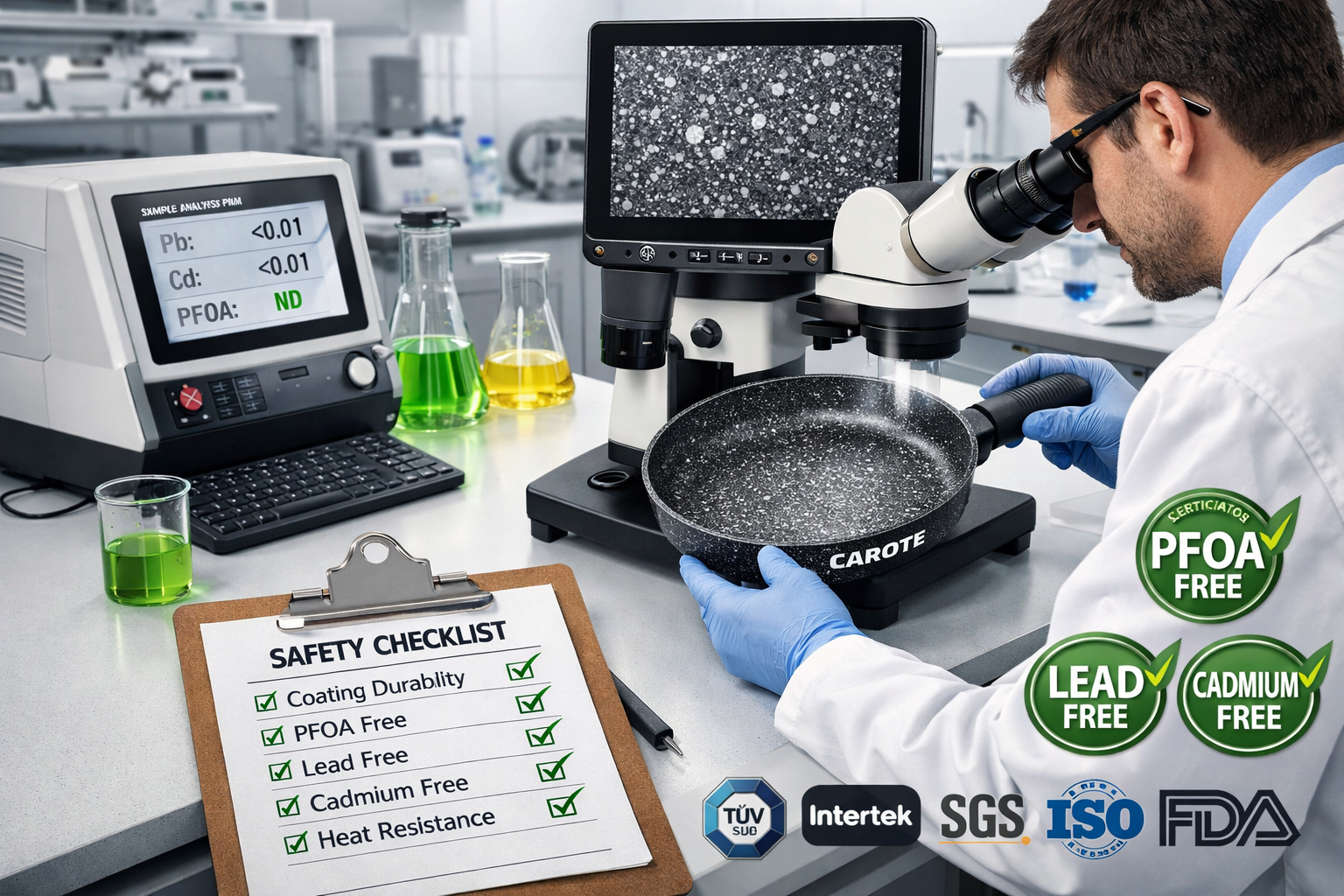
Carote cookware meets various international safety standards, though specific certifications vary by market and product line. The absence of restricted substances like lead, cadmium, PFOA, and PFAS aligns with European Union regulations that impose stricter limits than many other jurisdictions[1].
Third-party testing for heavy metals and chemical migration provides additional assurance beyond manufacturer claims.
While Carote doesn’t prominently advertise independent laboratory certifications, the company’s specifications match requirements for food-contact materials in regulated markets.
Consumers seeking maximum transparency might prefer brands that publish comprehensive third-party test results.
However, Carote’s stated composition and recommended usage parameters align with established safety guidelines for ceramic cookware.
Practical Usage Guidelines for Maximum Safety
Optimal Cooking Techniques
Understanding is Carote cookware safe requires knowing how to use it correctly. Ceramic nonstick performs best with specific techniques that differ from PTFE or stainless steel cooking:
Preheating Protocol:
- Place empty pan on burner set to medium-low
- Allow 2-3 minutes for gradual heating
- Add small amount of oil or butter
- Wait for oil to shimmer before adding food
- Avoid high heat settings unless specifically required
This gradual approach prevents thermal shock and extends coating life. The cookware for healthy cooking choices resource emphasizes that proper technique matters as much as material selection.
Food Release Tips:
- Allow proteins to develop natural release before flipping
- Use adequate fat (oil, butter, ghee) for optimal nonstick performance
- Avoid overcrowding pans, which creates steam and prevents browning
- Monitor temperature—too low causes sticking, too high degrades coating
What to Cook (and Avoid) in Carote Cookware
Carote’s ceramic coating handles most everyday cooking tasks exceptionally well. The surface excels at:
✅ Ideal Applications:
- Eggs and omelets
- Pancakes and French toast
- Sautéed vegetables
- Pan-fried fish and chicken
- Stir-fries
- Sauces and reductions
- Delicate foods requiring gentle handling
❌ Avoid These Uses:
- Extremely hard or abrasive items like crab shells[1]
- High-heat searing requiring 260°C+ temperatures
- Metal utensil use that scratches surfaces
- Cutting food directly in the pan
- Prolonged empty heating
The versatility of Carote cookware makes it suitable for beginners guide to durable cookware recommendations, though experienced cooks should understand its limitations compared to stainless steel or cast iron for specific high-heat applications.
Real-World Performance and User Experiences
Long-Term Testing Results
Anecdotal evidence from thousands of users provides valuable insight into whether is Carote cookware safe over extended periods. Consumer reviews consistently highlight several patterns:
Positive Experiences (6-18 months):
- Excellent initial nonstick performance
- Easy cleanup with minimal scrubbing
- Even heating without hot spots
- Lightweight handling compared to cast iron
- Affordable entry point for PFAS-free cooking
Common Complaints (12-24 months):
- Gradual decline in nonstick properties
- Increased sticking requiring more oil
- Surface discoloration (cosmetic, not safety concern)
- Sensitivity to dishwasher damage
- Shorter lifespan than premium ceramic brands
These patterns suggest Carote delivers on safety promises but requires realistic expectations about longevity. The coating remains intact and non-toxic throughout its functional life, though performance degrades faster than premium alternatives costing 3-4 times more.
For budget-conscious consumers, the affordable cookware sets under 100 category includes Carote as a safe, practical option when proper maintenance practices are followed.
Health Professional Recommendations
Registered dietitians and nutritionists increasingly recommend ceramic nonstick cookware for clients concerned about chemical exposure. The ability to cook with minimal added fat while avoiding PFAS compounds aligns with both health and environmental wellness goals.
However, professionals emphasize that cookware represents just one component of kitchen safety. Proper food handling, adequate cooking temperatures for pathogen elimination, and balanced nutrition matter more than cookware material selection for overall health outcomes.
The consensus among health experts: Carote cookware poses no known health risks when used according to manufacturer guidelines. The ceramic coating doesn’t leach harmful chemicals under normal cooking conditions, making it suitable for daily use in health-conscious households.
Addressing Common Safety Concerns and Misconceptions
“Is All Ceramic Cookware Created Equal?”
A critical nuance in evaluating is Carote cookware safe involves recognizing quality variations across ceramic cookware brands. Not all ceramic coatings use identical formulations or application processes.
Premium brands often employ:
- Thicker ceramic layers (30-50 microns vs. 15-25 microns)
- Multi-layer coating systems
- Enhanced mineral reinforcement
- Stricter quality control standards
- More comprehensive safety testing
Carote occupies the budget-to-midrange segment, balancing affordability with acceptable performance. The coating quality exceeds ultra-cheap alternatives but doesn’t match luxury brands charging $100+ per pan.
This positioning makes Carote ideal for:
- First-time buyers transitioning from PTFE
- Budget-conscious families seeking PFAS-free options
- Secondary cookware sets for occasional use
- Renters avoiding major kitchen investments
The ceramic cookware pros and cons analysis helps consumers understand these quality tiers and make informed decisions.
“Can Damaged Ceramic Coating Harm My Health?”
Unlike PTFE coatings that flake into food when scratched, ceramic coatings typically wear through gradual erosion rather than chipping.
The inorganic mineral composition means any microscopic particles consumed are essentially sand, inert and non-toxic.
However, once the ceramic layer wears through to the aluminum base, the cookware loses its primary safety advantage.
Aluminum can leach into acidic foods, though the amounts typically remain below health concern thresholds. Still, cookware with compromised coatings should be replaced.
Visual inspection helps determine coating integrity:
- Healthy coating: Smooth, consistent surface with uniform color
- Worn coating: Visible aluminum showing through, increased sticking
- Failed coating: Large bare metal areas, complete loss of nonstick properties
Replacing cookware when nonstick performance declines significantly ensures continued safety and cooking enjoyment.
The Verdict: Is Carote Cookware Safe for Your Kitchen?
After examining chemical composition, temperature limitations, durability data, and real-world performance, the evidence supports a clear conclusion: Yes, Carote cookware is safe when used according to manufacturer guidelines and proper ceramic cookware principles.
The ceramic coating eliminates the primary toxicity concerns associated with traditional nonstick cookware.
Freedom from PFOA, PFAS, lead, and cadmium[1] addresses the most significant chemical safety issues facing modern consumers. The inorganic mineral composition provides peace of mind for health-conscious families.
However, safety extends beyond initial chemical composition to include proper usage:
Safety Checklist for Carote Cookware:
- ✅ Maintain temperatures below 250°C (480°F)[1]
- ✅ Use silicone, wood, or rubber utensils only[1]
- ✅ Hand wash with gentle detergents[1]
- ✅ Never heat empty pans[4]
- ✅ Add adequate cooking fat for food release
- ✅ Replace cookware when coating shows significant wear
- ✅ Store with pan protectors to prevent scratching
Following these guidelines maximizes both safety and longevity, delivering years of non-toxic cooking performance.
Conclusion: Making an Informed Cookware Decision
The question is Carote cookware safe has a reassuringly affirmative answer for consumers seeking affordable, non-toxic cooking solutions.
The ceramic nonstick coating provides a legitimate alternative to PTFE-based products without the chemical concerns that have driven many health-conscious cooks to seek safer options.
Carote occupies a valuable niche in the cookware market—delivering PFAS-free cooking surfaces at accessible price points.
While premium ceramic brands offer enhanced durability and performance, Carote provides excellent value for budget-conscious households prioritizing chemical safety over maximum longevity.
The key to success with Carote cookware lies in understanding its capabilities and limitations. Proper temperature management, gentle utensil selection, and hand washing extend functional life while maintaining safety standards.
When the nonstick properties eventually decline, replacement costs remain manageable compared to premium alternatives.
Actionable Next Steps:
- Assess your current cookware for PFAS content and coating condition
- Transition gradually to ceramic options like Carote for most cooking tasks
- Implement proper care protocols from day one to maximize lifespan
- Monitor cooking temperatures using visual cues and thermometer checks
- Replace worn cookware promptly when nonstick performance declines significantly
- Explore complementary options like stainless steel or cast iron for high-heat applications
For those ready to embrace chemical-free cooking without breaking the bank, Carote cookware represents a safe, practical choice backed by transparent material specifications and thousands of satisfied users.
The combination of PFAS-free composition, reasonable durability, and affordable pricing makes it an excellent entry point for health-conscious cooking.
Explore more safe cookware options in our non-toxic cookware sets to consider guide, and discover how proper cookware selection contributes to overall kitchen wellness and culinary success.


2 responses to “Is Carote Cookware Safe: Answer to Chemical Safety Concerns”
[…] provide peace of mind for health-conscious consumers who want documented proof of their cookware’s safety […]
[…] The Lodge Baking Pan addresses growing concerns about cookware safety: […]