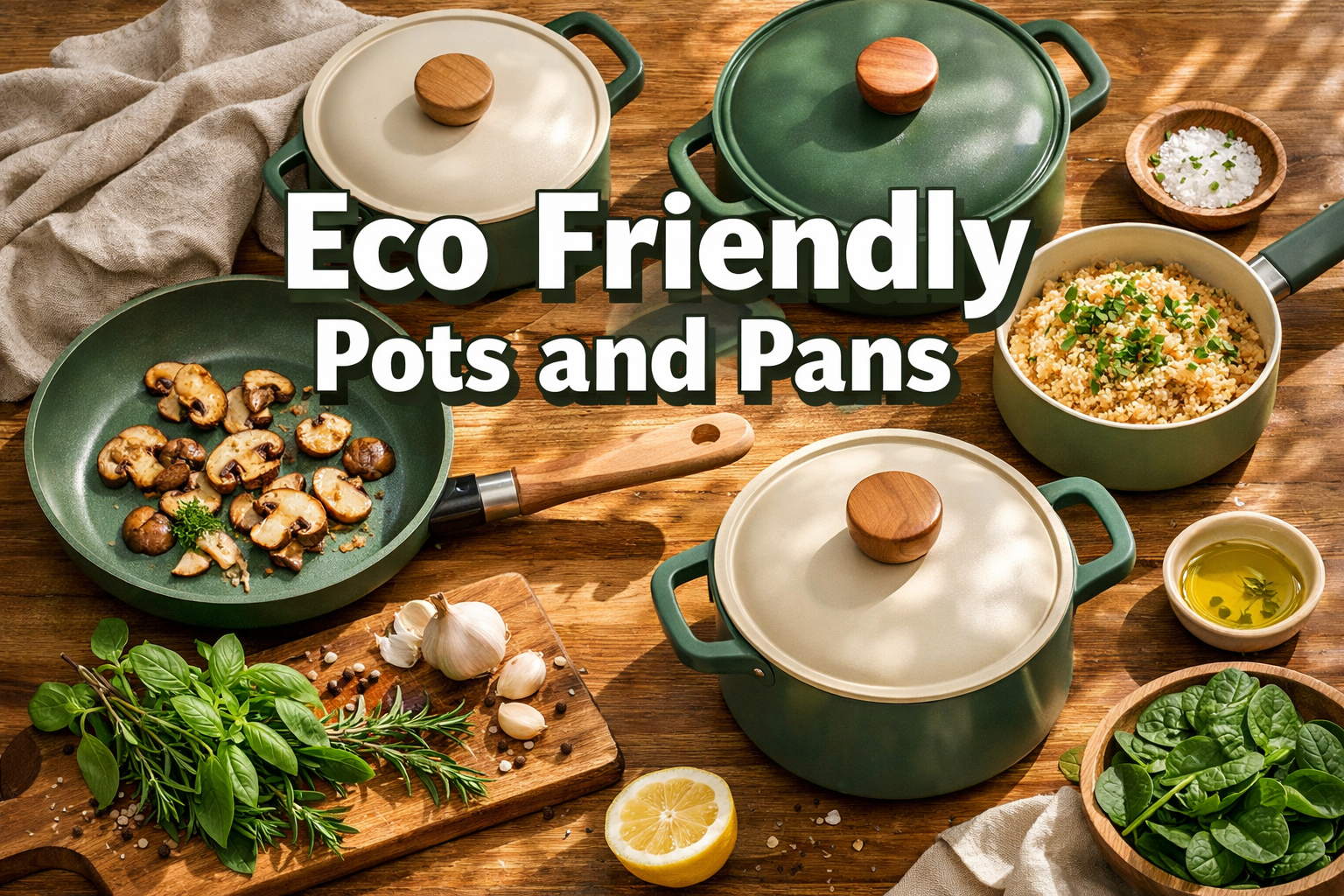
Eco Friendly Pots and Pans
Latest Update: March 31, 2026
What if the pots and pans you cook with every day are quietly working against your health?
It sounds alarming, but for millions of households still using traditional nonstick cookware coated with PFAS (per- and polyfluoroalkyl substances), the risk is very real.
The good news? Switching to Eco Friendly Pots and Pans is one of the most impactful and practical steps you can take toward a healthier kitchen in 2026.
Whether you’re a home cook, a parent feeding young children, or simply someone who cares about what goes into your food, this guide will walk you through everything you need to know.
From the science of harmful coatings to the best non-toxic brands on the market today.
Key Takeaways
- 🌿 Traditional nonstick cookware often contains PFAS, PTFE, and PFOA — chemicals linked to serious health concerns.
- ✅ The safest eco-friendly materials include ceramic, cast iron, stainless steel, carbon steel, and enameled cast iron.
- 🏆 Top brands like GreenPan, Caraway, HexClad, and All-Clad now offer certified PFAS-free options.
- 🔬 Third-party testing through labs like Light Labs is the gold standard for verifying cookware safety.
- 💰 Premium eco-friendly cookware costs more upfront but saves money long-term through durability and health benefits.
Why Traditional Cookware Is a Health Concern
Most conventional nonstick pans are coated with polytetrafluoroethylene (PTFE), commonly known as Teflon. When heated above 500°F (260°C), these coatings can break down and release toxic fumes.
More concerning is the class of chemicals they belong to: PFAS, or “forever chemicals,” so named because they don’t break down in the environment, or in the human body.
Studies have linked PFAS exposure to:
- Hormonal disruption
- Thyroid disease
- Elevated cholesterol
- Increased cancer risk
- Developmental issues in children
💬 “Upgrading to eco-friendly cookware is one of the easiest and most impactful steps consumers can take toward healthier cooking practices.”, Independent review, March 2026
The good news is that the cookware industry has responded. A new generation of chemical-free cookware and PFAS-free pans is now widely available, and many options perform just as well as (or better than) their toxic counterparts.
For a deeper dive into which specific chemicals to avoid, check out our essential guide to cookware free of PFAS risks.
Shop smart — Explore Top-Rated Non-Toxic Cookware Sets to find your perfect match
Understanding Eco Friendly Pots and Pans: Materials Explained
Shop smart — Explore Top-Rated Non-Toxic Cookware Sets to find your perfect match
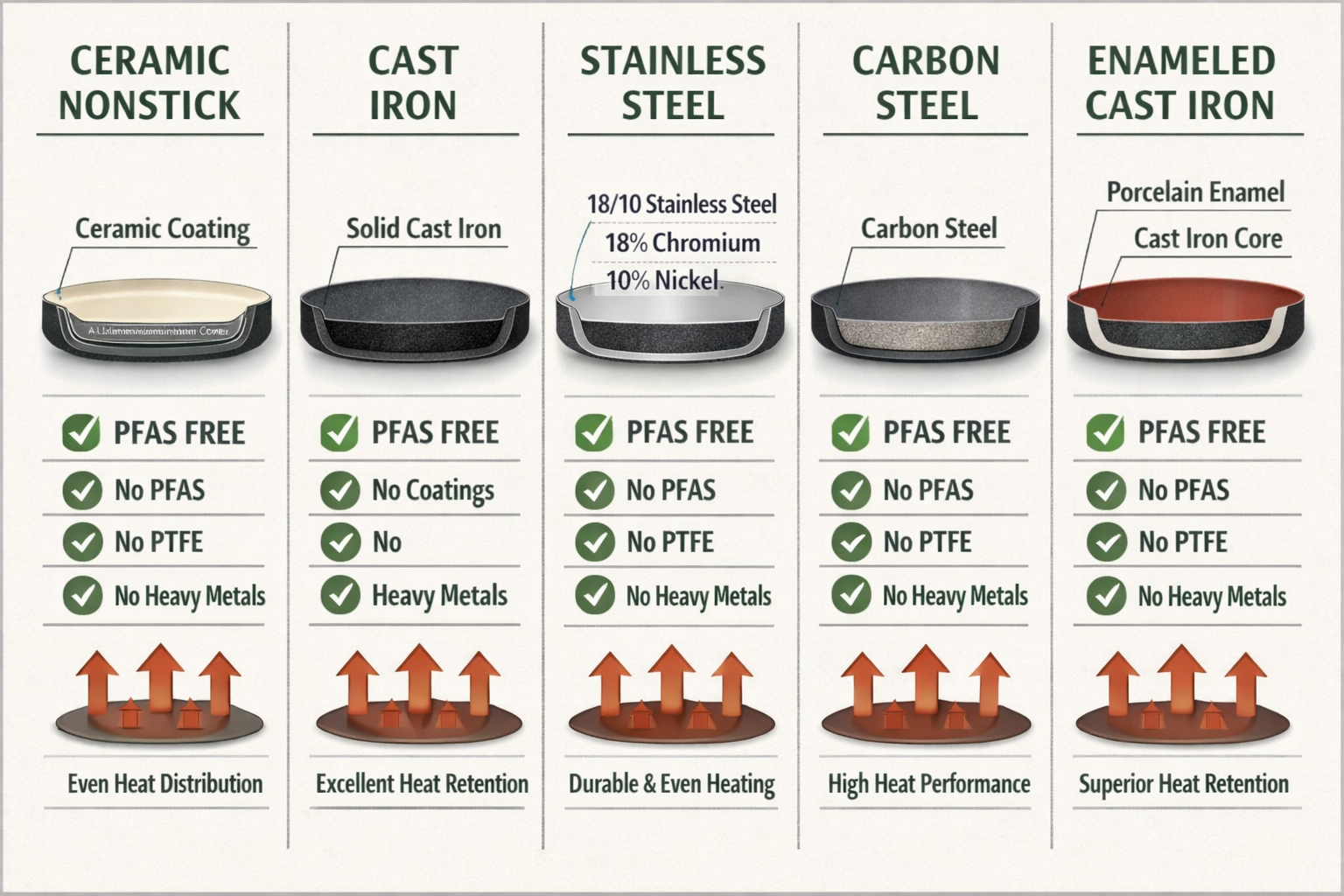
Choosing the right eco-friendly cookware starts with understanding what each material offers. Here’s a science-backed breakdown:
🥇 Top 5 Safest Cookware Materials
| Material | PFAS-Free | Durability | Heat Distribution | Best For |
|---|---|---|---|---|
| Ceramic Nonstick | ✅ Yes | Moderate | Good | Everyday cooking, eggs |
| Cast Iron | ✅ Yes | Excellent | Moderate | Searing, baking |
| Stainless Steel | ✅ Yes | Excellent | Very Good | All-purpose cooking |
| Carbon Steel | ✅ Yes | Excellent | Good | High-heat searing |
| Enameled Cast Iron | ✅ Yes | Excellent | Excellent | Slow cooking, soups |
Ceramic Nonstick Cookware
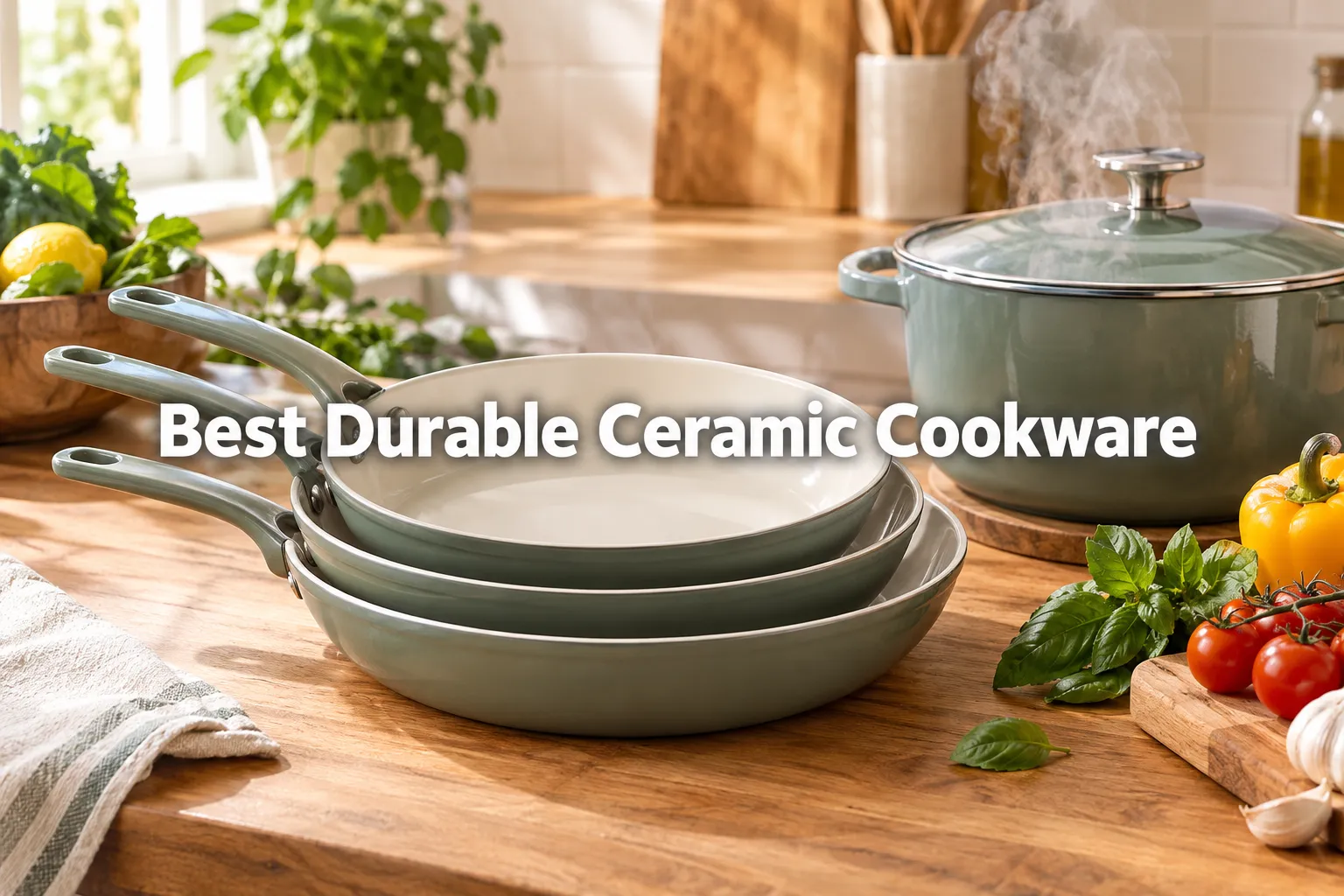
Ceramic coatings are made from inorganic minerals, no PFAS, PTFE, or PFOA involved. They offer a smooth, naturally nonstick surface that’s easy to clean and safe at normal cooking temperatures. The downside? They can wear faster than traditional nonstick if not cared for properly.
GreenPan’s Valencia Pro ceramic set stands out as a top-performing option, featuring induction compatibility and superior durability compared to typical ceramic cookware.
GreenPan also reduces CO2 emissions by 60% during the curing phase compared to traditional coatings and uses recycled aluminum in construction.
For a detailed comparison of ceramic vs. traditional options, see our guide on Teflon vs ceramic cookware.
Cast Iron
Cast iron is one of the oldest and most durable cooking surfaces on the planet. It’s naturally free of synthetic coatings and, when properly seasoned, develops a natural nonstick surface over time.
It also adds a small amount of dietary iron to food, a benefit for many people.
Learn how to get the most from your cast iron with our cast iron seasoning guide.
Stainless Steel
All-Clad D3 stainless steel cookware is ranked as a premium pick for non-toxic cookware. Stainless steel contains no coatings whatsoever, making it inherently chemical-free.
It’s highly durable, dishwasher-safe, and works on all heat sources including induction. The learning curve? It requires a bit more oil and technique to prevent sticking. Our guide to caring for your stainless steel pans can help.
Carbon Steel
Carbon steel is lighter than cast iron but equally durable. It heats quickly, handles high temperatures beautifully, and builds a natural seasoning over time. It’s a favorite among professional chefs for good reason.
Enameled Cast Iron
Brands like Le Creuset and Staub coat cast iron with a glass-based enamel that eliminates the need for seasoning while preventing rust. It’s completely non-reactive and ideal for acidic foods like tomato sauces.
What Makes Cookware Truly Non-Toxic?
Non-toxic cookware is defined by the absence of:
- PFAS (per- and polyfluoroalkyl substances)
- PTFE (polytetrafluoroethylene / Teflon)
- PFOA (perfluorooctanoic acid)
- Heavy metals (lead, cadmium)
- BPA (bisphenol A)
The most reliable way to verify safety claims is through independent third-party testing. Brands like Alva, Made In, and Caraway have submitted their cookware for testing through Light Labs, which verifies products are free from heavy metals, PFAS, and BPA, establishing transparent safety benchmarks.
When shopping, look for:
- ✅ Third-party certification labels
- ✅ Explicit “PFAS-free” and “PTFE-free” claims
- ✅ Transparent ingredient/material disclosures
- ✅ Brands with published independent lab results
Top Eco Friendly Pots and Pans Brands in 2026
Here’s how the leading brands stack up across key categories:
🥇 GreenPan — Best for Environmental Commitment
GreenPan leads in environmental production standards. Their Spectra and Reserve Pro lines use recycled aluminum and operate a cookware recycling program. CO2 emissions during manufacturing are cut by 60% versus traditional coatings. Price range: $40–$400+.
Pros: Strong eco credentials, wide product range, induction-compatible
Cons: Ceramic coating can degrade with metal utensils
🥈 Caraway — Best for Design + Safety
Caraway offers PFAS, PFOA, and PTFE-free ceramic nonstick pans alongside Dutch ovens, bakeware, and accessories, all ethically made with recyclable ceramic construction. Price range: $85–$1,870.
Pros: Beautiful design, comprehensive product range, certified safe
Cons: Premium pricing
Check out our Caraway Grill Press review for a real-world performance test.
🥉 HexClad — Best Hybrid Performance
HexClad‘s hybrid stainless cookware combines stainless steel and nonstick properties, delivering both PFAS-free safety and impressive cooking performance. It’s one of the most innovative entries in the health-conscious cooking space.
Pros: Outstanding durability, metal utensil safe, induction compatible
Cons: Higher price point
🏅 All-Clad D3 — Best Premium Stainless
All-Clad’s tri-ply stainless steel construction is a benchmark for non-toxic cookware without any coatings. It’s built to last decades.
Pros: Lifetime durability, fully dishwasher safe, no coatings to worry about
Cons: Requires technique to prevent sticking
🏅 Ninja ZeroStick — Best Budget PFAS-Free Option
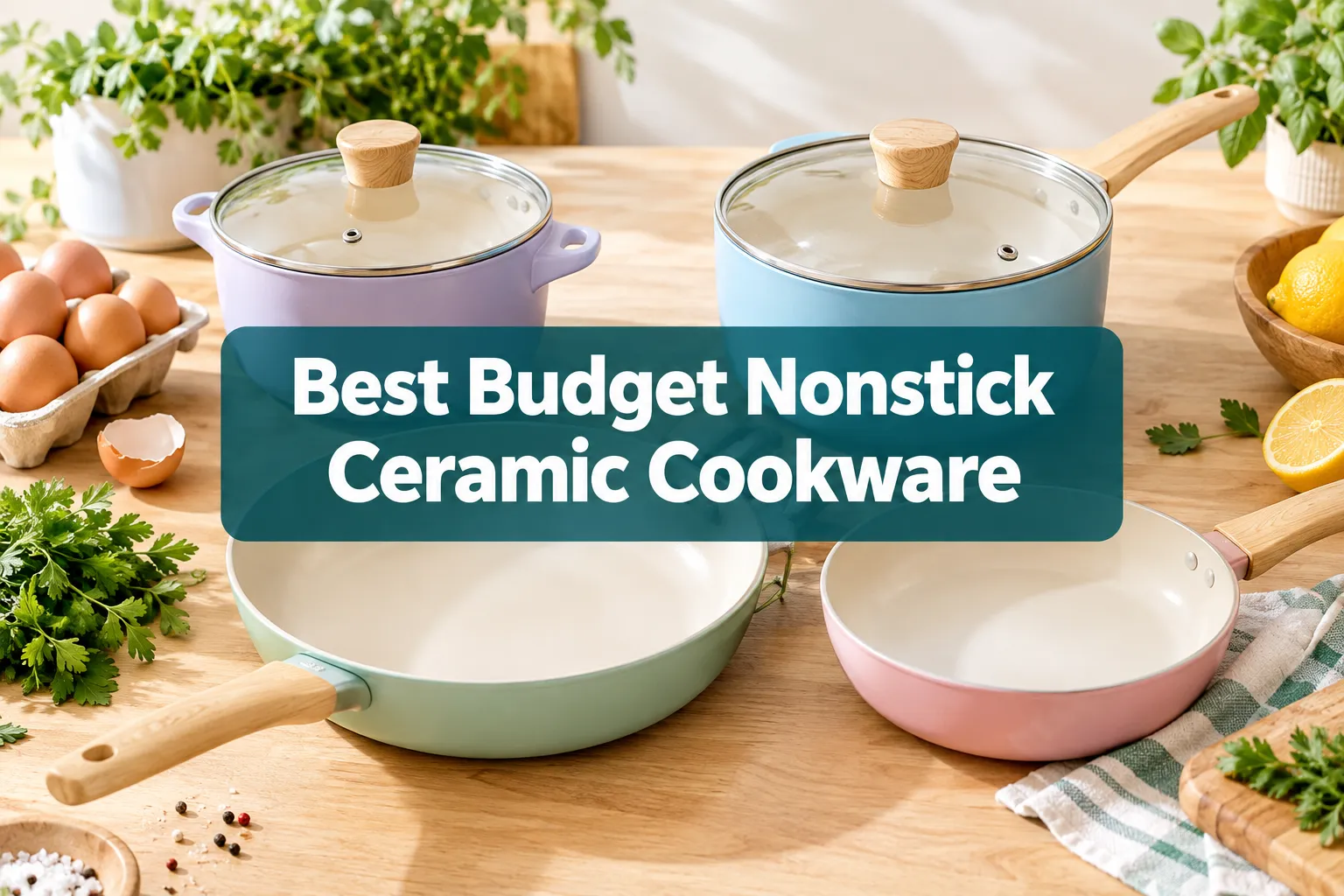
For everyday households, Ninja’s ZeroStick cookware represents the latest generation of affordable PFAS-free nonstick designed for mainstream adoption.
Pros: Accessible price, solid nonstick performance, widely available
Cons: Less durable than premium options
For a broader look at sustainable options, explore our eco-friendly cookware guide for sustainable cooking.
Shop smart — Explore Top-Rated Non-Toxic Cookware Sets to find your perfect match
Eco Friendly Pots and Pans: Cost-Benefit Analysis
One of the biggest objections to switching is cost. Let’s break it down honestly:
| Cookware Type | Upfront Cost | Lifespan | Cost Per Year |
|---|---|---|---|
| Traditional Teflon | $30–$80 | 2–3 years | $15–$40 |
| Ceramic Nonstick (mid) | $80–$200 | 3–5 years | $20–$50 |
| Stainless Steel (premium) | $200–$700 | 20–30 years | $10–$35 |
| Cast Iron | $30–$100 | Lifetime | <$5 |
| Enameled Cast Iron | $100–$400 | Lifetime | <$20 |
The verdict: Premium eco-friendly cookware often costs less per year than cheap nonstick pans that need replacing every few years, while eliminating health risks entirely.
Maintenance Tips for Long-Lasting Eco-Friendly Cookware
Getting the most from your sustainable cooking tools requires proper care:
- 🧽 Ceramic nonstick: Hand wash with mild soap, avoid metal utensils, use medium heat
- 🔥 Cast iron: Dry immediately after washing, re-season regularly, avoid soap
- ✨ Stainless steel: Use Bar Keepers Friend for stubborn stains, preheat before adding oil
- 🌊 Carbon steel: Similar to cast iron — keep it dry and seasoned
- 🍲 Enameled cast iron: Avoid thermal shock, hand wash recommended
For more practical kitchen care tips, our guide on effective ways to clean baking pans has you covered.
How to Identify Harmful Chemicals in Your Current Cookware
Signs your cookware may contain harmful chemicals:
- The surface is scratched, peeling, or flaking
- The pan is labeled “nonstick” but has no PFAS-free certification
- It was manufactured before 2015 (PFOA was phased out in the U.S. in 2013)
- No third-party safety certifications are listed
- The brand cannot provide transparent material disclosures
If your pans show any of these signs, it’s time to upgrade.
Conclusion: Make the Switch to Eco Friendly Pots and Pans
The science is clear, the products are better than ever, and the cost barrier is lower than most people think. Eco Friendly Pots and Pans aren’t just a trend, they represent a fundamental shift in how we think about kitchen health, environmental responsibility, and long-term value.
Here are your actionable next steps:
- Audit your current cookware — check for scratches, peeling, and missing certifications
- Choose one material to start with based on your cooking style and budget
- Look for third-party certified brands like Caraway, GreenPan, or HexClad
- Invest in quality — a cast iron pan or stainless steel set can last a lifetime
- Shop smart — Explore Top-Rated Non-Toxic Cookware Sets to find your perfect match
Your kitchen is where health begins. Make it a safe one. 🌿
Reference
Watch – https://www.youtube.com/watch?v=g5os0sEAZO0
Shop smart — Explore Top-Rated Non-Toxic Cookware Sets to find your perfect match