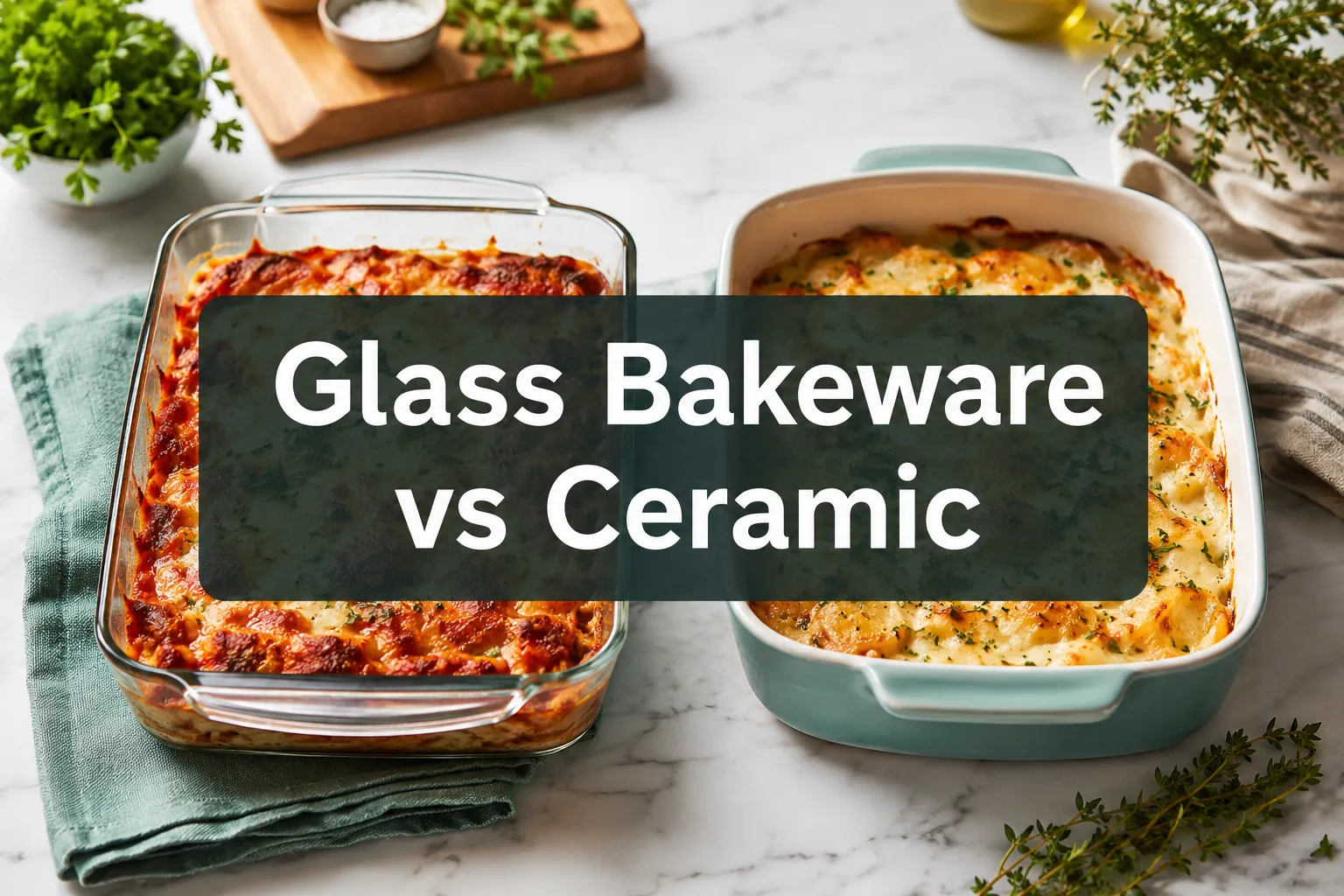
Glass Bakeware vs Ceramic
Last updated: August 18, 2026
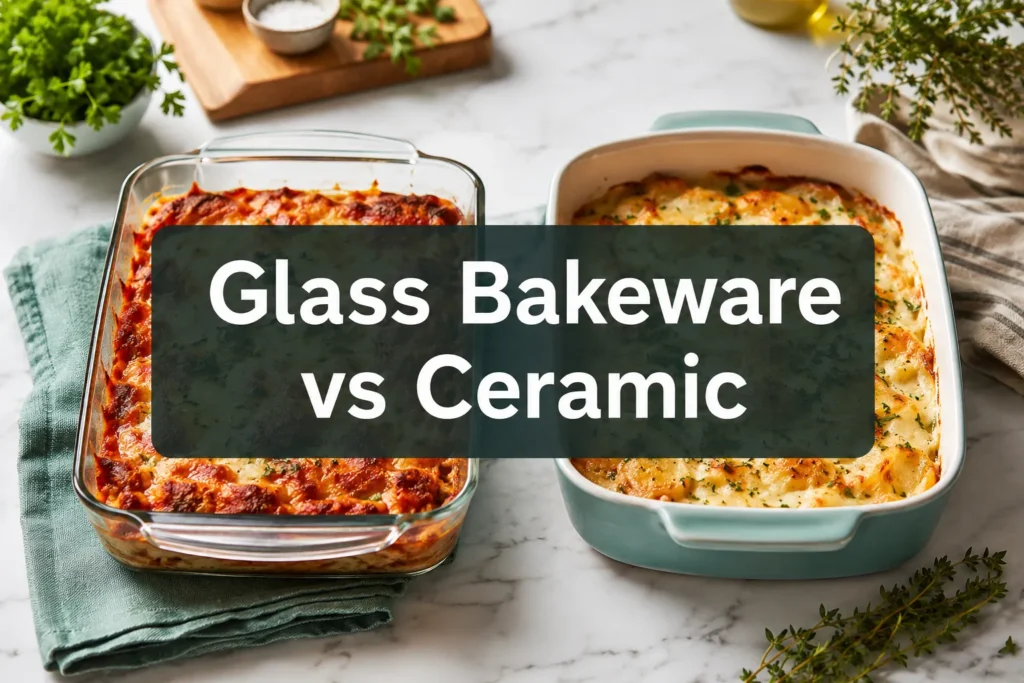
Quick Answer: Glass Bakeware vs Ceramic are both nonreactive, oven-safe options that work well for most home and commercial baking recipes. Glass heats up faster and browns edges more aggressively, while ceramic distributes heat more evenly and retains warmth longer. For most dishes, ceramic bakeware offers more forgiving, consistent results, but glass bakeware wins on visibility and lower cost.
Key Takeaways
- Glass bakeware is chemically inert and lets you monitor food without lifting a lid, but it is more vulnerable to thermal shock and shattering than ceramic.
- Ceramic bakeware heats more evenly and holds heat longer, making it ideal for casseroles, roasts, and slow-baked dishes.
- A March 2026 advisory flagged specific batches of tempered soda-lime glass dishes for shattering risk during freezer-to-oven transitions, so checking batch codes matters [3].
- Ceramic baking dishes are generally dishwasher safe, though hand washing extends glaze life significantly.
- Metal bakeware conducts heat fastest and is best for crispy results, while glass bakeware and ceramic bakeware sit in the middle ground for gentle, even cooking.
- Both glass bakeware and ceramic bakeware are free of PTFE and PFOA, making them popular choices for health-conscious home and commercial baking environments.
- Wholesale ceramic bakeware options from suppliers like Jinhua Ceramics make ceramic baking dishes accessible for commercial baking operations at scale.
- For brownies and bar cookies, glass bakeware tends to overbrown edges, making ceramic baking pans a better choice for even results.
Introduction: Choosing Bakeware Is About More Than Aesthetics
Most home bakers pick their bakeware based on color or price, but the material you choose directly affects how your food cooks.
The Glass Bakeware vs Ceramic debate matters because these two materials behave differently in the oven, handle temperature changes differently, and suit different recipes and cooking styles.
Glass bakeware is made from either borosilicate glass or tempered soda-lime glass, both of which are nonreactive and safe for oven use [1].
Ceramic bakeware is typically made from clay fired at high temperatures and coated with a food-safe glaze.
Both materials are free from PTFE and PFOA, which is why they are frequently recommended in guides on healthy non-toxic bakeware.
Understanding the differences between these two materials helps you make smarter choices for specific recipes, whether you are baking at home or sourcing products for a commercial baking operation.
What Is Glass Bakeware and What Are Its Common Types?
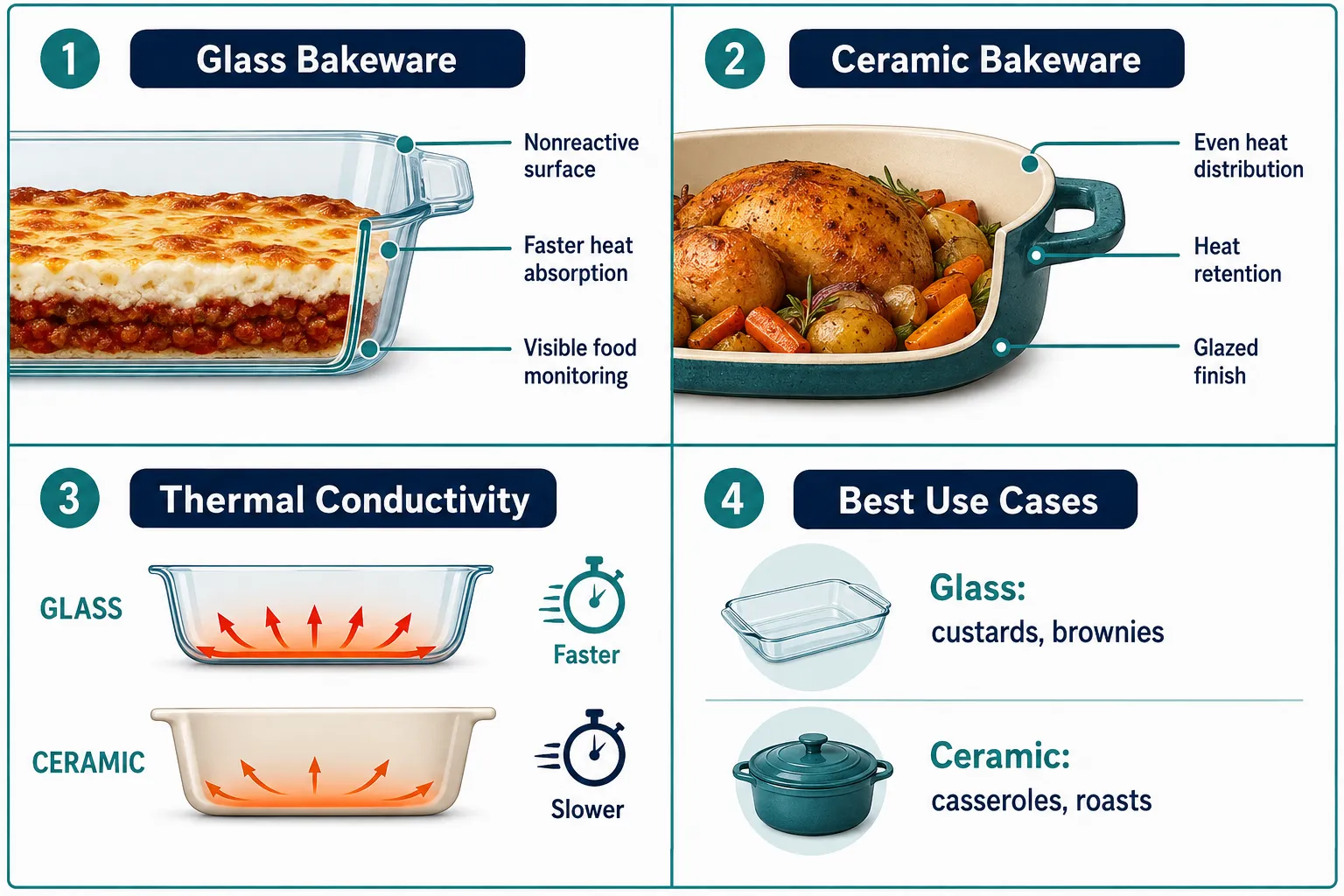
Glass bakeware refers to oven-safe dishes made from borosilicate or tempered soda-lime glass, designed for baking, roasting, and reheating food. The most widely recognized glass bakeware brand is Pyrex, which originally used borosilicate glass but switched to tempered soda-lime glass for its U.S. product line in the 1990s [3][5].
Common types of glass bakeware include:
- Rectangular and square glass baking dishes (the classic 9×13 pan)
- Glass pie dishes
- Glass loaf pans for bread baking
- Round glass casserole dishes with lids
- Glass mixing bowls that double as baking vessels
Borosilicate glass handles sudden temperature changes better than soda-lime glass because of its lower coefficient of thermal expansion [7].
A CBS investigation found that American-made tempered soda-lime glass dishes broke in all 10 lab tests at elevated temperatures, while European borosilicate dishes remained intact at 450 degrees
Fahrenheit but shattered in 5 of 6 tests at 500 degrees Fahrenheit [3]. This distinction matters enormously when you are moving dishes from the freezer directly to a hot oven.
For a deeper look at how glass performs in the oven, the guide on oven-safe glass bakeware benefits covers material differences and safe use practices in detail.
What Is Ceramic Bakeware and How Does It Differ from Glass?
Ceramic bakeware is made from clay that has been shaped, dried, and fired at high temperatures, then coated with a food-safe glaze that creates a smooth, nonporous surface. The result is a dense, heavy dish that distributes heat gently and holds warmth well after leaving the oven [6][12].
The key difference between glass ceramic and standard ceramic bakeware lies in composition. Glass ceramic bakeware is engineered to combine the transparency of glass with the heat retention of ceramic, while traditional ceramic baking dishes rely entirely on clay-based construction.
Standard ceramic bakeware is opaque, so you cannot see the food cooking from the side, but the glaze finish makes ceramic plates and dishes visually appealing for serving directly at the table.
Ceramic baking dishes come in a wide range of styles, from rustic stoneware to refined porcelain, making them popular for both everyday use and holiday entertaining.
Wholesale ceramic bakeware suppliers like Jinhua Ceramics produce ceramic baking pans in bulk for commercial baking clients, restaurants, and retail chains.
If you want to explore specific product options, the RUYOLIKS ceramic bakeware set review is a useful starting point for understanding what quality ceramic bakeware offers at the consumer level.
Thermal Conductivity and Baking Performance: Glass vs Ceramic in the Oven
Ceramic bakeware heats more evenly and retains heat longer than glass, making it more suitable for dishes that benefit from steady, consistent heat. Glass bakeware heats up faster but cools more quickly, which can lead to uneven browning and more pronounced edge caramelization [2][8].
How each material affects baking performance:
| Feature | Glass Bakeware | Ceramic Bakeware |
|---|---|---|
| Heat-up speed | Faster | Slower |
| Heat retention | Lower | Higher |
| Browning evenness | Edges brown more | More uniform browning |
| Best for | Custards, cobblers, quick breads | Casseroles, roasts, gratins |
| Visibility | See-through | Opaque |
| Thermal shock risk | Higher (especially soda-lime) | Lower |
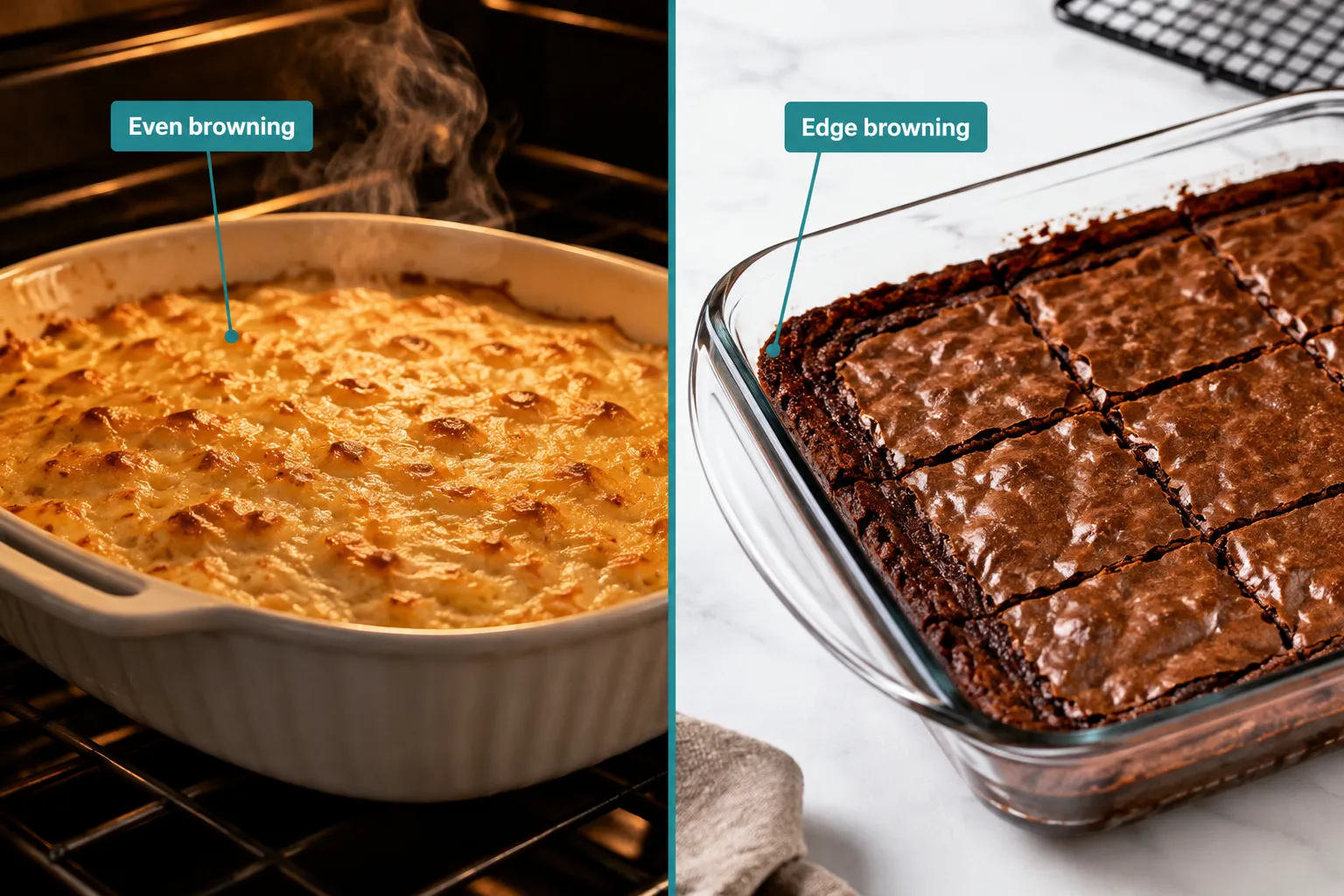
Several 2026 baking guides confirm that glass tends to brown and caramelize edges more aggressively, while ceramic produces more uniform browning and is more forgiving for delicate bakes [2][8].
This is why baking a cake in ceramic vs metal, or glass vs ceramic for brownies, consistently produces different results. If you are baking brownies, ceramic baking pans deliver a more even crumb and less risk of overbaked edges.
Do glass pans need to be preheated longer? Not necessarily, but because glass heats up faster than ceramic, it can create a temperature spike at the edges before the center catches up.
Ceramic bakeware, by contrast, takes longer to reach full temperature but then maintains that temperature more consistently throughout the baking dish.
For a broader comparison that includes metal bakeware in the mix, the article on oven-safe bakeware material options covers all three materials with practical guidance for different recipe types.
Durability vs Lifespan: Which Bakeware Offers the Long-Term Cost Advantage?
Ceramic bakeware generally outlasts glass bakeware in terms of resistance to everyday impact, though both materials can crack or chip under stress. The durability of ceramic baking dishes depends heavily on glaze quality and clay density, while glass bakeware durability hinges on the type of glass used [6][9].
Ceramic bakeware durability factors:
- High-quality ceramic baking dishes resist chipping better than thin-walled glass
- Glaze can crack over time if exposed to repeated sudden temperature changes
- Ceramic bakeware ceramic construction is dense, which adds weight but also resilience
- Chips in ceramic are usually cosmetic unless the glaze is compromised
Glass bakeware durability factors:
- Borosilicate glass is more durable under thermal stress than soda-lime glass
- Soda-lime glass is more prone to catastrophic shattering, especially during freezer-to-oven transitions
- A March 2026 advisory documented an urgent nationwide recall of specific batches of tempered soda-lime glass dishes due to shattering incidents [3]
- Older borosilicate glass dishes were explicitly excluded from that recall and generally tolerate temperature shifts better [3]
From a commercial baking perspective, ceramic bakeware offers better long-term cost performance because it is less likely to shatter unexpectedly and can withstand the rigors of a busy kitchen.
Bakeware glass products may need more frequent replacement in high-volume settings. Wholesale ceramic bakeware from suppliers such as Jinhua Ceramics is designed specifically for commercial baking durability, with reinforced rims and consistent glaze coverage across each ceramic baking dish set.
Safety and Health: Is Ceramic Bakeware Non-Toxic?
Both glass bakeware and ceramic bakeware are classified as nonreactive and safe for typical home and commercial baking, with no PTFE or PFOA in either material [1][5].
The main safety concern for glass is physical injury from unexpected shattering, while ceramic bakeware safety concerns center on mechanical cracking from sudden temperature changes [3][12].
Consumer Reports has analyzed more than 150 incident reports submitted to the U.S. Consumer Product Safety Commission documenting cases of glass bakeware shattering unexpectedly, including dozens of injuries [3].
These incidents are largely associated with tempered soda-lime glass dishes, not borosilicate glass bakeware.
For ceramic bakeware, the key health consideration is lead and cadmium content in the glaze. Reputable ceramic bakeware brands test their glazes to confirm they meet FDA standards for food contact surfaces.
When sourcing wholesale ceramic bakeware for commercial use, always request documentation confirming the glaze is food-safe and free from heavy metals.
Glass bakeware is considered chemically inert, so the food contact surface does not react with acidic or alkaline foods [1][5]. Ceramic baking dishes share this nonreactive quality when the glaze is intact.
Both materials are a strong choice for health and wellness-focused kitchens, and both are frequently listed in guides covering health and wellness bakeware options.
Choose ceramic bakeware if: You want a nonreactive, non-toxic surface with lower shattering risk and better heat retention for slow-cooked dishes.
Choose glass bakeware if: You want full visibility of your food during baking and prefer a lighter, lower-cost option for everyday recipes.
Appearance and Retail Display: Which Has More Shelf Appeal?
Ceramic bakeware wins on visual presentation, offering a wide range of colors, textures, and decorative finishes that make ceramic plates and baking dishes attractive enough to go straight from oven to table. Glass bakeware has a clean, utilitarian look that suits functional kitchens but offers less decorative variety.
For retail display and commercial settings, ceramic bakeware offers significantly more shelf appeal. A baking dish set in coordinated ceramic colors reads as a premium product in a way that glass bakeware rarely does.
This is why flowers ceramics and decorative ceramic lines perform well in gift and specialty kitchen retail. Wholesale ceramic bakeware suppliers like Jinhua Ceramics offer custom glazing, printing, and packaging options for brands that want to differentiate their ceramic baking dish lines.
For home bakers who value kitchen aesthetics, ceramic baking pans in matte or speckled finishes complement modern kitchen design far better than clear glass dishes.
If you are building a kitchen that doubles as a gathering space, ceramic bakeware offers both performance and presentation in a way that glass bakeware simply cannot match.
Cleaning and Maintenance: Is Bakeware Care Worry-Free?
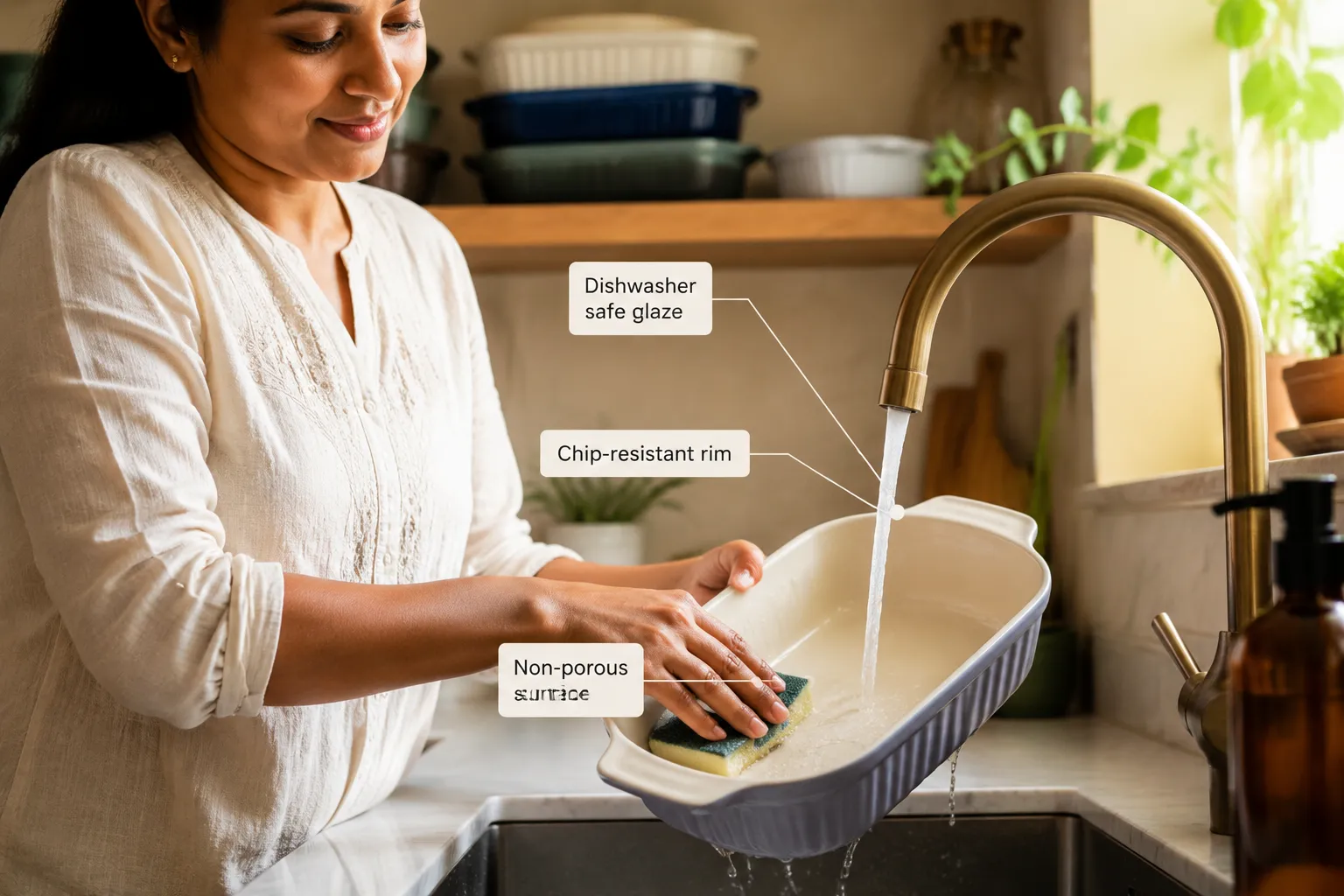
Both glass bakeware and ceramic bakeware are relatively easy to clean, and most products in both categories are dishwasher safe. However, hand washing extends the life of ceramic glaze and prevents the clouding that can affect glass bakeware over time [6][9].
Cleaning tips for glass bakeware:
- Allow glass dishes to cool completely before washing to avoid thermal shock
- Avoid steel wool or abrasive scrubbers that can scratch the surface
- Soaking in warm soapy water loosens baked-on food without damaging the glass
- Most glass bakeware is dishwasher safe, but repeated high-heat dishwasher cycles can cause clouding
Cleaning tips for ceramic bakeware:
- Ceramic plates and baking dishes labeled as ceramic plates dishwasher safe can go in the dishwasher, but gentle cycles preserve the glaze longer
- Avoid sudden temperature changes when washing, such as running cold water over a hot ceramic dish
- Baked-on residue responds well to a baking soda paste applied and left for 20 minutes before scrubbing
- Chips in the glaze should be monitored, as exposed clay can absorb food odors over time
For detailed cleaning guidance across all bakeware types, the resource on simple bakeware cleanup tips covers both glass and ceramic bakeware with practical step-by-step methods.
Glass Bakeware Temperature Limits and Thermal Shock Risks
Glass bakeware has a maximum safe temperature of around 425 to 450 degrees Fahrenheit for most tempered soda-lime glass products, while borosilicate glass can typically handle up to 500 degrees Fahrenheit [7].
Exceeding these limits, or exposing glass bakeware to sudden temperature changes, dramatically increases the risk of thermal shock and shattering.
Thermal shock occurs when one part of a glass dish heats or cools much faster than another, creating internal stress that can cause the dish to crack or shatter explosively.
The March 2026 advisory on glass dish recalls specifically cited freezer-to-oven transitions as a primary trigger for shattering incidents in tempered soda-lime glass bakeware [3].
How to avoid thermal shock with glass bakeware:
- Never move a glass baking dish directly from the freezer to a hot oven
- Always place glass dishes on a dry oven rack, not a cold or wet surface
- Avoid adding cold liquids to a hot glass dish
- Let glass bakeware cool on a dry towel or wooden board, not directly on a cold countertop
- Inspect glass dishes regularly for chips, cracks, or scratches that weaken structural integrity
Ceramic bakeware is also susceptible to cracking from sudden temperature changes, but the dense clay construction makes it more forgiving than glass in most kitchen scenarios [12]. For recipes that involve moving dishes between temperature extremes, ceramic baking dishes are the safer choice.
Glass Bakeware vs Ceramic for Specific Recipes: Brownies, Bread, and Casseroles
The best material depends on what you are baking. For brownies, ceramic baking pans produce more even results with less edge overbrowning, while glass bakeware tends to create darker, crispier edges because of its faster heat absorption [2][5].
Recipe-by-recipe guidance:
- Brownies and bar cookies: Ceramic bakeware is better for even texture. Glass bakeware overbrowns edges.
- Casseroles and gratins: Ceramic baking dishes excel here because heat retention keeps food warm longer after serving.
- Bread baking: Both glass bakeware and ceramic baking pans work, but ceramic loaf pans produce a slightly crispier crust due to even heat distribution.
- Custards and puddings: Glass bakeware is preferred because you can monitor the set of the custard from the side of the dish.
- Pie: Glass vs ceramic pie dish is a close call. Glass lets you check the bottom crust for doneness, while ceramic produces a more evenly cooked filling.
- Roasted vegetables: Ceramic baking dishes retain heat better for continued cooking after the oven is turned off.
For bakers comparing glass bakeware vs ceramic bread results specifically, ceramic loaf pans tend to produce a more consistent crust color because the heat wraps around the dough more uniformly. Glass loaf pans can produce a paler top crust with a darker bottom due to the way glass transmits heat from the oven floor.
About Jinhua Ceramics and Wholesale Ceramic Bakeware Options
Jinhua Ceramics is a commercial baking supplier specializing in wholesale ceramic bakeware, ceramic baking dishes, and custom ceramic baking pans for retail and foodservice clients.
Their product range includes a 3-piece baking dishes set in wholesale quantities, custom baking pans with personalized glazing, and a 3-piece custom ceramic baking dish set designed for kitchen bakeware wholesale buyers.
For commercial baking operations evaluating ceramic bakeware vs glass bakeware at scale, wholesale ceramic bakeware from Jinhua Ceramics offers consistent quality, custom branding options, and the durability needed for high-volume use.
Buyers know about the importance of glaze consistency and rim strength when ordering ceramic baking dishes in bulk, and reputable wholesale ceramic suppliers provide product specifications and food-safety certifications on request.
If you are a commercial buyer or retailer looking to expand your bakeware ceramic bakeware line, don’t hesitate to contact a wholesale ceramic supplier for a free quote on custom ceramic baking pans or a baking dish set tailored to your specifications.
Bakeware ceramic bakeware products designed for commercial use are typically thicker and heavier than consumer-grade options, with reinforced handles and chip-resistant glazes that hold up under daily use.
For home bakers interested in exploring quality ceramic options, the USA Pan Kitchen Gear ceramic bakeware line offers a well-regarded entry point into durable ceramic baking dishes.
Glass Bakeware vs Ceramic: Which Is a Worthwhile Investment?
For home bakers, ceramic bakeware is the better long-term investment because of its superior heat retention, even browning, lower shattering risk, and attractive presentation. Glass bakeware remains a practical and affordable choice for everyday recipes where food visibility matters.
For commercial baking, ceramic bakeware offers better durability and baking performance across a wider range of dishes and cooking temperatures. The lower risk of catastrophic failure compared to tempered soda-lime glass bakeware makes ceramic baking dishes the more reliable choice in a professional kitchen. Metal bakeware remains the fastest option for high-volume commercial baking where speed and crispy results are the priority, but ceramic bakeware ceramic construction fills the gap between metal bakeware efficiency and glass bakeware aesthetics.
Both glass ceramic bakeware and traditional ceramic baking dishes represent a strong value for buyers who prioritize non-toxic cooking surfaces, even heat distribution, and products that transition from oven to table with ease. For a comprehensive overview of how ceramic cookware stacks up in a broader kitchen context, the guide on ceramic cookware pros and cons is worth reading before making a final purchase decision.
If you are ready to invest in quality bakeware, explore top-rated ceramic and glass bakeware options on Amazon to compare current pricing and customer reviews across leading brands.
FAQ: People Also Ask About Glass Bakeware vs Ceramic
What is the healthiest baking pan material?
Ceramic bakeware and glass bakeware are both among the healthiest baking pan materials because neither contains PTFE, PFOA, or other synthetic coatings that can degrade at high heat. Both are nonreactive and will not leach chemicals into food. For the safest option, choose ceramic bakeware with a certified food-safe glaze or borosilicate glass bakeware, and avoid products with damaged surfaces.
What are the drawbacks of using a glass pan?
The main drawbacks of glass bakeware are its susceptibility to thermal shock and shattering, particularly with tempered soda-lime glass dishes. Glass bakeware also tends to brown food edges more aggressively than ceramic, which can lead to overcooked sides in brownies or casseroles. A 2026 recall advisory flagged specific batches of glass dishes for shattering during freezer-to-oven transitions, highlighting a real safety concern for home cooks [3].
Do professional chefs use ceramic pans?
Professional chefs do use ceramic baking dishes, particularly for casseroles, gratins, and dishes that are served directly at the table. In commercial baking settings, ceramic bakeware is valued for its even heat distribution and heat retention. However, for high-volume commercial baking where speed and uniform output matter most, metal bakeware is more commonly used because it heats faster and is lighter to handle at scale.
What is better, Pyrex or ceramic?
Ceramic bakeware generally performs better than Pyrex for dishes that require even, sustained heat, such as casseroles and roasted meats. Pyrex glass bakeware has the advantage of transparency, letting you monitor food without opening the oven. However, modern U.S.-made Pyrex uses tempered soda-lime glass rather than the original borosilicate formula, making it more vulnerable to thermal shock than high-quality ceramic baking dishes [3][5]. For most home baking recipes, ceramic offers more consistent results and lower shattering risk.
Conclusion: Making the Right Choice for Your Kitchen
The Glass Bakeware vs Ceramic decision comes down to what you bake most often and how you use your kitchen.
Ceramic bakeware is the stronger all-around performer for home and commercial baking, delivering even heat distribution, better heat retention, lower thermal shock risk, and a presentation quality that glass bakeware cannot match.
Glass bakeware remains a practical, budget-friendly choice for recipes where food visibility is important and baking temperatures stay below 425 degrees Fahrenheit.
Actionable next steps:
- If you bake casseroles, roasts, or gratins regularly, invest in a quality ceramic baking dish set with a certified food-safe glaze.
- If you use glass bakeware, check the batch code on your dishes against any current recall advisories, and replace tempered soda-lime glass with borosilicate glass where possible.
- For commercial baking operations, request samples and food-safety certifications from wholesale ceramic bakeware suppliers before placing bulk orders.
- For everyday home baking, a combination of ceramic baking dishes for slow-cooked recipes and glass bakeware for custards and pies covers most recipe needs efficiently.
—->Browse Top Rated Ceramic and Glass Bakeware Options to Find the Right Fit For Your Kitchen.<—-
References
[1] Is Glass Cookware Safe – https://theroundup.org/is-glass-cookware-safe/
[2] Glass Vs Ceramic Bakeware For Even Browning – https://lifetips.alibaba.com/kitchen-hacks/glass-vs-ceramic-bakeware-for-even-browning
[3] 2026 03 28 Millions Of Glass Pyrex Dishes Face Urgent Nationwide Recalls Regarding Shattering – https://bayareasmokeshop-clothes.com/news/656/2026-03-28-millions-of-glass-pyrex-dishes-face-urgent-nationwide-recalls-regarding-shattering/
[4] Ca2ae106d68803f14d7356f80953ce14 – https://www.oreateai.com/blog/glass-vs-ceramic-cookware-unpacking-the-heat/ca2ae106d68803f14d7356f80953ce14
[5] Baking In Glass Vs Metal Vs Ceramic – https://www.tasteofhome.com/article/baking-in-glass-vs-metal-vs-ceramic/
[6] Glass Vs Ceramic Bakeware – https://joyye.com/info-detail/glass-vs-ceramic-bakeware
[7] Glass Guide – https://www.interiormedicine.com/glass-guide
[8] Glass Vs Ceramic For Even Casserole Browning – https://lifetips.alibaba.com/kitchen-hacks/glass-vs-ceramic-for-even-casserole-browning
[9] Best Ceramic Bakeware – https://www.homedif.com/best-ceramic-bakeware
[10] Ceramic Vs Glass Baking Dish – https://thelivinglook.com/kitchen-hacks/ceramic-vs-glass-baking-dish
—->Browse Top Rated Ceramic and Glass Bakeware Options to Find the Right Fit For Your Kitchen.<—-