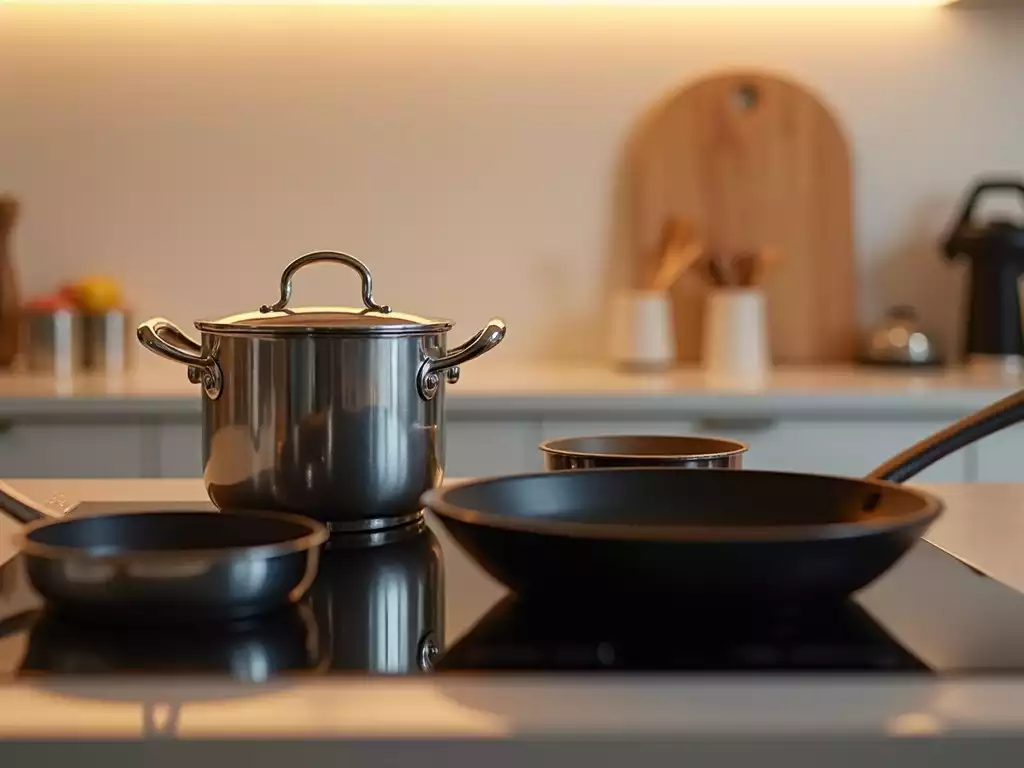
Understanding induction cookware can transform your cooking experience. With the right tools, you can save time, energy, and even enhance your culinary skills. Are you ready to make the most out of your induction stovetop?
What You Will Learn
- Induction-compatible cookware must contain ferrous materials that allow magnetic contact for heating.
- Key features of effective induction cookware include a magnetic base, flat bottom, and sufficient material thickness for even heat distribution.
- Popular materials for induction cookware include stainless steel, cast iron, and non-stick options, each with distinct advantages and drawbacks.
- Testing your cookware for induction compatibility is simple: use a magnet to check if it sticks to the base.
- Induction cookware offers fast heating, energy efficiency, enhanced safety, precise temperature control, and easy cleaning.
- When purchasing cookware, consider your cooking habits and evaluate reviews to make informed decisions about brands and materials.
Understanding Induction Cookware Compatibility
A visual guide to essential materials and testing for induction stovetops.
Understanding Cookware Compatibility with Induction Stovetops
Induction stovetops have revolutionized the way we cook, offering a sleek design and faster heating times. However, not all cookware is suitable for these modern appliances. Understanding cookware compatibility is essential for anyone looking to get the most out of their induction cooktop. In this section, we’ll explore what makes cookware induction-compatible, the materials that work best, and how to test your cookware’s compatibility. For more detailed insights into the benefits of induction cooking, you can refer to resources like this one from BE-Exchange.
Before diving into specifics, it’s important to note that the key to induction cooking lies in the magnetic properties of the cookware. Induction cooktops use magnetic fields to directly heat pots and pans, so only cookware made from certain materials will work properly.
What Makes Cookware Induction-Compatible?
To be compatible with induction stovetops, cookware must contain ferrous materials, meaning it is magnetic. If you hold a magnet to the bottom of your pot or pan and it sticks, congratulations — it should work on your induction cooktop! Here are some key features that define induction-compatible cookware:
- Magnetic Base: The most critical aspect is a magnetic base that enables the cookware to heat up.
- Flat Bottom: A flat surface ensures good contact with the induction cooktop, which improves efficiency.
- Material Thickness: Thicker materials often provide better heat distribution, enhancing cooking performance.
Having cookware that meets these criteria is essential for achieving optimal cooking results. It ensures that the heat is evenly distributed, which can lead to better meal preparation overall. Additional information on induction stovetop efficiency can be found in studies such as the Market Characterization Report for Induction.
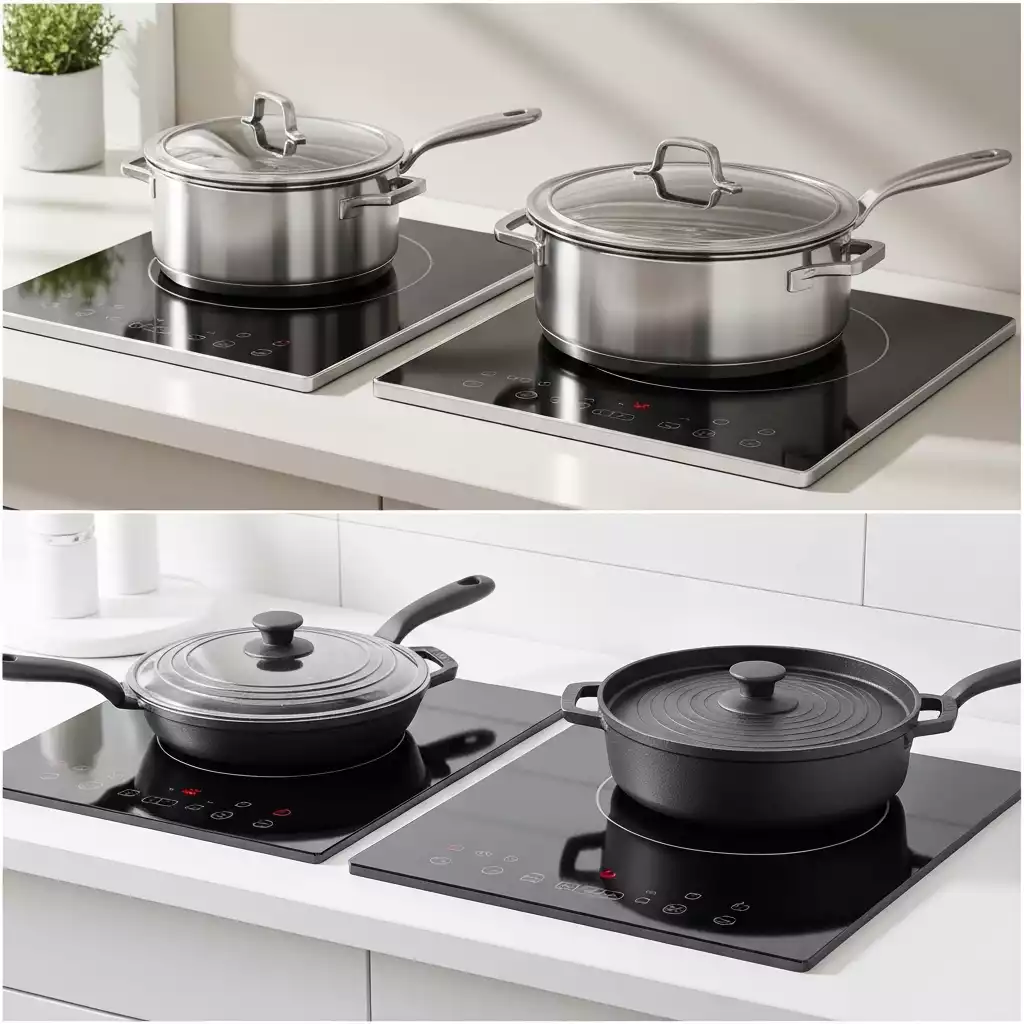
Essential Materials for Induction Cookware: Pros and Cons
Choosing the right material can significantly impact your cooking experience. Here’s a breakdown of popular induction cookware materials and their pros and cons:
- Stainless Steel: Durable and resistant to corrosion, but can be less efficient if the base is not magnetic.
- Cast Iron: Excellent heat retention and distribution, but heavy and can be prone to rust without proper care.
- Non-Stick Coated: Easy to clean and great for lower-fat cooking, yet may not be suitable for high temperatures.
When deciding on cookware, I often recommend considering what you typically cook. Each material has unique benefits that can cater to different cooking styles and preferences.
Compatibility Testing: Ensuring Your Cookware Works with Induction Hobs
Before you invest in a new set of cookware, it’s wise to test your current pots and pans for induction compatibility. Here are some simple steps you can follow:
- Grab a magnet and check the bottom of your cookware.
- If the magnet sticks, it will likely work on your induction stovetop.
- For cookware that doesn’t attract magnets, consider the material; it may still work if it’s designed with induction in mind.
By taking a moment to test your cookware, you can save time and money by ensuring that you only purchase items that will work seamlessly with your induction stove. It’s a small step that can make a big difference in your cooking experience! For further details on switching to induction, the Gas-to-Induction Stovetop Study offers valuable insights.
Interactive Poll: Your Cooking Style!
We want to hear from you! Understanding your cooking style can help you choose the best induction cookware. What type of meals do you prepare most often?
Frequently Asked Questions About Induction Cookware
- What makes cookware induction-compatible?
- Cookware needs to contain ferrous (magnetic) materials to work on an induction stovetop. A simple magnet test can confirm compatibility.
- What are the essential features of effective induction cookware?
- Key features include a magnetic base for heating, a flat bottom for efficient contact, and sufficient material thickness for even heat distribution.
- Which materials are best for induction cookware?
- Stainless steel, cast iron, and certain non-stick options are popular choices. Each has pros and cons regarding durability, heat retention, and maintenance.
- How can I test if my current cookware is induction-compatible?
- Place a magnet on the bottom of your pot or pan. If the magnet sticks firmly, the cookware is likely compatible with an induction stovetop.
- What are the benefits of using induction cookware?
- Induction cookware offers fast heating, energy efficiency, enhanced safety (the stovetop remains cool), precise temperature control, and easy cleaning.
- What should I consider before purchasing new induction cookware?
- Consider your cooking habits, the types of meals you prepare, and evaluate customer reviews for insights into product performance, durability, and ease of maintenance.
Summary of Key Takeaways on Induction Cookware
As we wrap up our exploration of induction cookware, it’s crucial to highlight the key features and benefits that make these products stand out. Induction cooktops are not just a trend; they’re revolutionizing how we think about cooking efficiency and safety in the kitchen!
From energy savings to precise temperature control, induction cookware is designed for modern culinary needs. Remember to look for materials that are compatible with induction stovetops, such as stainless steel, cast iron, and certain non-stick options. These materials not only heat quickly but also maintain consistent heat for better cooking results.
Recap of Cookware Features and Benefits for Induction Stovetops
- Fast Heating: Induction cookware heats up quickly, reducing cooking time.
- Energy Efficiency: Less energy is needed, making it eco-friendly.
- Safety: The stovetop remains cool, reducing the risk of burns.
- Precise Temperature Control: Allows for accurate cooking adjustments.
- Easy to Clean: Smooth surfaces make clean-up a breeze.
This recap of features highlights why induction cookware is a go-to choice for many home cooks! Each feature contributes to a safer, faster, and more efficient cooking experience.
Now, let’s dive into the next step in your induction cookware journey!

Taking the Next Step: Making an Informed Purchase
When it comes to buying quality induction cookware, knowing where to shop and what to look for can make all the difference. As someone who has spent years curating the best culinary tools, I can assure you that making an informed decision will pay off in the long run!
Where to Buy Quality Induction Cookware: Retailers and Online Options
- Specialty Kitchen Stores: Stores that focus on kitchenware often have knowledgeable staff.
- Online Retailers: Websites like Amazon and specialty sites provide extensive selections and customer reviews.
- Department Stores: Many carry reputable brands at competitive prices.
Choosing the right place to buy can significantly affect your shopping experience. I recommend checking out both local stores and online platforms to find the best deals and selections!
Encouraging Smart Choices for Your Kitchen: Evaluating Your Needs
Before making a purchase, take a moment to evaluate your cooking style and kitchen needs. Consider these questions:
- How often do I cook?
- What types of meals do I prepare regularly?
- Do I prefer lightweight cookware or heavier options?
Understanding your personal cooking habits will help narrow down your choices. Remember, the right cookware can enhance your cooking experience dramatically!
Customer Reviews: Insights on Popular Induction Cookware Brands
Lastly, reading customer reviews is an excellent way to gain insights into the performance and durability of induction cookware brands. Look for reviews that highlight:
- Overall satisfaction with product performance
- Ease of cleaning and maintenance
- Longevity and build quality
These insights can guide you toward making wise investments in your kitchen. After all, investing in quality cookware is investing in your culinary adventures!
Recap of Key Points
Here is a quick recap of the important points discussed in the article:
- Cookware Compatibility: Only cookware with ferrous materials will work on induction stovetops. Check for a magnetic base.
- Essential Materials: Stainless steel, cast iron, and certain non-stick options are the best choices for induction cooking.
- Testing Compatibility: Use a magnet to test your cookware. If it sticks, it’s likely induction-compatible.
- Benefits of Induction Cookware: Fast heating, energy efficiency, safety, precise temperature control, and easy cleaning make induction cookware a smart choice.
- Informed Purchasing: Evaluate your cooking habits and consider customer reviews before investing in new cookware.

2 responses to “Induction Cookware: What You Need”
[…] following these steps, you’ll be well on your way to selecting a cookware set that suits your needs. Remember, it’s not just about buying pots and pans; it’s about finding ones that make […]
[…] Understanding your cooking style is crucial for selecting the right cookware that meets your needs. […]