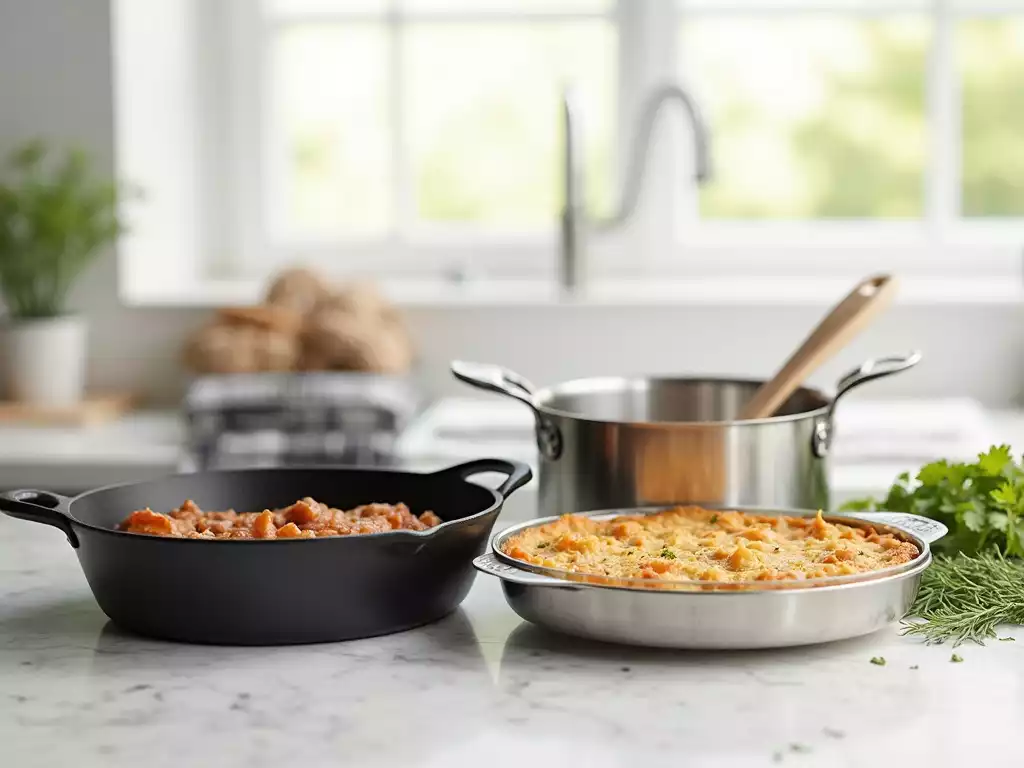
Oven Safe Cookware
What if you could enhance your cooking experience simply by understanding your Oven Safe cookware? Knowing which materials are oven safe can empower you to create delightful meals without the fear of damage or health risks.
What You Will Learn
- Oven safe cookware must withstand high temperatures without warping or leaching harmful substances.
- Key characteristics include high temperature resistance, durability against thermal shock, and non-reactive surfaces.
- Common oven safe materials include cast iron, stainless steel, carbon steel, non-stick, ceramic, and glass, each with its unique advantages.
- Proper maintenance techniques, such as avoiding drastic temperature changes and using the right cleaning methods, can prolong the lifespan of your cookware.
Cookware Material Characteristics and Maintenance
This visual offers a comprehensive overview of common oven-safe cookware materials, highlighting their key characteristics and essential maintenance tips to ensure longevity and optimal performance.
Cast Iron
Key: Great heat retention, even cooking.
Care: Hand wash, dry immediately, season regularly.
Stainless Steel
Key: Durable, resistant to rust and corrosion.
Care: Soft sponge, avoid abrasive cleaners.
Non-Stick
Key: Easy to clean, sensitive to high heat.
Care: Gentle sponges, wood/silicone utensils, low/medium heat.
Ceramic
Key: Non-reactive surface, prone to chips.
Care: Soft cloth, avoid sudden temperature changes.
Understanding Oven Safe Cookware: What You Need to Know
When it comes to cooking, one of the most important considerations is using oven safe cookware. This means choosing cookware that can withstand high temperatures without warping or releasing harmful substances. Knowing what’s safe can improve your cooking experience and help you prepare delicious meals without worry!
In this section, I’ll guide you through the essentials of oven safe cookware, focusing on its key characteristics, material choices, and what makes a cookware piece truly oven-safe. Let’s dive in!
Defining Oven Safe Cookware: Key Characteristics
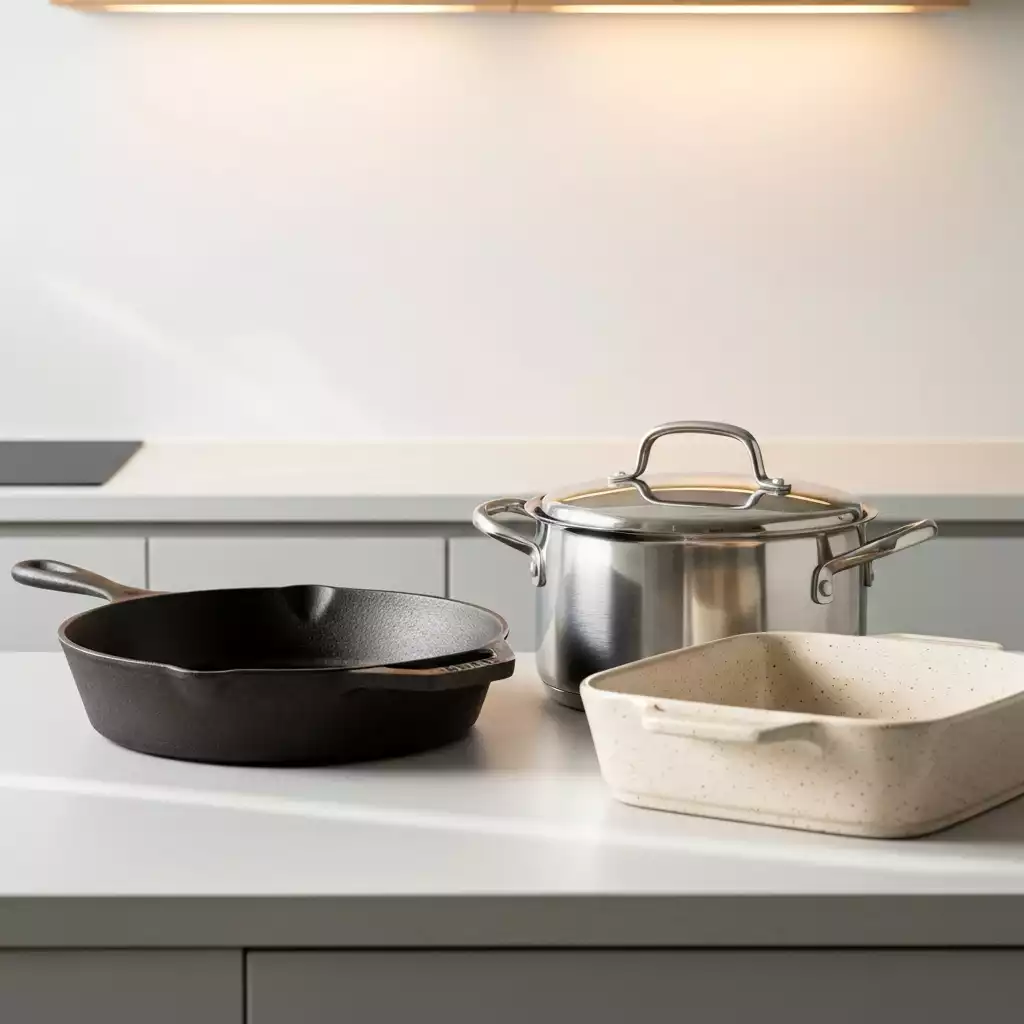
Oven safe cookware encompasses a variety of materials designed to be used in the oven without fear of damage. Typically, the key characteristics of oven safe cookware include:
-
- High temperature resistance
- Durability against thermal shock
- Non-reactive surfaces that don’t leach chemicals
These attributes ensure that you can roast, bake, and broil with confidence. Always check the manufacturer’s guidelines to verify that your cookware meets these criteria!
It’s important to be aware of potential health risks associated with certain cookware materials, as highlighted by sources like PMC NCBI, which discusses the presence of PFAS in food contact materials.
Why Choosing the Right Material Matters for Oven Safety
The material of your cookware significantly affects its performance in the oven. Some materials can handle high heat, while others may warp or release toxins when exposed to oven temperatures.
For example, cast iron is beloved for its heat retention, but it requires proper seasoning to avoid sticking. Meanwhile, non-stick coatings can be sensitive to high temperatures.
Research from Consumer Reports suggests that you can’t always trust claims about “non-toxic” cookware, emphasizing the need for informed choices.
Understanding the materials helps you make informed decisions and maintain safety in your kitchen. This knowledge ultimately enhances your cooking success and protects your health!
Exploring Common Cookware Materials: A Comprehensive Overview
Let’s take a closer look at some common cookware materials often labeled as oven safe:
- Cast Iron: Great for heat retention and even cooking.
- Stainless Steel: Durable and resistant to rust and corrosion.
- Carbon Steel: Versatile and can withstand high temperatures.
- Non-Stick: Easy to clean but can have limitations at high heat.
- Ceramic: Offers non-reactive surfaces but can be prone to chips.
- Glass: Perfect for baking dishes but needs careful handling.
Each of these materials has its own set of advantages and limitations. By knowing these, you can select the right cookware for any dish you want to prepare!
For further insights into cookware safety and materials, AARP offers a comprehensive guide that can help you make informed decisions about your pots and pans.
Pro Tip
Did you know? Using a thermometer to check the internal temperature of your cookware can help ensure that it’s truly oven safe. This is especially important for materials like glass and ceramic, which can be sensitive to temperature changes. Always refer to your manufacturer’s guidelines for the best practices in handling your specific cookware!
Frequently Asked Questions About Oven Safe Cookware
What does “oven safe” mean for cookware?
Oven safe means that the cookware can withstand high temperatures inside an oven without warping, melting, breaking, or releasing harmful substances. It’s designed to be durable under oven heat.
What are the key characteristics of oven safe cookware?
Key characteristics include high temperature resistance, durability against thermal shock (the ability to withstand rapid temperature changes without damage), and non-reactive surfaces that prevent chemicals from leaching into food.
Which common cookware materials are generally oven safe?
Common oven safe materials include cast iron, stainless steel, carbon steel, ceramic, and glass. Non-stick cookware can be oven safe, but often has limitations regarding maximum temperature.
How can I tell if my specific cookware is oven safe?
Always check the manufacturer’s instructions or the product label. Many cookware pieces will explicitly state “oven safe” and specify a maximum temperature threshold. If unsure, it’s best to err on the side of caution.
How do I maintain oven safe cookware to ensure its longevity?
Proper maintenance includes avoiding drastic temperature changes (e.g., placing a hot pan in cold water), storing cookware carefully to prevent scratches or warping, and using appropriate cleaning methods for each material type.
Maintaining Your Oven Safe Cookware for Longevity
Keeping your oven safe cookware in top shape doesn’t have to be complicated! With a bit of care, you can ensure that your favorite pots and pans last for years. Here are some essential maintenance tips that will help you preserve the quality and usability of your cookware.
- Store cookware properly to avoid scratches and warping.
- Avoid drastic temperature changes to prevent damage.
- Use the right utensils to minimize wear and tear.
By taking these simple steps, you can enhance the lifespan of your cookware and enjoy delicious meals without worrying about damaging your equipment!
Preventing Warping and Damage Over Time
One common issue with oven safe cookware is warping, which can occur due to extreme temperature changes or improper storage. To keep your cookware in tip-top shape, it’s vital to know how to handle it correctly. First, avoid placing a hot pan in cold water, as this can cause it to warp.
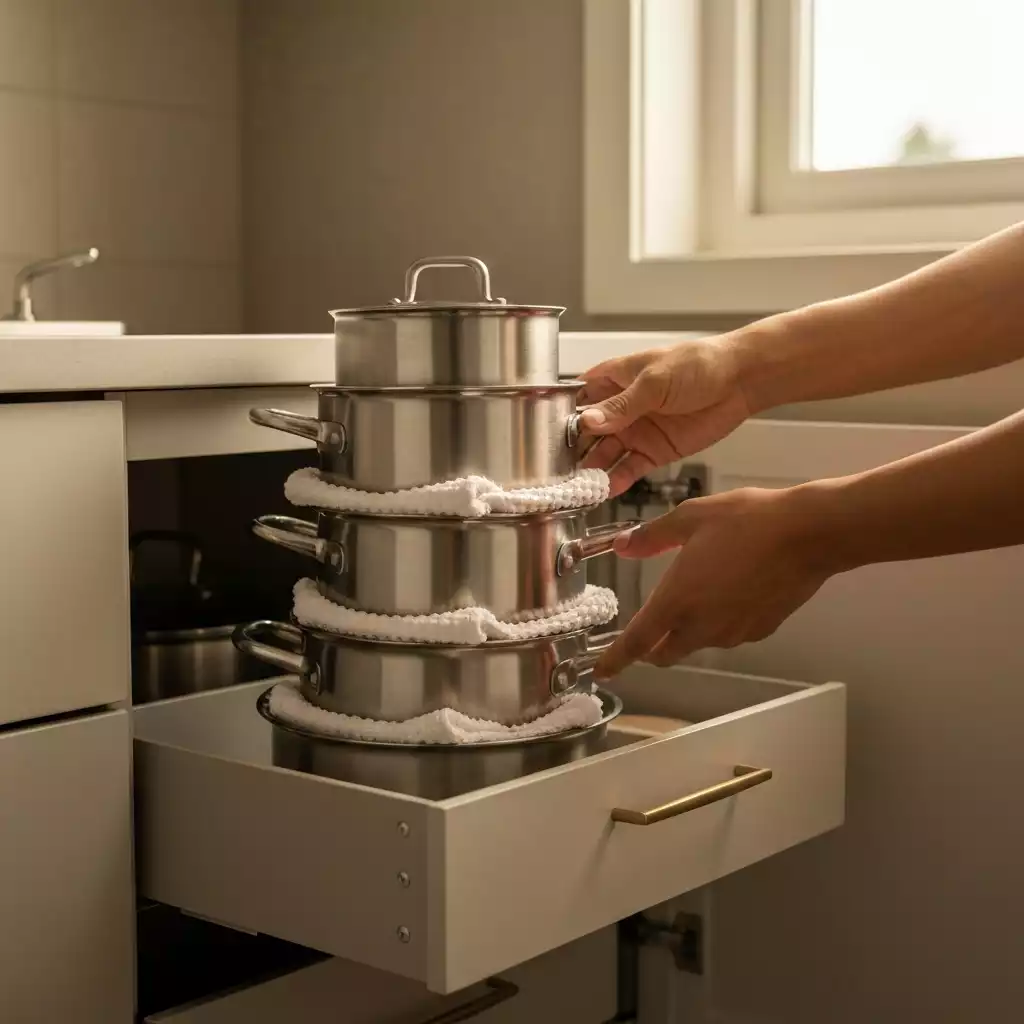
Instead, allow your cookware to cool down gradually before washing. Additionally, make sure to stack your pots and pans carefully, using soft cloths or paper towels between them to prevent scratches.
- Never use your cookware on high heat unless specified.
- Rotate items when stacking to avoid uneven pressure.
- Store them in a dry place to prevent rust or damage.
Cleaning and Care Tips for Different Materials
Cleaning your cookware properly is essential for maintaining its longevity. Each material has its own cleaning requirements, so let’s break it down!
- Cast Iron: Hand wash with mild soap and dry immediately to prevent rust.
- Stainless Steel: Use a soft sponge and avoid abrasive cleaners to keep its shine.
- Non-Stick: Use gentle sponges and avoid metal utensils to preserve the coating.
- Ceramic: Clean with a soft cloth and avoid sudden temperature changes.
By tailoring your cleaning routine to match each material, you’ll keep your cookware looking great and performing well!
Maintenance Tips for Non-Stick and Cast Iron Cookware
Non-stick and cast iron cookware each require specific care to maintain their performance. For non-stick cookware, ensure you use utensils made of wood or silicone to prevent scratching the surface. It’s also advisable to avoid using high heat, which can damage the non-stick coating.
On the other hand, cast iron cookware needs to be seasoned regularly. This involves applying a thin layer of oil to maintain its non-stick surface and prevent rust. Store it in a dry place to keep moisture at bay!
- Use low to medium heat for non-stick pans.
- Re-season cast iron cookware every few months.
- Never leave cast iron soaking in water to avoid rust.
With the right care, both types of cookware can serve you well for many delicious meals to come!
Recap of Key Points
Here is a quick recap of the important points discussed in the article:
- Oven safe cookware must withstand high temperatures without warping or releasing harmful substances.
- Key characteristics include high temperature resistance, durability against thermal shock, and non-reactive surfaces.
- Common materials include cast iron, stainless steel, carbon steel, non-stick, ceramic, and glass, each with their own advantages and limitations.
- Proper maintenance, such as avoiding drastic temperature changes and using appropriate utensils, can prolong the life of your cookware.
- Cleaning methods vary by material, with specific care instructions for cast iron and non-stick cookware.