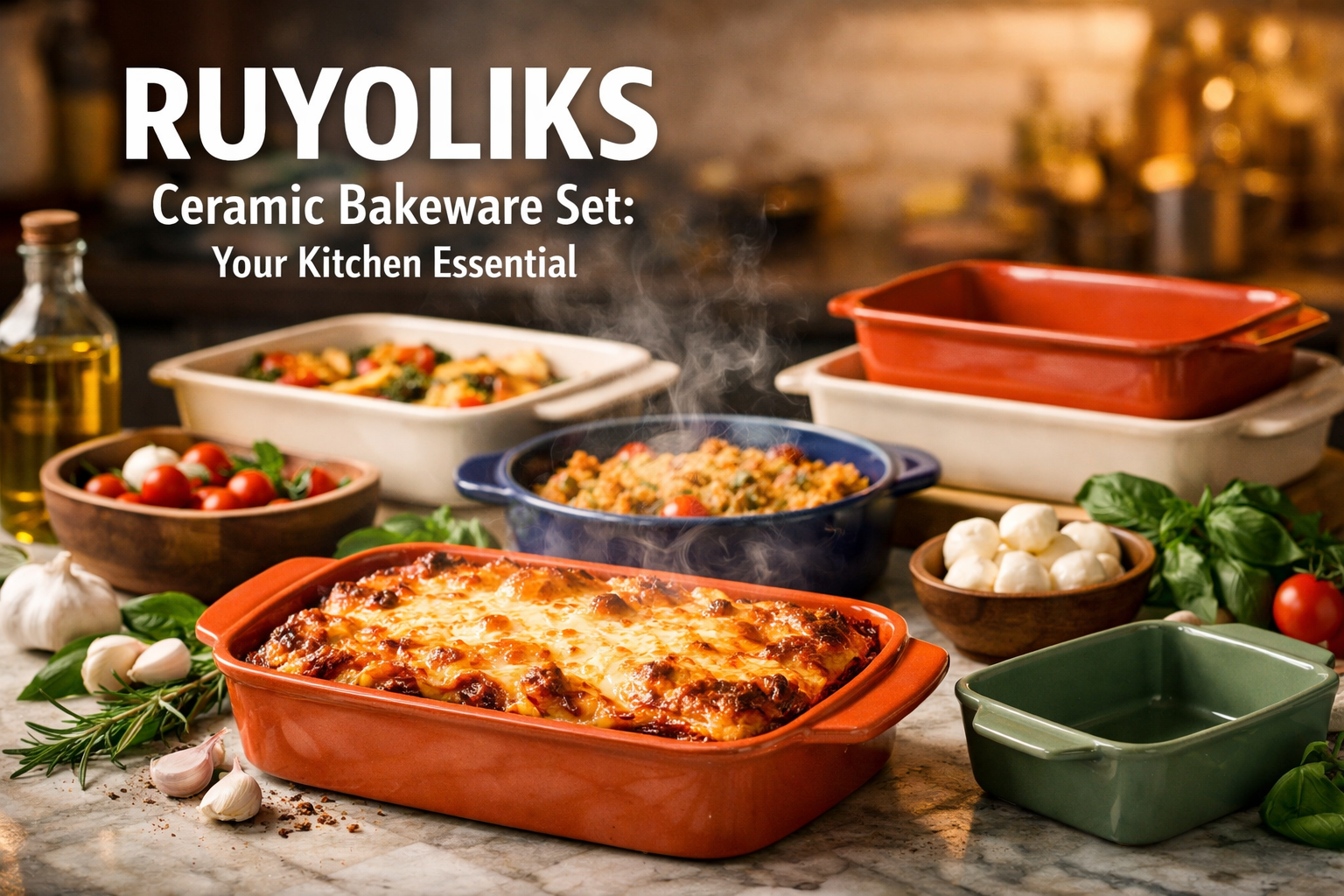
RUYOLIKS Ceramic Bakeware Set
Imagine pulling a perfectly golden lasagne from the oven, the cheese bubbling at the edges, and knowing that not a single toxic chemical has leached into your family’s meal. For home cooks and baking enthusiasts seeking healthier kitchen solutions, the RUYOLIKS Ceramic Bakeware Set represents a colorful revolution in safe, versatile cooking.
This comprehensive guide explores everything you need to know about this 5-piece ceramic baking collection that’s transforming kitchens across the country.
As concerns about cookware safety continue to grow in 2026, more home cooks are ditching traditional non-stick coatings in favor of ceramic alternatives.
The RUYOLIKS Ceramic Bakeware Set answers this demand with 100% pure ceramic construction, vibrant colors, and multi-functional design that works from freezer to oven to table.
Whether you’re a seasoned baker or just starting your culinary journey, understanding what makes this bakeware set special can help you make an informed decision for your kitchen.
Key Takeaways
- 100% ceramic construction ensures lead-free, non-toxic cooking without harmful chemical coatings
- Five versatile pieces in different sizes accommodate everything from individual portions to family-sized casseroles
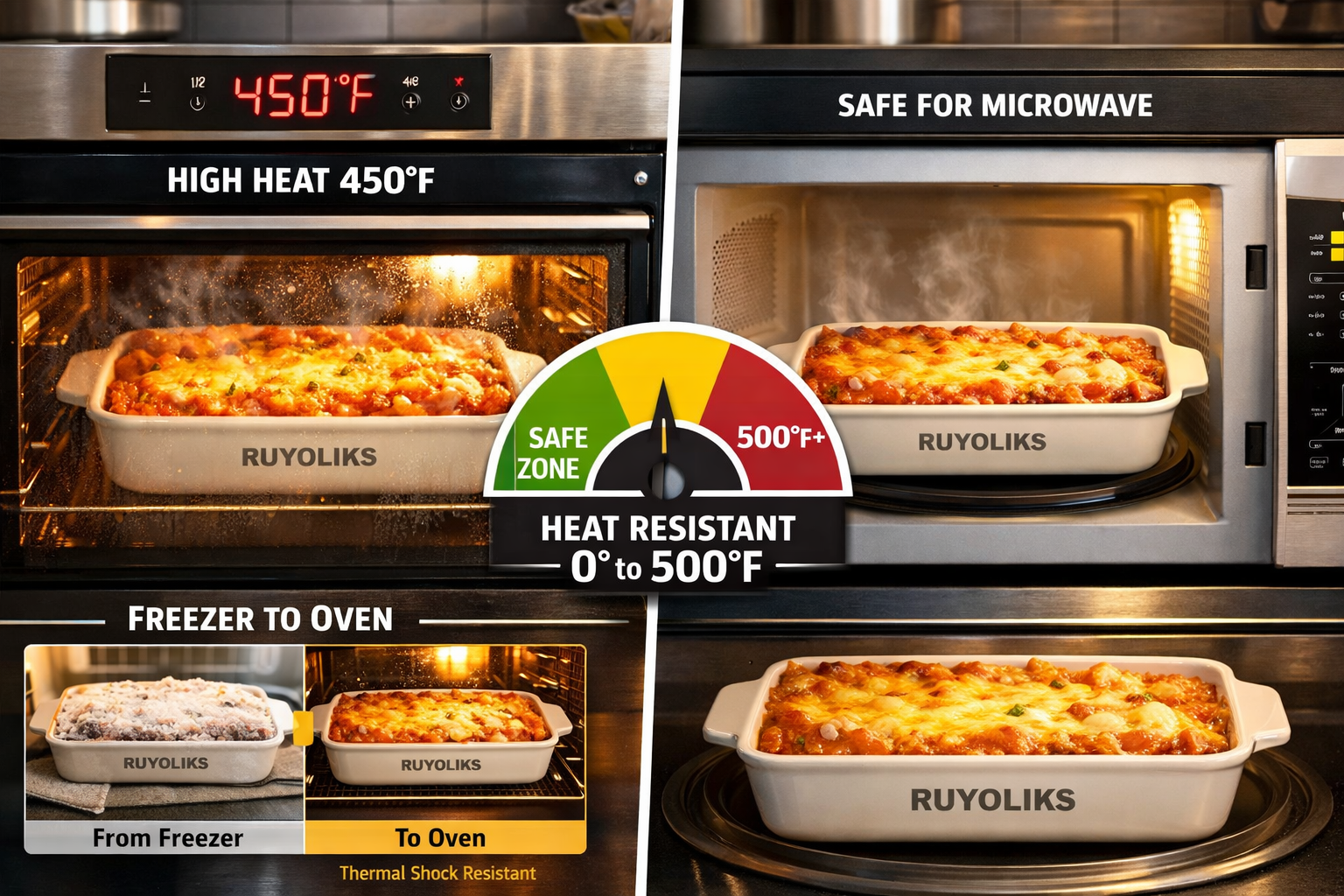
- Extreme temperature tolerance allows safe use from freezer (-4°F) to oven (500°F) and microwave
- Easy maintenance with dishwasher-safe convenience and natural non-stick properties
- Multi-purpose functionality serves as baking dish, serving platter, and storage container
Understanding the RUYOLIKS Ceramic Bakeware Set: Product Overview
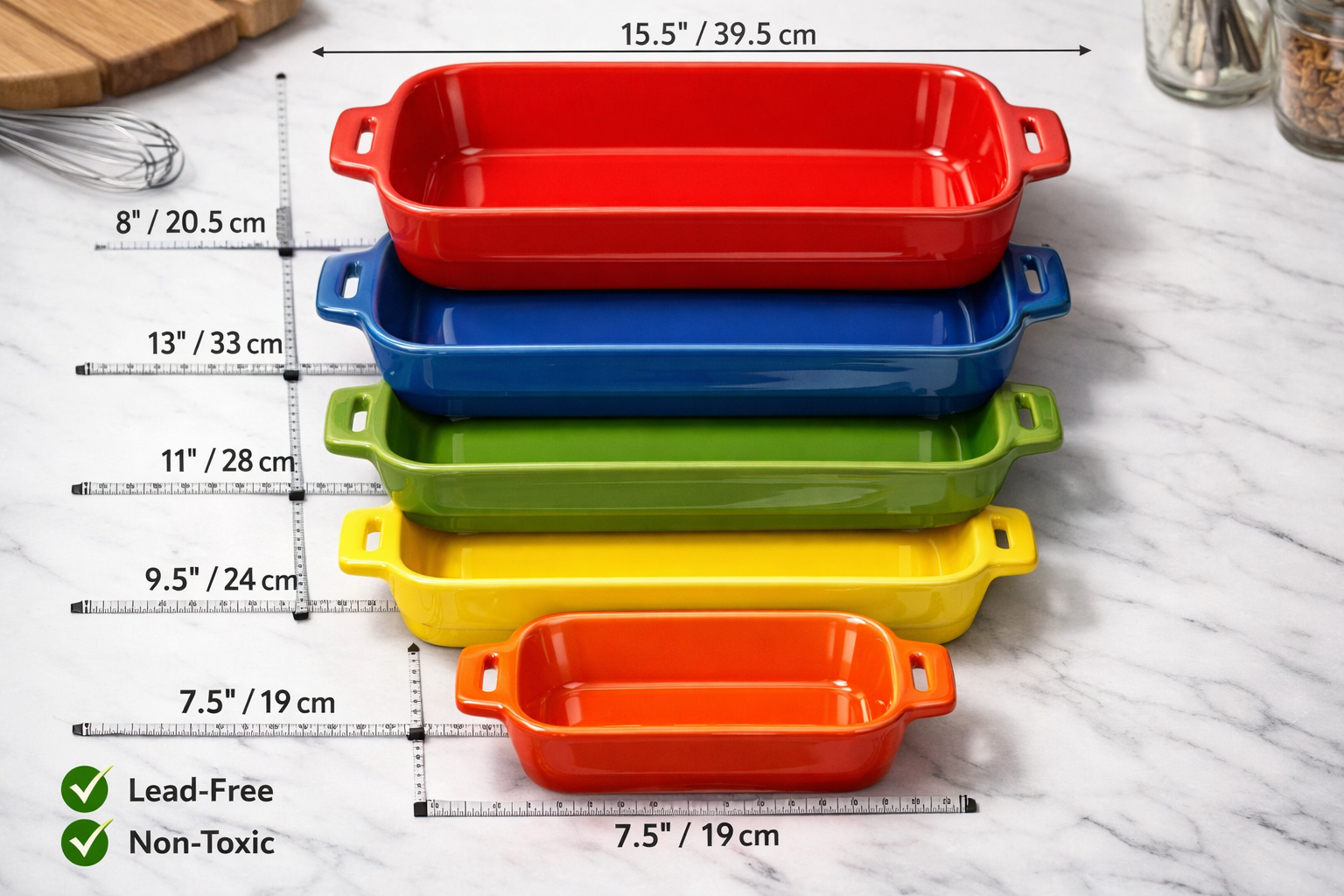
The RUYOLIKS Ceramic Bakeware Set consists of five rectangular baking dishes crafted from pure ceramic material, each featuring a distinct vibrant color that adds personality to any kitchen. Unlike traditional bakeware that may contain questionable coatings or materials, this set prioritizes food safety through its simple, honest construction approach.
What’s Included in the Set
The collection typically includes five graduated sizes designed to handle various cooking tasks:
- Large rectangular dish (approximately 13″ x 9″) – perfect for family-sized lasagnas and casseroles
- Medium baking pan (approximately 11″ x 7″) – ideal for smaller casseroles and roasted vegetables
- Medium-small dish (approximately 9″ x 6″) – great for side dishes and desserts
- Small rectangular pan (approximately 8″ x 5″) – perfect for individual portions
- Extra-small dish (approximately 7″ x 4″) – ideal for dips, sauces, or single servings
Each piece features ergonomic handles that provide secure grip even when wearing oven mitts, making transfers from oven to counter safer and more confident. The vibrant color options—often including red, blue, green, yellow, and orange—not only look stunning but also help with quick identification when multiple dishes are in use.
Material Composition and Safety Standards
The defining characteristic of the RUYOLIKS Ceramic Bakeware Set is its 100% ceramic composition. Unlike some “ceramic” cookware that features ceramic coatings over metal bases, these dishes are solid ceramic throughout. This construction method offers several critical advantages:
Lead-free certification means no heavy metal contamination risks, making it safe for children and adults alike. Many traditional ceramic glazes historically contained lead, but modern food-safe ceramics like RUYOLIKS undergo rigorous testing to ensure complete absence of this toxic element[1].
Cadmium-free formulation eliminates another potential heavy metal concern. Cadmium, sometimes used in ceramic pigments, can pose serious health risks when it leaches into food. Quality ceramic bakeware manufacturers now use alternative colorants that provide vibrant hues without safety compromises.
PFAS-free guarantee addresses one of the most pressing cookware concerns in 2026. Per- and polyfluoroalkyl substances (PFAS), commonly called “forever chemicals,” are found in many non-stick coatings and have been linked to various health issues. Pure ceramic bakeware naturally contains zero PFAS compounds[2].
For those interested in learning more about healthy non-toxic bakeware options, ceramic represents one of the safest material choices available today.
Temperature Performance and Cooking Versatility
Heat Resistance Specifications
One of the most impressive features of the RUYOLIKS Ceramic Bakeware Set is its exceptional temperature tolerance. Understanding these limits helps maximize the cookware’s potential while ensuring longevity:
| Temperature Range | Safe Use | Recommended Applications |
|---|---|---|
| -4°F to 32°F | ✅ Freezer storage | Meal prep, leftovers, make-ahead dishes |
| 32°F to 212°F | ✅ Refrigerator/Microwave | Reheating, cold storage, defrosting |
| 212°F to 450°F | ✅ Conventional oven | Baking, roasting, casseroles |
| 450°F to 500°F | ✅ High-heat cooking | Broiling, high-temperature roasting |
| Above 500°F | ❌ Not recommended | Risk of thermal shock damage |
This remarkable temperature range makes the set truly versatile. You can assemble a lasagna in the morning, refrigerate it throughout the day, and transfer it directly to a preheated oven without worry—a convenience that saves time and reduces dish usage.
Thermal Shock Resistance
Thermal shock occurs when cookware experiences rapid temperature changes, causing stress that can lead to cracking or shattering. Quality ceramic bakeware like RUYOLIKS is engineered to withstand moderate thermal shock, but following best practices extends the product’s lifespan:
Gradual temperature transitions work best. While the ceramic can technically handle freezer-to-oven transfers, allowing the dish to sit at room temperature for 10-15 minutes reduces stress on the material. This simple habit can add years to your bakeware’s life.
Avoid extreme contrasts such as placing a hot dish directly on cold surfaces or adding cold liquid to a hot pan. These scenarios create the most dramatic thermal stress and increase crack risk.
Preheat considerations matter when using ceramic. Unlike metal pans that can safely enter preheating ovens, ceramic dishes should generally be placed in cold or warming ovens to heat gradually alongside the oven temperature.
For more insights on oven-safe bakeware material options, ceramic ranks among the most temperature-tolerant materials available.
Cooking Applications and Recipe Versatility
Traditional Baking Uses
The RUYOLIKS Ceramic Bakeware Set excels at classic baking applications where even heat distribution matters most:
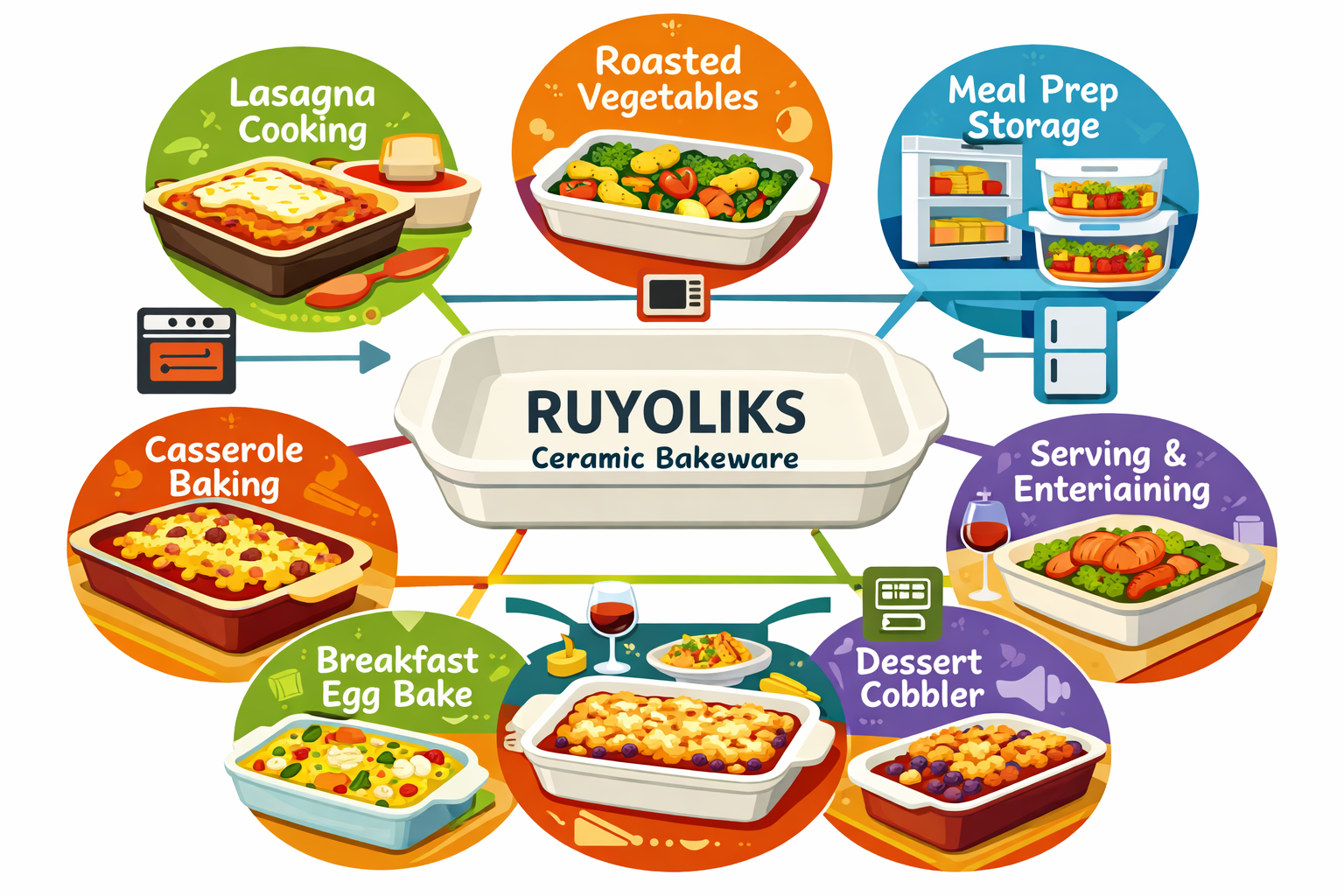
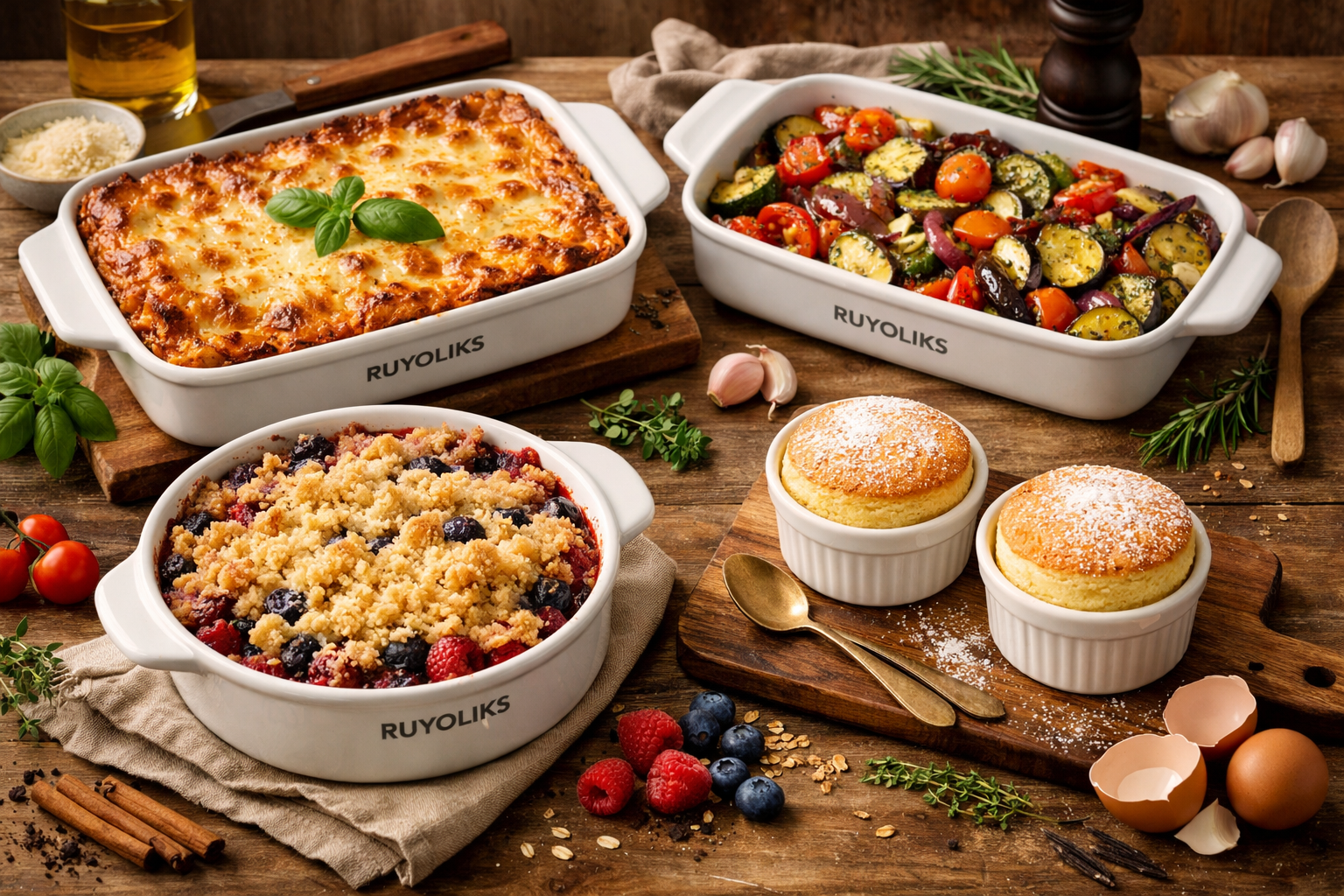
Lasagna and layered pasta dishes benefit tremendously from ceramic’s heat retention properties. The material absorbs heat slowly and releases it evenly, ensuring that cheese melts perfectly while pasta layers cook through without burning edges. The rectangular shape accommodates standard lasagna noodles without trimming, and the depth allows for generous layering.
Casseroles of all varieties—from traditional green bean casserole to modern quinoa bakes—find an ideal home in these dishes. The various sizes mean you can scale recipes appropriately, whether cooking for two or feeding a crowd. The natural non-stick properties of glazed ceramic mean less butter or oil needed for preparation.
Roasted vegetables achieve beautiful caramelization in ceramic bakeware. The material’s heat retention creates the sustained high temperature needed for proper roasting, while the smooth surface prevents sticking without excessive oil. Root vegetables, Brussels sprouts, and Mediterranean vegetable medleys all turn out perfectly.
Baked desserts like cobblers, crisps, bread puddings, and brownies develop excellent texture in ceramic dishes. The even heating prevents hot spots that cause uneven baking, while the attractive presentation means the dish can go straight from oven to table.
Beyond Traditional Baking
Creative cooks discover that ceramic bakeware serves purposes beyond conventional baking:
Marinating proteins works beautifully in ceramic dishes. The non-reactive surface won’t interact with acidic marinades (unlike some metals), and the rectangular shape accommodates chicken breasts, fish fillets, or steak cuts efficiently. The included sizes allow marinating individual portions or family meals.
Meal prep and storage becomes more streamlined when the same dish handles cooking and storage. Prepare a week’s worth of breakfast egg bakes, portion them in different-sized ceramic dishes, refrigerate, and reheat as needed. This approach reduces container clutter and simplifies morning routines.
Serving presentations benefit from ceramic’s aesthetic appeal. The vibrant colors and clean lines make these dishes attractive enough for table service, eliminating the need to transfer food to separate serving platters. This saves time, reduces dishes, and keeps food warmer longer thanks to ceramic’s heat retention.
Cold preparations like layered salads, dessert parfaits, or refrigerator cakes work wonderfully in ceramic bakeware. The material’s non-reactive nature preserves flavors, while the clear color differentiation helps identify contents at a glance.
For those exploring creative uses for ceramic baking dishes, the possibilities extend far beyond traditional applications.
Recipe Recommendations for Different Sizes
Matching dish size to recipe ensures optimal results:
Large dish (13″ x 9″): Classic lasagne, full-size sheet cakes, party-sized enchiladas, whole roasted chicken with vegetables, large batch mac and cheese, family-sized breakfast strata.
Medium dish (11″ x 7″): Small-batch lasagna, 8×8 brownie recipes, chicken and rice casseroles, vegetable gratins, medium roasts, dessert bars.
Medium-small dish (9″ x 6″): Side dish portions, individual pot pies, small roasts, dessert cobblers for 4-6 people, baked dips.
Small dish (8″ x 5″): Personal-sized meals, portion-controlled entrees, appetizer dips, small batch desserts, reheating single servings.
Extra-small dish (7″ x 4″): Individual desserts, sauce warming, butter melting, small side dishes, condiment serving.
Care, Maintenance, and Longevity
Cleaning Best Practices
Proper care ensures the RUYOLIKS Ceramic Bakeware Set maintains its performance and appearance for years:
Dishwasher safety is one of the set’s convenient features. The ceramic construction withstands dishwasher detergents and high-temperature wash cycles without degradation.
However, positioning matters, place dishes on the top rack when possible to avoid direct exposure to the heating element, and ensure adequate spacing to prevent chips from contact with other items.
Hand washing recommendations offer the gentlest cleaning approach. Use warm water, mild dish soap, and a soft sponge or cloth. The natural non-stick properties of glazed ceramic mean most food residue releases easily without aggressive scrubbing.
For stubborn, baked-on food, soaking for 15-30 minutes in warm soapy water typically loosens residue effectively.
Avoid abrasive materials that can scratch the glazed surface. Steel wool, abrasive scouring pads, and harsh cleansers may create microscopic scratches that compromise the non-stick properties over time. Stick with soft sponges, microfiber cloths, or nylon scrubbers for best results.
Stain prevention and removal becomes important with light-colored ceramic. Tomato-based sauces, turmeric, and other pigmented foods can leave stains.
Creating a paste from baking soda and water, applying it to stained areas, and letting it sit for 30 minutes before gentle scrubbing typically removes discoloration.
For persistent stains, a diluted hydrogen peroxide solution can help restore the original appearance.
For comprehensive simple bakeware cleanup tips, establishing a consistent routine prevents buildup and extends cookware life.
Storage Solutions
Proper storage protects your investment and maximizes kitchen organization:
Stacking considerations require care with ceramic bakeware. While the nesting design saves space, direct ceramic-on-ceramic contact can cause chips or scratches. Place paper towels, felt protectors, or silicone mats between stacked pieces to create protective barriers. This simple step prevents damage and keeps surfaces pristine.
Cabinet organization benefits from the graduated sizing of the RUYOLIKS set. Store pieces nested inside each other with protective layers, or arrange them vertically in a dish rack or divider system for easy access. The vibrant colors help with quick identification, reducing the time spent searching for the right size.
Handle protection deserves attention, as these protruding elements are vulnerable to chips. Ensure handles don’t contact hard surfaces or other cookware during storage. Some cooks prefer storing ceramic bakeware in dedicated drawers or cabinets where pieces won’t shift during door opening and closing.
For those managing bakeware for small kitchens, the nesting design of the RUYOLIKS set offers space-efficient storage without sacrificing versatility.
Longevity and Durability Expectations
Understanding realistic lifespan expectations helps gauge value:
Expected durability for quality ceramic bakeware ranges from 5-10+ years with proper care. Unlike non-stick coatings that degrade over time regardless of care, ceramic’s properties remain stable. The primary failure modes are physical damage (chips, cracks) rather than performance degradation.
Signs of wear to monitor include crazing (fine surface cracks in the glaze), chips along edges or handles, and discoloration that doesn’t respond to cleaning. Crazing doesn’t necessarily compromise function but can harbor bacteria, so dishes with extensive crazing should be replaced.
Replacement indicators include any cracks that penetrate through the ceramic body (not just surface glaze), significant chips that create sharp edges, or thermal shock damage that causes pieces to separate. These conditions can affect food safety or cooking performance and warrant replacement.
Value assessment considers the set’s versatility and longevity. When a 5-piece set serves multiple functions—baking, storage, serving, reheating—and lasts 5-10 years, the cost-per-use becomes remarkably low compared to single-purpose cookware that requires frequent replacement.
Comparing Ceramic to Alternative Bakeware Materials
Ceramic vs. Glass Bakeware
Both materials offer non-reactive, oven-safe performance, but key differences exist:
Heat distribution: Ceramic typically distributes heat more evenly than glass, reducing hot spots and improving baking consistency. Glass can create temperature variations that affect browning and cooking times.
Temperature tolerance: Quality ceramic like RUYOLIKS handles higher maximum temperatures (500°F) compared to most glass bakeware (450°F). This difference matters for high-heat roasting and broiling applications.
Thermal shock resistance: Glass is more vulnerable to thermal shock and shattering when exposed to rapid temperature changes. Ceramic offers better resilience, though gradual transitions remain ideal for both materials.
Aesthetic appeal: Ceramic’s vibrant color options provide more visual interest than clear or frosted glass. For those who value presentation, ceramic offers superior table-ready appearance.
Weight considerations: Glass bakeware is typically heavier than ceramic of similar size, making handling more challenging, especially when dishes are full.
For detailed comparisons, explore our guide on glass bakeware options and their specific advantages.
Ceramic vs. Metal Baking Pans
Metal pans (aluminum, stainless steel) represent traditional bakeware with distinct characteristics:
Heat conductivity: Metal conducts heat faster than ceramic, leading to quicker cooking times but potentially uneven results. Ceramic’s slower heat absorption creates more uniform cooking, particularly beneficial for delicate dishes.
Reactivity concerns: Acidic foods can react with certain metals, affecting taste and potentially leaching metal ions into food. Ceramic’s non-reactive surface eliminates this concern entirely.
Non-stick properties: While metal pans often require coatings for non-stick performance, ceramic naturally resists sticking when properly glazed. This means fewer chemicals and more sustainable long-term use.
Versatility: Metal pans can’t typically transition from freezer to oven or serve as attractive table presentation pieces. Ceramic’s temperature tolerance and aesthetic appeal provide greater multi-functionality.
Durability: Metal resists chips and cracks better than ceramic but may warp, corrode, or develop coating degradation over time. Each material has different failure modes requiring consideration.
Ceramic vs. Silicone Bakeware
Silicone represents a newer bakeware category with unique properties:
Temperature range: Quality silicone handles similar temperature ranges to ceramic (-40°F to 450°F), though ceramic often tolerates slightly higher maximum temperatures.
Rigidity: Ceramic’s firm structure makes handling easier when dishes are full, while flexible silicone can be awkward to transfer from oven to counter without spilling.
Cleaning ease: Both materials offer excellent non-stick properties and dishwasher safety, making cleaning comparable between the two.
Storage: Silicone’s flexibility allows compact storage, while ceramic’s rigid form requires more space but offers better protection for contents during storage.
Aesthetic presentation: Ceramic significantly outperforms silicone for table presentation, making it the clear choice when serving directly from the baking dish matters.
For those interested in exploring ceramic cookware pros and cons in greater depth, understanding these material comparisons helps make informed purchasing decisions.
Health and Safety Considerations
Non-Toxic Cooking Benefits
The RUYOLIKS Ceramic Bakeware Set addresses growing health concerns about cookware safety:
PFAS elimination represents perhaps the most significant health benefit. Traditional non-stick coatings often contain PFAS compounds that can release toxic fumes when overheated and may leach into food over time.
These “forever chemicals” accumulate in the body and environment, linked to various health concerns including thyroid disease, immune system effects, and certain cancers[2].
Heavy metal safety ensures that lead, cadmium, and other toxic metals don’t contaminate food. While vintage ceramic cookware sometimes contained these elements, modern food-safe ceramics undergo rigorous testing to verify their absence.
This makes ceramic bakeware particularly important for families with children, who are more vulnerable to heavy metal exposure.
Chemical stability at cooking temperatures means ceramic won’t break down or release compounds into food, even during high-heat cooking. Unlike some plastics or coated materials that can degrade, pure ceramic remains inert across its entire temperature range.
Allergen considerations benefit from ceramic’s non-porous glazed surface, which doesn’t harbor allergens between uses.
Thorough washing completely removes previous food residues, important for households managing food allergies or sensitivities.
For comprehensive information on cookware for healthy cooking choices, ceramic consistently ranks among the safest options available.
Environmental Sustainability
Beyond personal health, ceramic bakeware offers environmental advantages:
Longevity reduces waste: A ceramic baking set lasting 10 years prevents dozens of disposable aluminum pans from entering landfills. This durability factor significantly reduces the environmental footprint of meal preparation.
Manufacturing considerations: While ceramic production requires energy for kiln firing, the process doesn’t involve the chemical synthesis needed for non-stick coatings or plastic materials. Natural clay-based materials and mineral glazes create a more straightforward, less chemically intensive production process.
End-of-life disposal: Ceramic is inert and doesn’t leach chemicals into soil or water when discarded. Unlike coated cookware or plastics that create environmental contamination, broken ceramic poses minimal ecological risk.
Reduced cooking waste: The natural non-stick properties mean less oil or butter needed for cooking, reducing calorie intake and ingredient costs while minimizing cleanup water and detergent usage.
Multi-purpose functionality: When one item serves as baking dish, storage container, and serving platter, fewer total kitchen items need manufacturing, shipping, and eventual disposal—a significant sustainability advantage.
For those prioritizing sustainable cookware for everyday use, ceramic represents an environmentally conscious choice.
Professional Chef Perspectives and Expert Recommendations
Culinary Science Behind Ceramic Cookware
Understanding the physics of ceramic bakeware helps optimize its use:
Heat capacity and retention: Ceramic’s molecular structure allows it to absorb substantial thermal energy and release it slowly. This property creates a “heat buffer” that maintains consistent cooking temperatures even when oven cycling occurs or when the dish is removed from heat.
For dishes requiring sustained heat—like custards, bread puddings, or slow-roasted meats—this characteristic produces superior results.
Even heat distribution: The uniform material composition throughout ceramic bakeware eliminates the hot spots common in metal pans with uneven thickness or poor-quality construction. This consistency means more predictable cooking outcomes and reduced need for rotation during baking.
Moisture retention: Ceramic’s heat retention properties help maintain optimal humidity levels during covered cooking. When using foil or lids with ceramic bakeware, the sustained temperature prevents excessive moisture loss, keeping roasts tender and preventing dishes from drying out.
Browning characteristics: The moderate heat conductivity of ceramic creates gentle, even browning rather than the aggressive browning that can occur with highly conductive metals. This makes ceramic ideal for delicate dishes where controlled browning matters most.
Professional Usage Tips
Experienced cooks share insights for maximizing ceramic bakeware performance:
Temperature adjustment: Some recipes developed for metal pans may cook slightly faster than in ceramic. When adapting recipes, consider reducing oven temperature by 25°F or checking for doneness 5-10 minutes earlier than specified. Once you understand how your specific dishes perform, these adjustments become intuitive.
Preheating practices: For most applications, placing ceramic in a cold oven and allowing it to heat gradually produces best results. However, for dishes where immediate high heat matters (like certain roasted vegetables), a brief 10-minute preheat creates the surface sear desired while still protecting the ceramic from thermal shock.
Layering strategies: The heat retention of ceramic makes it excellent for layered dishes. However, this same property means the bottom layer receives sustained heat throughout cooking. For lasagna or similar dishes, slightly undercooking pasta before assembly prevents mushiness, as it will continue cooking during baking.
Broiler considerations: While ceramic tolerates broiler temperatures, positioning matters. Place dishes on lower oven racks (6-8 inches from broiler element) rather than directly beneath it. This distance provides the high heat needed for browning while reducing thermal stress on the ceramic.
Recipe Development Considerations
When creating recipes specifically for the RUYOLIKS Ceramic Bakeware Set:
Liquid ratios: Ceramic’s moisture retention means slightly less liquid may be needed compared to metal pans where more evaporation occurs. This particularly affects casseroles, where reducing liquid by 10-15% prevents sogginess.
Timing adjustments: Document cooking times specifically for ceramic bakeware when developing recipes. The slower heat transfer means some dishes require 5-15 minutes additional cooking time compared to metal pans, while others cook faster due to heat retention.
Sizing specificity: The graduated sizes of the RUYOLIKS set allow precise recipe scaling. Developing recipes for specific dish sizes (rather than generic “9×13 pan”) helps home cooks achieve consistent results.
Visual cues: Since ceramic dishes are opaque, recipes should emphasize internal temperature, texture, or other non-visual doneness indicators alongside appearance-based cues.
Budget Considerations and Value Assessment
Price Point Analysis
Understanding the value proposition helps justify the investment:
Initial cost: The RUYOLIKS Ceramic Bakeware Set typically falls in the mid-range price category, more expensive than basic metal pans but significantly less than premium brands. The 5-piece set offers better per-piece value than buying individual dishes.
Cost per use: When considering the set’s versatility (baking, storage, serving, reheating) and longevity (5-10+ years), the cost per use becomes remarkably low. A set used three times weekly for seven years represents over 1,000 uses, making even a $50-75 investment less than $0.05-0.07 per use.
Replacement savings: The durability of ceramic eliminates the frequent replacement cycles required for coated non-stick pans that degrade within 1-3 years. This longevity provides substantial long-term savings compared to cheaper alternatives requiring regular replacement.
Multi-function value: When one set replaces separate baking dishes, storage containers, and serving platters, the consolidated purchase saves money compared to buying each item category separately.
For those seeking affordable cookware sets under 100, ceramic bakeware sets like RUYOLIKS offer excellent value within budget constraints.
Comparison to Premium Brands
How does RUYOLIKS compare to higher-priced ceramic bakeware?
Material quality: The 100% ceramic construction matches premium brands’ material standards. The primary differences often involve manufacturing location, brand recognition, and aesthetic refinements rather than fundamental material superiority.
Performance characteristics: Temperature tolerance, non-stick properties, and heat distribution of RUYOLIKS perform comparably to premium options. Blind cooking tests often reveal minimal performance differences between mid-range and luxury ceramic bakeware.
Aesthetic details: Premium brands may offer more sophisticated color palettes, smoother handle finishing, or designer styling. However, the vibrant colors and clean lines of RUYOLIKS provide attractive presentation for most home cooks.
Warranty and support: Higher-priced brands sometimes include extended warranties or satisfaction guarantees. Evaluate whether these additional protections justify the price premium based on your risk tolerance and expected usage patterns.
Brand recognition: Premium brands carry cachet and may hold resale value better. However, for functional cooking purposes, mid-range options like RUYOLIKS deliver comparable performance at significantly lower cost.
Budget-Conscious Shopping Strategies
Maximizing value when purchasing ceramic bakeware:
Set vs. individual pieces: Buying the complete 5-piece set almost always offers better per-piece value than purchasing dishes individually. The graduated sizes ensure you’ll use all pieces regularly.
Seasonal sales: Ceramic bakeware often sees significant discounts during holiday shopping periods (Black Friday, post-Christmas sales) and seasonal transitions (spring cleaning sales, back-to-school promotions). Patient shoppers can save 20-40% by timing purchases strategically.
Marketplace comparisons: The RUYOLIKS set appears on various online marketplaces, often at different price points. Comparing prices across platforms (while verifying seller authenticity) can yield savings.
Bundle opportunities: Some retailers offer discounts when purchasing multiple kitchen items together. Combining ceramic bakeware with other needed kitchen tools can reduce overall costs.
For additional guidance on smart budget bakeware choices, strategic purchasing maximizes value without compromising quality.
Common Questions and Troubleshooting
Addressing Performance Concerns
Why does food stick despite ceramic’s non-stick properties?
While ceramic naturally resists sticking better than uncoated metal, it’s not entirely stick-free without preparation.
Light greasing with butter, oil, or cooking spray enhances non-stick performance, especially for cheese-heavy dishes or recipes with high sugar content.
Also, allowing baked goods to cool for 5-10 minutes before serving permits slight contraction that facilitates release.
Can ceramic bakeware cause uneven cooking?
Uneven cooking typically results from oven hot spots rather than the bakeware itself. Ceramic’s uniform composition actually promotes even heating.
If experiencing uneven results, verify oven temperature accuracy with an oven thermometer and consider rotating dishes halfway through cooking. Ensuring adequate space around dishes for air circulation also improves consistency.
Why did my ceramic dish crack?
Cracks usually result from thermal shock (rapid temperature changes) or physical impact. Review handling practices: Are you placing cold dishes in hot ovens? Setting hot dishes on cold surfaces? Avoiding these extremes prevents most cracking. Plus, inspect for hairline cracks before purchase, as manufacturing defects occasionally occur.
How do I remove stubborn stains?
Baking soda paste (3 parts baking soda to 1 part water) applied to stains and left for 30-60 minutes before gentle scrubbing removes most discoloration. For persistent stains, a hydrogen peroxide soak overnight often succeeds. Avoid chlorine bleach, which can damage ceramic glazes over time.
Usage Optimization
What’s the best way to prevent thermal shock?
The golden rule: avoid extreme temperature contrasts. Allow refrigerated dishes to sit at room temperature for 15-20 minutes before baking. Place ceramic in cold ovens and allow gradual heating. Never place hot dishes directly on cold surfaces or add cold liquids to hot dishes. These simple habits dramatically extend ceramic bakeware lifespan.
Can I use ceramic bakeware on the stovetop?
No. Ceramic bakeware is designed exclusively for oven, microwave, and food storage use. Stovetop heating creates concentrated hot spots that cause cracking. For stovetop-to-oven cooking, consider ceramic-coated cookware specifically designed for that purpose.
How do I prevent chips and edge damage?
Handle ceramic gently, avoiding contact with hard surfaces or other cookware. Use silicone or wooden utensils rather than metal implements that can chip edges. Store with protective barriers between stacked pieces. When loading dishwashers, ensure adequate spacing to prevent contact during wash cycles.
Is it safe to cut food in ceramic baking dishes?
While ceramic tolerates cutting better than non-stick coatings, using knives directly in dishes can dull blades and potentially scratch glazes. Transfer food to cutting boards for slicing, or use the edge of a serving spoon to portion soft dishes like lasagna directly in the pan.
The RUYOLIKS Advantage: Why This Set Stands Out
Unique Design Elements
Several features distinguish the RUYOLIKS Ceramic Bakeware Set from competitors:
Color-coded organization: The vibrant, distinct colors for each size create an intuitive organization system. At a glance, you can identify which dish you need without checking dimensions—a small convenience that saves time during busy meal preparation.
Ergonomic handle design: The handles provide secure grip even when wearing bulky oven mitts, with sufficient clearance to prevent finger contact with hot oven racks. The handles’ integration into the dish body (rather than attached separately) eliminates weak points where breaks commonly occur.
Graduated sizing logic: The five sizes follow a logical progression that accommodates most common cooking scenarios without redundancy. Each size serves distinct purposes, maximizing the set’s utility without wasted pieces that rarely get used.
Aesthetic versatility: The clean, modern lines and glossy finish complement various kitchen styles, from traditional to contemporary. The dishes look equally appropriate in farmhouse kitchens and modern minimalist spaces.
Real-World User Experiences
Home cooks share their experiences with the RUYOLIKS set:
“I was skeptical about ceramic after using metal pans my whole life, but the RUYOLIKS set converted me. My lasagna cooks more evenly, and I love that I can prep on Sunday, refrigerate, and bake on Wednesday without changing dishes. The colors make my kitchen feel more cheerful too!” – Sarah M., home cook
“As someone concerned about cookware safety, finding 100% ceramic without coatings was important. The RUYOLIKS set checks all my boxes: no PFAS, no heavy metals, and it performs beautifully. I’ve had mine for three years with daily use, and they still look nearly new.” – David K., health-conscious cook
“The size variety is perfect for my household of two. We use the smaller dishes constantly for portion-controlled meals and leftovers. The fact that they go from fridge to oven to table means fewer dishes to wash—a huge win for busy weeknights.” – Jennifer L., working professional
These testimonials highlight the practical advantages that emerge through regular use, beyond theoretical specifications.
Integration with Modern Kitchen Practices
The RUYOLIKS set aligns with contemporary cooking trends:
Meal prep compatibility: The graduated sizes perfectly accommodate batch cooking and portion control strategies. Prepare multiple recipes simultaneously, store them in the same dishes used for cooking, and reheat individual portions throughout the week.
Minimalist kitchen philosophy: Multi-functional items that serve several purposes align with minimalist principles of owning fewer, better things. The RUYOLIKS set replaces numerous single-purpose items, reducing kitchen clutter.
Health-conscious cooking: The non-toxic materials and reduced oil requirements support healthier cooking methods without sacrificing flavor or convenience.
Sustainable living: Durable, long-lasting cookware reduces consumption and waste, supporting environmentally conscious lifestyles.
Visual documentation: For home cooks who photograph meals for social media or personal records, the attractive ceramic dishes provide photo-ready presentation straight from the oven.
Essential Bakeware Companions
Complementary Kitchen Tools
Maximizing the RUYOLIKS Ceramic Bakeware Set performance involves pairing it with appropriate accessories:
Silicone utensils: Spatulas, spoons, and turners made from silicone protect ceramic surfaces from scratches while withstanding high temperatures. These tools facilitate serving directly from baking dishes without damage.
Oven mitts with silicone grip: Quality mitts with textured silicone gripping surfaces provide secure handling of ceramic dishes, which can become quite hot and heavy when full.
Cooling racks: Wire cooling racks prevent thermal shock by allowing air circulation around hot dishes, facilitating gradual cooling rather than rapid temperature drops that can cause cracking.
Protective storage solutions: Felt dividers, silicone mats, or dedicated drawer organizers protect ceramic during storage, preventing chips and scratches from dish-to-dish contact.
Instant-read thermometer: Since ceramic’s opacity prevents visual doneness checks, an instant-read thermometer ensures proper internal temperatures for food safety and optimal texture.
For those building comprehensive kitchen setups, exploring bakeware essentials for new bakers provides guidance on creating well-rounded cookware collections.
Building a Complete Bakeware Collection
The RUYOLIKS set forms an excellent foundation, but complete kitchen functionality may require additional specialized items:
Sheet pans: For cookies, roasted vegetables, and sheet pan dinners, rimmed metal baking sheets complement ceramic bakeware’s strengths.
Loaf pans: Bread baking requires the specific shape and heat conduction of dedicated loaf pans, which ceramic rectangular dishes don’t fully replicate.
Muffin tins: Individual portion baking for muffins, cupcakes, or mini quiches needs specialized pans with separated wells.
Round cake pans: Layer cakes require round pans that the rectangular RUYOLIKS set doesn’t include.
Pie dishes: Deep-dish pies and quiches benefit from the specific geometry of dedicated pie plates.
The key is recognizing that no single bakeware type handles all tasks optimally. The RUYOLIKS set excels at rectangular baking, casseroles, roasting, and storage—covering perhaps 60-70% of most home cooks’ needs. Strategic additions fill remaining gaps without redundancy.
Making the Purchase Decision
Evaluating Your Needs
Before purchasing the RUYOLIKS Ceramic Bakeware Set, consider these factors:
Cooking frequency: Daily cooks who regularly prepare casseroles, roasted dishes, and batch meals will maximize the set’s value. Occasional bakers might find smaller sets or individual pieces more appropriate.
Household size: The five graduated sizes accommodate various household configurations. Singles and couples will appreciate the smaller dishes for portion control, while families will use the larger pieces regularly.
Storage capacity: Ensure adequate cabinet or drawer space for the nested set. While the nesting design minimizes space requirements, you’ll need approximately 14″ x 10″ x 6″ of storage space.
Cooking style preferences: If your cooking focuses on baked casseroles, roasted vegetables, lasagnas, and similar dishes, ceramic bakeware excels. If you primarily sauté, fry, or use stovetop methods, other cookware types might better suit your needs.
Health priorities: For those prioritizing non-toxic cookware and eliminating PFAS exposure, the RUYOLIKS set’s 100% ceramic construction offers peace of mind worth the investment.
Budget constraints: Compare the set’s cost against your budget and expected usage. The cost-per-use calculation often justifies higher initial investment for frequently used items.
Where to Purchase
The RUYOLIKS set appears on various platforms, each with advantages:
Online marketplaces: Major e-commerce platforms offer competitive pricing, customer reviews, and convenient home delivery. Verify seller ratings and return policies before purchasing.
Specialty kitchenware retailers: These stores may offer hands-on examination before purchase and knowledgeable staff assistance, though prices might be higher than online options.
Direct manufacturer purchases: When available, buying directly from manufacturers sometimes provides better pricing or bundle deals, though shipping times may be longer.
Seasonal promotions: Holiday sales, Prime Day events, and other promotional periods often feature significant discounts on kitchen items, making patience worthwhile for budget-conscious shoppers.
For broader guidance on where to find quality bakeware, exploring multiple purchasing channels helps identify the best combination of price, service, and convenience.
Warranty and Return Considerations
Understanding purchase protections helps manage risk:
Manufacturer warranties: Review what coverage, if any, the manufacturer provides. Some ceramic bakeware includes limited warranties against manufacturing defects, though thermal shock damage from misuse typically isn’t covered.
Retailer return policies: Understand the return window and conditions. Can you return used items if performance doesn’t meet expectations? Are return shipping costs covered? These details matter if the product doesn’t suit your needs.
Damage inspection: Upon delivery, immediately inspect all pieces for chips, cracks, or glaze imperfections. Document any damage with photos and contact the seller promptly to arrange replacement.
Extended protection plans: Some retailers offer optional extended protection plans. Evaluate whether the additional cost justifies the coverage based on your risk tolerance and expected usage intensity.
Conclusion: Is the RUYOLIKS Ceramic Bakeware Set Right for You?
The RUYOLIKS Ceramic Bakeware Set represents an compelling option for home cooks seeking versatile, non-toxic bakeware that serves multiple kitchen functions.
Its 100% ceramic construction eliminates concerns about PFAS, lead, and other harmful chemicals while providing excellent heat distribution and retention for consistent cooking results.
The five-piece graduated sizing accommodates diverse cooking needs, from individual portions to family-sized casseroles, while the vibrant colors add visual appeal to any kitchen.
The set’s ability to transition from freezer to oven to table, serving as baking dish, storage container, and serving platter, provides exceptional versatility that streamlines meal preparation and reduces dish usage.
For health-conscious cooks, busy families practicing meal prep, and anyone seeking to eliminate toxic cookware from their kitchen, the RUYOLIKS set offers significant value. The mid-range price point delivers quality ceramic construction without premium brand pricing, making non-toxic bakeware accessible to broader audiences.
However, the set isn’t universal. Those who rarely bake casseroles or roasted dishes might find limited utility. Cooks requiring specialized shapes (round cake pans, loaf pans, muffin tins) will need additional pieces. And anyone seeking the absolute lightest-weight or most break-resistant options might prefer alternative materials.
Actionable Next Steps
Ready to upgrade your bakeware? Here’s how to proceed:
- Assess your cooking patterns over the next week. Track how often you prepare dishes suited to rectangular ceramic bakeware. If you’re making casseroles, roasted vegetables, or lasagna-style dishes 2-3+ times weekly, the RUYOLIKS set will see regular use.
- Measure your storage space to ensure the nested set fits comfortably in your cabinets. The approximately 14″ x 10″ x 6″ footprint should fit most standard kitchen storage.
- Compare prices across platforms to find the best deal. Check major online marketplaces, specialty retailers, and watch for seasonal sales that might offer 20-40% discounts.
- Read recent customer reviews to understand real-world performance and identify any common issues. Look for reviews from users with similar cooking styles and household sizes to yours.
- Consider starting with a smaller set if you’re uncertain about ceramic bakeware. Some retailers offer 3-piece options that let you test the material before fully committing.
- Explore complementary resources like our guides on non-toxic cookware sets to consider and beginners guide to durable cookware to build comprehensive kitchen knowledge.
- Plan your first recipes specifically for the new bakeware. Starting with forgiving dishes like vegetable roasts or simple casseroles helps you understand the ceramic’s heating characteristics before attempting more complex recipes.
The RUYOLIKS Ceramic Bakeware Set offers home cooks a practical, health-conscious solution for everyday cooking needs.
By understanding its strengths, limitations, and proper care requirements, you can make an informed decision about whether this colorful, versatile bakeware collection deserves a place in your kitchen.
For those prioritizing non-toxic materials, multi-functional design, and reliable performance at an accessible price point, the RUYOLIKS set delivers exceptional value that will serve your household well for years to come.
References
[1] U.S. Food and Drug Administration. (2023). “Lead in Ceramicware.” FDA Consumer Health Information.
[2] Environmental Protection Agency. (2024). “Our Current Understanding of the Human Health and Environmental Risks of PFAS.” EPA Research and Development.