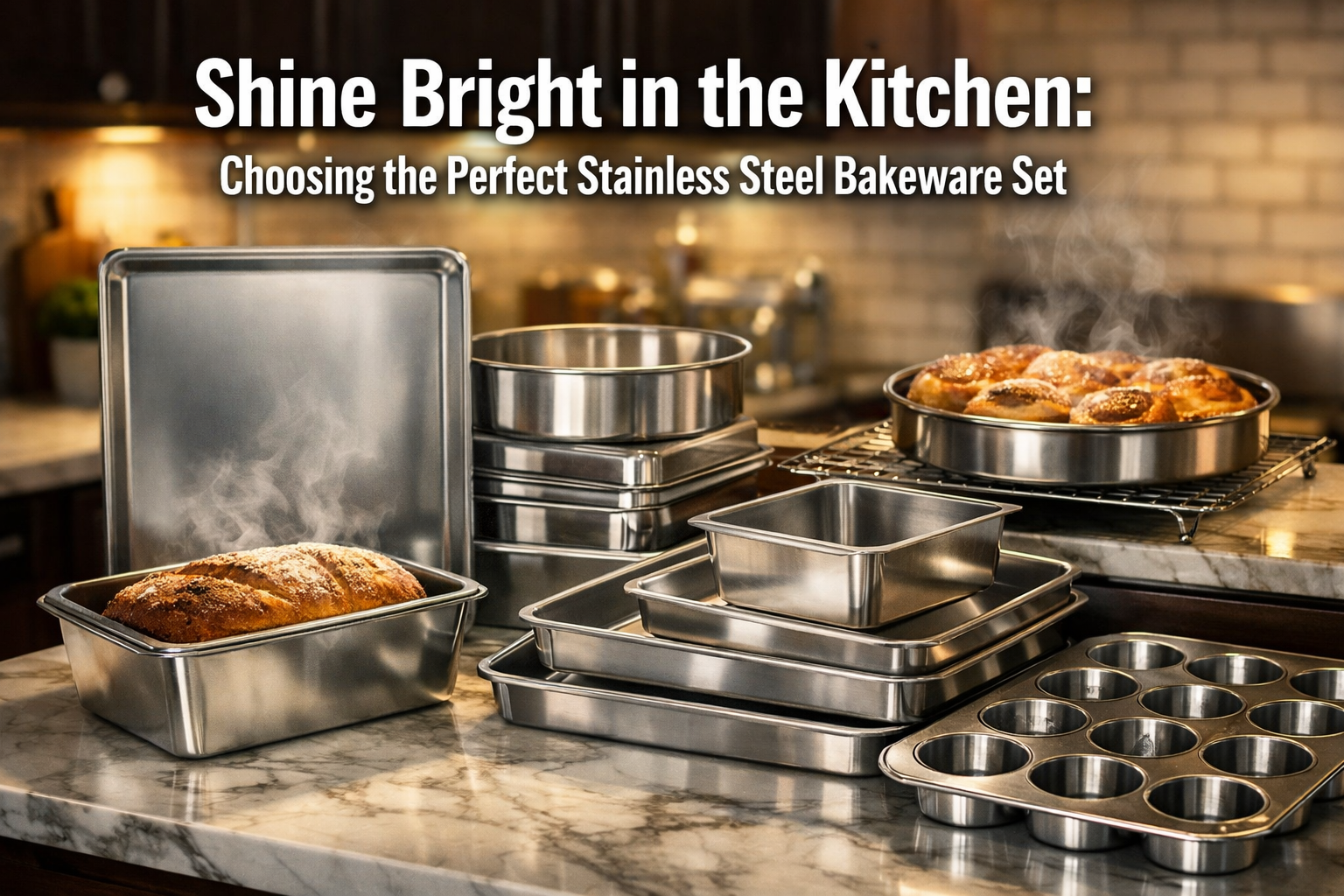
CStainless Steel Bakeware Set
Last updated: March 19, 2026
Quick Answer: Stainless Steel Bakeware Set is a smart, long-term investment for home bakers who want durable, non-toxic, and warp-resistant pans.
The best bakeware sets offer 18/10 or 18/0 stainless steel construction, reinforced rolled edges, and compatibility with high oven temperatures.
When comparing sets, prioritize gauge thickness, included pieces, and whether the set meets your specific baking needs, from roasting to delicate pastry work.
Key Takeaways
- Stainless steel bakeware is free from PTFE, PFOA, and other synthetic coatings, making it one of the safest choices for health-conscious bakers.
- Look for 18-gauge or thicker steel, thinner gauges warp under high heat and produce uneven browning.
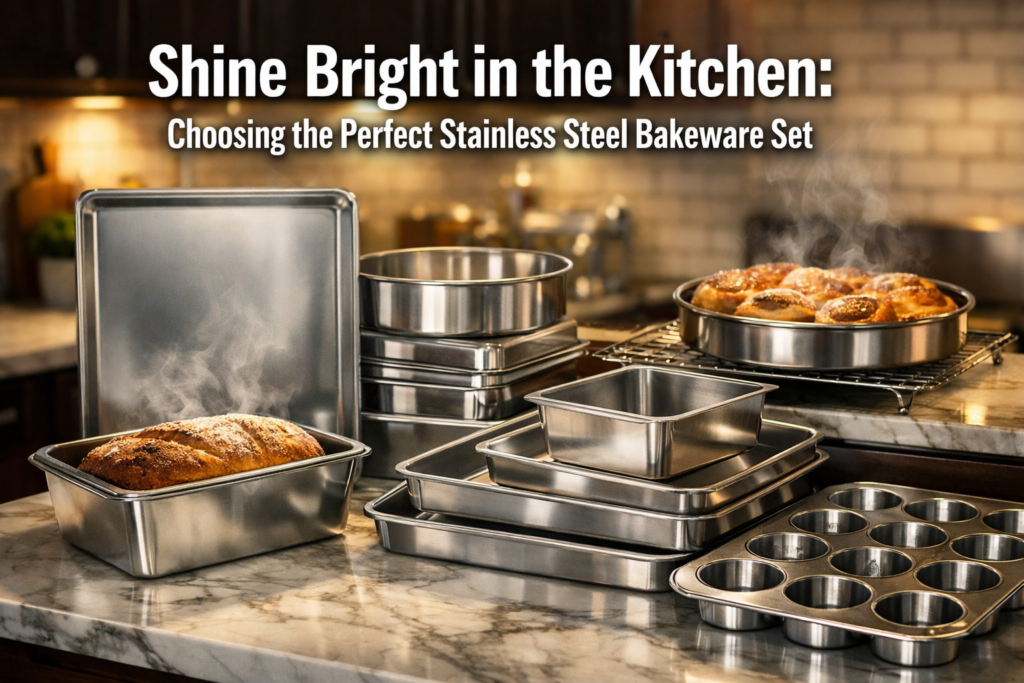
- A complete set typically includes a half-sheet pan, quarter-sheet pan, loaf pan, round cake pans, and a muffin tin. Not every set delivers all of these.
- Stainless steel requires more preparation than nonstick (greasing or parchment paper), but it lasts significantly longer.
- Price ranges vary widely, budget sets start around $30–$50, while professional-grade sets can exceed $150.
- Rolled or encapsulated edges prevent warping and add structural strength.
- Most stainless steel bakeware is dishwasher-safe, though hand washing preserves the finish longer.
- If you bake frequently or cook for a family, a larger set (5+ pieces) offers better value than buying individual pans.
Why Stainless Steel Bakeware Deserves a Spot in Your Kitchen
Stainless steel bakeware is the right choice for bakers who prioritize durability, food safety, and consistent performance over the convenience of a nonstick coating. Unlike coated aluminum pans, stainless steel does not leach chemicals at high temperatures, does not scratch easily, and will not degrade over time with regular use.
The material conducts heat differently than aluminum, it heats more slowly but retains heat well, which can produce crispier crusts on bread and more even browning on roasted vegetables. It’s also fully oven-safe at temperatures that would damage nonstick coatings, typically up to 500°F or higher.
For bakers moving away from coated pans, stainless steel is the natural upgrade. It pairs well with parchment paper or a light coat of butter and flour, and cleanup is straightforward once you understand the material.
If you’re just getting started, the bakeware essentials for new bakers guide covers the foundational pieces worth having before you invest in a full set.
Quick Comparison: Stainless Steel Bakeware Sets at a Glance
Because pricing and product availability shift frequently, the table below reflects general market categories rather than specific retail prices.
Use this as a framework when comparing sets side by side.
| Category | Typical Price Range | Steel Grade | Gauge | Pieces Included | Best For |
|---|---|---|---|---|---|
| Budget Sets | $30–$60 | 18/0 | 20–22 gauge | 3–5 pieces | Occasional bakers, beginners |
| Mid-Range Sets | $60–$120 | 18/10 | 18–20 gauge | 5–8 pieces | Regular home bakers |
| Professional Sets | $120–$200+ | 18/10 | 16–18 gauge | 6–10 pieces | Frequent bakers, serious cooks |
| Specialty/Boutique | $80–$180 | 18/10 | 18 gauge | 4–6 pieces | Gift buyers, design-focused kitchens |
Note: Gauge numbers work inversely — a lower gauge number means thicker, heavier steel.
Check Price and Availability on Amazon
What to Look for in a Stainless Steel Bakeware Set
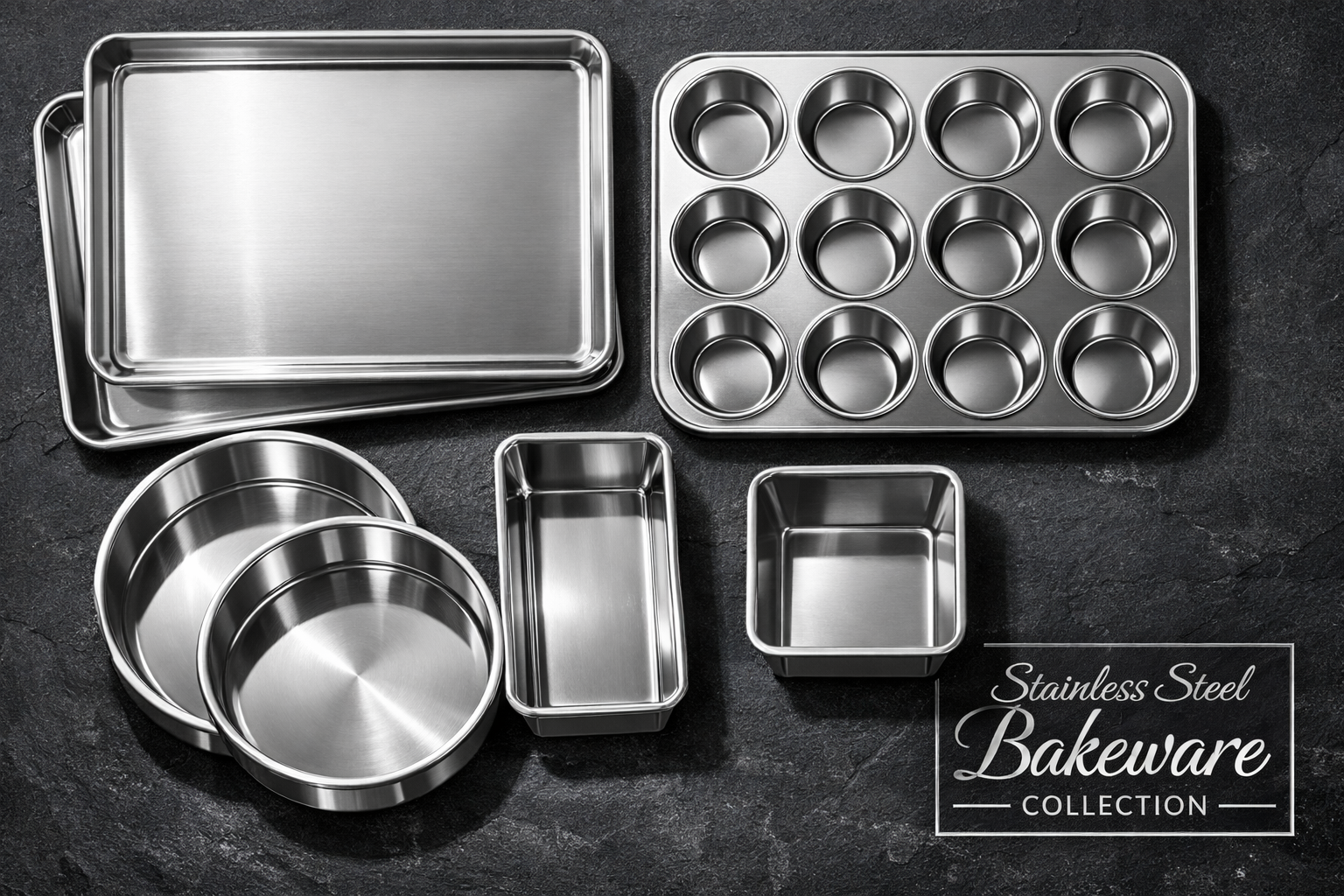
Choosing the right Stainless Steel Bakeware Set comes down to five core factors: steel grade, gauge thickness, edge construction, set composition, and price-to-value ratio. Each of these directly affects how the pans perform and how long they last.
Steel Grade: 18/10 vs. 18/0
The two numbers in stainless steel grading refer to chromium and nickel content. 18/10 stainless steel contains 18% chromium and 10% nickel, which gives it superior corrosion resistance and a brighter, more polished finish. 18/0 contains no nickel, making it slightly more affordable but also more prone to surface staining over time.
For bakeware, 18/10 is the better long-term investment. It resists rust, handles acidic foods without reacting, and maintains its appearance through years of use. Budget sets often use 18/0 or unspecified “stainless steel,” so check the product specifications before buying.
Gauge Thickness
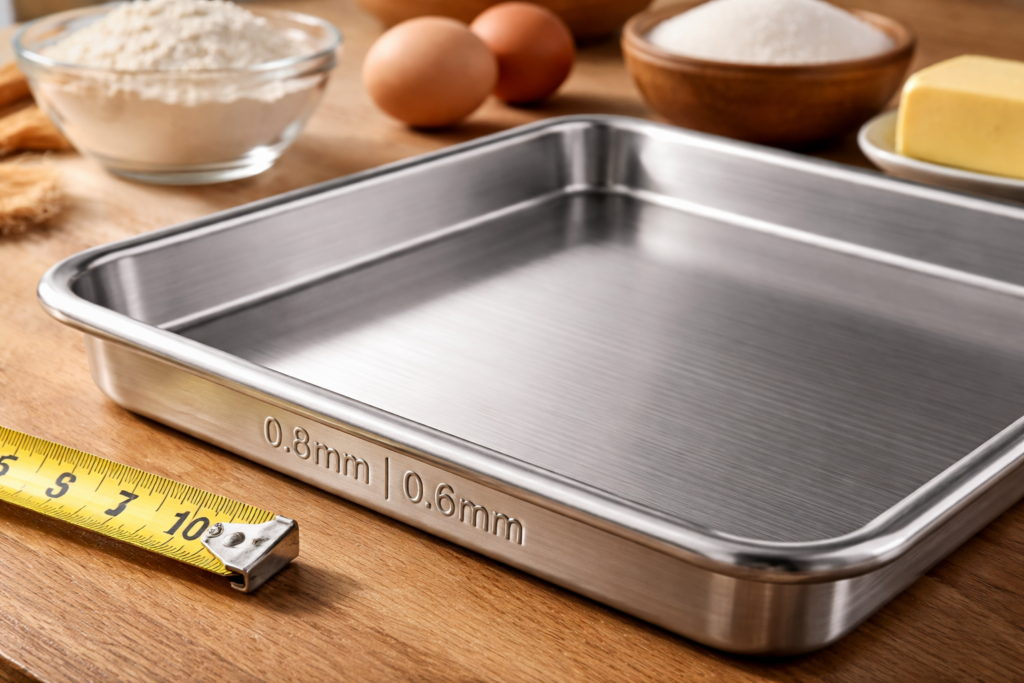
Gauge is the single most important performance factor in stainless steel bakeware. A pan made from 18-gauge steel is noticeably heavier and more warp-resistant than one made from 22-gauge steel. Thinner pans flex under high heat, which causes uneven baking and can permanently deform the pan.
- 16–18 gauge: Professional quality, heavy, excellent heat distribution, minimal warping risk.
- 20 gauge: Acceptable for home use, some flex possible at very high temperatures.
- 22 gauge and above: Budget territory, higher warping risk, shorter lifespan.
Edge Construction
Rolled edges, where the rim of the pan is folded over, add structural rigidity and prevent the sharp exposed edges that can occur with cheaper stamped pans. Some sets use reinforced wire rims, which add even more strength. This detail matters most for sheet pans and roasting pans, which are most vulnerable to warping.
What Pieces Should a Set Include?
A well-rounded stainless steel bakeware set should cover the most common baking tasks. Here’s what to look for:
- Half-sheet pan (18 x 13 inches) — the workhorse for cookies, roasting, and sheet cakes.
- Quarter-sheet pan (9 x 13 inches) — useful for smaller batches and toaster oven use.
- Two round cake pans (8 or 9 inches) — essential for layer cakes.
- Loaf pan (9 x 5 inches) — for bread, meatloaf, and pound cake.
- Muffin tin (12-cup) — for muffins, cupcakes, and egg bites.
- Cooling rack — some sets include one; it’s a valuable addition.
If a set skips the muffin tin or includes only one round cake pan, factor in the cost of buying those separately. For more guidance on building a complete kit, the bakeware essentials for new bakers resource is a practical starting point.
Stainless Steel vs. Other Bakeware Materials
Stainless steel outperforms coated aluminum in longevity and food safety, but it’s not the right material for every baking task.
Here’s a direct comparison:
Stainless steel vs. nonstick aluminum: Nonstick pans release food more easily without greasing, but coatings degrade over time and are not safe at temperatures above 450–500°F. Stainless steel lasts indefinitely with proper care. If you’re concerned about synthetic coatings, the best baking sheets non-toxic guide covers your options in detail.
Glass vs Stainless steel: Glass bakeware heats slowly and retains heat well, making it good for casseroles and custards. It’s fragile and not ideal for cookies or roasting. S Steel is more versatile and far more durable.
Stainless steel vs. carbon steel: Carbon steel is lighter and heats faster than stainless, but it requires seasoning and is prone to rust if not maintained properly. Stainless steel is lower maintenance and more forgiving for everyday bakers.
Ceramic vs Stainless Steel: Ceramic bakeware is attractive and distributes heat evenly, but it chips and cracks more easily than metal. For high-volume baking, stainless steel is the more practical choice.
How to Use and Care for Stainless Steel Bakeware
Stainless steel bakeware performs best when you prepare the surface properly and clean it correctly after each use.
Before baking:
- Grease the pan with butter, oil, or cooking spray, then dust with flour for cakes and breads.
- Use parchment paper for cookies and delicate items — this prevents sticking and makes cleanup faster.
- Avoid using cooking sprays with propellant (aerosol sprays) repeatedly, as the buildup can discolor the steel over time.
During baking:
- Preheat the oven fully before placing pans inside. Stainless steel benefits from a fully heated environment.
- Avoid placing cold pans directly on a hot oven rack from the refrigerator, thermal shock can cause warping in thinner gauges.
After baking:
- Allow pans to cool before washing. Running cold water over a hot pan can warp thinner steel.
- For stubborn baked-on residue, soak the pan in warm soapy water for 15–30 minutes, then use a non-abrasive scrubber.
- Avoid steel wool, which scratches the surface and can introduce rust over time.
- Dry pans thoroughly before storing to prevent water spots and surface oxidation.
For a deeper dive into maintaining the finish and preventing discoloration, the caring for your stainless steel pan guide covers common issues and solutions.
Who Should Buy a Stainless Steel Bakeware Set?
Stainless steel bakeware sets are the right choice for specific types of bakers.
Here’s a clear breakdown:
Buy a stainless steel set if you:
- Bake regularly (at least a few times per week) and want pans that last years without replacement.
- Prefer to avoid synthetic nonstick coatings for health or environmental reasons.
- Frequently roast vegetables, proteins, or other savory items alongside sweet baking.
- Have a high-heat oven or use the broiler regularly.
- Want bakeware that’s fully dishwasher-safe without worrying about coating damage.
Consider an alternative if you:
- Bake delicate items like macarons or thin cookies that require immediate, effortless release.
- Prefer lightweight pans that are easy to maneuver with one hand.
- Are on a tight budget and bake only occasionally, a single quality nonstick sheet pan may serve you better than a full stainless set.
For bakers working with limited space, the bakeware for small kitchens guide offers practical advice on choosing sets that stack efficiently and don’t overwhelm a compact kitchen.
Pricing and Where to Buy
Current pricing for stainless steel bakeware sets varies by retailer and changes frequently. As of early 2026, the most reliable sources for accurate, up-to-date pricing include:
- Manufacturer websites: Brands like Nordic Ware, USA Pan, and Vollrath list current retail prices directly. Checking these first gives you a baseline before comparing retailer discounts.
- Major retailers: Amazon, Williams Sonoma, Sur La Table, carry a wide range of sets with customer reviews that help verify real-world performance.
- Specialty kitchen stores: These often carry professional-grade sets not available through mass-market retailers.
When comparing prices, calculate the cost per piece rather than the total set price. A $120 set with 8 pieces ($15 per piece) is often a better value than a $60 set with 3 pieces ($20 per piece), especially if the quality is comparable.
For budget-conscious shoppers, the affordable baking tools to try resource highlights where to find quality bakeware without overspending.
FAQ: Stainless Steel Bakeware Sets
Is stainless steel bakeware truly non-toxic?
Yes. Stainless steel does not contain PTFE, PFOA, or other synthetic coatings. It does not leach chemicals into food at normal baking temperatures. 18/10 stainless steel is considered food-safe by major regulatory bodies including the FDA.
Does food stick to stainless steel bakeware?
More than nonstick, yes. Stainless steel requires proper greasing or parchment paper to prevent sticking. Once you establish a preparation routine, sticking is rarely a problem. Parchment paper is the easiest solution for cookies and cakes.
Can stainless steel bakeware go in the dishwasher?
Most stainless steel bakeware is dishwasher-safe. However, repeated dishwasher cycles can dull the finish over time. Hand washing with warm soapy water and a soft cloth preserves the appearance longer.
What oven temperature is safe for stainless steel bakeware?
Stainless steel bakeware is generally safe up to 500°F or higher, depending on the manufacturer. It can also handle broiler use, which is not possible with most nonstick pans. Always check the manufacturer’s stated maximum temperature for your specific set.
Why does my stainless steel pan have rainbow-colored stains?
This is called heat tinting or oxidation, and it’s a cosmetic issue, not a safety concern. It occurs when the pan is exposed to very high heat. It can be reduced by cleaning with a small amount of white vinegar or a stainless steel cleaner like Bar Keepers Friend.
How long does a quality stainless steel bakeware set last?
With proper care, a well-made stainless steel bakeware set can last 20 years or more. Professional-grade sets used in commercial kitchens often outlast the equipment around them. This is one of the primary reasons the upfront cost is justified over cheaper alternatives.
Is stainless steel bakeware good for bread baking?
Yes, particularly for sandwich loaves and quick breads. For artisan sourdough that benefits from steam and a very hot surface, a baking stone or Dutch oven may produce better results. The baking stone for sourdough guide covers this distinction in detail.
Final Verdict: Which Stainless Steel Bakeware Set Is Right for You?
The best Stainless Steel Bakeware Set is the one that matches your baking frequency, kitchen size, and budget, not necessarily the most expensive option on the market.
For serious home bakers: Invest in a professional-grade set with 18-gauge or thicker 18/10 stainless steel, reinforced edges, and at least six pieces. The higher upfront cost pays for itself within a few years compared to replacing cheaper sets.
For regular home bakers: A mid-range set in the $60–$120 range with 18/10 stainless and 18–20 gauge construction is the practical sweet spot. Look for sets that include a half-sheet pan, loaf pan, and at least one round cake pan as a minimum.
For beginners or occasional bakers: A budget-friendly 3–5 piece set is a reasonable starting point. Focus on gauge and edge quality even at the lower price tier, these two factors determine whether a budget set holds up or warps within a year.
Regardless of which set you choose, stainless steel bakeware is a sound long-term investment. It won’t need replacing when the coating wears off, it handles high heat without concern, and it performs consistently across a wide range of baking tasks.
Once you learn to work with the material, it’s hard to go back.
Check Price and Availability on Amazon
Related Reading
- Healthy non-toxic bakeware options
- Affordable cookware sets under $100
- Caring for your stainless steel pan

Leave a Reply
You must be logged in to post a comment.