
Understanding Copper Cookware Heat
Did you know that the thermal conductivity of copper is unmatched in the cooking world, influencing not just heat distribution but also the quality of your culinary creations?
What You Will Learn
- Copper cookware boasts a thermal conductivity of about 401 W/mK, significantly higher than aluminum (237 W/mK) and stainless steel (16 W/mK).
- Its superior heat responsiveness allows for instant adjustments to temperature changes, ideal for precision cooking.
- Copper cookware ensures uniform heat distribution, eliminating hot spots and enhancing cooking performance.
- It is favored by professional chefs for tasks like sauce reductions and delicate chocolate tempering, offering greater control over cooking processes.
- Investing in copper cookware can elevate your cooking techniques and significantly improve your kitchen experience.
Copper Cookware: Thermal Conductivity Comparison
Understanding the thermal conductivity of cookware materials is crucial for optimal cooking performance. Copper significantly outperforms aluminum and stainless steel in heat transfer capabilities, ensuring faster and more even heating.
Copper: Unmatched Heat Transfer
Heats up rapidly and maintains temperature effectively.
Aluminum: Good, but Slower
Offers decent heat conductivity, more common.
Stainless Steel: Lowest Conductivity
Poor heat conductor, often needs an aluminum or copper core.
Key Benefit: Even Heat Distribution
Ensures uniform cooking, preventing burning or undercooking.
The Science Behind Copper Cookware Heat Distribution
When it comes to cooking performance, the materials we use can make a world of difference. Copper cookware stands out due to its incredible thermal conductivity, which allows for quick and uniform heating.
In this section, let’s explore why copper excels in heat distribution compared to other popular materials like aluminum and stainless steel.

With a thermal conductivity value of about 401 W/mK, copper’s ability to transfer heat is unmatched. In contrast, aluminum has a conductivity of around 237 W/mK, while stainless steel lags behind at approximately 16 W/mK.
This means that copper cookware not only heats up faster but maintains its temperature more effectively, leading to better results in your culinary creations.
Understanding Thermal Conductivity: Why Copper Excels
It’s essential to grasp the concept of thermal conductivity to appreciate why copper cookware is so prized in the kitchen.
Thermal conductivity measures how well heat is transferred through a material. Copper’s high value means that it can quickly respond to changes in heat settings, making it ideal for tasks requiring precision.
- Superior heat responsiveness for precise cooking
- Instant adjustments to temperature changes
- Enhanced control over cooking techniques
With this efficient heat transfer, cooks can focus on creating delicious dishes without worrying about uneven cooking. This level of control is particularly beneficial when you’re preparing delicate sauces or confections that require specific temperatures.
How Even Heat Distribution Improves Cooking Performance
One of the key advantages of copper cookware is its ability to eliminate hot spots. When you cook with copper, you’re ensured of uniform heat distribution, which translates into better cooking performance. This characteristic makes it easier to achieve the desired doneness across your dishes.
- Even cooking for perfect results
- Reduced risk of burning or overcooking
- Improved flavor retention due to consistent temperatures
For instance, when making a delicate sauce, the last thing you want is to have parts of it boiling while others are simmering. Copper cookware takes the guesswork out of temperature control, allowing for a truly gourmet experience.
Heat Distribution Efficiency: The Key to Gourmet Cooking
In gourmet cooking, every detail matters, and heat distribution efficiency is a significant factor. Copper cookware’s ability to spread heat evenly means that you can master complex culinary techniques, from sautéing to slow cooking, effortlessly.
- Perfect for delicate sauces and custards
- Ideal for caramelizing and reducing liquids
- Enhances the effectiveness of sous-vide cooking
As a cooking enthusiast, I have found that using copper pots and pans elevates my dishes, making them restaurant-quality.
The consistent heat allows me to experiment more freely with flavors and textures, resulting in a delightful dining experience for my family and friends!
Practical Applications of Copper Cookware in the Kitchen
Now that we’ve covered the science of heat distribution, let’s dive into some practical applications. Understanding how to make the most of your copper cookware can truly enhance your cooking skills.
Pro Tip
Did you know? To maintain the exceptional performance of your copper cookware, consider lining it with stainless steel or tin. This not only enhances durability but also protects the copper’s wonderful heat conductivity, ensuring your dishes turn out perfectly every time!
Making an Informed Decision: Copper Cookware’s Role in Your Kitchen
When considering copper cookware, it’s essential to recognize its numerous benefits. The exceptional heat distribution, which we’ve already touched on, is just the tip of the iceberg!
Copper cookware not only ensures precise temperature control but also elevates cooking techniques to a professional level.
Beyond heat distribution, copper cookware is favored by many professional chefs. They appreciate its responsiveness, especially in tasks like sauce reductions and delicate chocolate tempering.
This responsiveness allows for **better control** over cooking processes, ensuring that your culinary creations turn out just right!
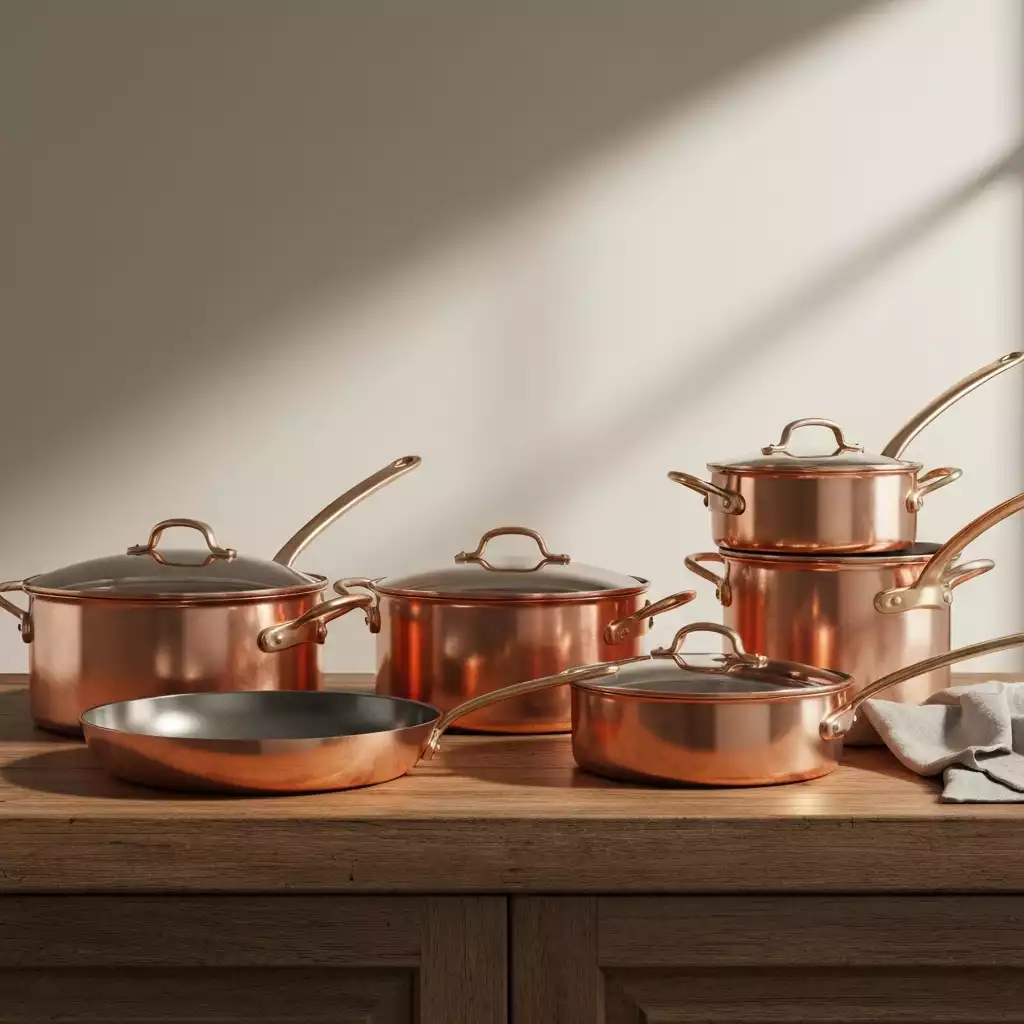
- Excellent heat conductivity for precise cooking
- Elimination of hot spots for uniform cooking
- Preferred by professionals for various techniques
- Versatile for both high and low-temperature applications
Ultimately, whether you’re an aspiring chef or someone who enjoys cooking at home, investing in copper cookware can significantly enhance your kitchen experience.
The benefits are clear, making it a worthy consideration for any serious cook!
Your Next Steps: Choosing the Right Copper Cookware for Your Needs
Now that you’re aware of the incredible benefits of copper cookware, it’s time to think about what suits your personal cooking style!
Take a moment to assess your cooking techniques, budget, and how much maintenance you’re willing to handle. Each of these factors plays a crucial role in selecting the right copper cookware for your kitchen.
For instance, if you frequently cook sauces or delicate dishes, investing in high-quality copper pots may be worthwhile.
If you’re budget-conscious, consider starting with a few essential pieces rather than a full set! There are various options out there, and finding what fits your lifestyle is key!
- Evaluate your cooking style: Are you a frequent chef or an occasional cook?
- Set a budget: Copper cookware comes at various price points.
- Consider maintenance: Are you comfortable with regular upkeep?
As you explore your options, I encourage you to check out reputable brands and products that meet your needs. With so many choices available, you can find the perfect balance of performance and affordability. Happy cooking!
Frequently Asked Questions About Copper Cookware
- What makes copper cookware superior to other materials?
- Copper boasts a thermal conductivity of 401 W/mK, significantly higher than aluminum (237 W/mK) and stainless steel (16 W/mK). This allows for rapid heating, instant temperature adjustments, and uniform heat distribution, eliminating hot spots.
- How does copper cookware improve cooking performance?
- Its superior thermal conductivity ensures uniform heat distribution, which translates to even cooking, reduced risk of burning, and improved flavor retention due to consistent temperatures. This precision is ideal for delicate culinary tasks.
- Is copper cookware suitable for all types of cooking?
- Yes, copper cookware is versatile and excellent for both high and low-temperature applications. It’s particularly favored by professional chefs for precision tasks like sauce reductions, delicate chocolate tempering, and custards.
- Do professional chefs really use copper cookware?
- Absolutely. Professional chefs highly value copper cookware for its responsiveness and control over cooking processes. Its consistent heat distribution is crucial for achieving gourmet results in complex culinary techniques.
- What should I consider before investing in copper cookware?
- When choosing copper cookware, consider your cooking style (frequency and type of dishes), your budget, and your willingness to handle maintenance. Many options are available to fit various needs and preferences.
- Is there any health concern with cooking in copper cookware?
- While copper is an essential nutrient, excessive intake can be harmful. Modern copper cookware is typically lined with a non-reactive material like stainless steel or tin to prevent copper from leaching into food, making it safe for cooking.
- For more information on copper in cookware, you can refer to studies on trace elements in food contact materials.
Recap of Key Points
Here is a quick recap of the important points discussed in the article:
- Copper cookware offers superior thermal conductivity (401 W/mK) for quick and uniform heating.
- Its high heat responsiveness allows for precise cooking with quick adjustments to temperature changes.
- Copper eliminates hot spots, ensuring even cooking and improved flavor retention.
- Ideal for delicate cooking techniques such as sauce reduction and custards, enhancing gourmet experiences.
- Investing in copper cookware can elevate your cooking skills, making it popular among professional chefs.
- Consider your cooking style, budget, and maintenance when selecting the right copper cookware for your needs.

One response to “Understanding Copper Cookware Heat”
[…] Copper cookware delivers unparalleled heat conductivity, responding instantly to temperature adjustments with precision that professional chefs demand. […]