Financier Pan
Last updated: February 2026
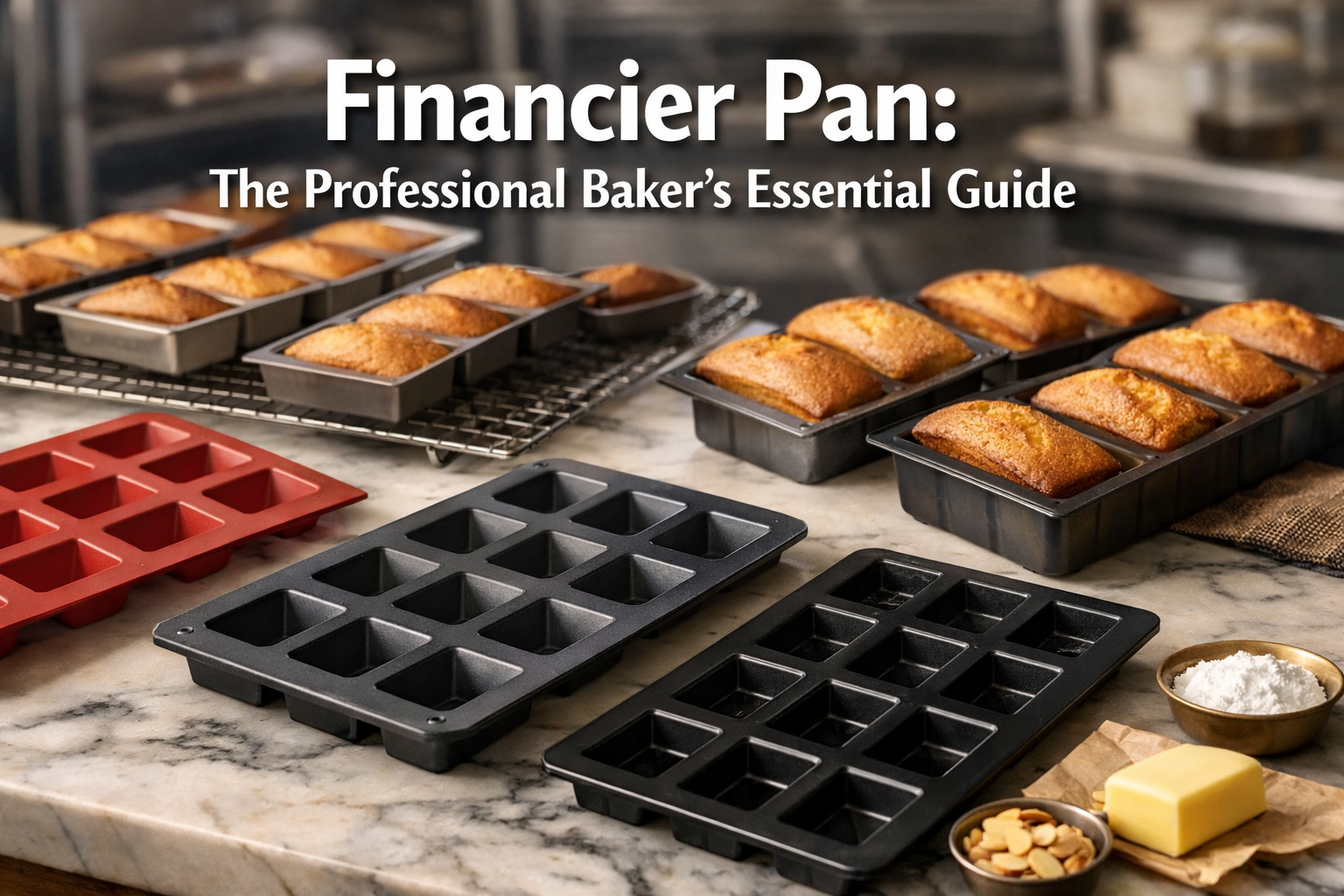
Picture a small French pastry with crispy golden edges and a tender, buttery center that melts on your tongue. That’s the financier, and creating these delicate almond cakes requires the right tool: a specialized Financier Pan.
Whether you’re a professional baker expanding your pastry repertoire or a home enthusiast chasing that perfect rectangular shape, understanding financier pans will transform your baking results.
A Financier Pan is a specialized baking mold designed to create the traditional rectangular or oval-shaped French almond cakes called financiers.
These pans feature individual cavities with sloped sides that give financiers their signature shape and crispy edges.
Available in materials ranging from non-stick coated metal to flexible silicone, financier pans come in various cavity counts and sizes to suit different baking needs.
TL;DR
- Financier pans create traditional French almond cakes with distinctive rectangular shapes and crispy edges
- Material choice matters: Teflon-coated metal offers superior browning while silicone provides easy release and flexibility
- Professional bakers typically choose 12-20 cavity pans while home bakers work well with 6-9 cavity options
- Proper care extends pan life significantly: hand washing and avoiding metal utensils are essential
- Price ranges from $15 for basic silicone molds to $45+ for professional-grade metal pans
What Is a Financier Pan and Why Do Bakers Need One?
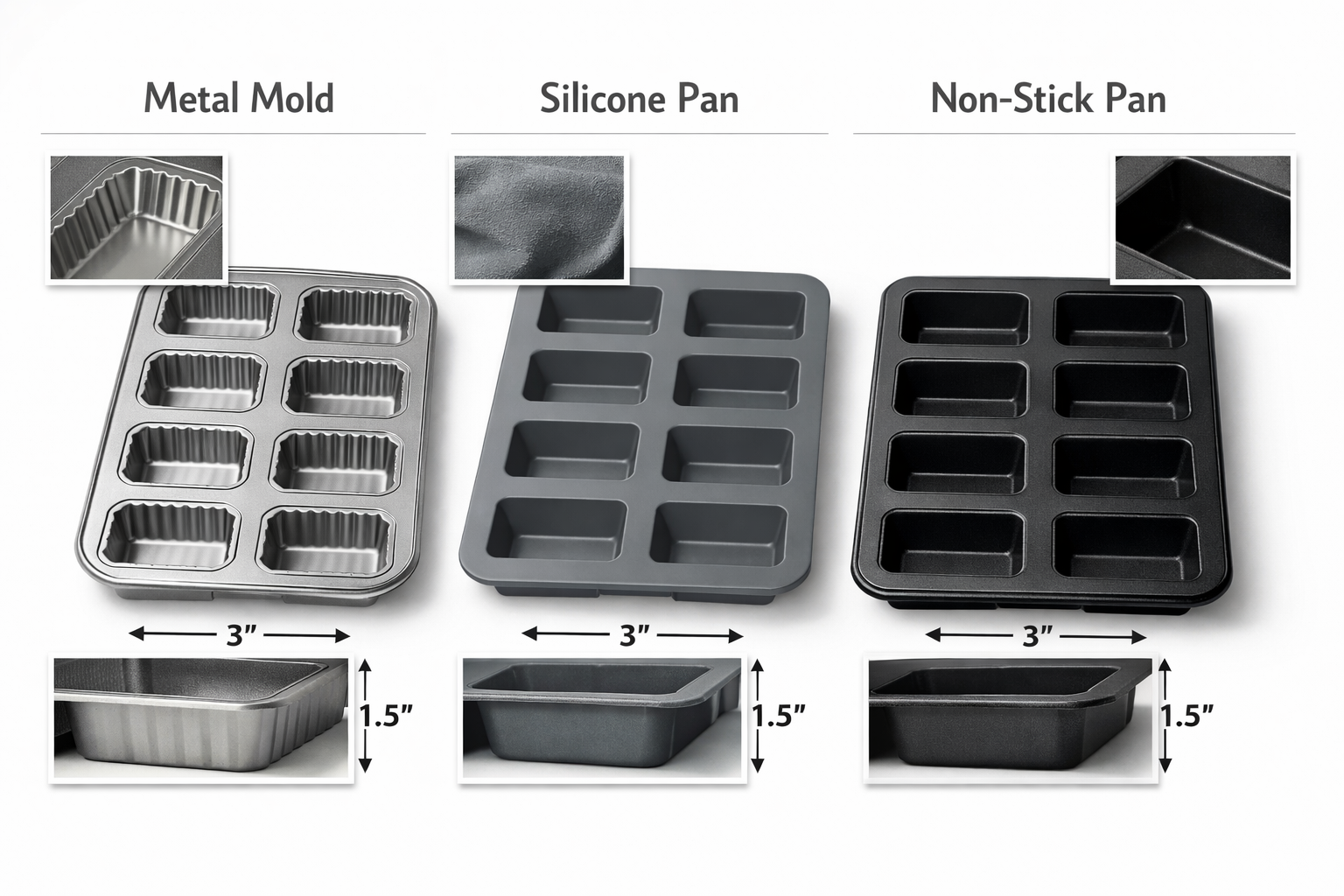
A financier pan is a specialized baking tool with individual rectangular or oval cavities designed specifically for making financiers, the classic French almond cakes traditionally shaped like gold bars. The pan’s unique design creates the signature sloped sides and crispy edges that define authentic financiers.
The story behind financiers is charming. French pastry chefs created these small cakes in the late 1800s near the Paris stock exchange. They shaped them like gold bars to appeal to financiers (bankers) who needed a quick, non-messy treat they could eat without getting their suits dirty. The rectangular shape wasn’t just decorative, it maximized the ratio of crispy edges to tender center, creating the perfect texture contrast.
Why standard muffin tins won’t work:
- Muffin tins create round, dome-shaped cakes instead of the traditional rectangular form
- The cavity depth in muffin pans doesn’t provide the right surface-to-batter ratio
- Financier pans have sloped sides that promote even browning and easy release
- The rectangular shape increases edge area, creating more of that desirable crispy crust
Professional bakers consider financier pans essential because they deliver consistent results. The uniform cavity size ensures even baking across all cakes, while the specialized shape creates the authentic appearance customers expect. For more specialized baking tools, explore our Financier Cake Pan Guide for comprehensive insights.
What Types of Financier Pans Are Available?
Financier pans come in three main material categories: non-stick coated metal, silicone, and traditional uncoated metal. Each type offers distinct advantages depending on your baking style, volume, and priorities.
Non-stick coated metal pans feature aluminum or steel bases with Teflon or similar coatings. These pans excel at heat conduction and browning, making them favorites in professional kitchens. The rigid structure maintains shape integrity even with heavy batters, and the dark coating promotes excellent caramelization on the cake edges.
Silicone financier molds provide maximum flexibility and easy release without greasing. These colorful, lightweight options work well for home bakers who value convenience and easy storage. Silicone withstands temperatures from -40°F to 450°F, making these molds freezer-to-oven safe.
Traditional uncoated metal pans appeal to purists seeking authentic French baking results. These require proper seasoning and greasing but deliver unmatched browning and durability when maintained correctly.
Comparison Table: Financier Pan Materials
| Material Type | Heat Conduction | Release Ease | Durability | Price Range | Best For |
|---|---|---|---|---|---|
| Teflon-coated metal | Excellent | Very good | 3-5 years | $25-$45 | Professional bakers, high volume |
| Silicone | Good | Excellent | 5-10 years | $15-$30 | Home bakers, easy cleanup |
| Uncoated metal | Excellent | Fair (needs prep) | 10+ years | $30-$50 | Traditionalists, experienced bakers |
| Ceramic-coated | Very good | Excellent | 2-4 years | $35-$55 | Health-conscious bakers |
Common mistake: Many bakers assume all non-stick coatings perform equally. Premium PFOA-free coatings last significantly longer and maintain release quality better than budget options. If you’re concerned about non-toxic options, check our guide on healthy non-toxic bakeware.
How Do Teflon and Silicone Financier Pans Compare?
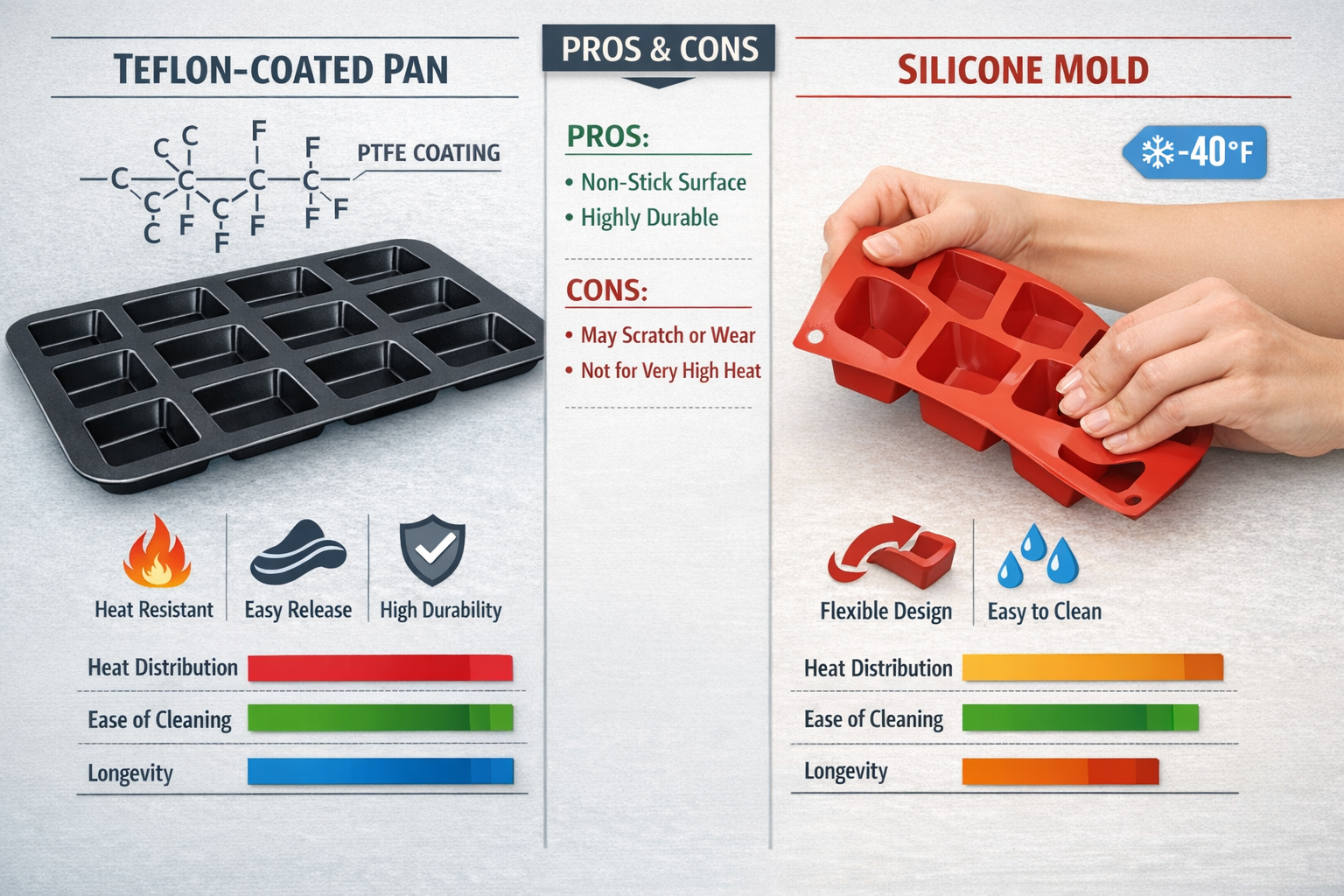
Teflon-coated metal pans and silicone molds represent the two most popular choices for modern bakers, each excelling in different areas. The decision between them depends on your baking priorities: browning performance versus convenience.
Teflon-coated financier pans deliver superior heat transfer, creating those coveted crispy, golden-brown edges that define excellent financiers. The rigid metal structure provides stability when moving filled pans to the oven, and the non-stick coating ensures consistent release when properly maintained. These pans typically feature 12-20 cavities and work exceptionally well for high-volume baking.
Silicone financier molds prioritize ease of use and cleanup. The flexible material allows you to pop out finished cakes by simply pushing from the bottom of each cavity. Silicone requires no greasing, stores compactly by folding or rolling, and goes directly from freezer to oven. However, silicone conducts heat less efficiently, sometimes resulting in lighter browning.
Performance Breakdown
Browning and texture:
- Teflon pans: Achieve deep golden-brown exteriors with pronounced crispy edges
- Silicone molds: Produce lighter browning with softer edges
- Choose Teflon if appearance and texture contrast matter most
Ease of release:
- Teflon pans: Require light greasing or butter-flour coating; 95% release success
- Silicone molds: Need no preparation; 99% release success
- Choose silicone for foolproof release every time
Durability concerns:
- Teflon coating can scratch or chip with metal utensils; typically lasts 3-5 years
- Silicone resists damage but can retain odors; lasts 5-10 years with proper care
- Both require specific care protocols to maximize lifespan
Temperature tolerance:
- Teflon pans: Safe to 450°F-500°F depending on coating quality
- Silicone molds: Safe from -40°F to 450°F
- Silicone wins for temperature versatility
Pro tip: Professional bakers often own both types—using metal pans for customer orders requiring perfect appearance and silicone for testing recipes or home use. Similar considerations apply when choosing between different baking pan materials for other applications.
Check Latest Prices
What Cavity Count and Size Should You Choose?
Financier pan cavity count ranges from 6 to 20 individual molds per pan, with cavity dimensions typically measuring 3 inches long by 1.5 inches wide by 0.75 inches deep. Your ideal configuration depends on baking volume, oven size, and intended use.
Standard cavity dimensions:
- Traditional size: 3″ L x 1.5″ W x 0.75″ D (holds about 2 tablespoons batter)
- Mini size: 2″ L x 1″ W x 0.5″ D (perfect for bite-sized portions)
- Large format: 4″ L x 2″ W x 1″ D (creates substantial individual servings)
Cavity count considerations:
6-9 cavity pans suit home bakers with standard ovens. These pans fit easily on most oven racks, bake evenly without rotation, and produce manageable batches for family consumption. A 9-cavity pan yields enough financiers for a dinner party while ensuring freshness.
12-15 cavity pans represent the sweet spot for serious home bakers and small commercial operations. This size maximizes oven space efficiency while remaining manageable to handle when filled. Most standard recipes yield enough batter for 12-15 financiers.
16-20 cavity pans target professional bakeries and high-volume production. These larger pans require commercial-sized ovens and careful handling due to weight when filled. They’re cost-effective for businesses but impractical for most home kitchens.
Practical example: A home baker making financiers for a weekend farmers market might choose two 12-cavity pans. This allows baking 24 financiers per oven cycle, producing 48-72 cakes in a morning session—enough for good sales without overwhelming production capacity.
Edge case: If you bake multiple items simultaneously, smaller 6-cavity pans offer flexibility. You can bake financiers alongside other pastries without monopolizing oven space.
What Technical Specifications Matter for Professional Bakeware?
Professional-grade financier pans feature specific technical characteristics that separate them from consumer-grade options. Understanding these specifications helps you identify pans that will perform consistently and last through thousands of baking cycles.
Material thickness directly impacts heat distribution and warping resistance. Professional pans use 0.8mm to 1.2mm thick aluminum or steel. Thinner materials (below 0.6mm) heat quickly but warp easily and create hot spots. Thicker construction (1.0mm+) provides even heating and maintains shape integrity over time.
Coating specifications determine release performance and longevity:
- Premium PTFE (Teflon) coatings: 2-3 layers, PFOA-free, rated for 500°F
- Ceramic coatings: Sol-gel technology, 450°F safe, eco-friendly
- Silicone quality: Food-grade platinum-cured silicone (not peroxide-cured)
- Coating thickness: 25-40 microns for durability
Cavity design features:
- Sloped sides: 5-10 degree angle promotes easy release and classic shape
- Reinforced edges: Rolled or wire-reinforced rims prevent warping
- Cavity spacing: Minimum 0.5″ between cavities ensures even air circulation
- Base design: Dimpled or textured bottoms improve heat transfer
Weight and construction:
- 12-cavity metal pan: 1.5-2.5 pounds (heavier indicates better material)
- Silicone 12-cavity mold: 8-12 ounces
- Reinforced frames: Silicone molds with metal frames offer stability
Oven compatibility:
- Standard ovens: Pans up to 15″ x 10″ fit most home ovens
- Commercial ovens: Can accommodate 18″ x 13″ professional pans
- Convection settings: All materials work well; reduce temperature 25°F
Common mistake: Assuming all “professional” labeled pans meet commercial standards. Check actual specifications material thickness, coating layers, and construction quality rather than relying on marketing terms.
For comparison with other professional-grade options, see our reviews of Fat Daddio’s cake pans, known for their commercial-quality construction.
Check Latest Prices
How Should You Care for and Maintain Your Financier Pan?
Proper care extends your financier pan’s lifespan from months to years while maintaining optimal release performance and appearance. Different materials require specific maintenance approaches, but all benefit from gentle handling and thorough cleaning.
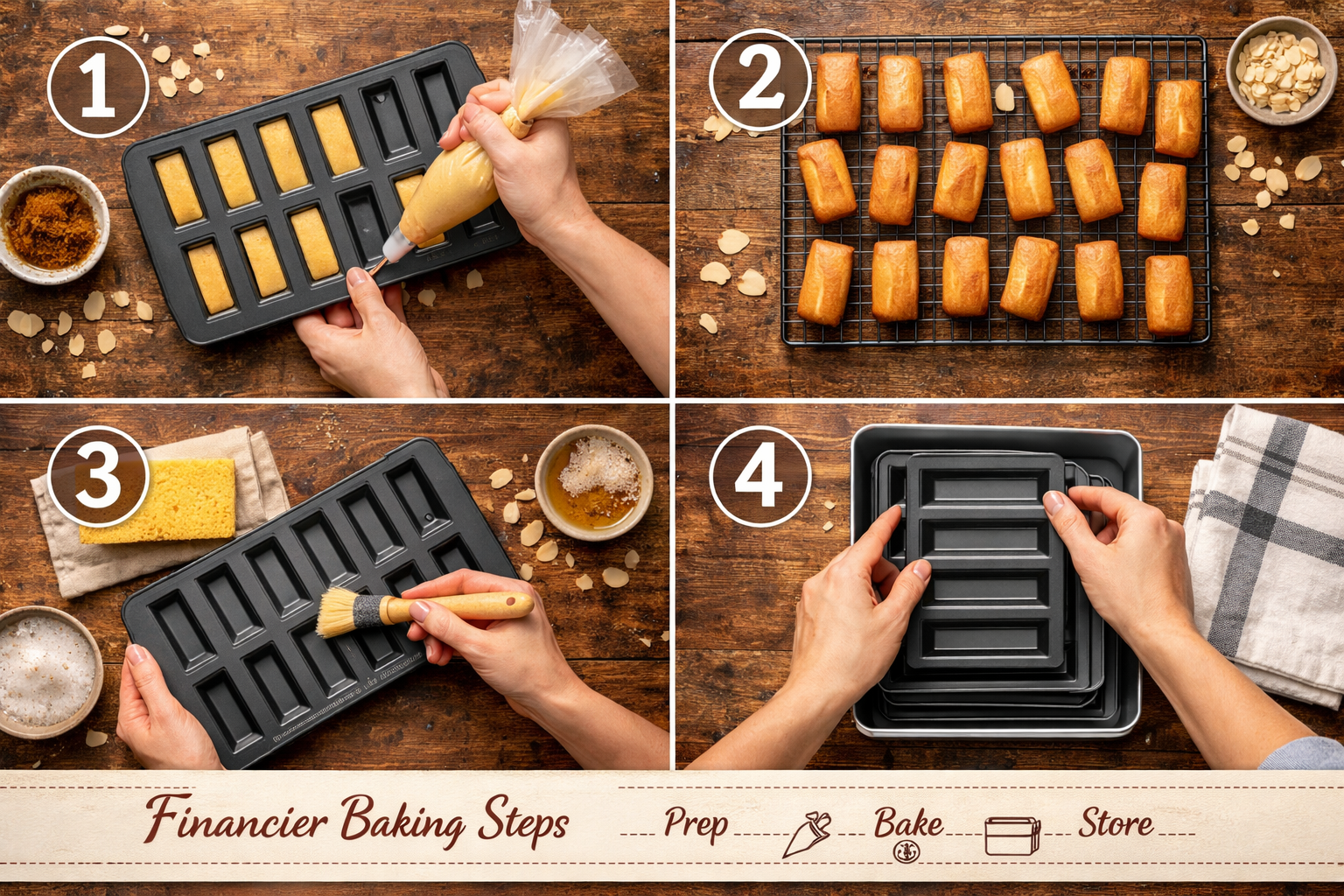
For Teflon-coated metal pans:
- Cool completely before washing—thermal shock damages coatings
- Hand wash only with warm water and mild dish soap
- Use soft sponges or cloths; never abrasive scrubbers or steel wool
- Dry immediately to prevent water spots and coating degradation
- Store carefully with paper towels between stacked pans to prevent scratching
- Re-season occasionally by coating lightly with vegetable oil and baking empty at 300°F for 20 minutes
For silicone molds:
- Wash in warm soapy water or top-rack dishwasher
- Remove odors by soaking in baking soda solution (1/4 cup per quart water)
- Dry thoroughly before storing to prevent mildew
- Avoid sharp objects that could puncture or tear the material
- Store flat or loosely rolled to maintain shape
- Deep clean monthly with white vinegar to remove residue buildup
Universal maintenance tips:
- Never use cooking spray—it creates sticky buildup that’s hard to remove
- Avoid metal utensils that scratch protective coatings
- Don’t cut or slice cakes while still in the pan
- Store in dry locations away from direct sunlight
- Inspect regularly for coating damage or material degradation
Troubleshooting common issues:
| Problem | Cause | Solution |
|---|---|---|
| Cakes sticking | Insufficient greasing or coating wear | Increase butter/flour prep; consider replacement if coating damaged |
| Uneven browning | Hot spots from warping | Rotate pan halfway through baking; replace warped pans |
| Discoloration | Normal patina from use | Cosmetic only; doesn’t affect performance |
| Odor retention (silicone) | Fat absorption | Baking soda soak; ensure thorough drying |
Professional insight: Commercial bakeries replace Teflon pans every 18-24 months under heavy use, while home bakers can expect 5+ years with proper care. Silicone molds in professional settings last 3-5 years; home use can extend this to a decade.
For more detailed care instructions for different pan types, check our guide on caring for stainless steel pans, which shares principles applicable to all quality bakeware.
What’s the Price-to-Performance Ratio for Different Financier Pans?
Understanding the relationship between cost and performance helps you invest wisely in financier pans that match your baking frequency and quality expectations. Not every baker needs the most expensive option, but choosing solely on price often leads to disappointing results and frequent replacements.
Budget tier ($15-$25):
- Basic silicone molds from mass-market brands
- Thin metal pans with standard non-stick coatings
- Typically 6-12 cavities
- Best for: Occasional bakers, recipe testing, beginners
- Expected lifespan: 1-2 years with moderate use
- Performance: Adequate release, lighter browning, may warp
Mid-range tier ($25-$40):
- Quality silicone with reinforced frames
- Thicker aluminum with premium PFOA-free coatings
- Professional cavity counts (12-15)
- Best for: Regular home bakers, small cottage businesses
- Expected lifespan: 3-5 years with proper care
- Performance: Excellent release, good browning, consistent results
Professional tier ($40-$60+):
- Commercial-grade construction (1.0mm+ thickness)
- Multi-layer premium coatings or French tinned steel
- 15-20 cavities, restaurant-quality standards
- Best for: Professional bakers, high-volume production
- Expected lifespan: 5-10 years in commercial use
- Performance: Superior browning, perfect release, exceptional durability
Value calculation example:
A $20 budget pan used weekly might last 18 months (78 uses) = $0.26 per use
A $45 professional pan used weekly might last 6 years (312 uses) = $0.14 per use
The professional pan delivers better results at lower per-use cost over time.
Cost-effectiveness factors:
- Baking frequency: Daily users justify premium prices; monthly bakers do fine with mid-range
- Quality requirements: Selling baked goods demands professional appearance
- Replacement costs: Cheap pans replaced frequently cost more than one quality purchase
- Energy efficiency: Better heat conduction reduces baking time and energy costs
Smart buying strategy: Start with one quality mid-range pan to learn proper technique. Add professional-grade pans as your skills and volume increase. Keep one budget silicone mold for experimental recipes or teaching children to bake.
Red flag: Pans priced under $12 typically use thin materials and inferior coatings that fail quickly. The slight savings isn’t worth the frustration and replacement cost.
How Do Financier Pans Fit into International Baking Standards?
Financier pans reflect broader international standards for professional bakeware, with European and American manufacturers following different sizing conventions and quality certifications. Understanding these standards helps you choose pans compatible with your recipes and baking style.
European standards (primarily French):
- Dimensions in centimeters: typical cavity 7.5cm x 4cm x 2cm
- Tinned steel construction remains traditional in France
- LFGB certification (German food safety standard) common
- Emphasis on artisanal production and traditional shapes
American standards:
- Dimensions in inches: typical cavity 3″ x 1.5″ x 0.75″
- Aluminum with non-stick coatings dominates market
- FDA food-contact compliance required
- Focus on convenience and dishwasher compatibility
Material safety certifications to look for:
- LFGB approved: German standard for food contact materials (strictest in Europe)
- FDA compliant: Required for sale in United States
- PFOA-free: Ensures coating doesn’t contain harmful perfluorooctanoic acid
- Food-grade silicone: Platinum-cured rather than peroxide-cured
- BPA-free: Important for any plastic components
Recipe compatibility considerations:
French recipes often specify pan dimensions in centimeters and may require slight batter adjustments when using American-sized pans. A traditional French financier recipe yielding 12 cakes in 7.5cm molds might produce 14-15 in 3-inch American cavities due to volume differences.
Professional certifications:
Commercial bakeries in Europe often require equipment meeting specific hygiene standards (HACCP compliance). American commercial kitchens prioritize NSF certification for food equipment, though this rarely applies to individual baking pans.
Cross-cultural baking insight: Japanese pastry chefs have embraced financiers enthusiastically, often using smaller cavity sizes (2-2.5 inches) to create delicate, portion-controlled versions. This reflects broader Japanese preferences for refined, smaller sweets.
Sustainability considerations:
European manufacturers increasingly emphasize recyclability and eco-friendly coatings. Look for pans made from recycled aluminum or featuring water-based ceramic coatings if environmental impact matters to you. Our guide to sustainable bakeware options explores this topic further.
What Do Professional Bakers Recommend for Financier Pans?
Check Latest Prices
Professional pastry chefs and experienced bakers consistently recommend specific features and brands based on real-world performance in demanding commercial environments. Their insights come from baking hundreds or thousands of financiers and experiencing firsthand what works and what fails.
Top professional recommendations:
Material choice: 90% of professional pastry chefs prefer heavy-gauge aluminum with premium non-stick coatings for daily production. The combination of excellent heat conduction, easy release, and reasonable durability makes these pans workhorses in commercial kitchens.
Cavity configuration: Professionals recommend 12-15 cavity pans as the optimal balance. This size maximizes production efficiency while remaining manageable for one person to handle safely when filled with batter.
Financier Pan Guide
Essential features professionals prioritize:
- Reinforced construction: Wire-reinforced edges prevent warping under repeated high-heat use
- Uniform cavity depth: Ensures consistent baking times across all positions
- Adequate spacing: Minimum 0.5″ between cavities for proper air circulation
- Easy-grip handles: Essential for safe oven-to-counter transfer when hot
- Stackability: Saves valuable storage space in commercial kitchens
Professional baker testimonial insights:
Pastry chefs emphasize that the pan’s ability to create consistent browning matters more than any other factor. Customers expect uniform appearance, and inconsistent results waste time and ingredients. They recommend investing in two identical pans rather than one premium and one budget option—consistency across batches matters.
Commercial kitchen priorities:
- Durability: Must withstand daily use for 2+ years
- Cleaning efficiency: Quick cleanup between batches saves labor costs
- Storage footprint: Compact storage maximizes limited kitchen space
- Replacement availability: Stick with established brands that won’t discontinue models
Common professional practice: Many bakeries maintain a rotation system—using newer pans for customer orders requiring perfect appearance while relegating older pans to staff meals or recipe testing. This maximizes the useful life of each pan.
What professionals avoid:
- Extremely cheap pans that warp after a few uses
- Overly complex designs with hard-to-clean details
- Pans without heat-safe handles or grips
- Silicone molds for high-volume production (too slow to cool between batches)
Recommended buying approach: Purchase one quality pan first. Use it for several months to understand your specific needs, then add additional pans matching your proven preferences. This prevents investing heavily in pans that don’t suit your workflow.
For insights into other professional-grade baking tools, explore our brioche mold guide, which covers similar considerations for specialized French baking.
Frequently Asked Questions About Financier Pans
What makes a financier pan different from a madeleine pan?
The Financier pan has rectangular or oval cavities with straight or slightly sloped sides, while madeleine pans feature shell-shaped cavities with scalloped edges. Financiers create bar-shaped cakes; madeleines produce shell-shaped cookies. The batters differ too, financiers use browned butter and more almond flour, requiring different cavity depths.
Can you use a financier pan for other recipes?
Yes. Financier pans work excellently for mini brownies, cornbread sticks, individual quiches, savory herb cakes, and frozen dessert bars. The rectangular shape and portion control make these pans versatile beyond traditional financiers. Just adjust baking times based on your recipe’s density and moisture content.
Financier Pan
Do you need to grease silicone financier molds?
Generally no. Quality food-grade silicone provides natural non-stick properties without greasing. However, some bakers lightly butter silicone molds when making very lean batters or when seeking extra browning. Always follow your specific recipe’s recommendations.
How do you prevent financiers from sticking?
For metal pans, use the traditional French method: brush cavities with melted butter, dust with flour, then tap out excess. For silicone, ensure molds are completely clean and dry before filling. Never use cooking spray, which creates sticky residue. Allow cakes to cool 2-3 minutes before removing.
What temperature should you bake financiers at?
Most financier recipes call for 375°F-400°F (190°C-200°C). The high temperature creates the signature crispy edges while keeping centers tender. Silicone molds may require slightly higher temperatures or longer baking times due to slower heat conduction. Always verify doneness with a toothpick test.
How long do financier pans last?
Quality Teflon-coated pans last 3-5 years with home use, 1.5-2 years in commercial settings. Silicone molds last 5-10 years for home bakers, 3-5 years professionally. Proper care—hand washing, avoiding metal utensils, thorough drying—significantly extends lifespan. Replace pans when coatings chip or release performance declines.
Can financier pans go in the dishwasher?
Silicone molds can typically handle top-rack dishwasher cleaning, though hand washing extends their life. Never put Teflon-coated metal pans in dishwashers—the harsh detergents and high heat degrade coatings rapidly. Always check manufacturer instructions for your specific pan.
Financier Pan Guide
What’s the best brand for financier pans?
Professional bakers frequently recommend Matfer Bourgeat (French, traditional quality), USA Pan (American, excellent value), and de Buyer (French, premium construction). For silicone, Silikomart and Lékué receive consistent praise. Choose based on your budget and baking frequency rather than brand alone.
Why are my financiers browning unevenly?
Uneven browning typically indicates hot spots from pan warping or oven temperature inconsistencies. Rotate the pan 180 degrees halfway through baking. Ensure your oven temperature is accurate using an oven thermometer. Warped pans should be replaced—they won’t heat evenly.
How many financiers does a standard recipe make?
Traditional financier recipes yield 12-15 cakes, perfectly matching standard pan sizes. Recipe quantities depend on cavity volume—standard 3-inch cavities hold about 2 tablespoons batter each. Scale recipes up or down based on your pan’s cavity count.
Can you freeze batter in financier pans?
Yes, especially with silicone molds. Fill cavities with batter, freeze until solid, then pop out frozen portions and store in freezer bags. Bake directly from frozen, adding 3-5 minutes to baking time. This technique enables fresh-baked financiers on demand.
What’s the difference between cheap and expensive financier pans?
Expensive pans use thicker materials (1.0mm+ vs 0.4-0.6mm), premium multi-layer coatings, and better construction quality. They heat more evenly, resist warping, and last significantly longer. Cheap pans work for occasional use but fail quickly under regular baking. The per-use cost often favors quality pans.
Key Takeaways
- Financier pans are specialized tools designed to create traditional French almond cakes with distinctive rectangular shapes and optimal crispy-to-tender ratios that standard muffin tins cannot replicate
- Material selection drives performance: Teflon-coated metal pans excel at browning and heat conduction for professional results, while silicone molds prioritize convenience and foolproof release for home bakers
- Cavity count should match your needs: 6-9 cavities suit occasional home baking, 12-15 cavities balance efficiency and manageability, and 16-20 cavities serve commercial production requirements
- Quality specifications matter significantly: Look for 0.8mm+ material thickness, premium PFOA-free coatings, proper cavity spacing, and reinforced construction for durability and consistent results
- Proper care extends lifespan dramatically: Hand wash Teflon pans with soft sponges, avoid metal utensils on all non-stick surfaces, dry thoroughly before storage, and never use cooking spray
- Price reflects long-term value: Mid-range pans ($25-$40) offer the best balance for regular bakers, while professional-grade options ($40+) deliver lower per-use costs through extended durability
- Professional recommendations emphasize consistency: Invest in matching pans for uniform results, prioritize even heat distribution over fancy features, and choose established brands with reliable replacement availability
- Versatility extends beyond financiers: These pans excel at mini brownies, cornbread sticks, individual quiches, and frozen dessert bars, maximizing your investment
- International standards vary: European pans use centimeter dimensions and traditional materials while American options favor inch measurements and modern coatings—ensure recipe compatibility
- Sustainability considerations grow: Look for recycled aluminum construction, eco-friendly ceramic coatings, and long-lasting designs that reduce replacement frequency and environmental impact
Conclusion
Choosing the right Financier Pan transforms your ability to create authentic French almond cakes with professional-quality results. Whether you prioritize the superior browning of Teflon-coated metal pans or the convenience of flexible silicone molds, understanding the technical specifications, care requirements, and performance characteristics ensures your investment delivers consistent results for years.
The decision ultimately depends on your specific baking context. Home bakers making occasional batches for family and friends will find excellent value in mid-range silicone or coated metal pans with 9-12 cavities.
Professional bakers and serious enthusiasts should invest in commercial-grade metal pans that withstand high-volume production while delivering the impeccable appearance customers expect.
Your next steps:
- Assess your baking frequency and volume to determine the appropriate cavity count and quality tier
- Choose your material based on whether browning performance or ease of use matters more for your situation
- Verify specifications including material thickness, coating quality, and cavity dimensions before purchasing
- Start with one quality pan to learn proper technique and confirm it matches your workflow
- Implement proper care protocols from day one to maximize your pan’s lifespan and performance
- Expand your collection strategically by adding identical pans once you’ve proven your preferences
Remember that a quality Financier Pan is an investment in your baking capabilities. The difference between mediocre and exceptional financiers often comes down to the tool you use.
Check Latest Prices
Choose wisely, care for your pans properly, and you’ll enjoy perfect golden-brown financiers with crispy edges and tender centers for years to come.
Ready to explore more specialized baking equipment?
Check our comprehensive guides on fluted tart pans and other professional pastry tools to expand your baking repertoire.
References
[6] Lets Talk Financiers – https://www.frenchtarte.com/news-blog/2015/03/lets-talk-financiers.html


One response to “Financier Pan: Professional Bakers Essential Guide 2026”
[…] This heavy-gauge construction prevents warping and ensures consistent heat distribution across the entire pan. […]