
Baking Pan For Lasagna
Last updated: February 20, 2026
The right Baking Pan For Lasagna determines whether layers cook evenly, edges brown properly, and cleanup takes five minutes or fifty. A poor pan warps at high heat, sticks relentlessly, or distributes temperature so unevenly that the center stays cold while corners burn.
This guide breaks down exactly what to look for in lasagna bakeware, which materials perform best, and how to match a pan to the way you actually cook.
Key Takeaways
- Aluminized steel (like USA Pan) offers the best combination of even heat distribution, durability, and weight for most home cooks
- Standard lasagna pans measure 9×13 inches, but deep dish lasagna pan options (3+ inches deep) handle thicker, multi-layer recipes without overflow
- Ceramic and glass pans retain heat longer for serving but heat up slower and carry thermal shock risk
- Budget metal pans ($20-$30) outperform budget glass in durability and browning performance
- Non-stick coatings dramatically reduce cleanup time but vary widely in longevity
Quick Answer
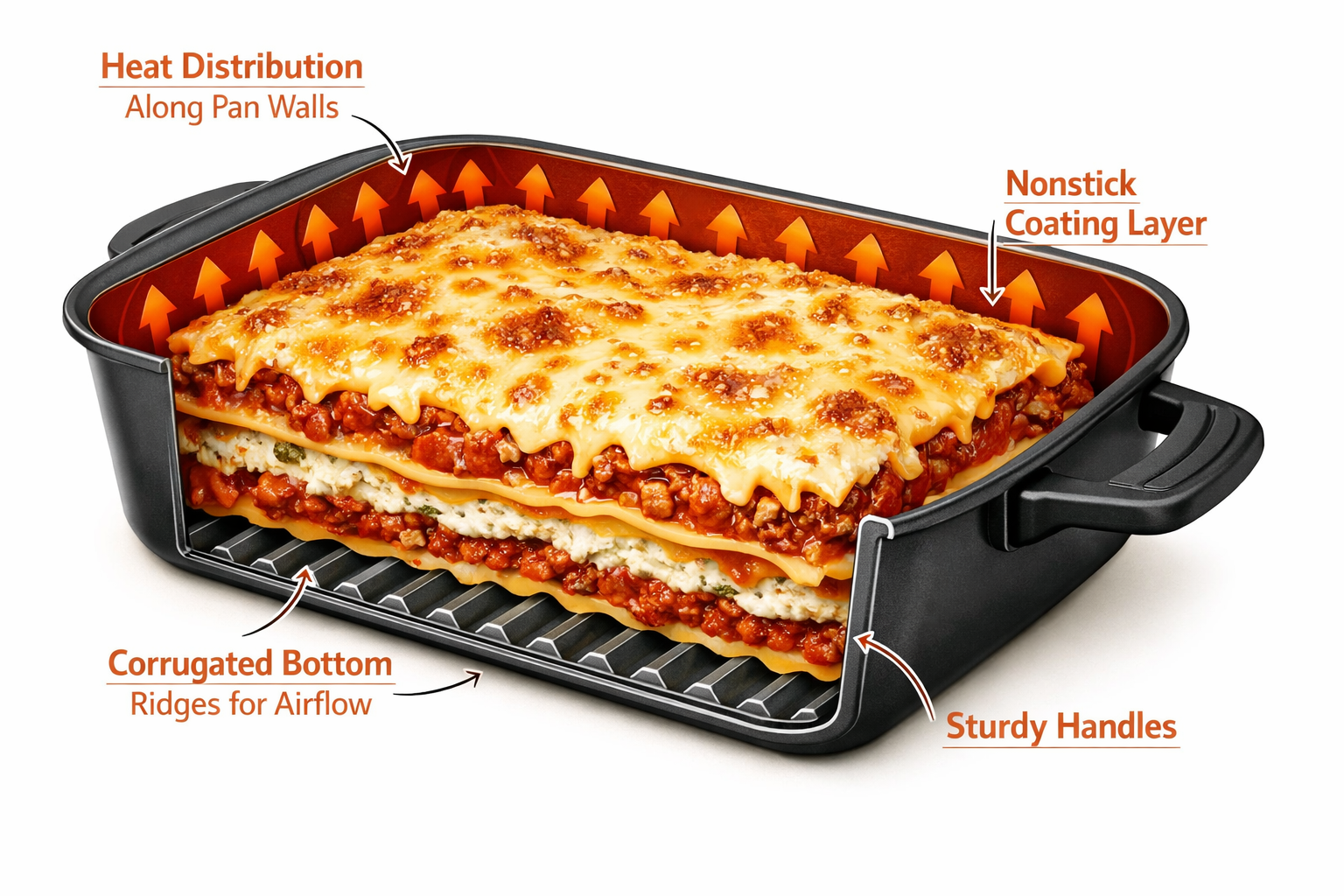
The best Baking Pan For Lasagna in 2026 is an aluminized steel pan in the 9×13-inch format with at least 2.5 inches of depth, a non-stick coating, and sturdy handles.
This combination delivers even heat distribution up to 450°F+, resists warping, and releases baked-on cheese without soaking.
For those who prioritize presentation and oven-to-table serving, a ceramic lasagna pan is the strongest alternative.
Check Latest Deals and Prices
What Makes the Best Lasagna Pan? Core Selection Criteria
A great lasagna pan needs to do four things well: distribute heat evenly, hold multiple layers without overflow, release food cleanly, and survive years of use. Everything else is secondary.
The five factors that matter most:
- Heat distribution — Uneven heating creates dry corners and undercooked centers. Metals like aluminized steel and aluminum conduct heat far better than glass or ceramic.
- Depth — Standard lasagna recipes need at least 2.5 inches. If you build 5+ layer lasagnas or high-moisture recipes, look for 3-inch or deeper pans.
- Size — The 9×13-inch rectangle is the standard for a reason: it fits most oven racks and serves 8-12 portions. Smaller pans work for 4-6 servings.
- Handles — Full-size lasagna pans weigh 8-12 pounds when loaded. Integrated handles with a good grip prevent accidents.
- Non-stick surface — Cheese bonds aggressively to bare metal and unglazed ceramic. A quality non-stick lasagna dish or well-glazed ceramic surface saves significant cleanup effort.
Common mistake: Buying a pan that’s too shallow. A 2-inch pan works for thin lasagnas but will overflow with ricotta-heavy or meat sauce recipes. Choose 2.5 inches minimum.
For a broader look at how to evaluate kitchen bakeware, see our guide on what considerations are important when selecting cookware.
Which Material Is Best for a Baking Pan for Lasagna?
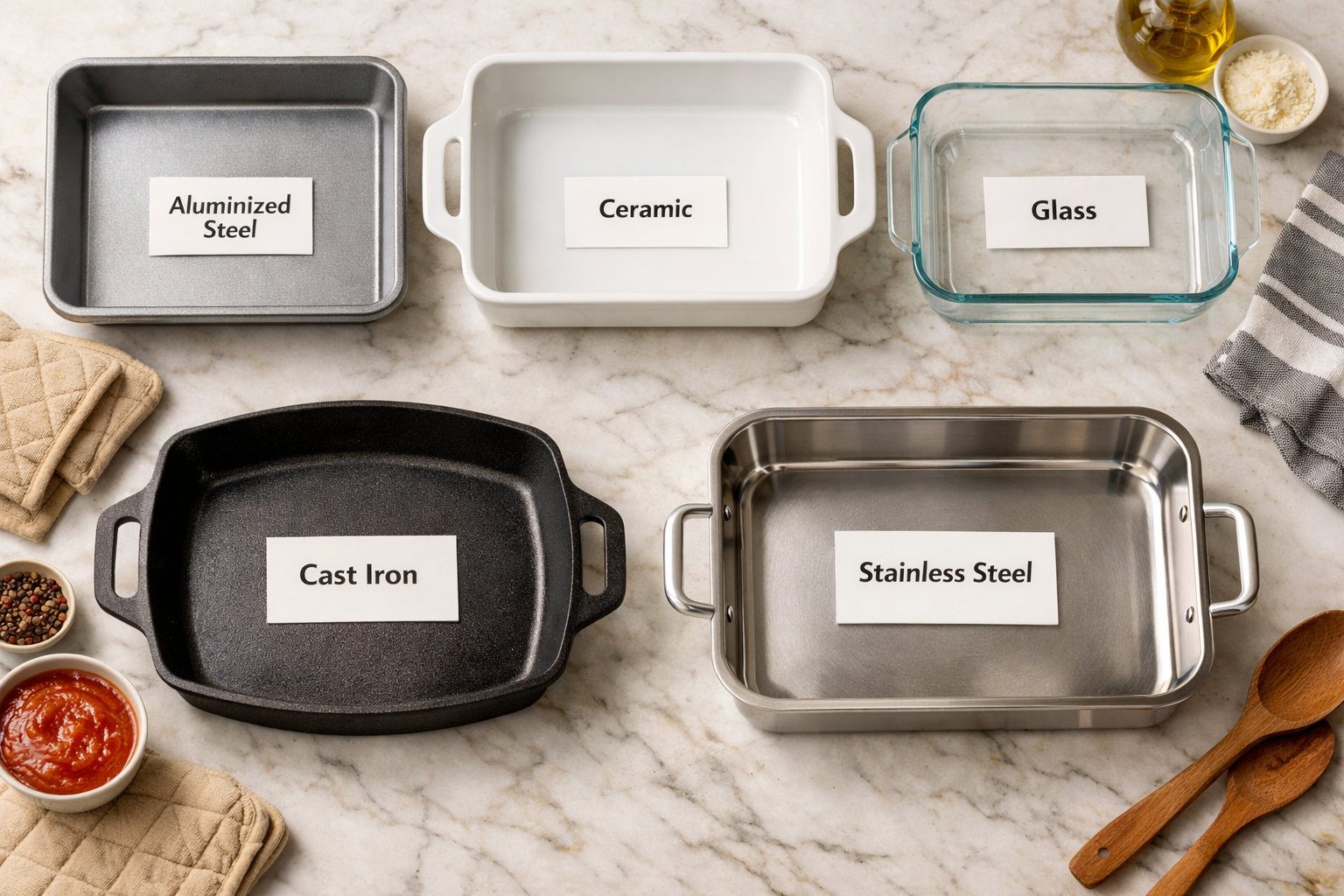
Aluminized steel is the top-performing material for most lasagna baking situations, but ceramic, glass, stainless steel, and cast iron each have specific advantages depending on cooking style and priorities.
Material Comparison Table
| Material | Heat Distribution | Weight | Durability | Oven-Safe Temp | Best For |
|---|---|---|---|---|---|
| Aluminized Steel | Excellent | Light-medium | 10+ years | 450°F+ | Everyday baking, browning |
| Ceramic | Good (slow warmup) | Heavy | 5-10 years | 450-500°F | Oven-to-table serving |
| Glass (Pyrex) | Fair (slow, uneven) | Heavy | Fragile | 425-450°F | Monitoring doneness |
| Stainless Steel | Good | Medium | 15+ years | 500°F+ | Professional use, broiling |
| Cast Iron | Excellent (slow) | Very heavy | Lifetime | 500°F+ | Deep browning, heat retention |
Thermal Conductivity Breakdown
Metals conduct heat 10-20 times faster than glass or ceramic. In practical terms, this means:
- Aluminized steel heats up in about 5-7 minutes and distributes temperature evenly across the pan floor. The USA Pan Bakeware lasagna pan uses corrugated ridges on the bottom to promote air circulation, which reduces sogginess in high-moisture recipes.
- Glass takes 10-15 minutes to reach full temperature and retains heat much longer after removal from the oven. This can overcook edges if you don’t account for carryover cooking.
- Ceramic behaves similarly to glass but typically handles thermal shock slightly better due to thicker walls. A quality ceramic lasagna pan also doubles as an attractive serving dish.
Choose aluminized steel if you prioritize cooking performance and easy handling. Opt for ceramic if you want to serve directly from the oven. Pick glass if you need to visually check browning on the bottom and sides.
If you’re interested in how different materials perform across bakeware categories, our oven-safe bakeware material guide covers this in depth.
How Deep Should a Lasagna Baking Pan Be?
Check Latest Deals and Prices
For standard recipes with 3-4 layers of pasta, a pan depth of 2.5 inches is sufficient. For thick, restaurant-style builds with 5+ layers, a deep dish lasagna pan of 3-3.5 inches prevents overflow and allows proper heat penetration to the center.
Size guide by serving count:
- 9×13 inches, 2.5″ deep — 8-10 servings, fits most recipes and standard oven racks
- 9×13 inches, 3″+ deep — 10-12 servings, ideal for thick layered or meat-heavy lasagnas
- 8×8 inches, 2.5″ deep — 4-6 servings, great for smaller households or side dishes
- 14×10 inches, 3″ deep — 12-16 servings, best for entertaining or batch cooking
Edge case: If you regularly cook for large groups (holiday gatherings, potlucks), a roasting pan hybrid like the USA Pan Bakeware model works well. Its deeper sides accommodate oversized lasagnas, and it doubles as a roasting pan for other meals.
For small kitchen setups where storage is tight, consider pans that nest or stack. Our smart cookware storage solutions guide covers practical approaches to keeping bulky bakeware organized.
Are Non-Stick Lasagna Pans Worth It?
Yes, for most home cooks. Non-stick coatings reduce cleanup time dramatically and prevent the common problem of cheese and sauce bonding permanently to pan surfaces. The tradeoff is coating longevity: most non-stick surfaces degrade after 3-5 years of regular use.
What to look for in non-stick lasagna cookware:
- PTFE-based coatings (traditional non-stick) — Effective release, safe up to 450-500°F, avoid metal utensils
- Ceramic non-stick — PFAS-free option, slightly less effective release over time, safe at similar temperatures
- Silicone-enhanced coatings — Found on some aluminized steel pans, good durability with moderate release properties
Maintenance tips for non-stick pans:
- Hand wash with soft sponges (dishwashers accelerate coating breakdown)
- Avoid stacking without protective liners between pans
- Never use metal spatulas or knives directly on the cooking surface
- Replace when food begins sticking despite proper greasing
If you’re concerned about chemical safety in non-stick coatings, our non-toxic bakeware guide explains which materials and coatings are safest for food contact.
For those who prefer to skip non-stick entirely, well-glazed ceramic and properly seasoned cast iron both offer natural release properties without synthetic coatings. Explore more about ceramic baking dish versatility for alternatives.
How Do Different Oven Types Affect Baking Pan for Lasagna Performance?
Pan material interacts differently with conventional, convection, and gas ovens. Choosing the right oven-safe lasagna pan means matching the material to your specific oven type.
Conventional electric ovens: Heat comes from top and bottom elements. Aluminized steel and stainless steel perform best because they respond quickly to radiant heat. Glass and ceramic work but require longer preheat times.
Convection ovens: Circulating air cooks faster and more evenly. Metal pans excel here because they transfer the moving hot air efficiently. Reduce temperature by 25°F from standard recipes when using convection with metal pans.
Gas ovens: Tend to have hot spots, especially near the back. Heavier materials like cast iron and thick ceramic help buffer these inconsistencies. Lighter metal pans may develop uneven browning in gas ovens with poor circulation.
Broiler compatibility: If you like to broil the top of your lasagna for a crispy cheese finish, avoid glass entirely (thermal shock risk). Stainless steel and cast iron handle broiler temperatures safely. Most aluminized steel pans with non-stick coatings are safe under the broiler briefly, but check manufacturer specifications.
Common mistake: Placing a cold glass pan into a preheated oven. Glass is susceptible to thermal shock and can crack or shatter. Always let glass bakeware come to room temperature before placing it in a hot oven.
What About Sustainability and Eco-Friendly Lasagna Pan Options?
Check Latest Deals and Prices
Sustainability-minded cooks have several strong options. Cast iron and stainless steel are the most environmentally responsible choices because they last decades (or a lifetime) and are fully recyclable at end of life.
Eco-friendly ranking by material:
- Cast iron — Lasts generations, fully recyclable, no coatings to degrade
- Stainless steel — 15-20+ year lifespan, 100% recyclable, no chemical coatings
- Aluminized steel — 10+ year lifespan, recyclable, but non-stick coatings are not
- Ceramic — Long-lasting if not dropped, but not easily recyclable
- Glass — Recyclable in theory, but tempered glass is often rejected by recycling facilities
Cost-per-use analysis: A $45 cast iron lasagna pan used weekly for 20 years costs roughly $0.04 per use. A $15 glass pan that lasts 5 years costs about $0.06 per use. A $30 aluminized steel pan lasting 10 years costs about $0.06 per use. The upfront cost difference fades quickly when measured over actual lifespan.
For more on sustainable kitchen equipment, check out our sustainable bakeware brand options.
How to Clean and Maintain Your Lasagna Pan for Maximum Lifespan
Proper cleaning extends pan life by years. The approach depends entirely on material.
Aluminized steel with non-stick coating:
- Let the pan cool to warm (not hot) before washing
- Soak in warm soapy water for 10-15 minutes
- Use a soft sponge or nylon brush — never steel wool
- Dry completely before storing to prevent oxidation
Ceramic and glass:
- Soak stubborn residue in warm water with baking soda (1 tablespoon per quart)
- Use a non-abrasive scrub pad
- Avoid sudden temperature changes (don’t run cold water on a hot dish)
Cast iron:
- Scrub with coarse salt and a small amount of oil while still warm
- Rinse briefly, dry immediately on the stovetop over low heat
- Apply a thin layer of cooking oil after each use to maintain seasoning
Stainless steel:
- Deglaze stuck-on food with hot water while the pan is still warm
- Use Bar Keeper’s Friend or baking soda paste for stubborn spots
- Stainless steel is dishwasher-safe but hand washing preserves finish
For detailed cleaning techniques, especially for tough baked-on residue, see our guide on effective ways to clean baking pans with burnt food.
Price and Value Breakdown: What Should You Spend?
Most home cooks get the best value in the $25-$40 range. Below $20, quality drops noticeably in terms of warping resistance and coating durability. Above $50, you’re paying for premium materials (ceramic, cast iron) or brand reputation.
| Price Range | What You Get | Best Options |
|---|---|---|
| Under $15 | Thin metal or basic glass, limited lifespan | Budget glass dishes |
| $15-$25 | Decent aluminized steel, basic non-stick | Entry-level metal pans |
| $25-$40 | Quality aluminized steel, good non-stick, sturdy handles | USA Pan, mid-range brands |
| $40-$60 | Premium ceramic, enameled cast iron | Le Creuset-style ceramic |
| $60+ | Enameled cast iron, artisan ceramic | Heirloom-quality pieces |
Decision rule: If you make lasagna once a month or more, invest in the $25-$40 range for aluminized steel or $40-$60 for ceramic. If lasagna is an occasional dish, a $15-$20 glass or basic metal pan works fine.
For budget-conscious shoppers looking across bakeware categories, our affordable nonstick baking pans guide covers strong options under $30.
FAQ: Common Questions About Lasagna Baking Pans
What size pan is standard for lasagna?
The standard lasagna pan is 9×13 inches with a depth of at least 2.5 inches. This size fits most recipes calling for 9-12 no-boil or regular lasagna noodles per layer and serves 8-10 people.
Can I use a glass pan for lasagna?
Yes, glass works for lasagna and lets you see browning on the sides and bottom. However, glass heats slowly, retains heat longer (which can overcook edges), and is vulnerable to thermal shock. Never place a cold glass pan in a preheated oven.
Is ceramic or metal better for lasagna?
Metal (aluminized steel or stainless steel) is better for cooking performance: faster heating, more even browning, and lighter weight. Ceramic is better for presentation and oven-to-table serving. For purely cooking results, metal wins.
Do I need to grease a non-stick lasagna pan?
A light coating of cooking spray or olive oil is still recommended, even with non-stick pans. This provides extra insurance against sticking, especially with cheese-heavy recipes, and helps maintain the non-stick coating over time.
What temperature should a lasagna pan withstand?
Most lasagna recipes bake at 350-400°F. A good oven-safe lasagna pan should handle at least 450°F to accommodate variations in recipes and allow for brief broiling to brown the top. Metal pans generally handle higher temperatures than glass.
Can I put a lasagna pan in the dishwasher?
Glass and stainless steel pans are generally dishwasher-safe. Non-stick coated pans and ceramic should be hand-washed to preserve their surfaces. Cast iron should never go in the dishwasher.
How do I prevent lasagna from sticking to the pan?
Spread a thin layer of sauce on the bottom of the pan before adding the first noodle layer. This creates a barrier between the pasta and the pan surface. Greasing the pan lightly before adding sauce provides additional protection.
What is the best lasagna pan for convection ovens?
Aluminized steel pans perform best in convection ovens because they respond quickly to circulating hot air. Reduce your recipe temperature by 25°F when using convection to avoid overbrowning.
How long do non-stick lasagna pans last?
With proper care (hand washing, no metal utensils, no overheating), a quality non-stick lasagna pan lasts 3-5 years of regular use. Some premium coatings extend this to 7+ years.
Can I freeze lasagna in my baking pan?
Metal and glass pans can go in the freezer, but this ties up your pan until you use the lasagna. A better approach: line the pan with plastic wrap, assemble the lasagna, freeze it, then pop out the frozen block and wrap it separately. This frees your pan for other uses.
Conclusion
Choosing the right Baking Pan For Lasagna comes down to matching material, size, and features to how you actually cook. For most households, an aluminized steel pan in the 9×13-inch format with non-stick coating and sturdy handles delivers the best combination of performance, durability, and value. The USA Pan Bakeware model stands out in 2026 reviews for its corrugated bottom design and even heat distribution.
Next steps:
- Measure your oven to confirm a 9×13-inch pan fits comfortably with clearance on all sides
- Decide on material based on your priorities: metal for performance, ceramic for presentation, cast iron for longevity
- Set a budget in the $25-$40 range for the best value, or $40-$60 if you want an oven-to-table piece
- Check oven compatibility — confirm the pan handles your oven’s maximum temperature and any broiler use
- Plan for storage — consider stackable options if cabinet space is limited
The perfect lasagna starts with the right pan. Get that foundation right, and every layer benefits.
Key Takeaways
- Aluminized steel pans offer the best heat distribution and durability for regular lasagna baking
- The standard 9×13-inch size with 2.5+ inch depth fits most recipes and oven configurations
- Non-stick coatings save significant cleanup time but require hand washing to maintain longevity
- Glass pans allow visual monitoring but heat slowly and risk thermal shock
- Ceramic pans excel for oven-to-table presentation but are heavier and more fragile
- Cast iron and stainless steel are the most sustainable long-term choices
- The $25-$40 price range delivers the best performance-to-value ratio for metal pans
- Always match pan material to your oven type (conventional, convection, or gas) for best results
- Greasing and a bottom sauce layer prevent sticking regardless of pan material
- Proper cleaning and storage habits can double or triple the useful life of any lasagna pan

One response to “Baking Pan For Lasagna: 2026 Buying Guide & Reviews”
[…] without PFAS (per- and polyfluoroalkyl substances), the Lodge Baking Pan provides a naturally seasoned cooking surface free from synthetic chemicals that plague many modern […]