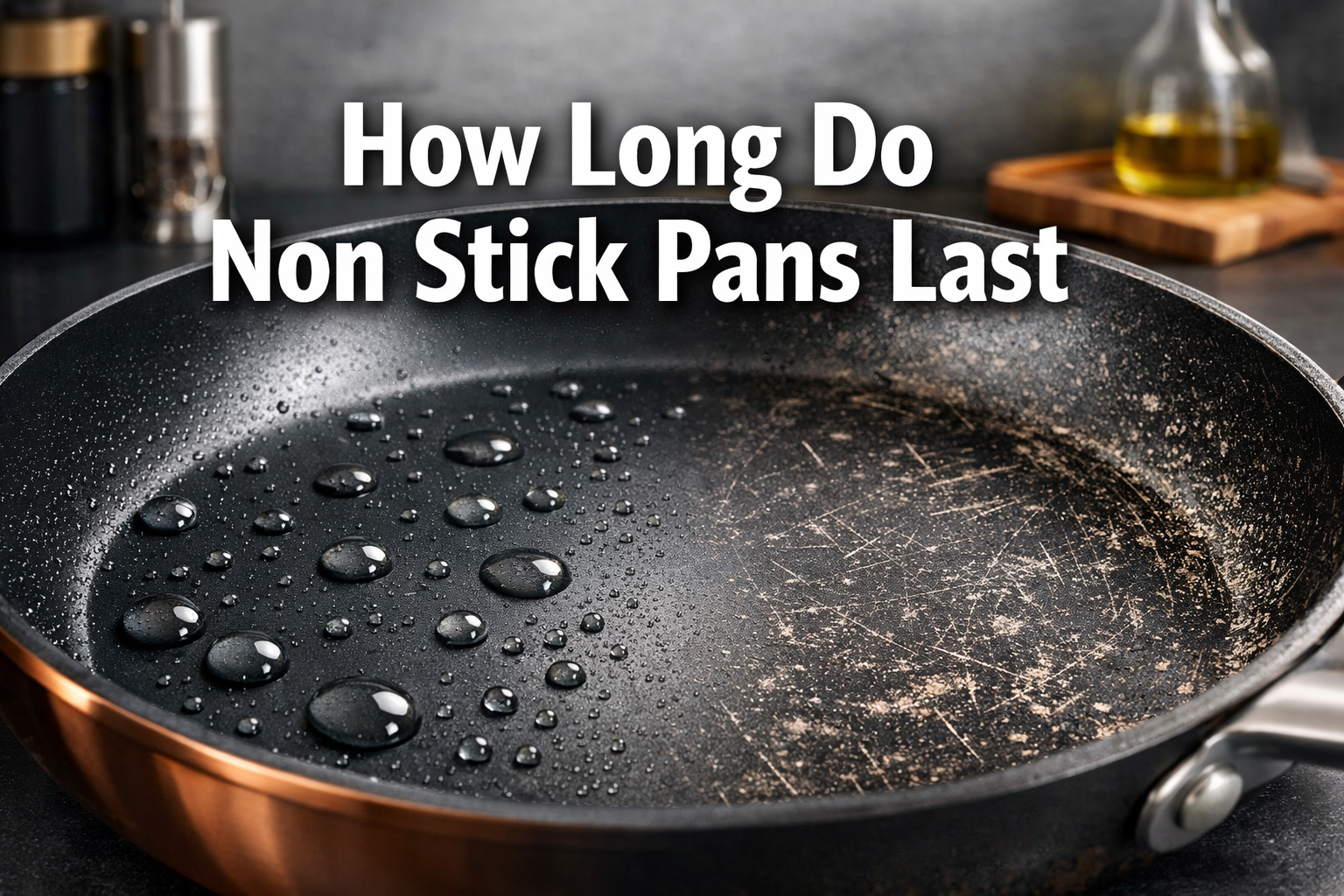
How Long Do Non Stick Pans Last
Latest Update: March 4th 2026
I’ll never forget the morning I cracked an egg into my favorite non stick pan, only to watch it stubbornly cling to the surface despite adding butter.
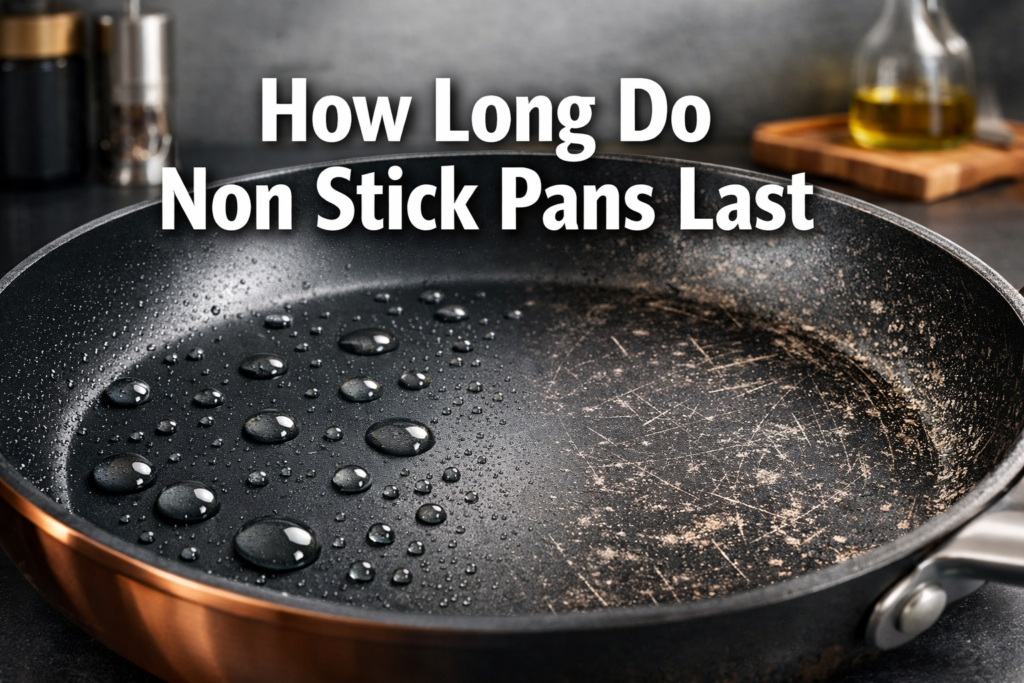
That pan had served me faithfully for years, but I’d ignored the telltale signs of wear, the scratches, the discoloration, the gradual loss of that effortless release I’d come to depend on.
If you’re wondering How Long Do Non Stick Pans Last before they need replacement, you’re asking the right question at the right time.
Understanding cookware lifespan isn’t just about getting your money’s worth, it’s about food safety, cooking performance, and making informed purchasing decisions.
In 2026, with growing awareness about cookware materials and their impact on health, knowing when to replace your Non Stick Pans has become more important than ever.
Key Takeaways
- Standard non-stick pans typically last 2-5 years with proper care, while premium options may extend to 5-10 years
- Visual signs like scratches, chips, and food sticking indicate it’s time for replacement, regardless of age
- Proper maintenance practices—including hand washing, low-to-medium heat cooking, and avoiding metal utensils—significantly extend pan lifespan
- Alternative cookware materials like cast iron and stainless steel offer longer lifespans but require different cooking techniques
- Health and safety considerations make timely replacement crucial when non-stick coatings show degradation
How Long Do Non Stick Pans Last: Expected Lifespan by Quality
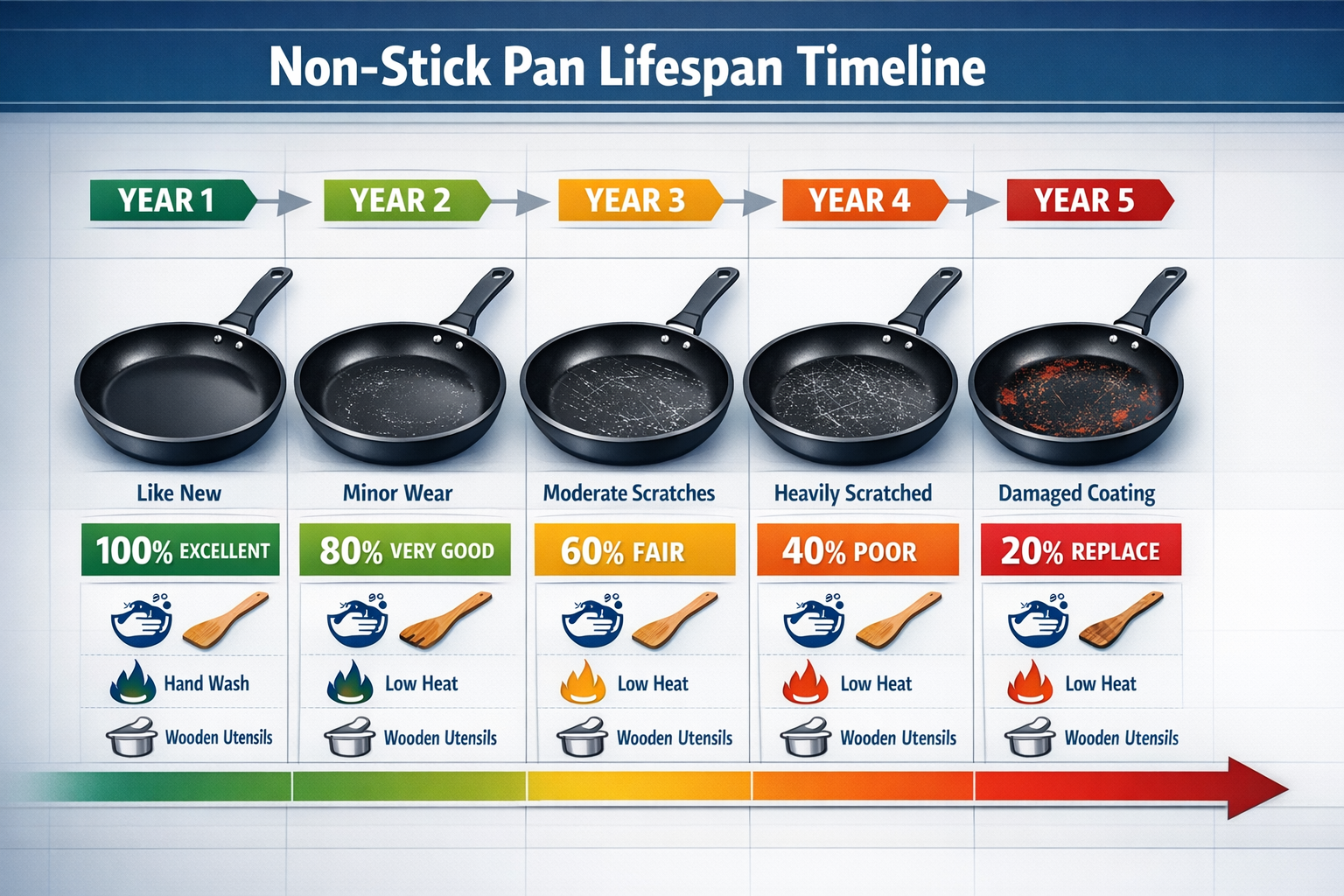
The answer to “How Long Do Non Stick Pans Last” isn’t one-size-fits-all. Most households can expect 2-5 years of reliable performance from their non-stick cookware, but this range varies significantly based on quality, usage frequency, and care practices.
Budget-Friendly Options (1-3 Years)
Entry-level non stick pans from discount retailers typically last 1-3 years. These pans feature thinner coatings and lighter-gauge aluminum bases that warp more easily under heat stress.
While they’re perfect for occasional cooks or those furnishing their first kitchen, frequent users will notice performance degradation within 18-24 months.
For those exploring budget-friendly nonstick pan options, understanding this shorter lifespan helps set realistic expectations and plan for eventual replacement costs.
Mid-Range Cookware (3-5 Years)
Mid-tier brands offering reinforced coatings and heavier construction typically deliver 3-5 years of excellent performance. These pans balance affordability with durability, making them the sweet spot for most home cooks. The thicker base materials resist warping, while multi-layer coatings withstand daily use better than budget alternatives.
Premium Non-Stick Pans (5-10 Years)
High-end non-stick cookware from professional-grade manufacturers can last 5-10 years when meticulously maintained. These pans feature advanced coating technologies, superior base materials, and often include lifetime warranties on construction (though not on the non-stick coating itself). The investment pays off for serious home cooks who use their pans daily.
Understanding Non-Stick Coating Degradation
The non-stick coating itself—not the pan structure—determines lifespan. Even the most robust aluminum or stainless steel base can’t compensate once the coating fails. This fundamental truth about cookware longevity often surprises first-time buyers.
The Science Behind Coating Breakdown
Non-stick coatings work through molecular-level smoothness that prevents food adhesion. Over time, several factors compromise this surface:
- Thermal cycling causes microscopic expansion and contraction
- Abrasion from utensils and cleaning creates tiny scratches
- Chemical exposure from acidic foods gradually weakens molecular bonds
- Oxidation occurs when coatings are exposed to high heat
Modern PFAS-free coatings have addressed many health concerns, but they still face these physical degradation challenges. The coating material science continues evolving, with manufacturers developing more resilient formulations each year.
Different Coating Types and Their Durability
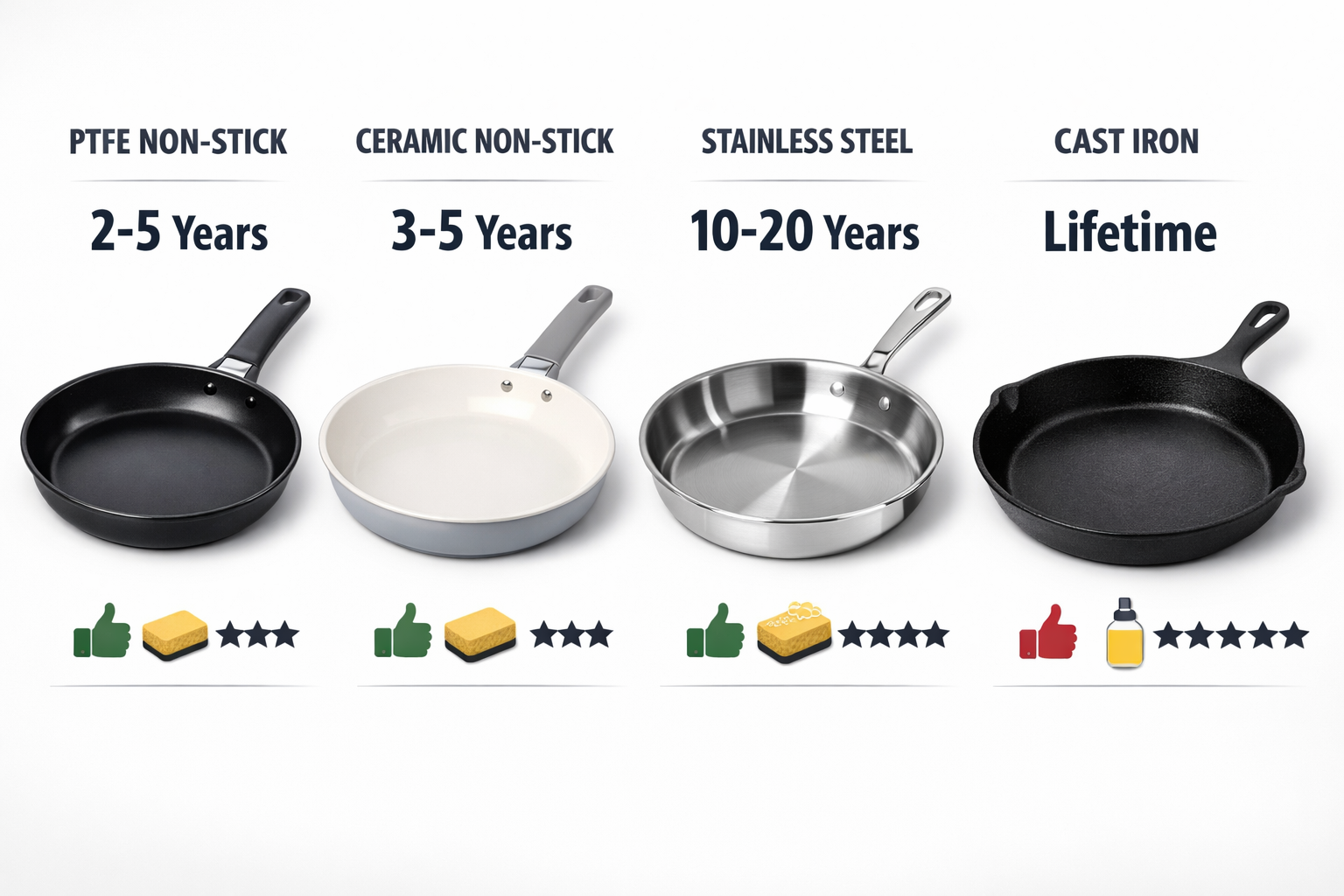
Traditional PTFE coatings (Teflon and similar) typically last 2-5 years. These coatings excel at food release but require careful temperature management—never exceed 260°C, as breakdown accelerates rapidly above this threshold.
Ceramic non-stick coatings offer PFAS-free alternatives but generally last 3-5 years. Our comprehensive ceramic non-stick durability testing reveals that while ceramic starts strong, performance often declines more rapidly than PTFE after the first year.
Titanium-reinforced coatings represent the premium tier, potentially lasting 5-7 years. These hybrid coatings incorporate titanium particles for enhanced scratch resistance and thermal stability.
Clear Signs Your Non-Stick Pan Needs Replacement 🔍
Knowing when to replace non-stick pans protects both your cooking results and your health. Watch for these definitive indicators:
Visual Deterioration
- Scratches and gouges exposing the base metal beneath
- Discoloration or dark spots that won’t clean off
- Peeling or flaking coating material
- Warping causing uneven heating or wobbling on the cooktop
Performance Decline
- Food sticking despite using adequate oil or butter
- Uneven heating with hot spots burning food
- Residue buildup that resists normal cleaning
- Metallic taste transferred to food (immediate replacement required)
I learned this lesson the hard way when I continued using a scratched pan “just a bit longer.” The eggs stuck, cleanup became frustrating, and I finally accepted what the pan had been telling me for months, it was time to let go.
Essential Maintenance Tips to Maximize Pan Longevity
Proper care dramatically extends How Long Do Non Stick Pans Last. These proven practices have helped my current pans outlast their predecessors by years:
Temperature Management
Always cook on low to medium heat. Non-stick coatings perform beautifully at moderate temperatures, and excessive heat is their primary enemy. Preheat for just 1-2 minutes, these pans heat quickly and efficiently.
Never heat an empty pan above medium. The coating can reach dangerous temperatures within minutes, releasing fumes and permanently damaging the surface.
Cleaning Best Practices
Hand wash only, even if labeled dishwasher-safe. Dishwasher detergents contain harsh chemicals and abrasives that accelerate coating degradation. The high heat cycles also stress the coating unnecessarily.
Use soft sponges or cloths, never abrasive scrubbers. For stubborn residue, soak in warm soapy water rather than scrubbing aggressively. This gentle approach preserves the coating’s integrity.
Never rinse hot pans under cold water. This thermal shock can warp the pan and crack the coating. Let pans cool naturally before washing—patience here adds months to lifespan.
Storage and Handling
- Use pan protectors when stacking to prevent scratching
- Hang pans individually if space allows
- Store in dry locations to prevent moisture-related issues
- Avoid metal utensils—stick with silicone, wood, or nylon
For comprehensive guidance on maintaining various cookware types, explore our beginner’s guide to durable cookware.
Comparing Non-Stick Pans to Alternative Cookware Materials
Understanding how long do non-stick pans last becomes more meaningful when compared to alternative materials. Each cookware type offers distinct trade-offs between convenience, durability, and maintenance requirements.
Stainless Steel (10-20 Years)
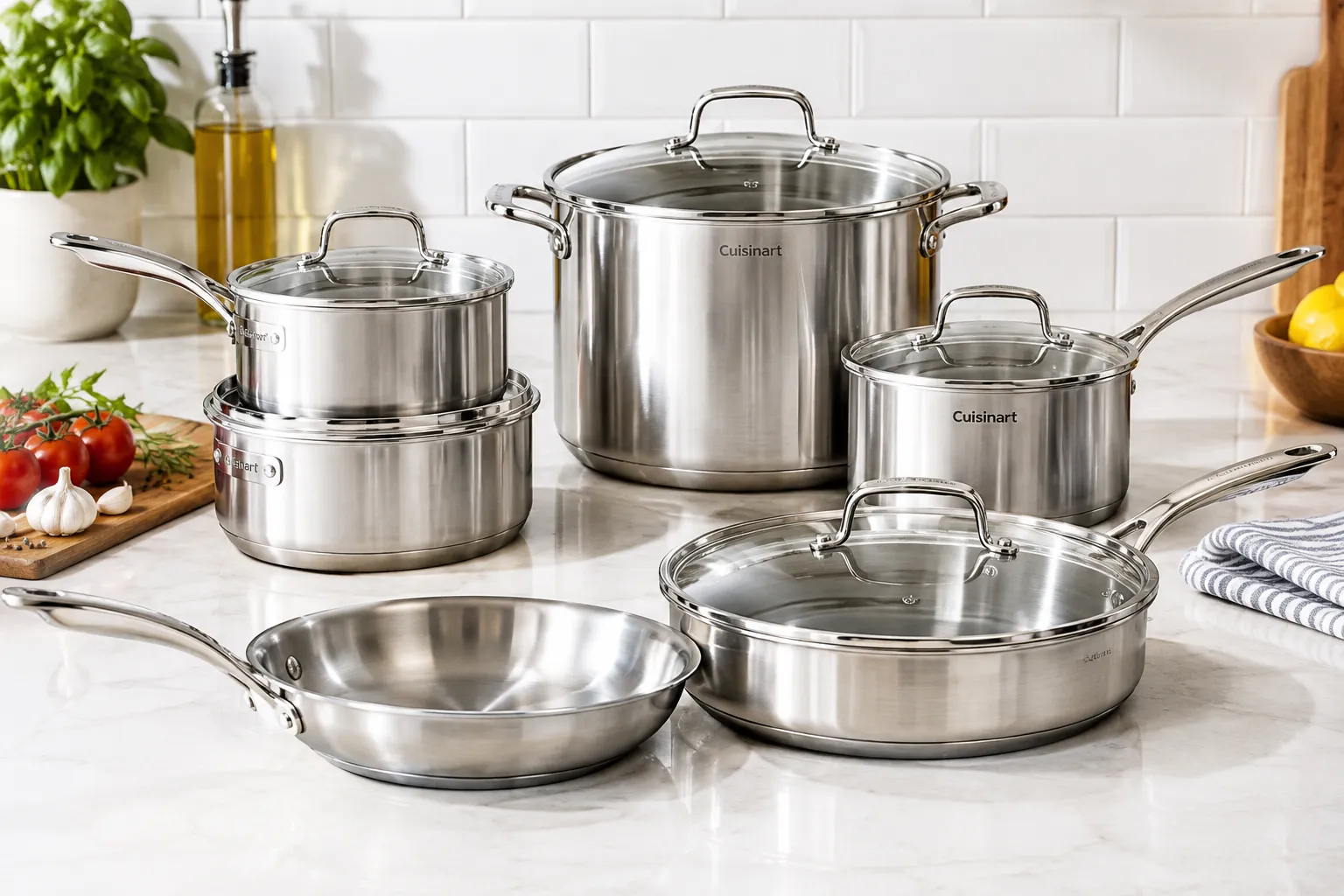
Stainless steel pans deliver exceptional longevity, often lasting 10-20 years with proper care. They’re virtually indestructible, dishwasher-safe, and can withstand high heat. However, they require cooking technique adjustments and proper preheating to prevent sticking.
Our guide to caring for stainless steel pans explains the learning curve, which pays dividends in decades of reliable performance.
Cast Iron (Lifetime)
Cast iron skillets can literally last forever when properly seasoned and maintained. They improve with age as seasoning layers build up. The trade-off? They’re heavy, require hand washing, and need periodic re-seasoning. For patient cooks willing to invest in maintenance, cast iron offers unbeatable value over decades.
Ceramic Cookware (3-5 Years)
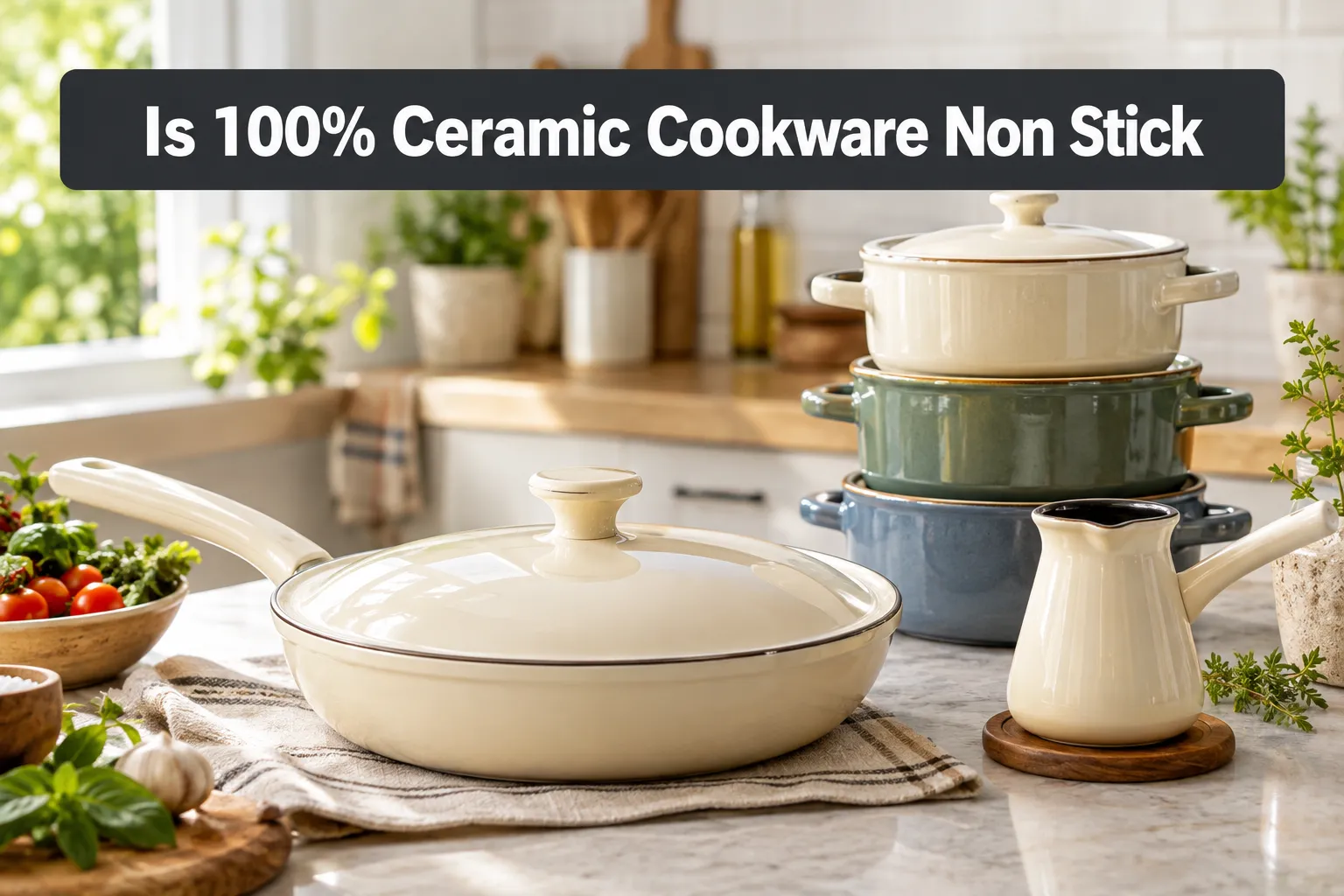
Ceramic pans provide PFAS-free non-stick performance for 3-5 years. They’re attractive, naturally non-toxic, and perform well initially. However, the coating degrades faster than traditional non-stick, and performance often declines noticeably after year two. Check out our guide to ceramic nonstick cookware for detailed insights.
Carbon Steel (10+ Years)
Similar to cast iron but lighter, carbon steel pans develop natural non-stick properties through seasoning. They last 10+ years and offer excellent heat control for professional-style cooking techniques.
The Economics of Non-Stick Pan Replacement
Let’s talk money. A quality non-stick pan costs $30-$150, depending on size and brand. If you replace a $60 pan every 4 years, that’s $15 annually—reasonable for daily-use cookware.
However, frequent replacement of cheap pans often costs more long-term than investing in quality upfront. Three $20 pans over 6 years ($60 total) might seem economical, but a single $80 premium pan lasting the same period delivers better performance throughout.
Cost-Benefit Analysis
| Pan Quality | Initial Cost | Lifespan | Annual Cost | Performance Quality |
|---|---|---|---|---|
| Budget | $20-30 | 1-3 years | $10-30 | Declining rapidly |
| Mid-Range | $40-80 | 3-5 years | $10-20 | Consistent |
| Premium | $100-150 | 5-10 years | $10-30 | Excellent throughout |
Take a Look at These Top Selling Non Stick Pans on Amazon
The numbers reveal that mid-range pans often offer the best value proposition for most households. Premium pans justify their cost for frequent users, while budget options make sense only for occasional cooking.
Health and Safety Considerations with Aging Non-Stick Cookware
Beyond performance, degraded non-stick coatings raise legitimate health questions. While modern PFAS-free formulations have addressed many concerns, understanding the risks helps you make informed replacement decisions.
When Coatings Break Down
Scratched or damaged coatings may release particles into food. While most manufacturers claim these particles pass through the digestive system harmlessly, the research remains incomplete. The precautionary principle suggests replacing visibly damaged pans.
Overheated non-stick coatings (above 260°C) can release fumes that cause flu-like symptoms in humans and can be fatal to pet birds. This risk increases as coatings age and become more fragile.
Choosing Safer Alternatives
For health-conscious cooks, exploring healthy non-toxic bakeware options provides peace of mind. Stainless steel, cast iron, and ceramic alternatives eliminate concerns about coating degradation entirely.
Environmental Impact and Sustainable Disposal
The 2-5 year replacement cycle for non-stick pans creates environmental challenges. Millions of pans enter landfills annually, and the coating materials don’t biodegrade readily.
Recycling Options
Many municipal recycling programs don’t accept non-stick cookware due to coating contamination. However, specialized metal recyclers sometimes accept them after coating removal. Contact local scrap metal facilities to inquire about their policies.
Sustainable Cookware Choices
Investing in longer-lasting materials reduces environmental impact. Cast iron and stainless steel pans that last decades generate far less waste than non-stick pans replaced every few years. Our sustainable cookware options guide explores eco-friendly alternatives.
Professional Chef Perspectives on Cookware Longevity
Professional kitchens approach cookware differently than home cooks. Commercial kitchens often replace non-stick pans annually due to intense daily use, sometimes cooking on the same pan 6-8 hours daily.
However, many professional chefs prefer stainless steel and cast iron for most applications, reserving non-stick exclusively for delicate tasks like eggs and fish. This selective use extends non-stick pan lifespan significantly.
The professional consensus? Non-stick pans are specialized tools, not all-purpose workhorses. This philosophy helps home cooks reconsider their cookware strategy and potentially extend lifespan through more appropriate use.
Making Smart Purchasing Decisions for Your Next Pan
Armed with knowledge about how long non-stick pans last, you can make strategic purchasing decisions:
Prioritize Quality Over Quantity
One excellent pan outperforms three mediocre ones. Focus your budget on fewer, better pieces rather than complete sets of questionable quality.
Match Pan to Usage
Heavy daily use justifies premium investment. Occasional cooking works fine with mid-range options. Be honest about your cooking frequency when selecting pans.
Consider Your Cooking Style
If you primarily cook delicate foods requiring non-stick surfaces, invest in quality non-stick. If you’re comfortable with stainless steel techniques, allocate budget there instead.
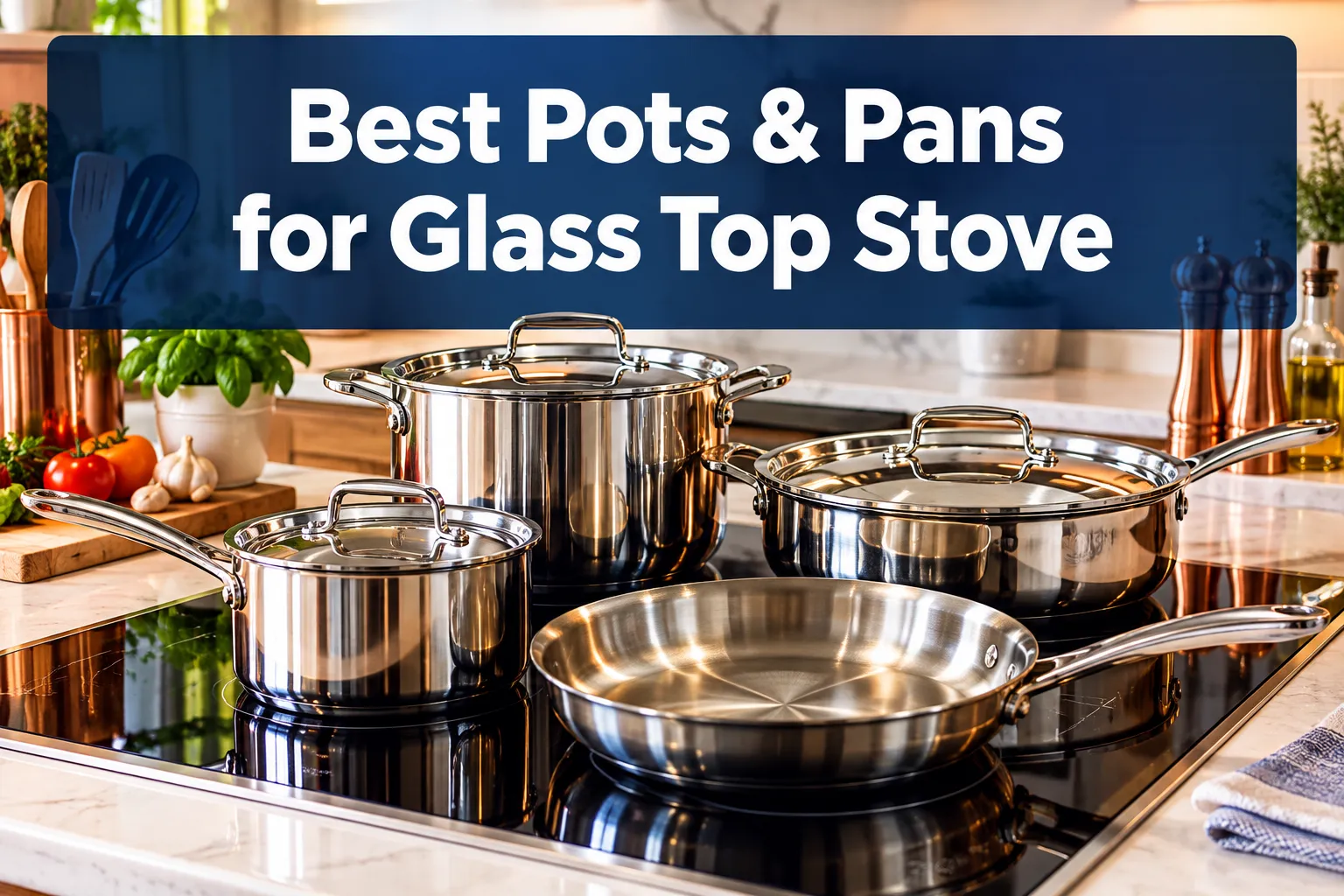
Explore our recommendations for choosing the right pots and pans for comprehensive guidance tailored to different cooking styles.
Extending Lifespan Through Proper Cooking Techniques
Beyond maintenance, cooking technique significantly impacts pan longevity:
- Preheat properly but briefly (1-2 minutes maximum)
- Use adequate fat even with non-stick surfaces
- Avoid acidic foods for extended cooking times
- Remove food promptly after cooking
- Cool completely before cleaning
These habits become second nature with practice and can extend your pan’s useful life by 1-2 years.
Frequently Asked Questions About Non-Stick Pan Lifespan
Can you restore a worn non-stick pan?
Unfortunately, no. Once the coating degrades, it cannot be repaired or restored. Some companies offer re-coating services, but the cost typically exceeds buying a new pan.
Do expensive non-stick pans really last longer?
Generally yes, but with diminishing returns. A $100 pan might last twice as long as a $30 pan, but a $200 pan won’t necessarily last twice as long as the $100 option.
Is it safe to use scratched non-stick pans?
While not immediately dangerous, scratched pans perform poorly and may release coating particles. Replacement is recommended once scratching becomes visible.
How often should I replace non-stick baking pans?
Non-stick baking pans typically last longer than stovetop cookware—often 5-7 years—because they experience less thermal stress and abrasion.
Conclusion: Making Informed Decisions About Your Cookware
Understanding how long non-stick pans last empowers you to make smarter purchasing decisions, recognize replacement signals, and maximize your cookware investment.
While the 2-5 year average lifespan might seem short compared to other kitchen equipment, proper care and realistic expectations ensure you get excellent value during that period.
The key takeaways? Invest in quality appropriate to your usage level, practice proper maintenance religiously, watch for clear replacement signals, and consider longer-lasting alternatives for your primary cooking needs.
Non-stick pans excel at specific tasks but aren’t meant to be lifetime investments.
Ready to upgrade your cookware? Start by honestly assessing your current pans for signs of wear.
If you’re seeing scratches, experiencing sticking, or approaching the 3-5 year mark, it’s time to explore replacement options.
Check out our durable non-stick frying pan recommendations to find your next kitchen workhorse.
Remember, the best pan is one that matches your cooking style, fits your budget, and receives the care it deserves.
Your morning eggs will thank you! 🍳

2 responses to “How Long Do Non Stick Pans Last: Complete 2026 Guide”
[…] management ranks as the single most important factor in nonstick pan longevity. Never preheat empty non stick pans on high heat, this creates hotspots that can reach coating-damaging temperatures within minutes. […]
[…] explains why pans sometimes lose their non-stick pan properties seemingly overnight, the cumulative damage finally reaches a tipping point where the […]