Non Toxic Bakeware Brands
Last updated: November 6, 2026
Quick Answer
The most trusted Non Toxic Bakeware Brands in 2027 include Nordic Ware, USA Pan, Caraway, Xtrema, Emile Henry, Pyrex, Great Jones, and Lodge. Each avoids PFAS, PFOA, and PTFE through uncoated metal, tempered glass, pure ceramic, or seasoned cast iron construction. Prices range from under $30 for a single sheet pan to over $400 for a full set, with restock sales and extra off deals showing up often throughout the year.
Key Takeaways
- Non-toxic bakeware avoids PFAS, PFOA, PTFE, lead, and cadmium through uncoated or alternative materials.
- Nordic Ware Naturals and USA Pan are strong budget picks under $100 for a full set.
- Caraway and Great Jones use ceramic coatings on steel, while Xtrema and Emile Henry are 100 percent solid ceramic with no coating layer.
- Pyrex glass and Lodge seasoned cast iron skip coatings entirely, which lowers chemical risk.
- “Ceramic” is a marketing term, not a regulated standard, so brand claims still deserve scrutiny.
- HexClad entered the bakeware market in October 2026 with a PFAS-free stainless and ceramic hybrid line.
- Watch for restock sale events where brands offer extra off every order over 100 dollars, plus free gifts.
- Proper care, hand washing and avoiding metal utensils, extends the life of any coated bakeware set.
Check current price and availability on Amazon (US) or view options for UK shoppers.
What Makes Bakeware Actually Non-Toxic
Bakeware counts as non-toxic when it avoids PFAS, PFOA, PTFE, lead, and cadmium, either by skipping a chemical coating entirely or by using a coating the maker can verify through testing. This matters because heat can degrade some coatings over time, releasing particles into food.
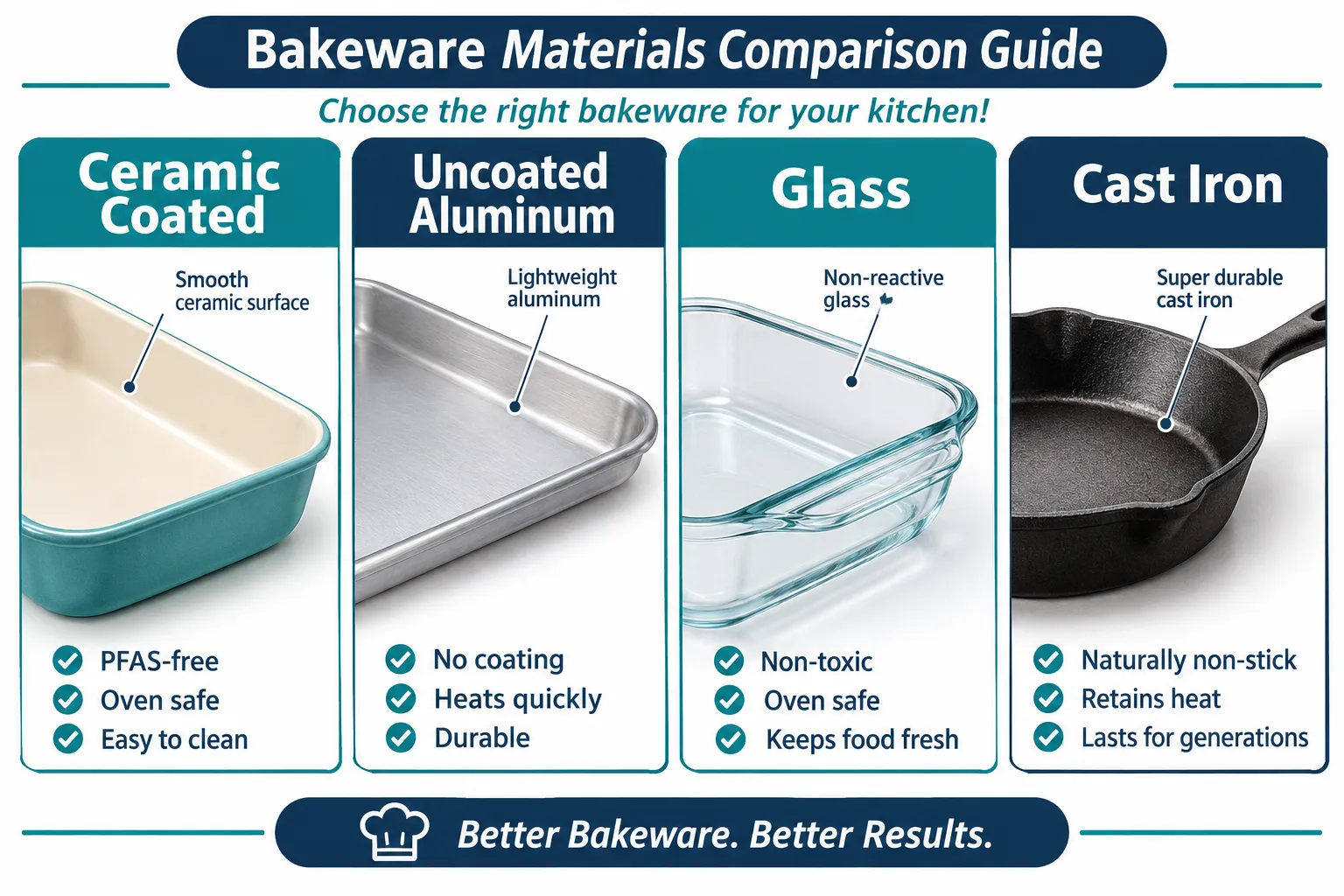
The clearest path to non-toxic bakeware is choosing materials with no coating at all. Uncoated aluminum, tempered glass, solid ceramic, and seasoned cast iron all sidestep the coating question. For pans that do use a coating, look for brands that publish third party test results rather than just a marketing label.
- No coating: aluminum, glass, cast iron
- Coated but verified: silicone-based coatings with published PTFE and PFOA-free claims
- Red flag: vague “non-stick” claims with no material disclosure
Decision rule: choose uncoated bakeware if you want the simplest non-toxic guarantee. Choose a verified coated option if you need easier food release for delicate baking like cakes.
Best Non Toxic Bakeware Brands in 2027
Eight brands consistently appear across 2027 buying guides as the most reliable non-toxic bakeware brands: Nordic Ware, USA Pan, Caraway, Xtrema, Emile Henry, Pyrex, Great Jones, and Lodge. Each takes a different approach to avoiding harmful coatings.
- Nordic Ware Naturals: uncoated aluminum, no coating to worry about, named best bakeware set under $100 by Everyday Health in October 2026.
- USA Pan: silicone-based AMERICOAT coating, PTFE, PFOA, and BPA-free, made in the USA, not dishwasher safe, transparency standout in 2026 guides.
- Caraway: ceramic-coated steel, lifetime warranty, scored 100 out of 100 on a PFAS Authority bakeware ranking, named best splurge pick.
- Xtrema: 100 percent pure ceramic with no metal core, described as a transparency leader for loaf pans and other pieces.
- Emile Henry: high-fired ceramic clay made in Marcigny, France, rated to 500°F with a 10-year warranty.
- Pyrex: tempered glass, no coating chemistry involved, still the best glass baking dish recommendation.
- Great Jones: aluminized steel with ceramic coating, PFAS, PFOA, PTFE, lead, and cadmium-free claims.
- Lodge: cast iron seasoned with vegetable oil, firmly uncoated.
HexClad also launched its first bakeware collection in October 2026, positioned as PFAS-free with a stainless steel and ceramic nonstick hybrid surface, including cake pans, a rectangular pan, a square pan, a baking sheet, and a cooling rack.
For readers comparing full sets rather than single pans, our non-toxic bakeware set reviews break down pricing and included pieces in more detail.
Non Toxic vs Regular Baking Pans: What’s the Difference
Regular baking pans often rely on PTFE or older nonstick chemistry bonded to the metal, while non-toxic bakeware either skips the coating or uses a verified alternative like silicone or ceramic. The difference shows up most under high heat, when cheap coatings are more likely to degrade or flake.
Regular pans are usually cheaper upfront but may need replacing sooner if the coating fails. Non-toxic pans, whether uncoated or verified coated, tend to hold up longer and avoid the uncertainty of what exactly is leaching into food during baking.
Common mistake: assuming “ceramic” automatically means safe. Ceramic is a marketing term without one legal definition, and a brand’s PFAS-free claim is a manufacturer statement unless backed by independent testing.
Affordable Non Toxic Bakeware Options
Affordable non-toxic bakeware is available well under $100, with Nordic Ware Naturals and USA Pan leading the budget category. Both rely on uncoated or silicone-coated aluminum rather than expensive ceramic or glass construction.
- Nordic Ware Naturals set: uncoated aluminum, under $50 for multiple pans
- USA Pan single sheet: typically $20 to $35
- Pyrex glass dish: often under $25 for a single piece
If your budget is tight, our guide to smart budget bakeware choices covers more entry-level picks without sacrificing safety.
Decision rule: choose uncoated aluminum if budget is the top priority. Choose ceramic or glass if you want a longer warranty and don’t mind paying more.
Where to Buy Non Toxic Bakeware
Check current price and availability on Amazon (US) or view options for UK shoppers.
Non-toxic bakeware is sold directly through brand websites, major retailers, and marketplaces like Amazon, with the best deals usually appearing during seasonal restock sale events. Buying direct from the brand often unlocks extra off codes and free gifts not available elsewhere.
Watch for sale middot bullet points on brand pages noting “extra off every $100” thresholds, since many bakeware brands run promotions offering off extra off every 100 spent, plus free gifts with restock sale events.
Some sites show a brief “Google Verifying” message before letting you continue, a routine bot check, not an error: the page simply says Google Verifying request, able to continue in a few seconds, don’t refresh.
For broader browsing, our roundup of where to find quality bakeware online lists additional retailers worth checking before you buy.
Non Toxic Bakeware That Doesn’t Stick
The best non-stick non-toxic bakeware relies on silicone coatings like USA Pan’s AMERICOAT or ceramic coatings like Caraway’s, both of which release baked goods cleanly without PTFE. Uncoated pans like Nordic Ware’s can still perform well with parchment paper or a light oil layer.
- Best for cookies: silicone-coated aluminum sheets, since they brown evenly and release easily
- Best for cakes: ceramic-coated pans, which combine even heat with non-stick release
- Best for bread: uncoated aluminum or cast iron, since a light flour dusting replaces any coating
Glass vs Ceramic vs Stainless Steel Bakeware: Which Is Best
Glass, ceramic, and stainless steel bakeware each avoid PTFE but differ in weight, heat retention, and price. Pyrex like Glass is the simplest and cheapest non-toxic option, solid ceramic like Xtrema and Emile Henry offers the most uniform heat, and stainless steel resists chipping better than either.
| Material | Coating | Best for | Typical price |
|---|---|---|---|
| Glass (Pyrex) | None | Casseroles, quick dishes | Under $25 |
| Solid ceramic (Xtrema) | None | Even heat baking | $60 to $150 |
| Stainless steel | Often none | Durability, no chipping | $30 to $100 |
| Ceramic-coated steel (Caraway) | Ceramic | Non-stick baking sheets | $100 to $445 |
Readers weighing stainless steel specifically can check our guide to top stainless steel cookware brands for pans built to last across years of heavy use.
Why Solid Titanium Suits the Oven
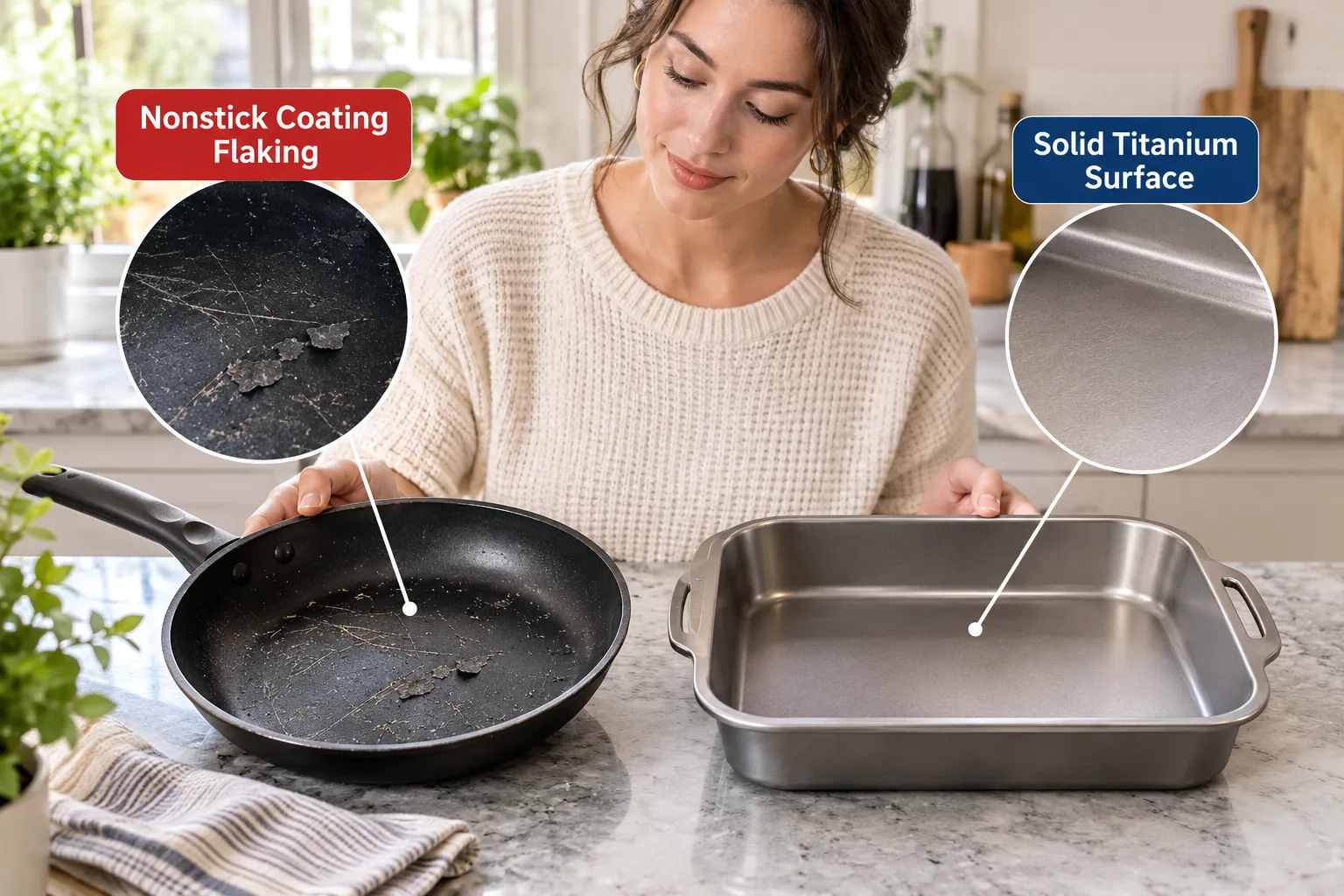
Solid titanium bakeware suits the oven because titanium handles high heat without warping, resists scratching, and contains no coating that could degrade over time. Titanium pans are less common than aluminum or ceramic but are gaining attention in 2027 as a durable, uncoated alternative.
A titanium pan typically costs more upfront than aluminum, but the trade-off is a pan built to last through daily use without peeling or flaking. If you bake often and want one set that won’t need replacing, titanium is worth the extra cost over a basic uncoated aluminum sheet.
Is Non Toxic Bakeware Worth the Extra Cost
Non-toxic bakeware is worth the extra cost for most home bakers because it removes the uncertainty around coating degradation and often comes with longer warranties. A $100 ceramic set with a lifetime warranty can cost less per year than replacing a cheap coated pan every season.
- Choose extra cost options if you bake several times a week and want a 25-year warranty style guarantee
- Skip the splurge if you bake occasionally and a basic uncoated sheet pan meets your needs
How to Properly Care for Non Toxic Bakeware
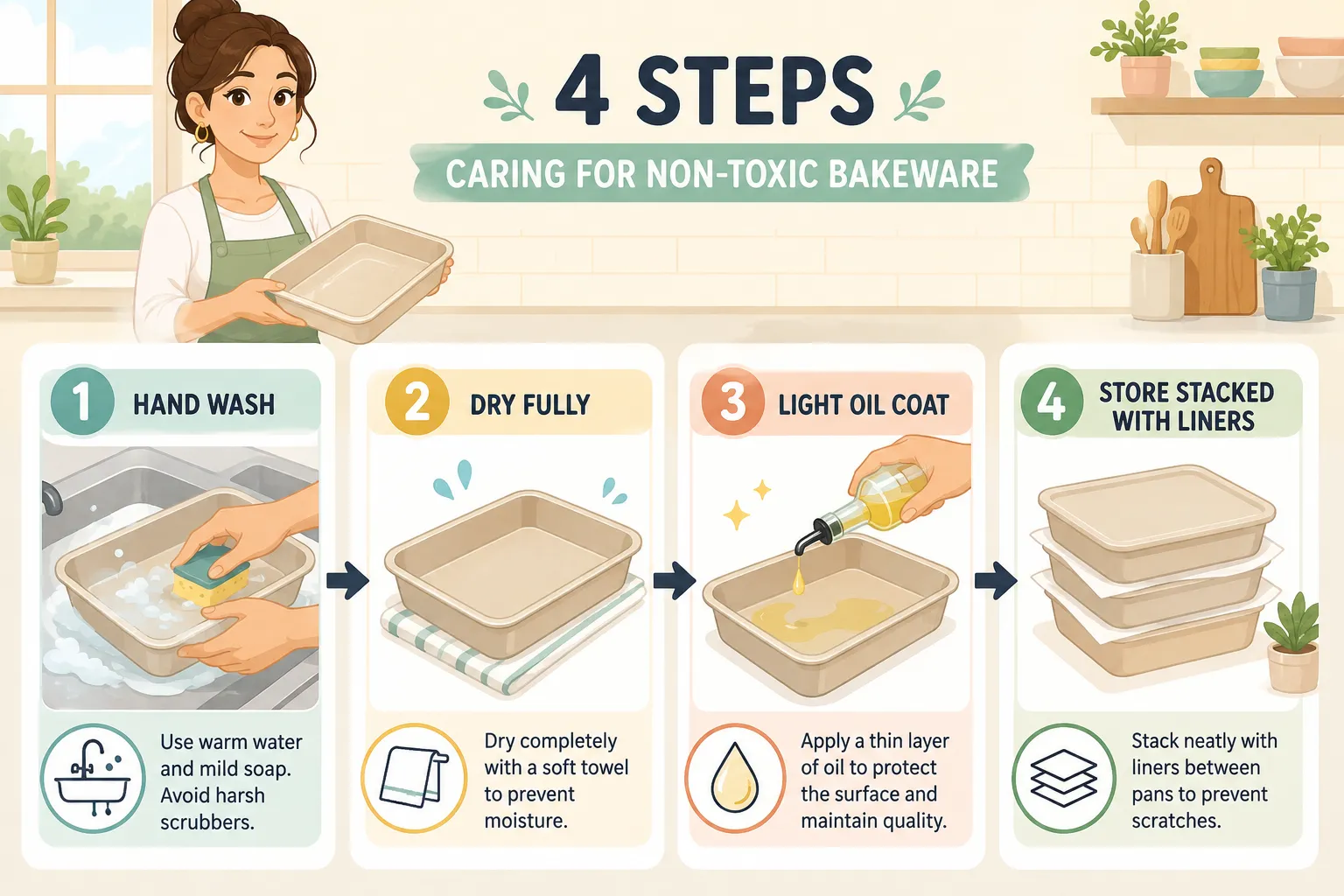
Non-toxic bakeware lasts longest when hand washed, dried fully, and stored with liners between stacked pieces to prevent scratching. A gentle non-toxic bakeware cleaner, rather than abrasive scouring pads, protects ceramic and silicone coatings from premature wear.
- Hand wash with warm water and mild soap
- Dry fully before storing to prevent water spots
- Apply a light oil coat to uncoated aluminum or cast iron pans
- Store with felt liners or paper towels between stacked pans
For more detailed cleaning steps, see our guide to keeping bakeware spotless.
What Chemicals Are in Regular Baking Pans
Regular baking pans often contain PTFE-based nonstick coatings, and older or cheaper versions may also include PFOA, a chemical phased out of most US manufacturing by 2015 but still found in some imported cookware. Reading the product description for PFAS-free, PFOA-free, and PTFE-free claims is the fastest way to check.
Non Toxic Bakeware Safe for High Temperatures
Non-toxic bakeware rated for high temperatures includes Emile Henry ceramic, rated to 500°F, and cast iron from Lodge, which handles oven and stovetop heat without issue. Glass bakeware like Pyrex typically has a lower safe ceiling and should avoid sudden temperature swings.
Check the manufacturer’s listed maximum temperature before broiling or using a pan at high heat, since exceeding it can cause cracking in glass or discoloration in coated metal.
Do You Really Need Non Toxic Bakeware
You don’t strictly need non-toxic bakeware to bake successfully, but choosing it reduces the chance of coating breakdown over years of oven use. If your current pans are scratched, warped, or flaking, replacing them with an uncoated or verified coated option is a reasonable upgrade.
Our guide to healthy non-toxic bakeware walks through the full reasoning behind switching if you’re still deciding.
Non Toxic Bakeware Peeling or Flaking: What to Do
If your bakeware is peeling or flaking, stop using it immediately and replace it, since damaged coatings can transfer small particles into food during baking. Solid ceramic, glass, and uncoated metal pans don’t have this failure mode, which is why many bakers switch to them after one bad experience with cheap nonstick.
Best Non Toxic Baking Sheets for Cookies
The best non-toxic baking sheets for cookies are Nordic Ware’s uncoated aluminum sheet and USA Pan’s silicone-coated option, both of which brown cookies evenly without a PTFE layer. Caraway’s ceramic-coated sheet duo also scored highly on PFAS safety rankings.
- Nordic Ware: uncoated, budget friendly, even browning
- USA Pan: silicone coated, easy release, made in USA
- Caraway: ceramic coated, scored 100 out of 100 on a PFAS Authority ranking
For cookie sheet specific comparisons, see our best baking sheets non toxic guide.
Built to Last: Durability and Warranty
Durability in non-toxic bakeware comes down to material choice: solid ceramic and cast iron resist wear the longest, while coated options depend on warranty backing. Emile Henry offers a 10-year warranty, Caraway backs its line with a lifetime warranty, and uncoated aluminum simply has no coating to fail in the first place.
A pan built to last reduces long-term cost even if the upfront price is higher. For readers also shopping cookware sets beyond bakeware, our non-toxic cookware sets guide covers similar durability factors.
Non Toxic Bakeware on Sale Right Now
Non-toxic bakeware brands frequently run restock sale events, often advertising extra off every order over $100, free gifts with purchase, and occasional black Friday style discounts across sizes and sets. Checking brand sites directly during these windows typically beats marketplace pricing.
Many promo banners list details like off extra off every 100, 100 off free gifts with restock sale, or extra off every 100 restock sale, which simply mean stacked discounts apply once your cart crosses a spending threshold. Shop early during a known restock sale to catch the best stock of popular sizes before they sell out.
Related Articles
- Kitchen Gift Basket Ideas: 2026 Picks
- Engraved Chef Knife Gift: 2026 Buying Guide
- Non-Toxic Cookware on Sale Right Now
The Bottom Line
Non Toxic Bakeware Brands worth trusting, share one trait: they either skip coatings entirely or back their coated claims with published, verifiable details. Nordic Ware, USA Pan, Pyrex, Xtrema, Emile Henry, Caraway, Great Jones, and Lodge all meet that bar in different ways, at different price points.
If you want the simplest guarantee, pick uncoated aluminum, glass, or cast iron. If you want easier food release, pick a verified ceramic or silicone coated set with a solid warranty. Either path gets you bakeware built to last without guessing what’s in the coating.
Ready to shop? Check current price and availability on Amazon (US) or view options for UK shoppers.
FAQ
What’s the safest bakeware?
The safest bakeware avoids coatings entirely, making uncoated aluminum, tempered glass, solid ceramic, and seasoned cast iron the top choices. Brands like Nordic Ware, Pyrex, Xtrema, and Lodge all fit this category and remove any question about coating breakdown at high oven temperatures.
Is Pampered Chef stoneware non-toxic?
Pampered Chef stoneware is made from clay and fired at high heat, similar to other uncoated ceramic bakeware, which generally places it in the lower concern category. As with any ceramic brand, check the current product specs directly since formulations can change between product lines.
Are there any non-toxic frying pans made in the USA?
Yes, USA Pan manufactures its bakeware in the United States using a silicone-based AMERICOAT coating that is PTFE, PFOA, and BPA-free. While USA Pan focuses on bakeware rather than frying pans specifically, it remains one of the clearest USA-made, verified non-toxic options available.
What is the best ceramic baking sheet?
Caraway’s ceramic nonstick baking sheet duo is widely regarded as a top pick, scoring 100 out of 100 on a PFAS Authority safety ranking. Xtrema’s solid ceramic options are also strong choices for buyers who want zero metal core and a fully uncoated surface.
Check current price and availability on Amazon (US) or view options for UK shoppers.

Leave a Reply
You must be logged in to post a comment.