How to Choose Bakeware
Latest Update: November 11, 2026
How to Choose Bakeware comes down to matching each pan’s shape, material, size, and construction to the foods you make and the space you have. The right choices help you bake more consistently without filling your cupboards with pans you rarely use.
Key Takeaways
- Begin with versatile shapes that suit your regular recipes, then add specialty pans when a recipe calls for them.
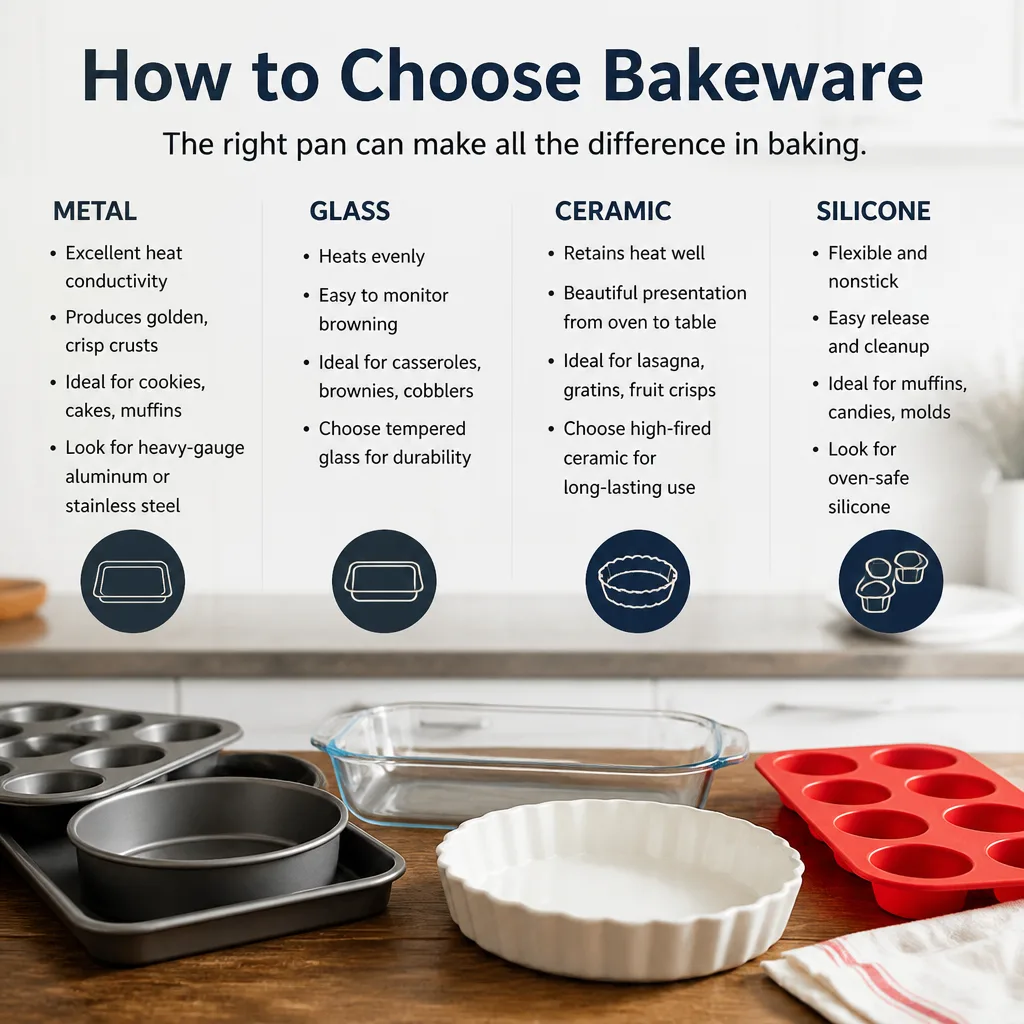
- Choose metal for quick heat conduction and browning, glass for visibility and nonreactive cooking, ceramic for oven to table dishes, and silicone for flexible release.
- Measure a pan’s usable interior and depth, not only its outside dimensions or name.
- When changing pan size or material, compare capacity and batter depth, then use browning and doneness cues to guide baking.
- For more background on choosing a first collection, read our beginner bakeware guide.
- For a closer look at material choices, see our guide to oven safe bakeware materials.
Match the pan shape to what you bake
Choose a pan for the form and amount of food you make most often. A broad sheet pan gives cookies, roasted vegetables, and sheet pan meals room to spread, while its shallow sides expose more food to the oven’s heat and support browning.
Round cake pans suit layer cakes, loaf pans give breads and pound cakes their familiar shape, and muffin pans portion batter into individual bakes. A springform pan is useful for recipes such as cheesecakes that benefit from a removable side.
Start with a sheet pan, a cake pan or baking dish, and one pan for the foods you bake regularly. Add specialty shapes as recipes demand, rather than buying a full range before you know which pieces you will use.
The Half Sheet Pan measures 18 x 13 inches and suits cookies, roasted vegetables, and sheet pan dinners. Its wide, shallow surface makes it a practical first choice for everyday baking and roasting.
Before choosing a pan, consider how it will feel when full. Sturdy rims and comfortable handles make a loaded pan easier to carry from counter to oven.
For more cake pan guidance, browse our guide to bakeware for cakes.
Compare metal, glass, ceramic, and silicone
When considering what material is best for bakeware, think about how quickly it conducts heat, how much browning you want, and how you plan to serve or clean the food. These differences affect everyday results as much as the pan’s shape does.
| Material | What it does well | What to keep in mind |
|---|---|---|
| Aluminum or other metal | Conducts heat quickly and supports browning. | Dark finishes brown edges and bottoms faster than light finishes. |
| Glass | Shows food as it cooks and does not react with acidic ingredients. | Heats more slowly than metal and holds heat after leaving the oven. |
| Ceramic | Provides even cooking and can go from oven to table. | Heats more slowly than metal. |
| Silicone | Flexes to release baked goods and is easy to clean. | Needs support from a rigid sheet pan and usually gives less browning than metal. |
Light colored aluminum bakeware is a useful default for cakes because it conducts heat efficiently without the faster edge browning of a dark surface. Choose darker metal when you want faster browning, but watch cakes and breads closely because their edges and bottoms can color sooner.
Glass bakeware is useful when you want to see the sides and base of a dish as it cooks. It retains heat after removal, so food can continue cooking, and sudden temperature changes can cause thermal shock.
Choose ceramic for even cooking and a dish that can be served at the table. Silicone molds release flexibly, but place them on a firm sheet pan before filling so you can move them without bending the mold.
For tomato based and other acidic recipes, choose nonreactive glass, ceramic, or stainless steel instead of uncoated aluminum. Our material comparison guide covers how common materials differ in their interaction with food.
Measure the inside, depth, and capacity
Pan dimensions determine how much room food has to spread and rise. Measure the usable interior length and width, then measure depth from the inside base to the rim, since exterior measurements include the pan’s sides.
Capacity matters when two pans have similar widths but different shapes or depths. A deeper dish can hold more batter, changing its depth in the pan and the way it bakes.
The 9×13 Baking Dish measures 9 x 13 inches and suits casseroles, cakes, and brownies. Its versatile rectangular shape makes it a useful option when you want one dish for several kinds of baking.
When substituting a pan, compare its area and capacity with the recipe pan, then keep the batter level as close as possible. A wider pan spreads the batter thinner, while a narrower or deeper pan makes it thicker.
Do not rely on the original baking time after changing pans. Watch for browning and use the recipe’s usual doneness cues, and leave space above the batter for rising and bubbling so it does not spill over the rim.
Check thickness, coating, and handling
Look for a rigid base and sturdy sides when choosing metal bakeware. Thin metal flexes more easily when heated or loaded, while a solid rim helps the pan keep its shape as you carry it.
Dark finishes absorb more heat and can brown cakes and breads faster, especially at the edges and base. Choose a lighter finish when you want gentler browning, and use the recipe’s visual cues.
The 12PCS Nonstick Bakeware Set costs $47.97 and includes a roasting pan, cookie sheet, round cake pans, muffin tins, a wire cooling rack, and a pair of oven mitts. Its carbon steel pans have a nonstick coating and wider grip handles, so the set brings several common shapes together with grips designed for handling.
A nonstick coating helps baked goods release, but scratches can damage the surface. Use nonmetal utensils and avoid cutting food directly in the pan.
Before choosing a pan, compare its overall size with your oven interior and consider how much room you need to grip it. Leave space around the pan for air to circulate, and make sure its handles clear the oven walls.
Shoppers called both factors very important when deciding whether to buy an item.
Source: Private Label Manufacturers Association, survey conducted by Surveylab
Build a useful collection for your kitchen
For a small kitchen, begin with a sheet pan and one versatile baking dish. Add a loaf pan or muffin pan when breads, cakes, or individual portions are part of your routine.
A standard 12 cup muffin tin suits muffins, cupcakes, and individual quiches. The Muffin Tin is a practical addition when those portioned foods appear regularly in your baking.
Choose pans that nest or stack to save cupboard space, but avoid resting heavy pieces on delicate nonstick surfaces. A simple cloth or other soft layer between stacked pans helps prevent the surfaces from rubbing together.
Care for bakeware to preserve its performance
Let hot glass and ceramic cool gradually, and set them on a dry, room temperature surface. A sudden change from hot to cold can create thermal shock and break the dish.
Wash coated pans with mild dish soap and a soft sponge. Abrasive cleaners and scouring pads can scratch the coating, so use wooden, silicone, or other nonmetal utensils and portion baked food outside the pan.
Cast iron needs a different routine: dry it thoroughly after washing and maintain its seasoning to help prevent rust. Follow the cleaning method suited to each material, and see our bakeware cleanup tips for more care guidance.
Frequently Asked Questions
Can a glass baking dish go directly from the freezer to a hot oven?
No. Transfer the food to a room temperature metal pan before baking.
Should you grease a nonstick pan before baking?
A light coating of butter or oil can help delicate cakes release and can encourage browning. Too much grease may make the edges overly oily, so use the amount the recipe calls for.
How can you tell when a nonstick coating is too scratched to keep using?
Peeling, flaking, deep gouges, or areas where the coating has worn away are clear signs to replace the pan. Minor marks that do not catch a fingernail are different from damage that exposes the metal beneath.
Can you use bakeware under a broiler?
Use bakeware designed for broiling, since intense radiant heat can warp a pan or damage its coating.
Does a springform pan need a baking sheet underneath?
Place a springform pan on a rimmed sheet when moving it in and out of the oven. The sheet also catches drips if a thin batter or filling seeps around the removable base.
Should you preheat an empty nonstick baking pan?
Avoid preheating an empty nonstick pan unless the recipe specifically requires it. Add the batter or food before the pan heats, since prolonged empty heating can overheat the cooking surface.
See also: B064JtkoN.
Conclusion
How to Choose Bakeware is easier when you start with the foods you make, then compare pan shape, material, interior size, depth, construction, and storage needs. Choose a few sturdy, versatile pieces first, and add specialty pans as your baking habits grow.

Leave a Reply
You must be logged in to post a comment.