
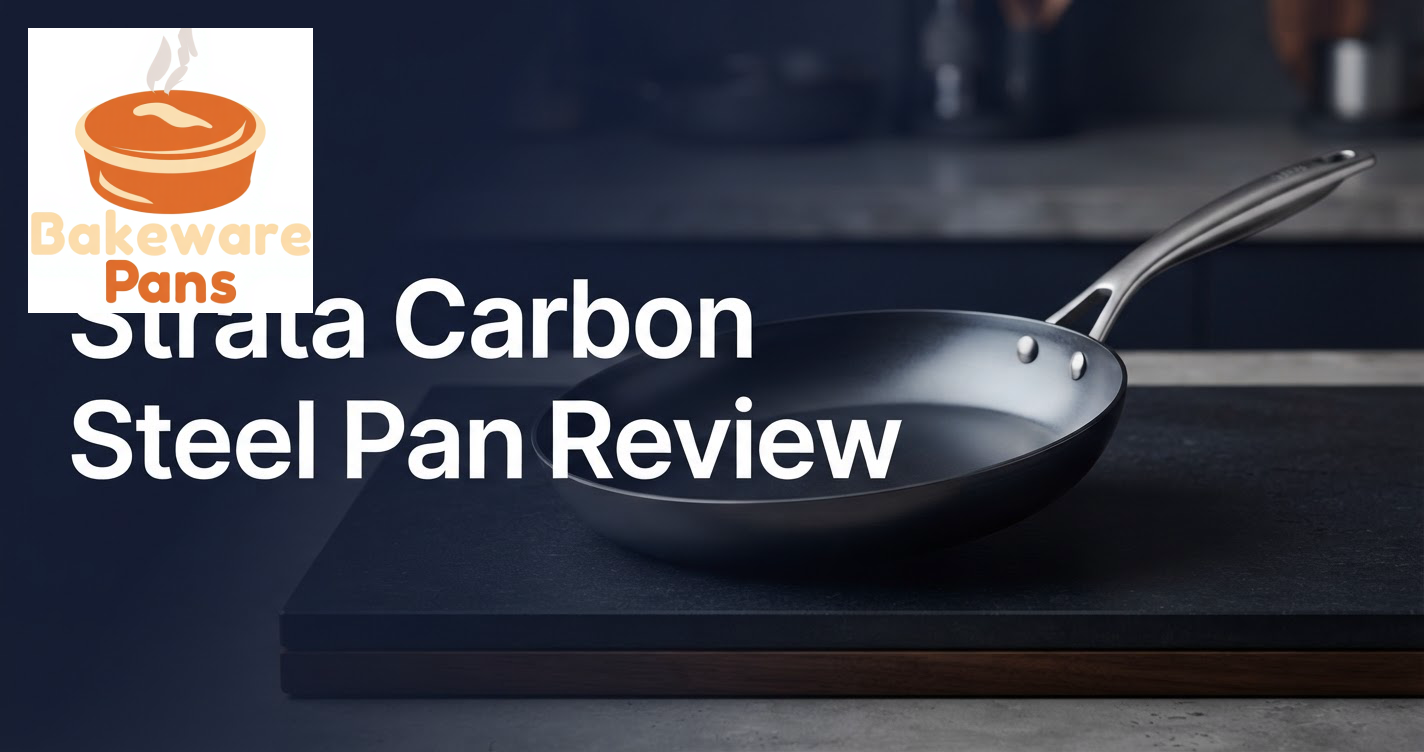
Strata Carbon Steel Pan Review
Latest Update: November 13, 2026
This Strata Carbon Steel Pan Review looks at the layered build, what it can mean for everyday cooking, and the care a carbon steel surface needs. The Strata Carbon Steel Clad Pan combines cooking surfaces with an aluminium core, a design described as supporting heat responsiveness and even heat distribution.
Key Takeaways
- Quick Answer: The Strata is a potential fit for home cooks who want carbon steel cooking surfaces with an aluminium core and are willing to season and maintain the pan.
- Construction: Carbon steel, bonding layers and aluminium serve different roles in the layered design. Look at the rim and layer bonds when considering cleaning and corrosion risk.
- Heat: Even heat distribution, quick temperature response and heat retention are separate traits. Judge each with repeatable cooking tests.
- Handling: The listed 12 inch skillet weighs approximately 2.8 pounds. Choose a size that suits your burner and the flat cooking area you need.
- Care: A carbon steel surface needs seasoning, prompt drying and rust prevention. Long acidic cooking can weaken the patina.
- Compare: Traditional carbon steel has simpler construction, while stainless steel and coated pans call for different care routines.
Shop and View Best Deal on Amazon—>
How the Strata pan is constructed
The listed Strata construction uses carbon steel cooking surfaces, proprietary alloy bonding layers and a pure aluminium core. The carbon steel can develop seasoning, while the aluminium core can help spread heat through the pan.
The listed layer thicknesses are 1.5 mm for each carbon steel layer, 0.3 mm for each bonding layer and 3.0 mm for the aluminium core. That is a different approach from a traditional pan made mainly from one piece of carbon steel, where one metal forms the cooking body rather than several bonded layers sharing different roles.
Layer edges matter as much as the materials. Exposed steel at the rim can corrode if moisture remains there, while secure bonds between layers support long term use and reduce places where residue can collect.
The listed 12 inch skillet weighs approximately 2.8 pounds.
What to assess about heating and heat retention
Even heating means the cooking surface warms with few pronounced hot spots. Check for uneven browning across the pan, because a food item that darkens much faster in one area may be receiving uneven heat.
Responsiveness describes how quickly the pan changes temperature after you adjust the burner. An aluminium core can aid heat spreading, but you need cooking tests to learn how quickly this particular pan responds on your stove.
Heat retention is separate. A thicker or heavier pan usually stores more heat, while a responsive pan can adjust more quickly when the heat setting changes. Neither quality guarantees the other.
For a fair comparison, use the same burner, setting, preheating time and food quantity for each pan. Watch how evenly food cooks, how quickly the pan reacts to a burner adjustment and how much heat remains after you move it off the burner.
Shop and View Best Deal on Amazon—>
Consider weight, handling and cooking surface fit
At approximately 2.8 pounds for the listed 12 inch skillet, the Strata has a defined weight that can help you judge everyday handling. A heavier pan can feel steady on the stove, while a lighter one is easier to lift, move and use for tossing food.
Cast iron is commonly heavier and holds heat well. Traditional carbon steel is often easier to move than cast iron, though the feel of any pan also depends on its dimensions and handle.
Choose a pan by its usable flat cooking area and your burner size, not just the diameter in its name. A large pan on a small burner can heat unevenly near the edges, leaving you with crowded or inconsistently cooked food.
Handle security and rim shape also matter in daily use. A firmly attached handle supports controlled lifting, and a clean pouring rim helps you transfer sauces without drips.
Seasoning, food release and everyday care
Seasoning is a thin layer of polymerised oil bonded to the cooking surface. Start with a clean, dry pan, rub on a very thin coating of suitable oil, then heat it; repeat with thin layers rather than leaving a thick coat that can turn sticky.
Carbon steel does not provide dependable food release before seasoning and suitable cooking habits have developed. Preheating, using enough fat and allowing food to brown before moving it all help the surface release food more readily.
After cooking, wash away residue, dry the pan promptly and apply a light protective oil when needed. Water left on carbon steel raises rust risk, including around a rim where layers meet.
If rust or damaged seasoning appears, remove loose residue, dry the pan thoroughly and rebuild the patina with thin coats of oil. Acidic foods can weaken seasoning, so avoid long acidic simmers in a carbon steel skillet.
Shop and View Best Deal on Amazon—>
Match the surface to eggs, fish and meat
For eggs, preheat gently and add enough fat. Eggs are more likely to stick when a pan is too cool, the surface is new, or you move them before they have had time to set.
For fish, dry the fillet surface and use a well seasoned pan. Let the underside cook and firm before turning, which helps reduce tearing.
For meat, preheat the Strata Carbon Steel Pan and leave space between pieces. Overcrowding cools the cooking surface and traps moisture, so the meat steams rather than browns.
Compare food release only when the pans have similar seasoning, preheating, fat and food conditions.
Compare it with traditional carbon steel and other surfaces
Traditional carbon steel has simpler construction and develops seasoning on its cooking surface. A layered pan uses additional metals to influence heat movement, so the main choice is between a simpler steel body and a build that combines materials for different jobs.
Stainless steel is generally easier to maintain against rust and acidic foods. Seasoned carbon steel can develop food release through its patina, but it calls for more attention to drying, oil and cooking technique.
A coated surface can feel easier at the start, while seasoned steel asks you to manage preheating, fat and upkeep.
For another perspective on a different Strata design, see our Strata Pan 12 Inch Review. Our carbon steel pan brand comparison also places traditional and hybrid options in context.
Who should choose the Strata pan
The Strata may suit cooks who want a carbon steel cooking surface paired with an aluminium core and are ready to maintain seasoning. It is a considered option for home cooks who value layered construction and can give the pan the care carbon steel requires.
Cooks who often make acidic dishes, want less maintenance or expect dependable food release without seasoning may prefer another surface. Stainless steel and coated cookware offer different care and cooking tradeoffs.
- Potential fit: You want carbon steel cooking surfaces and will dry, season and maintain them.
- Consider another surface: You regularly cook acidic foods for a long time or want a lower maintenance routine.
- Decide by use: Consider pan weight, burner size, the foods you cook and your comfort with seasoning.
The central tradeoff is straightforward: layered construction may combine useful material properties, but it does not remove the seasoning and rust prevention needs associated with carbon steel.
Frequently Asked Questions
Can a carbon steel pan be used for deep frying?
Yes, a carbon steel pan can be used for deep frying if it is stable and has enough depth for the oil and food. Leave ample space at the top because hot oil rises when food is added, and avoid moving a pan full of hot oil.
How long does it take for a carbon steel patina to develop?
There is no fixed timetable because the patina changes with cooking frequency, food choice and seasoning habits. It can darken gradually with use, and a patchy appearance does not by itself mean the pan cannot cook well.
Why can a carbon steel pan warp?
Uneven, rapid heating can make the metal expand at different rates and distort the pan. A burner that concentrates heat in a small area can add to that stress, especially when the pan is heated abruptly.
Can metal utensils be used on a carbon steel cooking surface?
Yes, metal utensils are suitable for a carbon steel surface, and they can help lift browned bits from the pan. A sharp edge or forceful scraping may disturb seasoning in one spot, which you can restore with regular use and care.
How should I store a carbon steel pan between uses?
Store it fully dry in a low humidity cupboard, with the cooking surface protected from standing water or damp cloth. If pans are stacked, place a dry separator between them to reduce scratches and trapped moisture.
Can I make a quick pan sauce in a carbon steel skillet?
Yes, browned bits left after searing can add flavour to a quick sauce. Use a short cooking time and avoid prolonged simmering with strongly acidic ingredients, which can affect the seasoned surface.
What are the downsides of carbon steel pans?
The main tradeoff is maintaining the seasoned surface while learning how it releases food.
See also: B00j0ykFO.
Conclusion
This Strata Carbon Steel Pan Review points to a layered skillet designed around carbon steel cooking surfaces and an aluminium core. That combination may interest cooks who want carbon steel and are comfortable building and maintaining seasoning.
We would choose it based on handling, burner fit, maintenance tolerance and the foods you cook most. Layered construction can shape heat movement, but it does not eliminate the care needs of carbon steel.

Leave a Reply
You must be logged in to post a comment.