
Best Affordable Cookware Set
Last updated: April 3, 2026
Quick Answer: The Best Affordable Cookware Set balances material quality, cooking performance, and long-term durability without draining your budget.
For most home cooks in 2026, the Tramontina Gourmet Tri-Ply Clad and Ninja Foodi NeverStick sets offer the strongest price-to-performance ratio, while ceramic options like the GreenLife set suit health-conscious buyers on a tight budget.
Key Takeaways
- Material matters most: Stainless steel lasts longest; nonstick is easiest to use; ceramic is the most health-conscious choice
- Sweet spot pricing: Quality cookware sets are available from $50 to $300, with the best value typically found in the $80–$180 range
- Piece count isn’t everything: A focused 8–10 piece set often outperforms a bloated 15-piece set with filler pieces
- Induction compatibility is a must-check feature if you have or plan to upgrade to an induction cooktop
- Long-term cost analysis favors mid-range stainless steel over cheap nonstick, which typically needs replacement every 1–3 years
- Top tested picks include Tramontina Tri-Ply Clad (best value stainless), Ninja Foodi NeverStick (best value overall), and GreenLife Ceramic (best budget nonstick)
- Ergonomic handles, oven-safe ratings, and lid quality are the three most overlooked factors in affordable sets
- Sustainability: Ceramic and stainless steel options carry a lower environmental footprint than PTFE-coated nonstick
What Makes a Cookware Set Truly Affordable?
Affordability in cookware isn’t just about the sticker price, it’s about cost-per-use over the life of the set. A $40 nonstick set that warps in 18 months costs more per year than a $150 stainless steel set that lasts a decade.
When evaluating the best affordable cookware set, I look at three factors together:
- Initial purchase price relative to piece count and quality
- Expected lifespan based on material and construction
- Replacement cost if individual pieces wear out
“The cheapest pan you buy is often the most expensive one you own.” A principle every experienced home cook learns the hard way.
Price tiers to know:
| Tier | Price Range | Best For |
|---|---|---|
| Budget | $30–$80 | Students, first apartments, light cooking |
| Mid-Range | $80–$180 | Most home cooks, daily use |
| Premium Affordable | $180–$300 | Serious home cooks, long-term investment |
| Professional | $300+ | Culinary enthusiasts, chefs |
For most readers, the $80–$180 mid-range tier delivers the best balance of quality and value.
👉 Shop Top-Rated Affordable Cookware Sets on Amazon
What Are the Best Cookware Materials for Home Cooking?
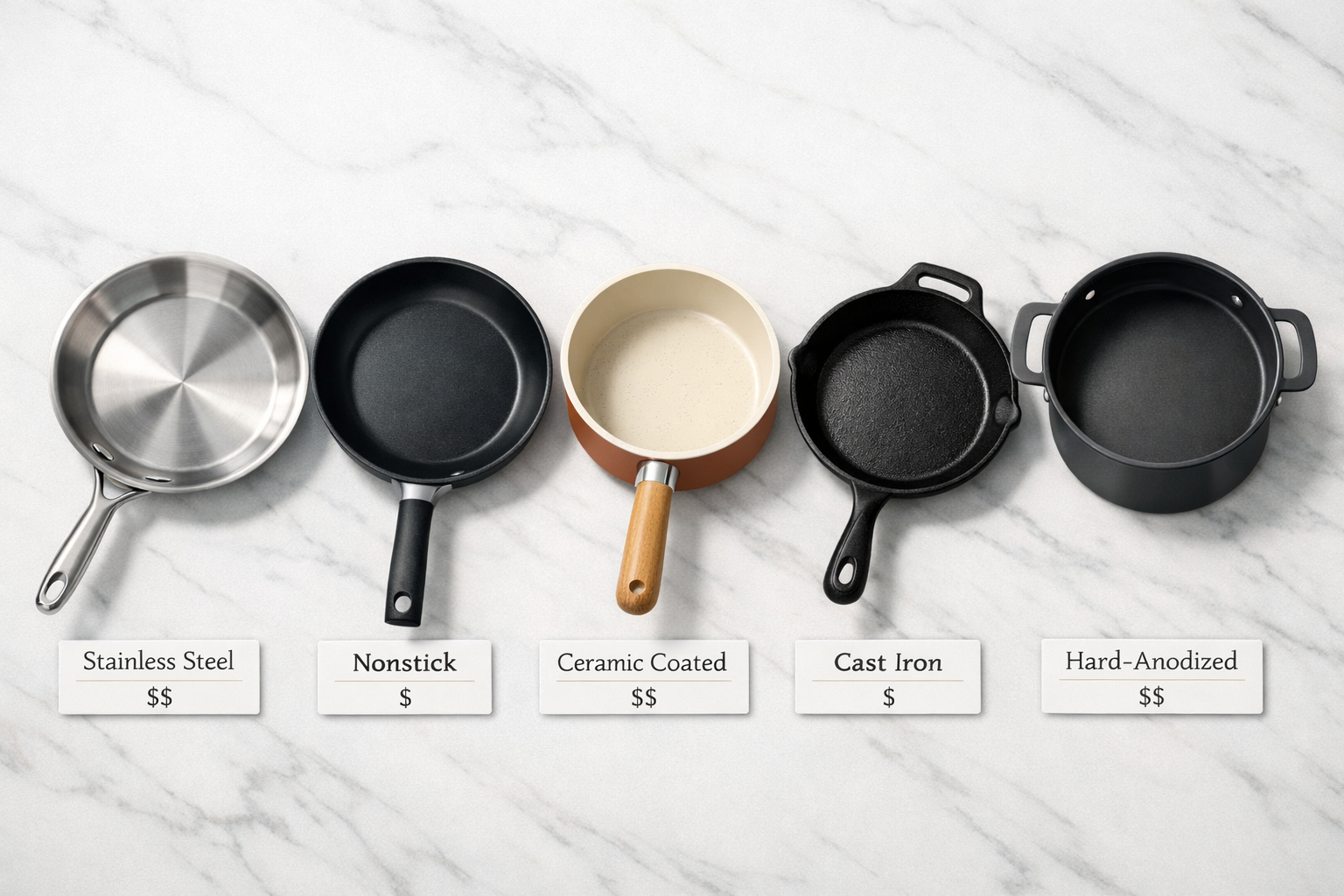
The best cookware material for most home cooks is stainless steel with an aluminum core, because it combines durability, even heat distribution, and versatility across all cooktops. Nonstick is the easiest to use daily, while ceramic offers the healthiest cooking surface.
Here’s a breakdown of the main options:
Stainless Steel (Tri-Ply or Multi-Clad)
- Pros: Extremely durable, dishwasher-safe, works on all cooktops including induction, no coating to degrade
- Cons: Food can stick without proper technique, heavier than nonstick
- Best for: Searing, browning, deglazing, long-term use
- Top pick: Tramontina Gourmet Tri-Ply Clad 12-Piece Set — TechGearLab specifically notes it offers “nonstick cooking and excellent cooking quality at an unbeatable price”
For a deeper look at top brands, see our guide to top stainless steel cookware brands.
Nonstick (PTFE/Hard-Anodized)
- Pros: Easy food release, minimal oil needed, simple cleanup
- Cons: Coating degrades over 1–5 years, not ideal for high-heat searing
- Best for: Eggs, pancakes, delicate fish, low-fat cooking
- Top pick: Ninja Foodi NeverStick Premium 8-Piece Set, named best value by Good Housekeeping after testing 200+ sets
For honest nonstick reviews, check out our best affordable nonstick pans guide.
Ceramic Nonstick
- Pros: Free of PTFE and PFOA, visually appealing, good for health-conscious cooks
- Cons: Less durable than PTFE nonstick, loses release properties faster
- Best for: Low-to-medium heat cooking, health-focused households
- Top pick: GreenLife Ceramic Non-Stick Cookware Set
Our detailed ceramic nonstick cookware guide covers this category thoroughly.
Cast Iron
- Pros: Exceptional heat retention, naturally nonstick when seasoned, lasts generations
- Cons: Heavy, requires seasoning and careful maintenance, slow to heat
- Best for: Searing steaks, cornbread, slow cooking
For cast iron care, our cast iron seasoning guide is the place to start.
How Many Pieces Should a Complete Cookware Set Include?
A complete cookware set for most home cooks needs 8–10 pieces. Sets with more pieces often include duplicates or rarely-used items that add bulk without adding cooking capability.
The essential pieces in any quality set:
- 8-inch skillet (everyday frying and eggs)
- 10 or 12-inch skillet (larger meals, searing)
- 1.5-quart saucepan with lid (sauces, reheating)
- 3-quart saucepan with lid (grains, soups)
- 5 or 6-quart stockpot with lid (pasta, large batches)
- Sauté pan, 3-quart with lid (optional but very useful)
Common mistake: Buying a 15-piece set because it “seems like more value.” Many budget 15-piece sets pad the count with lids counted as pieces, small butter warmers, or utensils that wear out quickly.
Which Affordable Cookware Sets Performed Best in Testing?
Based on independent testing by Good Housekeeping (200+ sets tested) and TechGearLab’s comparative analysis, these sets consistently rank at the top for value:
🏆 Top Tested Picks for 2026
1. Ninja Foodi NeverStick Premium 8-Piece Set
- Best value overall per Good Housekeeping testing
- Hard-anodized exterior, PTFE nonstick interior
- Oven safe to 400°F, induction compatible
- Price range: ~$120–$160
2. Tramontina Gourmet Tri-Ply Clad 12-Piece Set
- Best value stainless steel per TechGearLab
- Fully clad tri-ply construction for even heating
- Dishwasher safe, induction ready
- Price range: ~$130–$180
3. Calphalon Premier Set
- Best overall by TechGearLab for “durability, excellent cooking performance, and well-designed handles and lids”
- Price range: ~$200–$280
4. GreenLife Ceramic Non-Stick Cookware Set
- Best budget ceramic option
- PTFE and PFOA free
- Price range: ~$50–$80
5. Tramontina 14-Piece Ceramic Induction-Ready Set
- Excellent budget alternative to premium sets per TechGearLab
- Price range: ~$80–$120
6. Made In 13-Piece Set
- Most versatile option per Good Housekeeping
- Price range: ~$500 (premium affordable tier)
How Do You Choose the Right Cookware for Your Cooking Style?
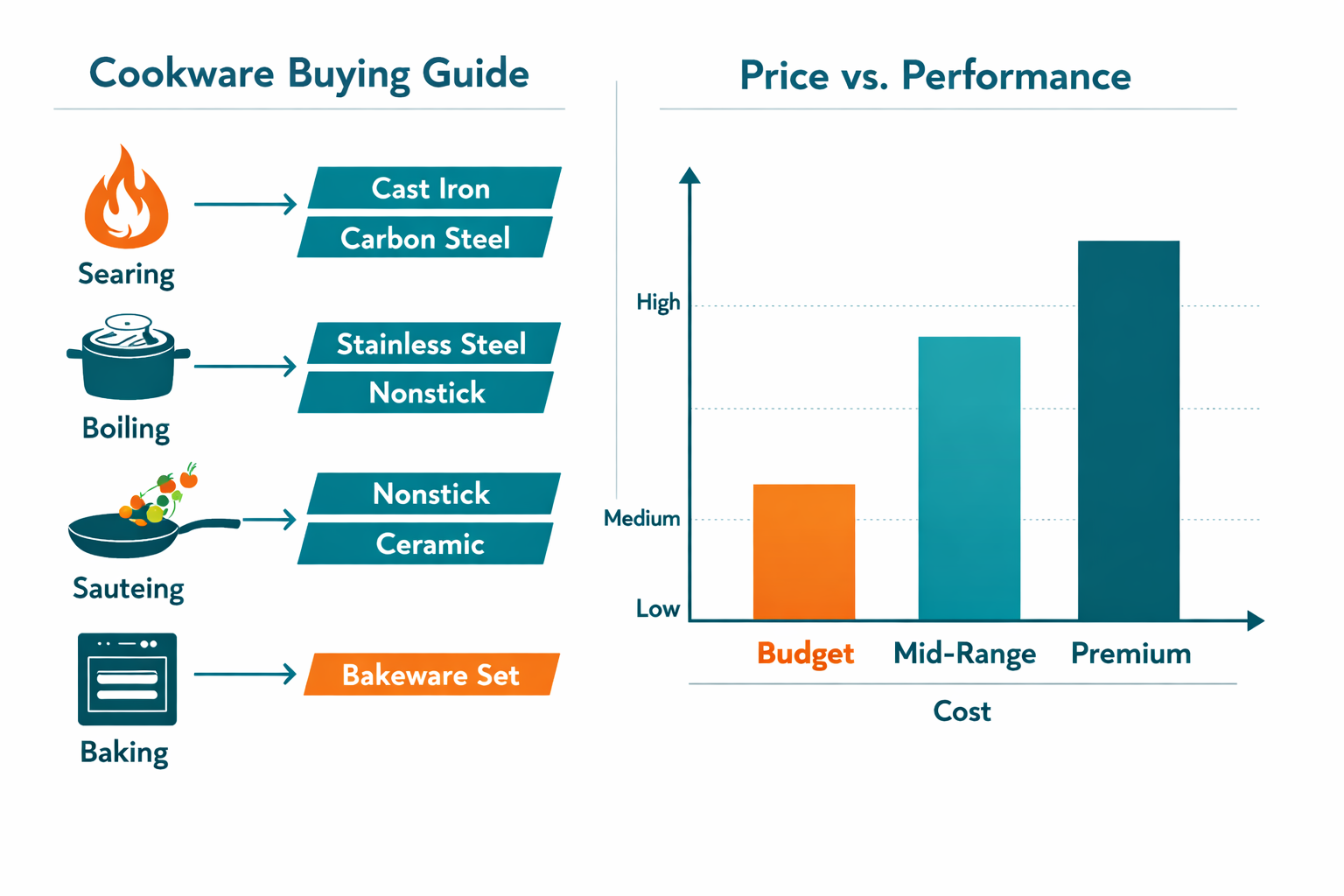
Match your cookware material to how you actually cook, not to what looks best in reviews. A passionate steak-searing cook needs different tools than someone who primarily makes stir-fries or delicate sauces.
Stainless steel if you:
- Sear meats regularly
- Cook acidic foods (tomatoes, wine sauces)
- Want cookware that lasts 10+ years
- Prefer dishwasher-safe options
Nonstick if you:
- Cook eggs and delicate proteins daily
- Prefer easy cleanup over high-heat performance
- Are a beginner or cooking for one or two people
Ceramic if you:
- Prioritize avoiding PTFE coatings
- Cook at low-to-medium heat most of the time
- Want to reduce your kitchen’s chemical footprint
For cooks with glass top stoves, compatibility is critical — see our best cookware for glass top stoves guide before buying.
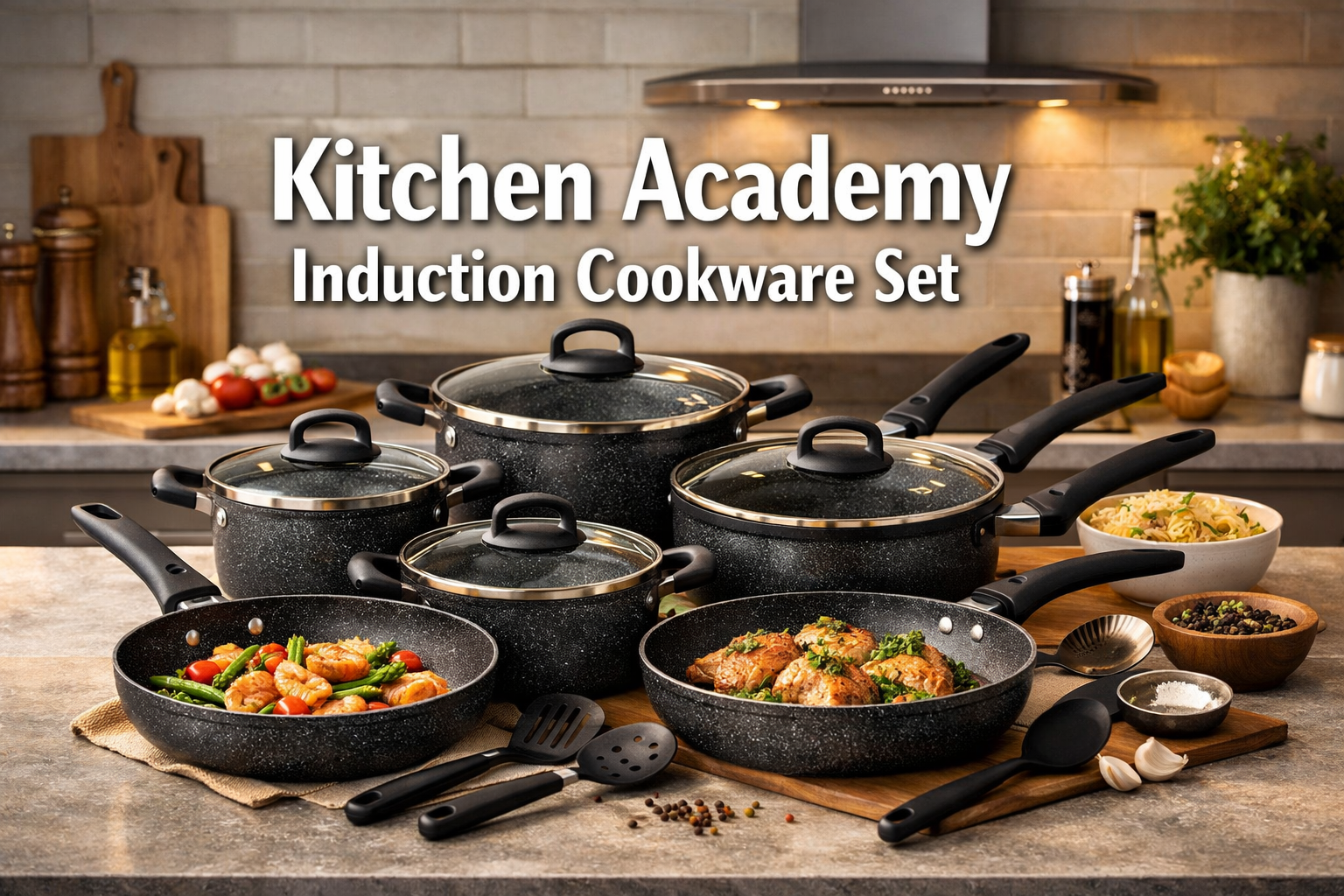
If you use or plan to use an induction cooktop, our essential guide to induction cookware covers exactly what to look for.
What About Sustainability and Environmental Impact?
This is a topic most cookware reviews skip entirely, but it matters more in 2026 than ever before.
Stainless steel is the most sustainable long-term choice: it’s fully recyclable, doesn’t degrade into food, and a quality set can last decades. Ceramic coatings have a lower chemical footprint than PTFE but wear faster, meaning more frequent replacement.
Traditional PTFE nonstick involves fluoropolymer manufacturing that carries environmental concerns, particularly around PFAS chemicals.
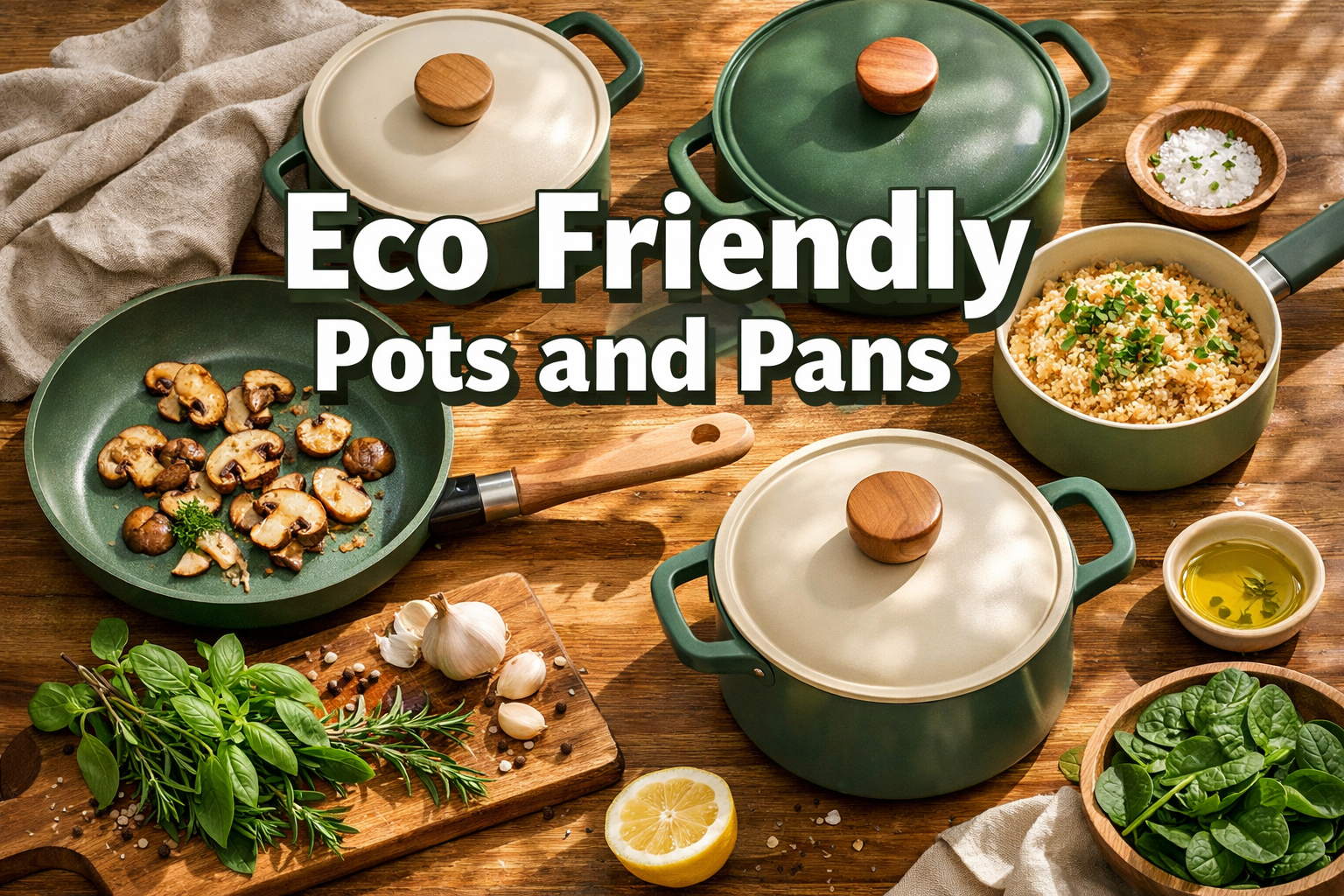
For readers focused on this area, our guide to eco-friendly cookware options and PFAS-free cookware go deeper on these issues.
Disposal tip: Don’t throw old nonstick pans in general recycling. Many municipalities have specific drop-off programs for coated cookware. Check your local waste management guidelines.
👉 Shop Top-Rated Affordable Cookware Sets on Amazon
How Do You Maintain Affordable Cookware to Maximize Lifespan?
Proper maintenance can double or triple the life of any cookware set, especially nonstick. Most premature cookware failure comes from user error, not poor manufacturing.
Key maintenance rules:
- Never use metal utensils on nonstick or ceramic surfaces — use silicone or wood
- Avoid thermal shock — don’t plunge a hot pan into cold water
- Hand wash nonstick even if labeled dishwasher-safe; repeated dishwasher cycles degrade coatings faster
- Season cast iron after every wash to maintain its nonstick surface
- Store with pan protectors or paper towels between stacked pieces to prevent scratching
- Use low-to-medium heat for nonstick; high heat is the fastest way to degrade the coating
- Dry stainless steel immediately after washing to prevent water spots and mineral buildup
Frequently Asked Questions
Q: What is the best cookware material for home cooking?
Stainless steel with an aluminum core (tri-ply) is the best all-around material for home cooking. It’s durable, works on all cooktops, handles high heat, and doesn’t have a coating that degrades. Nonstick is better for daily egg cooking and easy cleanup.
Q: Are nonstick cookware sets safe to use in 2026?
Modern PTFE nonstick cookware is considered safe at normal cooking temperatures (below 500°F/260°C). The primary risk is overheating an empty pan. PFOA, a chemical previously used in manufacturing, has been phased out of most cookware since 2013. For those who prefer to avoid PTFE entirely, ceramic nonstick is a solid alternative.
Q: How many pieces should a complete cookware set include?
Eight to ten pieces covers all everyday cooking needs. A good set includes two skillets (8-inch and 10/12-inch), two saucepans with lids, and a stockpot with lid. Sets with 14–15 pieces often include filler items.
Q: What’s the difference between tri-ply and disc-bottom stainless steel?
Tri-ply means the aluminum core runs the full length of the pan walls, providing even heat distribution up the sides. Disc-bottom sets only have the aluminum layer at the base, which can create hot spots on the sides. For the best affordable cookware set, fully clad tri-ply is worth the slight price premium.
Best Affordable Cookware Set: FAQs
Q: Is the Tramontina cookware set worth buying?
Yes. TechGearLab ranks the Tramontina Gourmet Tri-Ply Clad as the best value stainless steel set available, noting it delivers professional-level cooking performance at a budget-friendly price.
Q: Can I use affordable cookware on an induction cooktop?
Only if the cookware has a magnetic base. Most stainless steel sets are induction compatible, but always check the product specs. Aluminum and ceramic sets require an induction-compatible base layer. The Tramontina Ceramic Induction-Ready set is a specifically designed budget option.
Q: How long should a quality affordable cookware set last?
A mid-range stainless steel set should last 10–15 years with proper care. Nonstick coatings typically last 1–5 years depending on use and maintenance. Ceramic nonstick falls in between, usually 2–4 years before the release properties diminish.
Q: What’s the best affordable cookware set for beginners?
The GreenLife Ceramic Non-Stick Set or the Ninja Foodi NeverStick 8-Piece Set are both excellent starting points. They’re forgiving to use, easy to clean, and priced accessibly.
Conclusion: Your Next Steps
Finding the Best Affordable Cookware Set comes down to three honest questions: How do you cook? How long do you want it to last? And what’s your actual budget?
For most home cooks, the Tramontina Tri-Ply Clad or Ninja Foodi NeverStick sets hit the sweet spot of quality, price, and durability. If you’re prioritizing health and avoiding chemical coatings, the GreenLife Ceramic set is the strongest budget option.
Actionable next steps:
- Identify your cooktop type (gas, electric, glass, induction) — this eliminates incompatible options immediately
- Decide on material based on your cooking style using the guide above
- Set a realistic budget — aim for the $80–$180 range for the best value
- Check our curated picks and compare top-rated sets: 👉 Shop Top-Rated Affordable Cookware Sets on Amazon
- Read material-specific guides before buying — our affordable cookware sets under $100 guide is a great next stop
The right set, properly maintained, is a kitchen investment that pays off every single day.
Watch – https://www.youtube.com/watch?v=lOyvMifQ-DA
👉 Shop Top-Rated Affordable Cookware Sets on Amazon

Leave a Reply
You must be logged in to post a comment.