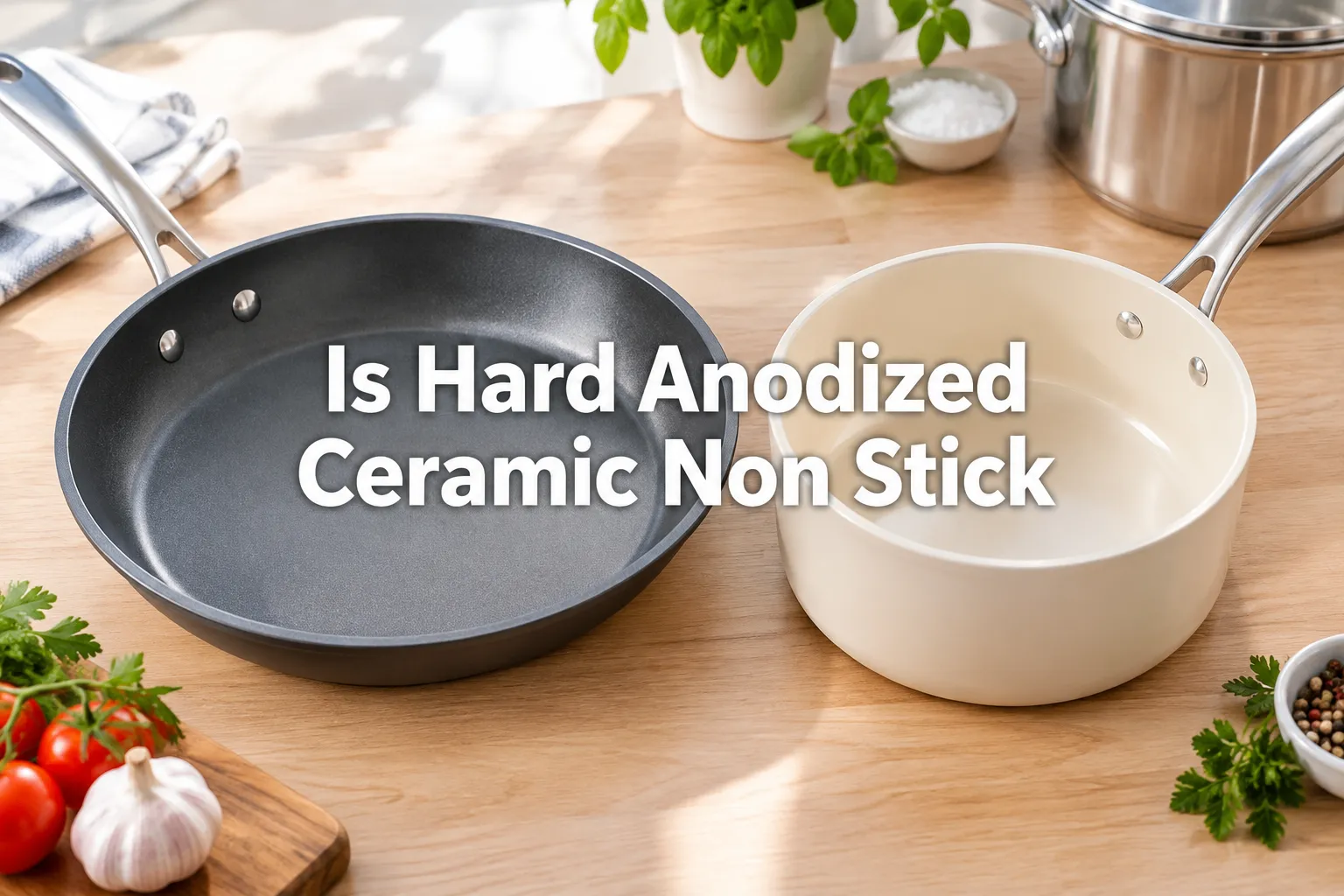
Is Hard Anodized Ceramic Non Stick Cookware Safe
Last updated: October 18, 2026
Quick Answer
Is Hard Anodized Ceramic Non Stick Cookware Safe, for everyday cooking when you stay within its heat limits, avoid metal utensils, and retire any pan once the surface is scratched or flaking. The hard anodized aluminum base resists leaching and reacts far less with food than plain aluminum, while a true ceramic nonstick coating is typically free of PFOA and PTFE, according to cookware safety coverage from NBC News Select. Problems mostly show up with overheating, rough scrubbing, or coatings that are labeled ceramic but still contain hidden PTFE.
Key Takeaways
- Hard anodized cookware starts as aluminum, then goes through an electrochemical process that hardens the surface, so it resists scratches and does not react with acidic foods the way bare aluminum does.
- Ceramic nonstick coatings are usually PFOA and PTFE free, but some “ceramic” branded pans still blend in PTFE, so checking the label matters.
- Both hard anodized and ceramic cookware are considered safe for everyday cooking as long as you avoid metal utensils and keep heat below about 450 to 500 degrees Fahrenheit, per guidance from the New York Times Wirecutter.
- Stop using any nonstick pan, hard anodized or ceramic, once the coating is scratched, flaking, or worn thin.
- Stainless steel cookware is more scratch resistant long term, but hard anodized cookware offers easier everyday nonstick cooking with less oil.
- A 2025 UNC study on cookware and PFAS exposure found that coating quality and wear matter more than material labels alone, according to North Carolina Health News.
- New Jersey’s Protecting Against Forever Chemicals Act, enacted in 2026, is pushing cookware makers toward clearer labeling, as reported by DLA Piper.
- If you want long term durability over nonstick convenience, consider stainless steel or cast iron cookware instead.
US readers can Shop Hard Anodized and Ceramic Cookware Sets on Amazon Now, and UK readers can Find Comparable Sets Here.
What Is Hard Anodized Ceramic Nonstick Cookware Made Of?
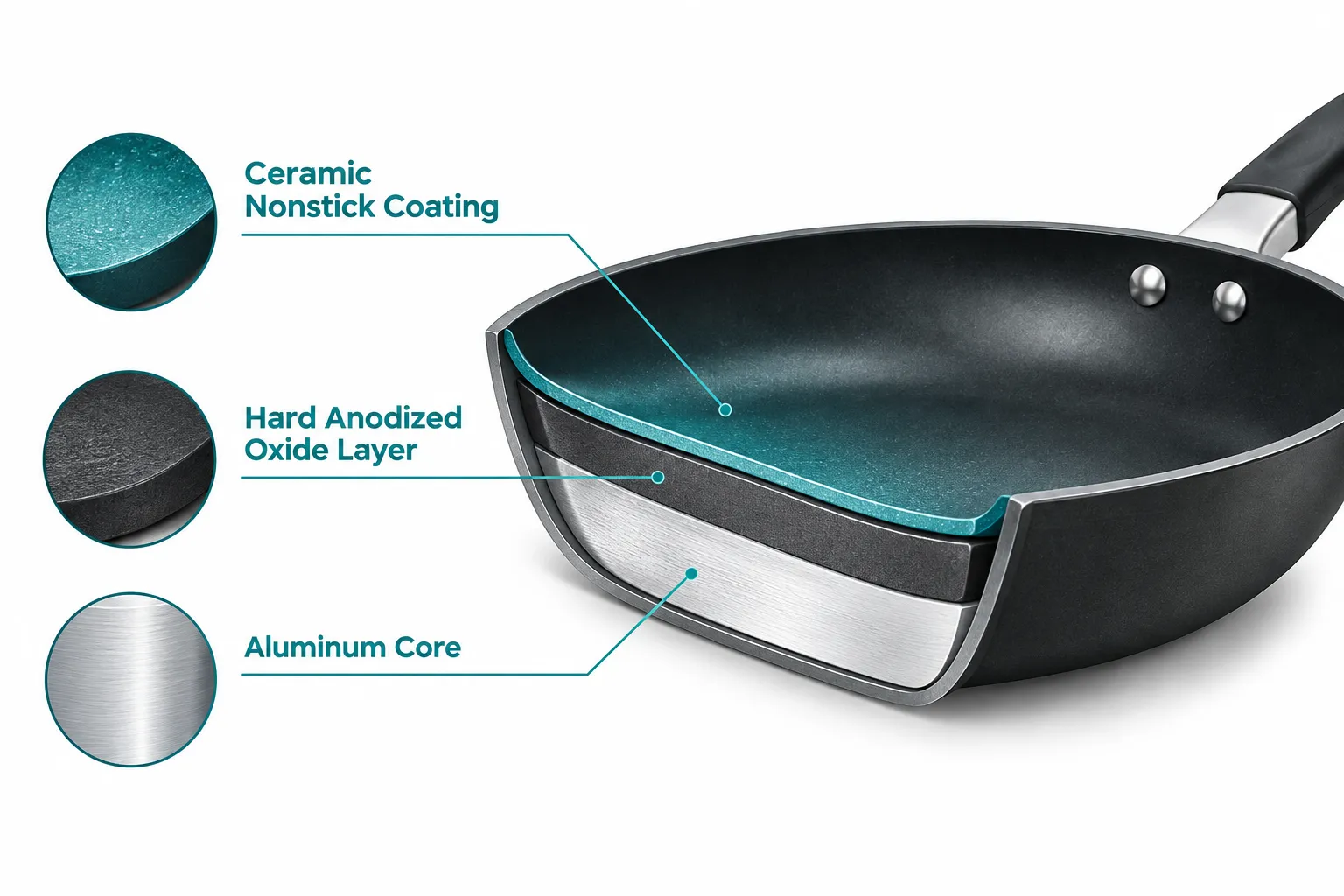
Hard anodized ceramic nonstick cookware is made of an aluminum core that has been hardened through an electrochemical anodizing process, then finished with a ceramic nonstick coating on top. The anodizing step thickens and seals the aluminum surface, while the ceramic layer gives the pan its slick, low stick cooking surface.
This combination is popular because it pairs two separate benefits into one piece of cookware.
- The base metal: raw aluminum is lightweight and heats quickly, but it is soft and reacts with acidic food, so manufacturers anodize it to create a harder, more stable surface.
- The anodized layer: this is not a coating added on top, it is the aluminum itself converted into a dense oxide layer, which is why hard anodized cookware feels noticeably tougher than plain aluminum pans.
- The ceramic nonstick coating: a mineral based, silicon derived layer sprayed or cured onto the anodized surface, giving the pan its nonstick finish without relying on traditional PTFE chemistry in most cases.
Many shoppers confuse hard anodized cookware with stainless steel cookware, but the two use completely different base metals and finishing processes, which is a big part of why they perform so differently in a kitchen.
Is Hard Anodized Cookware Safe to Use Every Day?
Yes, hard anodized cookware is safe for everyday cooking when the surface is intact and you follow basic nonstick care rules. The anodizing process seals the aluminum so it does not leach into food the way untreated aluminum can, which is why health focused buyers often choose hard anodized over bare aluminum.
That said, safety depends heavily on how you treat the pan over time.
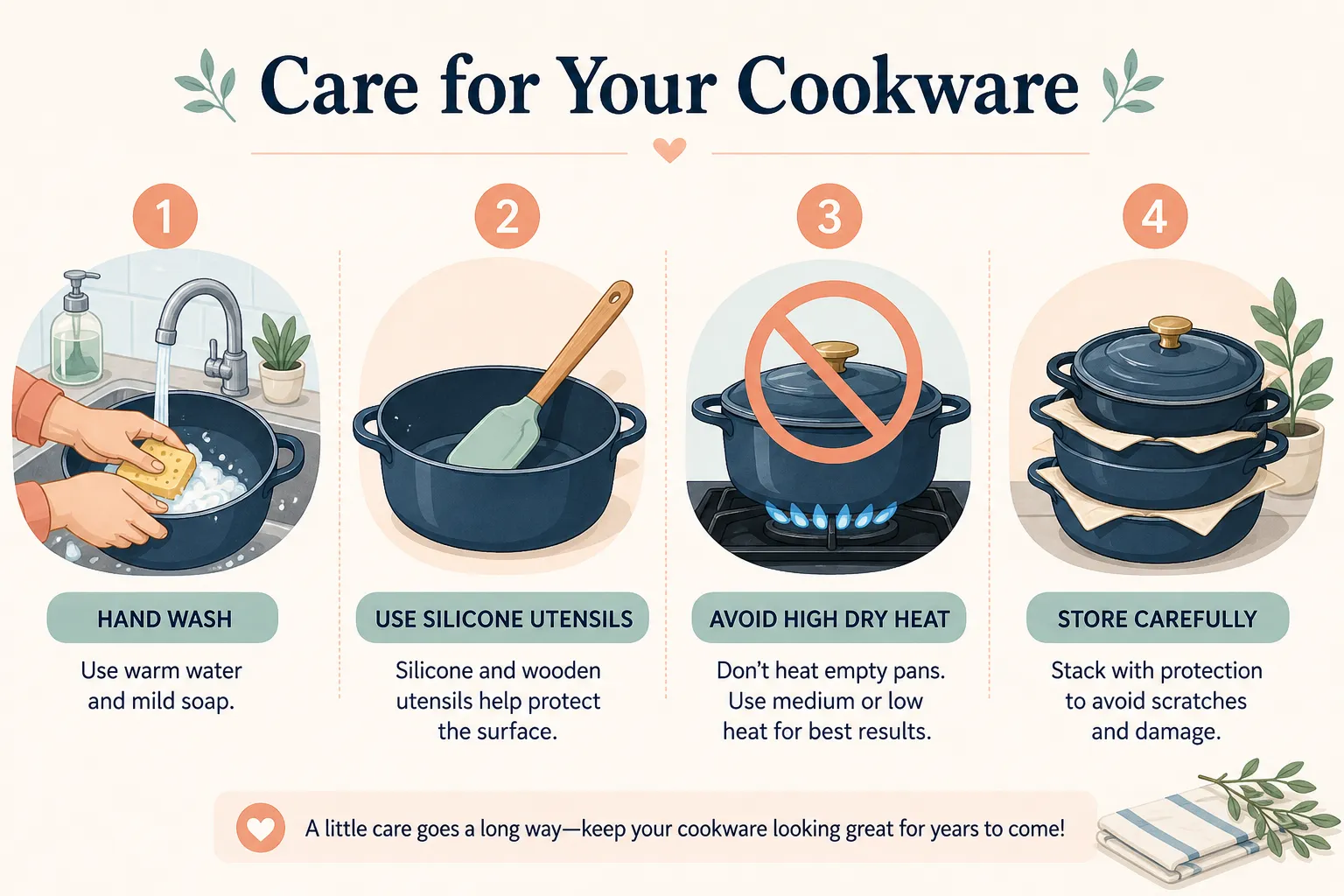
- Use wood, silicone, or nylon utensils instead of metal ones, since metal tools scratch the surface and shorten its life, a point echoed by Wirecutter’s testing.
- Avoid dry heating an empty hard anodized pan, since high heat without food or oil stresses the coating faster than normal cooking does.
- Hand wash when possible, since dishwasher detergents and high heat cycles can dull the anodized finish over repeated cycles.
- Replace the pan once you see flaking, pitting, or a surface that no longer feels smooth, since damaged coatings are the main safety concern, not the hard anodized base itself.
Choose hard anodized cookware if you want lighter pans with fast, even heating and you are willing to hand wash. Choose stainless steel instead if you cook mostly at high heat with metal tools and want a surface that forgives rougher handling.
Does Ceramic Nonstick Cookware Have PFOA or PTFE?
Most ceramic nonstick cookware does not contain PFOA or PTFE, since the nonstick layer is built from a silicon based gel rather than the fluoropolymer chemistry used in traditional Teflon style coatings. However, labeling is inconsistent across brands, and some pans marketed as ceramic still include a thin PTFE layer underneath.
- PFOA: this chemical was phased out of nonstick manufacturing in the United States years ago, and reputable ceramic and PTFE based cookware brands alike now advertise themselves as PFOA free.
- PTFE: this is the compound in traditional Teflon coatings, and while it is considered stable at normal cooking temperatures, it can break down and release fumes above roughly 500 degrees Fahrenheit, according to NBC News Select.
- Growing regulatory attention has pushed some states toward requiring clearer disclosure, and a 2026 labeling rule tied to New Jersey’s forever chemicals law is set to take effect in 2028, as outlined by SGS.
If you want to avoid any confusion, look for cookware that specifically states it is PTFE free, not just ceramic, and check our guide to cookware free of PFAS risks before you shop.
Hard Anodized vs Ceramic Nonstick: Which Is Safer?
Both hard anodized and ceramic nonstick cookware are considered safe under normal cooking conditions, but they carry different risk profiles. Hard anodized cookware’s main safety question is about the nonstick layer applied on top of it, while pure ceramic cookware’s main question is coating durability over time.
- Hard anodized cookware with a ceramic topcoat benefits from a tougher base that resists warping, so the coating sits on a more stable surface.
- Pure ceramic nonstick pans, especially budget ones, tend to lose their slick surface faster, which can push cooks toward using more oil or butter sooner than expected, a pattern noted in Wirecutter’s long term testing.
- Neither option is inherently more toxic when new and undamaged, but once scratched, both lose their protective barrier and the question shifts to what is underneath.
A common mistake is assuming “ceramic” automatically means chemical free. Some hard anodized ceramic nonstick pans still use a hybrid coating, so reading the product description matters more than the marketing word on the box. For a side by side breakdown, see our Teflon vs ceramic cookware comparison.
Can Hard Anodized Ceramic Cookware Scratch and Release Chemicals?
Yes, hard anodized ceramic cookware can scratch, and once the nonstick coating is compromised it can expose the anodized aluminum underneath or begin flaking into food. The anodized base itself does not easily leach chemicals, but a damaged ceramic coating is no longer doing its job and should be retired.
- Metal utensils, abrasive sponges, and stacking pans without protective liners are the most common causes of scratches.
- A 2025 study out of UNC examined how cookware wear contributes to PFAS exposure pathways, finding that damaged coatings and food processing equipment both play a role, according to North Carolina Health News.
- If a hard anodized ceramic pan is scratched but shallow, it may still be functional for low heat cooking, but any flaking into food means it is time to stop using it, a view shared by multiple reviewers covering cookware durability.
For a deeper look at how coatings hold up over repeated use, our ceramic nonstick durability test walks through what actually happens to the surface after months of cooking.
Stainless Steel vs Hard Anodized Cookware
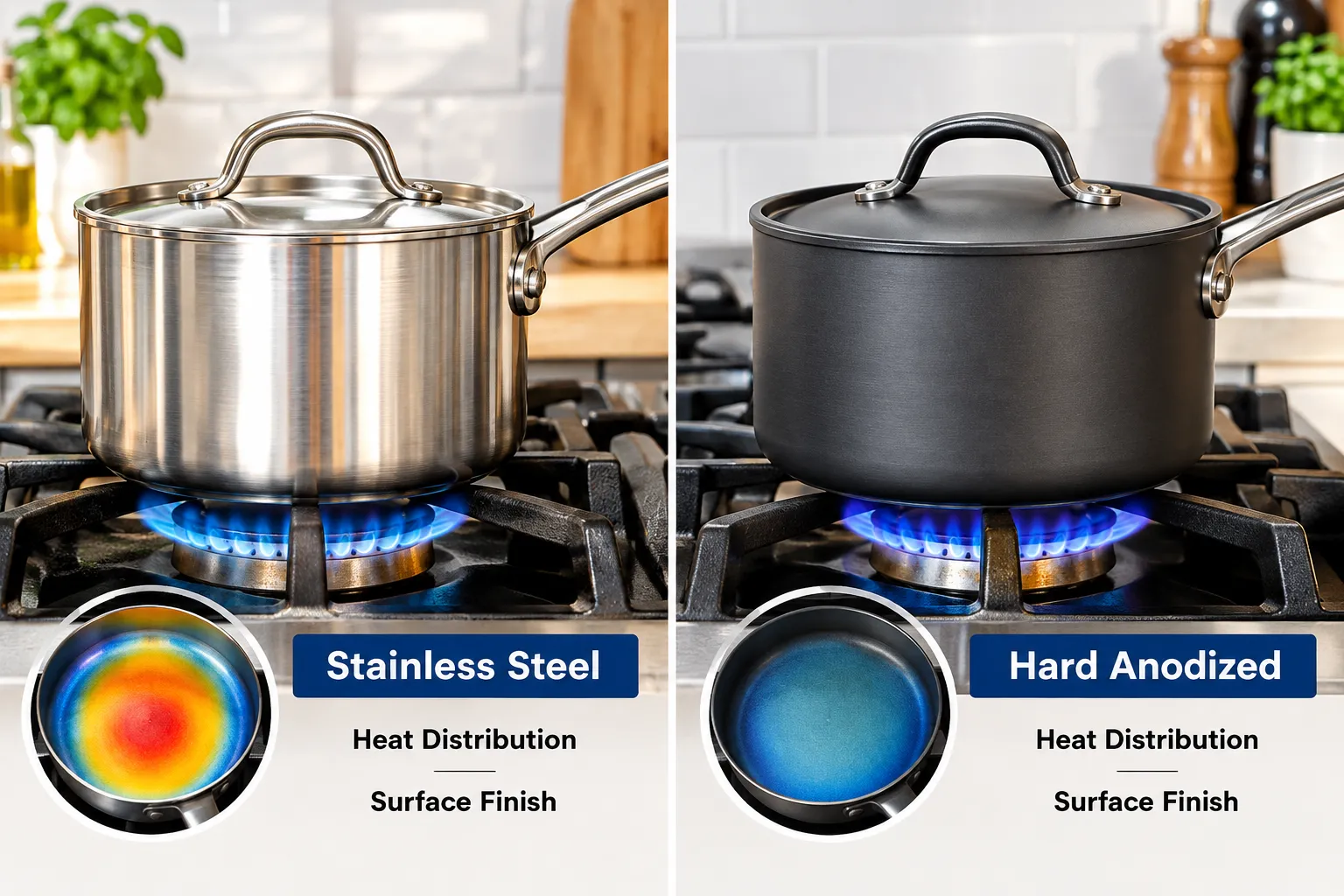
Stainless steel and hard anodized cookware solve different kitchen problems, and neither one is universally better. The Stainless steel wins on durability and high heat searing, while hard anodized wins on easy, low oil, everyday cooking.
What Is Hard Anodized Cookware?
Hard anodized cookware is aluminum that has been electrochemically treated to create a hard, dark, corrosion resistant surface. It heats quickly, distributes heat evenly, and is often paired with a nonstick coating for everyday frying, sauteing, and simmering.
What Is Stainless Steel Cookware?
Stainless steel cookware is made from steel alloyed with chromium and nickel, which resists rust, staining, and reaction with acidic food without any coating at all. It is naturally scratch resistant and safe with metal utensils, though it requires more oil and technique to prevent sticking.
Key Differences Between Stainless Steel and Hard Anodized Cookware
- Stainless steel cookware is heavier and more durable over time, while hard anodized cookware is lighter and heats faster.
- Hard anodized cookware often includes a nonstick coating, while stainless steel cookware relies on technique and oil instead of a coating.
- Stainless steel handles metal utensils and dishwashers better, while hard anodized cookware needs gentler hand washing.
Detailed Comparison Chart
| Feature | Hard Anodized Cookware | Stainless Steel Cookware |
|---|---|---|
| Base material | Treated aluminum | Steel with chromium and nickel |
| Surface | Often nonstick coated | Bare metal, no coating |
| Heat distribution | Fast and even | Good, especially in triply builds |
| Utensil safety | Wood, silicone, nylon only | Metal safe |
| Dishwasher safe | Usually hand wash recommended | Often dishwasher safe |
| Weight | Lighter | Heavier |
| Longevity | Good if cared for, coating wears over time | Excellent, often lasts decades |
US readers can Shop Hard Anodized and Ceramic Cookware Sets on Amazon Now, and UK readers can Find Comparable Sets Here.
Pros, Cons, and Performance
Hard anodized cookware pros include fast heating, lighter weight, and easy nonstick cooking with less oil. The main con is that the nonstick coating eventually wears down and requires replacement.
Stainless steel cookware pros include excellent durability, metal utensil safety, and compatibility with high heat searing. The con is that food can stick more easily without proper preheating and oil technique.
Choosing the Right Option: Stainless Steel vs Hard Anodized
Choose hard anodized cookware if you cook eggs, fish, or delicate foods often and want an easy nonstick surface. Choose stainless steel cookware if you sear meat at high heat, use metal tools, and want cookware that lasts for decades with proper care. Many home cooks keep both in rotation rather than picking just one.
What Is Ceramic Cookware? Hard Anodized and Ceramic Cookware Pros
Ceramic cookware refers to pans with a mineral based nonstick coating, sometimes applied directly to aluminum and sometimes to a hard anodized base. It is marketed as a safer, PTFE free alternative to traditional nonstick, though performance varies widely by brand and price point.
Hard Anodized Cookware Pros
- Heats faster and more evenly than stainless steel
- Lighter to lift and maneuver
- Often finished with a nonstick or ceramic coating for easy cleanup
- Resists warping better than plain aluminum
Ceramic Cookware Pros
- Typically PFOA and PTFE free
- Bright, often colorful surface finishes
- Lower stick cooking with less oil when new
- Easy to wipe clean right after cooking
If you want a broader rundown of benefits and drawbacks, our ceramic cookware pros and cons guide and our complete ceramic nonstick cookware set guide both cover this in more depth.
Best Hard Anodized Ceramic Nonstick Cookware Brands
The best hard anodized ceramic nonstick cookware brands combine a durable anodized base with a well tested nonstick coating and offer clear material disclosures. Reputation, warranty terms, and third party safety claims all matter more than marketing language alone.
Stahl Triply, positioned as India’s triply pioneer since 2015, is one brand often cited for stainless steel cookware with a steel, aluminum, steel core, and it also sells hard anodized lines for buyers who prefer coated nonstick cooking. When comparing brands, look at how each one is made, not just how it is marketed.
- Check whether the brand discloses PTFE or PFOA status directly on the product page.
- Compare warranty length, since longer warranties often signal more confidence in coating durability.
- Read independent reviews rather than relying only on brand claims, similar to the approach used in Food Network’s cookware set reviews.
- For a full stainless steel focused list, see our top stainless steel cookware brands guide.
Hard Anodized Ceramic Cookware Temperature Limits and Oven Safety
Hard anodized ceramic cookware generally performs best between low and medium high heat, with most manufacturers recommending you stay below about 450 to 500 degrees Fahrenheit to protect the nonstick coating. Many hard anodized pans are oven safe, but always check the handle material and manufacturer rating first.
- Glass or stainless steel handles usually tolerate higher oven temperatures than plastic or silicone grips.
- Broiling is generally not recommended for ceramic coated cookware, since direct high intensity heat accelerates coating breakdown, a caution repeated in NBC News Select’s nonstick guidance.
- If a recipe calls for searing at very high heat, stainless steel or cast iron cookware is the safer choice over hard anodized ceramic nonstick pans.
For more on oven friendly options across materials, our oven safe cookware guide breaks down limits by material type.
What Happens If the Hard Anodized Ceramic Coating Peels Off?
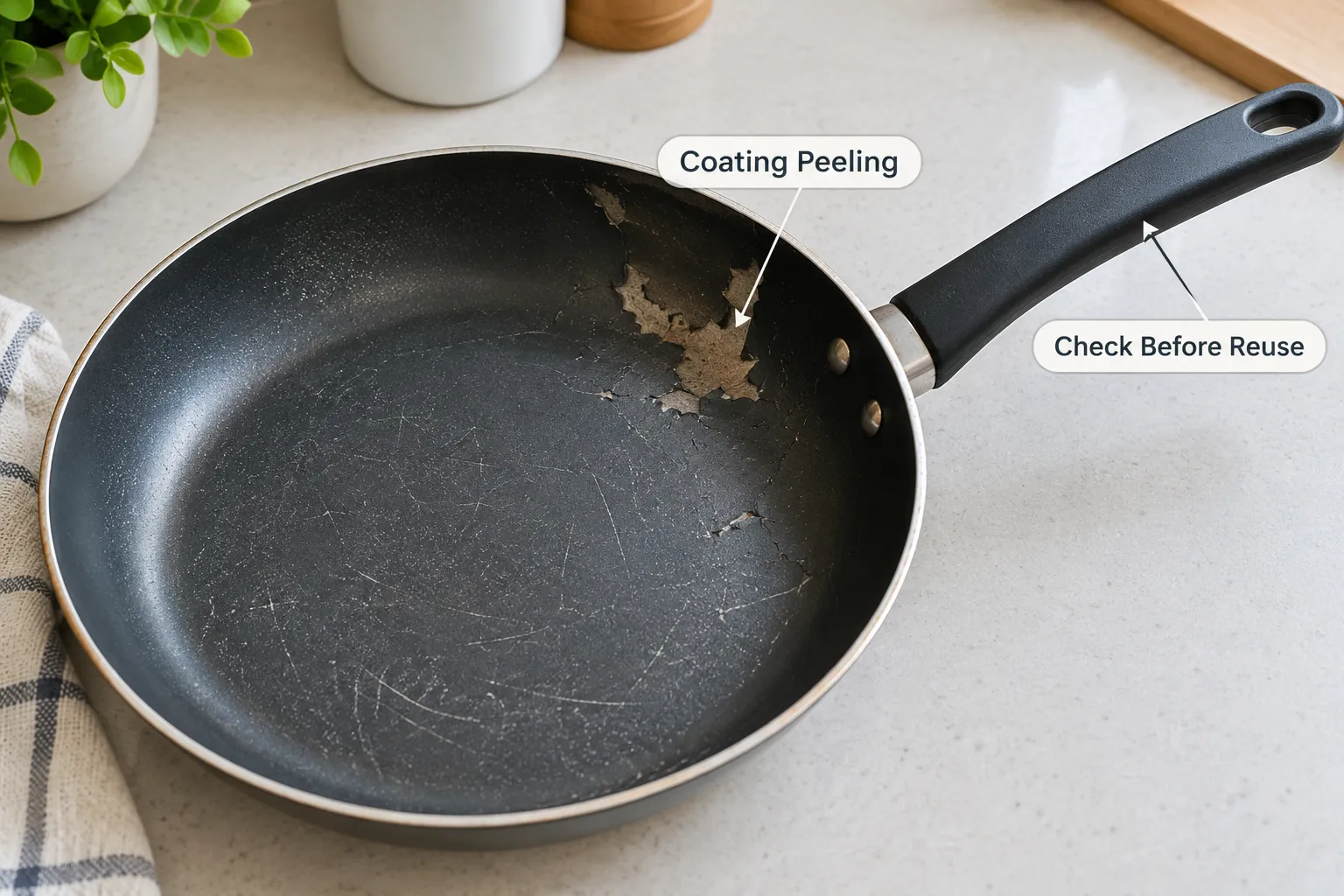
If the ceramic coating on a hard anodized pan peels off, the exposed area loses its nonstick property and may expose the anodized aluminum underneath, which can cause food to stick and the pan to cook unevenly in that spot. Small flakes mixed into food are generally considered low risk in isolated incidents, but continued use is not recommended.
- Stop cooking with a pan once you see visible peeling, bubbling, or flaking.
- Do not try to repair a peeling coating with oil or seasoning, since this does not restore the nonstick surface.
- Replace the pan, since once the coating fails in one area it typically continues to degrade nearby.
Common causes include overheating an empty pan, using metal utensils, and running the pan through repeated harsh dishwasher cycles.
How Long Does Hard Anodized Ceramic Nonstick Last, and What Are the Alternatives?
Hard anodized ceramic nonstick cookware typically lasts between one and three years of regular nonstick performance before the coating noticeably weakens, though the anodized base itself can last much longer if the coating is eventually retired. Heavier daily use and dishwashering shorten that window considerably.
- With gentle hand washing and wooden or silicone tools, some hard anodized ceramic pans stay functional for three to five years.
- Heavy daily cooking, high heat, and dishwasher cycles can cut that lifespan down to closer to one year.
- Once the coating is gone, stainless steel, cast iron, or carbon steel cookware are durable alternatives that do not rely on a nonstick layer at all.
If you are shopping for something with a longer lifespan from the start, our guide to eco friendly and sustainable cookware covers cast iron and stainless steel options built to outlast most coated pans.
Is Hard Anodized Ceramic Cookware Safe for Induction Stoves?
Not automatically. Hard anodized ceramic cookware is safe for induction stoves only if it has a magnetic base, usually a layer of stainless steel or a magnetic plate built into the bottom, since standard aluminum and anodized surfaces alone do not respond to induction heat.
- Check the product listing for an induction compatible label before buying.
- A simple test is holding a magnet to the base of the pan, if it sticks firmly, it will likely work on an induction cooktop.
- Stainless steel cookware is naturally induction safe in most cases, which is one reason some cooks choose it over hard anodized cookware for induction kitchens, a point covered in our induction cookware guide.
Common Problems With Hard Anodized Ceramic Nonstick Cookware
The most common problems with hard anodized ceramic nonstick cookware are coating wear, discoloration, scratching from metal tools, and reduced nonstick performance after repeated dishwasher cycles. Most of these issues come down to care habits rather than manufacturing defects.
- Surface scratches: caused by metal utensils or stacking pans without protection.
- Discoloration: often from overheating an empty pan or using high heat with oil that smokes.
- Reduced nonstick performance: a natural result of coating wear over time, not a sign the pan is unsafe to own, just a sign it needs replacing soon.
- Warping: rare with true hard anodized cookware, but more common with thin, budget aluminum pans mislabeled as hard anodized.
Shop Smart: Collections, Cart, and Related Resources
Shopping for hard anodized ceramic nonstick cookware is easiest when you compare a full set rather than single pans, since sets often include better per piece savings and matched lids. Below are quick notes on how most cookware shop pages are organized, so you know what to expect before checkout.
My Shopping Cart
Most cookware sites let you add a set to your cart, review items, then move to login and checkout, similar to standard retail flow.
Related Posts
Readers comparing hard anodized and ceramic cookware often also look into stainless steel brand guides and PFAS free bakeware before finalizing a purchase.
Product Series
Many cookware brands organize their lineup into a hard anodized series, a stainless steel series, and a ceramic nonstick series, each aimed at a different cooking style.
Quick Links
Helpful quick links usually include care instructions, such as those found at care.stahlkitchens.com, along with warranty and shipping details.
Connect With Us
Brands typically offer support through email or chat for questions about coating safety, induction compatibility, or warranty claims.
Frequently Bought Together
Shoppers buying a hard anodized skillet often add a matching ceramic nonstick saucepan or a stainless steel stockpot to round out a full cooking collection, taking advantage of set savings shop pricing when available.
Ready to compare real options. US shoppers can Check Current Hard Anodized and Ceramic Cookware Sets on Amazon, and UK shoppers can Browse Equivalent Sets Here.
Frequently Asked Questions
What are the downsides of hard anodized cookware?
Hard anodized cookware can be heavier feeling than plain aluminum, is usually not dishwasher friendly, and requires hand washing to protect the nonstick coating. It also cannot go on induction stoves unless it has a magnetic base, and the nonstick layer wears down over a few years of regular use.
Is hard anodized or ceramic cookware safer?
Both are generally considered safe under normal cooking conditions. Hard anodized cookware’s base resists leaching better than plain aluminum, while ceramic coatings are usually PFOA and PTFE free. Safety mainly depends on coating condition and avoiding overheating, not which material you choose between the two.
Is hard anodized cookware toxic free?
The hard anodized aluminum base itself is not considered toxic, since the anodizing process seals the metal. However, any nonstick coating applied on top should be checked separately for PFOA or PTFE content, since the base and the coating are two different safety questions entirely.
Is hard anodized safer than teflon?
Hard anodized cookware with a ceramic topcoat is often marketed as a safer alternative to traditional Teflon, which uses PTFE. Both are considered low risk when undamaged and used under about 500 degrees Fahrenheit, but ceramic coatings typically skip PTFE chemistry entirely, which some buyers prefer.
Is hard anodized cookware safe for everyday cooking?
Yes, hard anodized cookware is safe for everyday cooking when the coating is intact and you avoid metal utensils and excessive heat. It is a common choice for daily frying, sauteing, and simmering in home kitchens.
Is triply stainless steel cookware better than hard anodized?
Triply stainless steel cookware, like Stahl Triply, often offers better long term durability and even heat distribution thanks to its steel, aluminum, steel layers. Hard anodized cookware is lighter and easier to cook on without sticking, so the better choice depends on your cooking style.
Which cookware lasts longer, stainless steel or hard anodized?
Stainless steel cookware generally lasts longer, often decades, since it has no coating to wear away. Hard anodized cookware with a nonstick layer typically lasts one to five years before the coating needs replacing, even though the anodized base itself remains durable.
Which is better, stainless steel or hard anodized?
Neither is better overall. Stainless steel is better for high heat searing, metal utensils, and long term durability. Hard anodized is better for lighter weight, faster heating, and easy nonstick cooking with less oil for everyday meals.
What are the disadvantages of hard anodized cookware?
Disadvantages include limited induction compatibility without a magnetic base, the need for hand washing, gradual nonstick coating wear, and higher cost than basic aluminum cookware. It also cannot handle metal utensils without risking scratches to the surface.
Is hard anodized good for health?
Hard anodized cookware is considered fine for health when used properly, since the anodizing process limits aluminum reactivity with food. Health concerns mainly arise if the nonstick coating is damaged or if the cookware is overheated well beyond manufacturer recommendations.
Which is better, stainless steel or a hard anodized pressure cooker?
A stainless steel pressure cooker generally offers more durability and metal utensil safety, while a hard anodized pressure cooker heats faster and distributes heat more evenly. Both are considered safe cooker options, so the choice depends on whether you prioritize speed or long term durability.
Can hard anodized cookware go in the dishwasher?
Most manufacturers recommend hand washing hard anodized cookware instead of using a dishwasher, since harsh detergents and high heat cycles can dull the anodized finish and shorten coating life. Checking the specific product manual is the safest way to confirm.
Is stainless steel cookware safe for induction cooktops?
Yes, most stainless steel cookware is safe for induction cooktops, since steel naturally responds to the magnetic field induction stoves use. A quick magnet test on the base confirms compatibility if the packaging does not clearly state it.
Does hard anodized cookware contain harmful chemicals?
The hard anodized base itself does not contain harmful chemicals, since it is simply treated aluminum. Any nonstick coating on top should be checked separately, and most modern ceramic coatings are marketed as PFOA and PTFE free.
Which is more expensive, stainless steel or hard anodized?
High quality triply stainless steel cookware is often more expensive upfront than hard anodized cookware, though both ranges vary widely by brand. Over time, stainless steel can be more cost effective since it does not need coating replacement every few years.
Conclusion
Is Hard Anodized Ceramic Non Stick Cookware Safe, practical choice for most home kitchens, as long as you respect its heat limits, skip metal utensils, and retire any pan once the coating scratches or flakes.
The anodized aluminum base resists reactivity far better than plain aluminum, and a genuine ceramic coating skips the PFOA and PTFE chemistry found in older nonstick pans, though the label alone is not a guarantee, so check product details before you buy.
My own rotation includes a hard anodized skillet for eggs, a stainless steel saucepan for sauces, and a cast iron pan for searing, and that mix covers almost everything I cook in a normal week.
If you are ready to shop, compare a full set rather than single pieces, check induction compatibility if your stove needs it, and look for clear PTFE free labeling before checkout.
US readers can Shop Hard Anodized and Ceramic Cookware Sets on Amazon Now, and UK readers can Find Comparable Sets Here.

Leave a Reply
You must be logged in to post a comment.