What Is the Safest Nontoxic Cookware
Last updated: August 3, 2026
Quick Answer: What Is the Safest Nontoxic Cookware made from, that does not leach harmful chemicals into food, including uncoated stainless steel, seasoned cast iron, enameled cast iron, and pure ceramic. Among coated options, PFAS-free ceramic nonstick pans from brands like Caraway, Our Place, and Xtrema rank highest for everyday safety. Avoid cookware containing PTFE, PFOA, or any undisclosed PFAS compounds.
Key Takeaways
- The safest cookware materials are uncoated stainless steel, cast iron, enameled cast iron, and 100% pure ceramic, because none of these leach synthetic chemicals into food under normal cooking conditions.
- Nonstick cookware coated with PTFE (commonly known as Teflon) can release toxic fumes when overheated above 500 degrees Fahrenheit, according to Healthline.
- PFOA was phased out of PTFE manufacturing in the United States by 2013, but many PFAS compounds still appear in some nonstick coatings, making PFAS-free certification the most important label to look for [7].
- Ceramic coated pans are PFAS-free and generally considered non-toxic, but the ceramic layer can degrade over time, reducing nonstick performance after 1 to 3 years of heavy use.
- Brands like Caraway, Our Place, Lodge, and Xtrema lead the non-toxic cookware category in 2026, with independently verified PFAS-free formulations.
- A quality non-toxic cookware set typically costs between $100 and $600 depending on material, brand, and number of pieces.
- Always check for oven safe ratings, lid compatibility, and induction-ready bases when choosing a new set.
- For people with chemical sensitivities, pure ceramic cookware from Xtrema or uncoated stainless steel pans are the most conservative choices available.
Browse the Best Non-Toxic Cookware Sets on Amazon
What Makes Cookware Toxic or Nontoxic
Cookware becomes toxic when its materials or coatings break down under heat and release harmful substances that can leach into food. The primary culprits are synthetic fluoropolymer coatings, reactive metals, and improperly fired glazes that contain lead or cadmium.
The core distinction is simple: cookware made from inert, stable materials that do not react with food or heat is considered non-toxic. Cookware made with synthetic chemical coatings, especially those in the PFAS family, carries a higher risk profile.
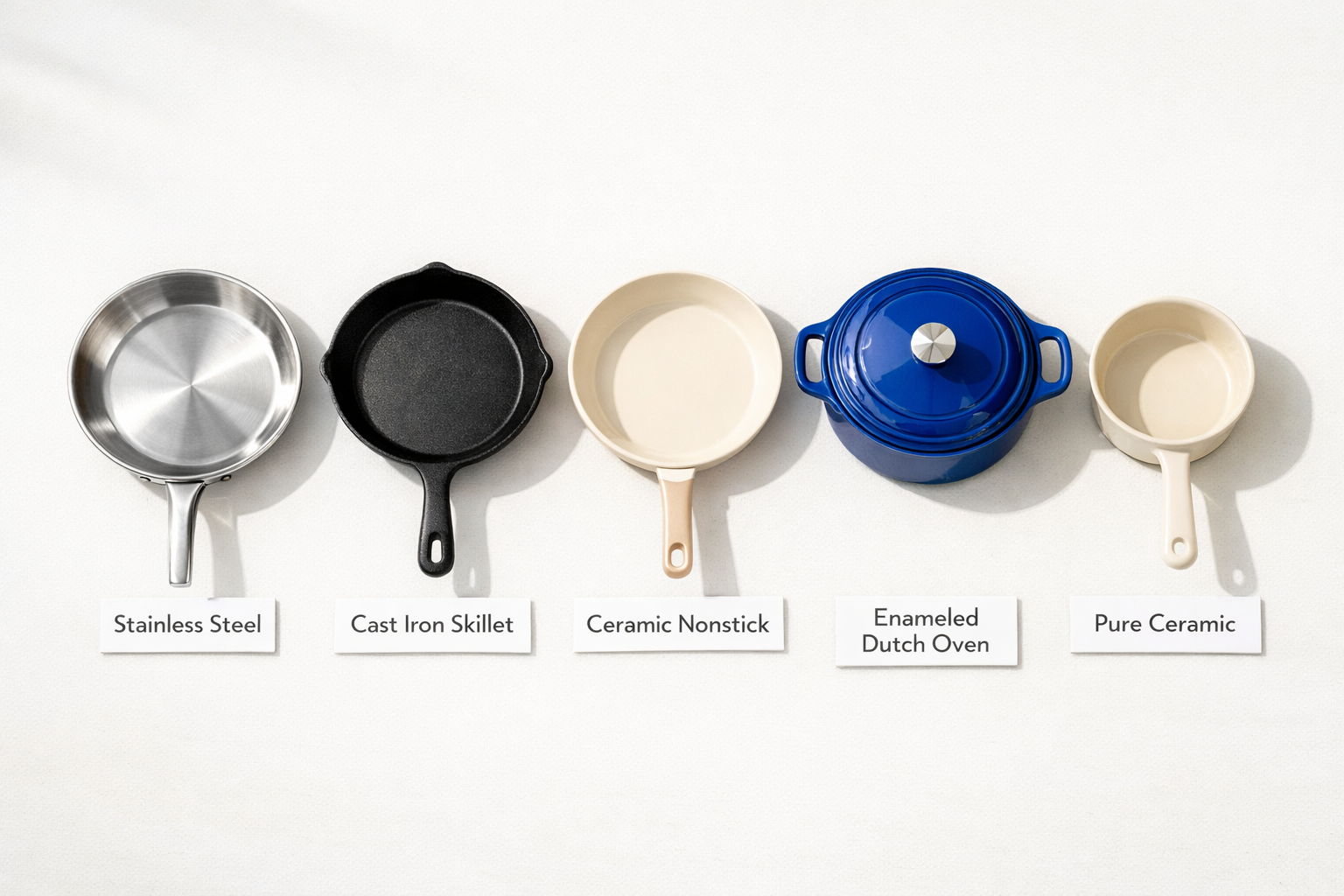
According to Healthline, the main materials to evaluate are PTFE-based nonstick coatings, ceramic coatings, stainless steel, cast iron, enameled cast iron, and pure ceramic [7].
The main chemical concerns in cookware:
- PTFE (polytetrafluoroethylene): The polymer used in traditional nonstick coatings. Stable at normal cooking temperatures but begins to degrade above 500 degrees Fahrenheit, releasing fumes that can cause flu-like symptoms in humans and are lethal to pet birds [7].
- PFOA (perfluorooctanoic acid): A processing chemical formerly used to manufacture PTFE. Classified as a likely human carcinogen by the U.S. Environmental Protection Agency. Phased out of U.S. production by 2013 but still found in some imported cookware.
- PFAS (per- and polyfluoroalkyl substances): A broad family of over 12,000 synthetic chemicals, sometimes called “forever chemicals” because they persist in the environment and human body. Several states have passed legislation restricting PFAS in cookware, and the regulatory landscape is tightening fast [9].
- Lead and cadmium: Can appear in low-quality ceramic glazes and enameled finishes. Reputable brands test for both. The FDA sets action levels for lead in food contact materials, and quality cookware brands publish third-party test results.
- Reactive metals: Uncoated aluminum and unlined copper can leach into food, especially when cooking acidic foods like tomatoes or citrus. While small amounts of aluminum are generally considered safe by MedlinePlus, many people prefer to avoid it entirely [6].
What makes cookware genuinely non-toxic:
- Made from materials that are chemically inert at cooking temperatures
- Free from PFAS, PFOA, PTFE, lead, and cadmium
- Third-party tested and certified, not just self-declared
- Stable coatings that do not chip or degrade rapidly with normal use
For a deeper look at which materials to prioritize, the Organic Authority studio team notes that the safest everyday choices combine chemical-free construction with practical cooking performance [2].
You can also explore our guide on cookware free of PFAS risks for a full breakdown of which brands and materials meet the highest safety standards.
Does Nonstick Cookware Have Forever Chemicals
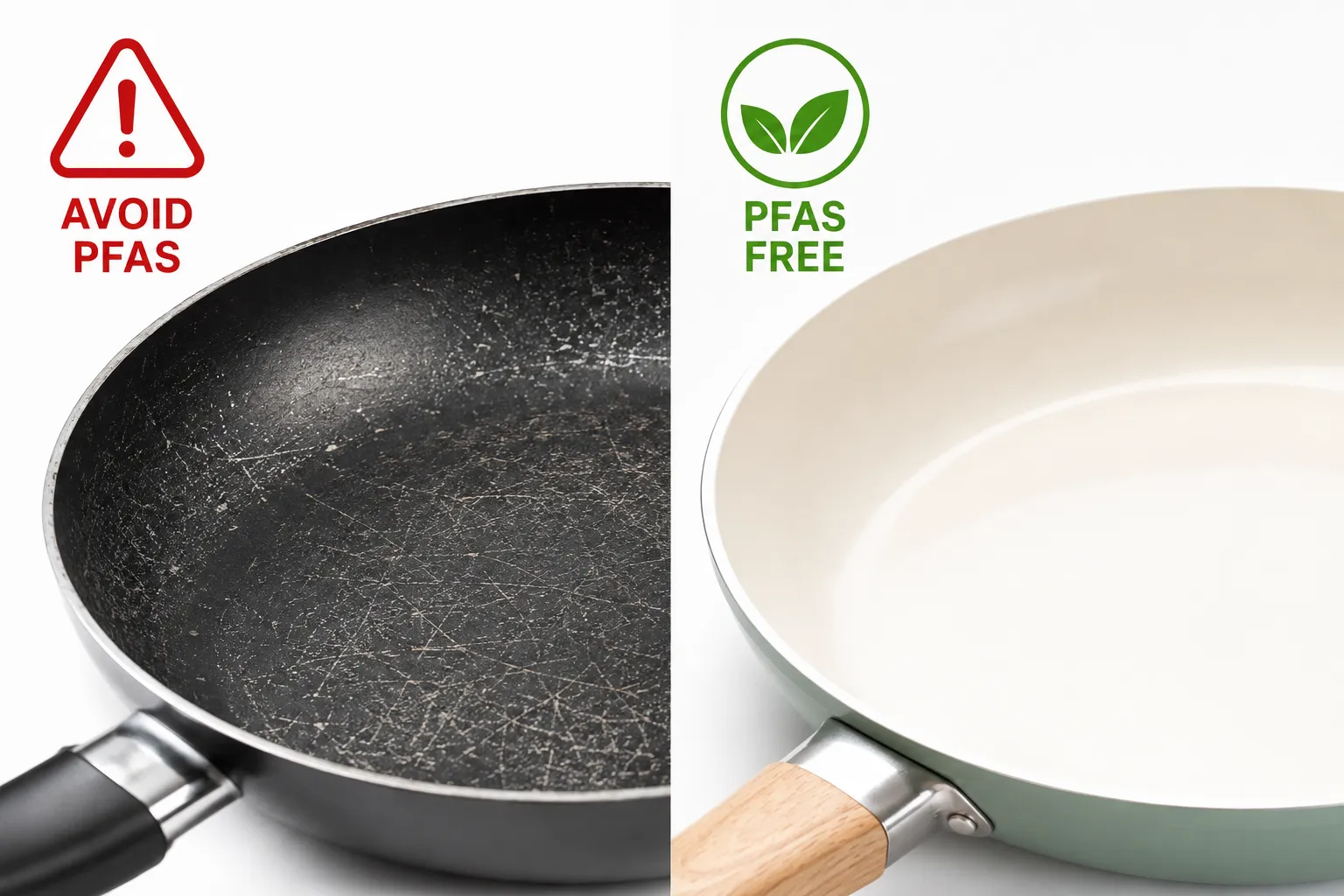
Most traditional nonstick cookware does contain PFAS compounds, but a growing number of newer nonstick pans are genuinely PFAS-free. The key is knowing what to look for on the label.
PTFE itself is technically a PFAS compound, and while PFOA (the most studied and regulated PFAS used in cookware manufacturing) was phased out by major U.S. manufacturers by 2013, other PFAS chemicals can still appear in some nonstick coatings [9].
The BCLP Law PFAS in Cookware State-by-State Regulations report documents that California, Washington, and several other states have enacted or are enacting bans on PFAS in cookware, signaling a major regulatory shift [9].
What Is the Safest Nontoxic Cookware
What “PFAS-free” actually means on a nonstick pan:
- The coating uses no fluoropolymers at all, relying instead on ceramic, silicone, or other mineral-based nonstick surfaces
- The manufacturing process does not use PFAS as a processing aid
- The brand provides third-party testing documentation to verify the claim
Ceramic nonstick coatings, like those used by Caraway and Our Place, are made from silicon dioxide (essentially a sand-derived mineral compound) and contain no PTFE or PFAS. These are genuinely non-toxic nonstick options, though their nonstick performance can diminish faster than PTFE over time.
Safe usage tips for any nonstick pan:
- Never heat an empty nonstick pan on high heat
- Use low to medium heat for most cooking tasks
- Avoid metal utensils that can scratch the surface
- Replace pans when the coating shows visible scratching or peeling
- Never place a hot nonstick pan directly under cold water
The Guardian’s 2026 roundup of the best non-toxic pans confirms that ceramic-coated pans from established brands represent the current gold standard for non-toxic nonstick cooking [5]. For a detailed comparison of PTFE versus ceramic, see our Teflon vs ceramic cookware guide.
Ceramic vs Stainless Steel vs Cast Iron Cookware Safety
Each of these three materials is considered safe for everyday cooking, but they differ in how they perform, how they age, and what cooking styles they suit best.
Ceramic cookware (both ceramic-coated and pure ceramic) is free from PFAS and metals, making it one of the most popular non-toxic choices in 2026. Ceramic coated pans offer easy food release and are lighter weight than cast iron, but the coating can degrade over time with high heat or abrasive cleaning.
Pure ceramic cookware, like the Xtrema Legacy Collection, is made entirely from inorganic minerals and is virtually inert at any cooking temperature [2].
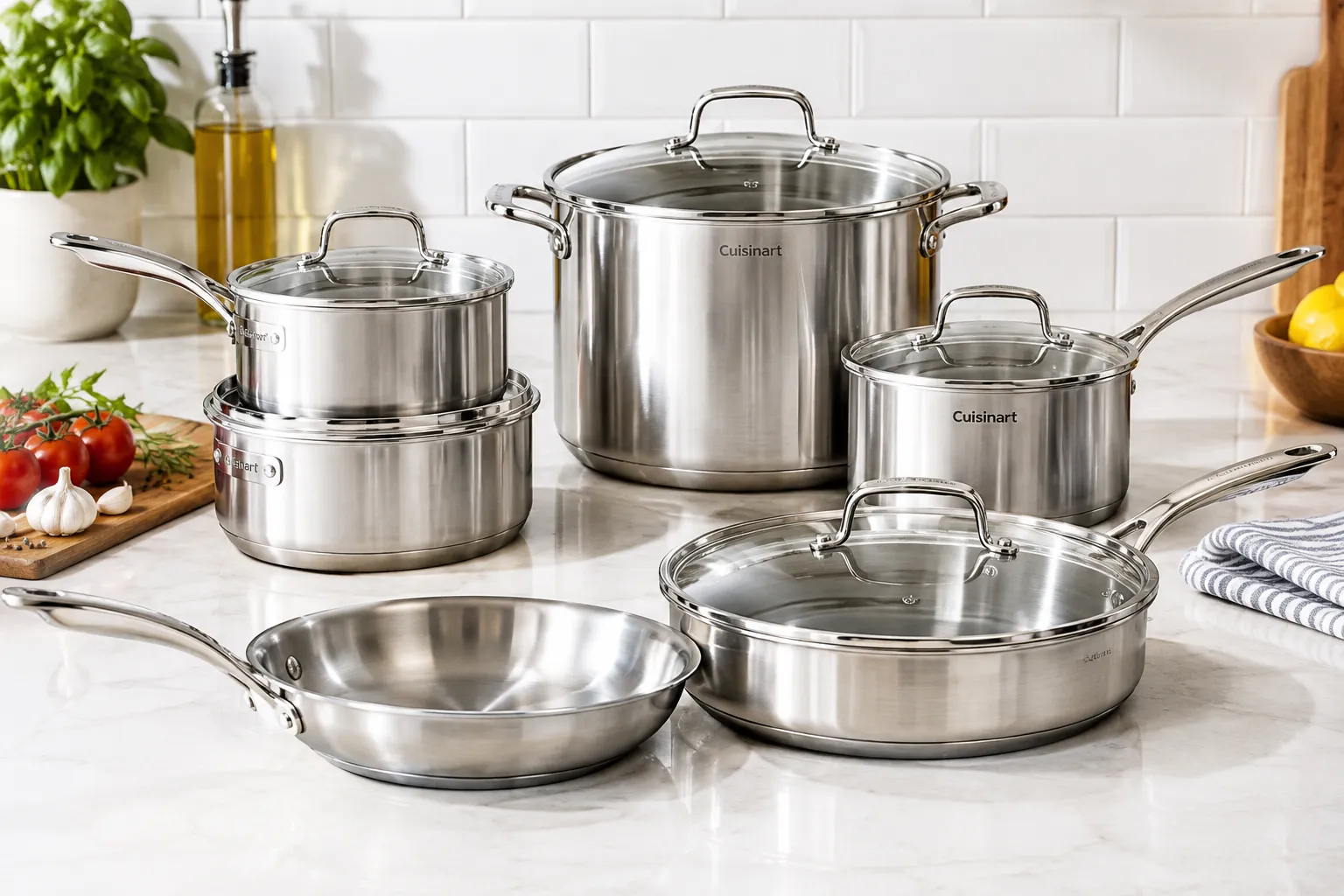
Stainless steel cookware is extremely durable, does not leach chemicals, and is safe for cooking acidic foods. High-quality stainless steel pans use a 18/10 or 18/8 alloy (18% chromium, 10% or 8% nickel), which creates a passive oxide layer that prevents corrosion.
According to Science Insights, stainless steel is one of the most chemically stable cooking surfaces available [10]. The main trade-off is that stainless steel pans require more fat and technique to prevent food from sticking, especially proteins like eggs or fish.
Cast iron cookware and enameled cast iron are both non-toxic and extremely long-lasting. Seasoned cast iron can actually add small amounts of dietary iron to food, which is beneficial for most people.
Enameled cast iron, like Lodge’s enameled line, adds a glass-like coating that prevents any iron transfer and makes the pan easier to clean. The main drawbacks are weight (a 12-inch cast iron skillet can weigh over 8 pounds) and the need for careful seasoning and drying to prevent rust in uncoated versions.
Browse the Best Non-Toxic Cookware Sets on Amazon
| Material | PFAS-Free | Nonstick | Induction Safe | Oven Safe | Durability |
|---|---|---|---|---|---|
| Stainless Steel | Yes | No | Yes | Yes (high temp) | Decades |
| Cast Iron (uncoated) | Yes | When seasoned | Yes | Yes (unlimited) | Lifetime |
| Enameled Cast Iron | Yes | Partial | Yes | Yes (high temp) | Decades |
| Ceramic Coated | Yes | Yes (initially) | Varies | Yes (up to 550°F) | 1 to 3 years |
| Pure Ceramic | Yes | Moderate | No (most) | Yes (very high) | Years |
| PTFE Nonstick | No | Excellent | Varies | Limited (350°F) | 2 to 5 years |
For a comprehensive look at the pros and cons of each option, our ceramic cookware pros and cons guide and top stainless steel cookware brands review are excellent next reads.
What Cookware Should You Avoid for Health Reasons
The cookware you should avoid most urgently includes anything with PTFE coatings that are scratched or degraded, unlined aluminum or copper pans, and any ceramic-glazed cookware from unknown manufacturers that has not been tested for lead and cadmium.
According to AARP’s Pots and Pans Safety Guide, the biggest risk factors in everyday cookware are overheated PTFE, improperly cured or low-quality ceramic glazes, and reactive metals used without protective linings [4]. Here is a practical breakdown:
Cookware to avoid or use with caution:
- Scratched or chipped PTFE nonstick pans: Once the coating is compromised, small particles can enter food. While ingesting PTFE particles is not considered acutely toxic, degraded pans release more fumes at lower temperatures and should be replaced immediately.
- Unlined aluminum pans: Aluminum is reactive with acidic foods. While the FDA and MedlinePlus note that dietary aluminum exposure from cookware is generally low, people with kidney disease or aluminum sensitivity should avoid unlined aluminum entirely [6].
- Unlined copper cookware: Copper is an excellent heat conductor but reacts strongly with acidic foods, potentially causing copper toxicity. Always use lined copper cookware with a stainless steel or tin interior.
- Cheap imported ceramic cookware: Some low-cost ceramic pans use glazes that contain lead or cadmium, especially if manufactured without third-party safety testing. Always buy from brands that publish independent lab results.
- Nonstick pans with no PFAS disclosure: If a brand cannot tell you exactly what is in their nonstick coating, that is a red flag. Legitimate non-toxic cookware brands openly share their formulations and testing data.
Browse the Best Non-Toxic Cookware Sets on Amazon
Common mistake: Many people assume that because a pan is labeled “PFOA-free,” it is also PFAS-free. PFOA is just one of thousands of PFAS compounds. A pan can be PFOA-free and still contain other fluoropolymers. Look specifically for “PFAS-free” or “fluoropolymer-free” language, and verify it with third-party documentation [9].
In This Baking and Cooking Guide: How We Rate Nontoxic Cookware Sets
Our ratings for each cookware set are based on five weighted criteria: material safety and transparency (30%), cooking performance and even heat distribution (25%), durability and coating longevity (20%), value relative to price (15%), and design details like lid quality, handles, and oven safe ratings (10%).
Every set reviewed here has been evaluated against published safety data, user feedback, and independent testing where available. We cross-reference brand claims against third-party lab results and regulatory filings.
Our ratings reflect what is the safest nontoxic cookware for real kitchens, not just laboratory conditions. Brands like Caraway, Our Place, Lodge, and Xtrema were selected because they consistently appear at the top of expert roundups from sources including The Guardian, Healthline, and Organic Authority [5][7][2].
Our Place Titanium Pro Cookware Set: Rating 9.8 out of 10
The Our Place Titanium Pro Cookware Set earns the top spot in our 2026 rankings because it combines a genuinely PFAS-free titanium-reinforced ceramic nonstick surface with exceptional cooking performance and a thoughtfully designed cookware set that works on all stovetops including induction.
Our Place has become one of the most recognizable names in non-toxic cookware, and the Titanium Pro represents their most advanced offering. The Always Pan concept that made the brand famous has been refined and expanded into a full pro cookware set that handles everything from searing proteins to simmering sauces.
Key features:
- Titanium-reinforced ceramic nonstick surface, free from PTFE, PFAS, PFOA, lead, and cadmium
- Oven safe up to 550 degrees Fahrenheit, one of the highest ratings in the ceramic nonstick category
- Induction compatible base made from a magnetic stainless steel plate
- Modular lid system where a single lid fits multiple pans in the set
- Lightweight construction compared to cast iron, making it easier to handle for everyday cooking
- Handles stay cool on the stovetop and are ergonomically designed for a secure grip
Who it is for: Home cooks who want the convenience of nonstick cooking without the chemical concerns of PTFE. The Titanium Pro set is especially well suited to people cooking for families, where quick cleanup and food safety are both priorities.
One thing to know: Like all ceramic nonstick pans, the Titanium Pro surface will last longer if you use low to medium heat and avoid metal utensils. The brand recommends wooden or silicone tools to preserve the nonstick coating over time.
The Our Place cookware duo set and tiny cookware duo set versions are also worth considering for smaller households or those who want to test the brand before committing to a full set.
Both the cookware duo set and the tiny cookware duo set share the same PFAS-free ceramic construction and modular lid design. Find the Our Place Titanium Pro on Amazon.
Our Place Essentials Complete Cookware Set: Rating 9.6 out of 10
The Our Place Essentials Complete Cookware Set delivers the brand’s signature non-toxic ceramic nonstick performance at a more accessible price point, making it one of the best value options for anyone building a safe kitchen from scratch.
This set includes the iconic Always Pan, a versatile skillet that replaces up to eight pieces of traditional cookware, along with a saucepan, a pot, and a steamer basket.
Every pan in the set is made with Our Place’s ceramic nonstick surface, free from PFAS, PTFE, PFOA, lead, and cadmium. The set rating of 9.6 out of 10 reflects its outstanding safety profile, practical design, and the brand’s commitment to transparency about materials.
What is included in the set:
- The Always Pan (a 10-inch pan with a pour spout, steamer basket, and spatula slot)
- A 2-quart saucepan with lid
- A 4-quart pot with lid
- A steamer basket that nests inside the pot
- A modular lid that fits both the pan and the pot
Cooking performance: The ceramic nonstick surface on Our Place pans releases food easily with minimal oil, making it ideal for cooking eggs, fish, and other delicate proteins.
Even heat distribution is good across the base, though the thinner construction means it heats up faster than cast iron or stainless steel pans, requiring slightly more attention to heat management.
Design details: Our Place cookware is available in a wide range of colors, making it one of the most aesthetically appealing non-toxic cookware options on the market.
The handles are made from a heat-resistant material and stay cool during stovetop use. The lid is made from tempered glass, allowing you to monitor cooking without lifting it and releasing steam.
Verdict: If you love the idea of non-toxic cookware that also looks beautiful on the stovetop, the Our Place Essentials Complete Cookware Set is hard to beat. It is a strong choice for anyone asking what is the safest nontoxic cookware that also fits a modern kitchen aesthetic.
Our Place Cast Iron Always Pan: A Non-Toxic Classic Reimagined
The Our Place Cast Iron Always Pan is a cast iron skillet redesigned with the brand’s signature aesthetic sensibility, offering the chemical-free durability of traditional cast iron with a more approachable weight and a pre-seasoned surface that is ready to use from day one.
Cast iron cookware is inherently non-toxic because it contains no synthetic coatings. The Our Place Cast Iron Always Pan adds an enameled exterior that protects the iron from rust while maintaining the interior seasoned cooking surface.
It is oven safe to very high temperatures and works on all cooktops including induction. The pan is heavier than the ceramic nonstick options in the Our Place lineup, but lighter weight than a comparable Lodge cast iron skillet, making it a good middle ground for cooks who want cast iron performance without the full weight commitment.
Best uses for cast iron cookware:
- Searing steaks and proteins at high heat
- Baking cornbread, frittatas, and skillet cookies directly in the oven
- Cooking acidic foods like tomato-based sauces (with enameled versions only)
- Long, slow braises that benefit from cast iron’s excellent heat retention
Browse the Best Non-Toxic Cookware Sets on Amazon
Caraway Enameled Cast Iron 12-Piece Cookware Set: Rating 9.5 out of 10
Caraway’s Enameled Cast Iron 12-Piece Cookware Set is one of the most complete non-toxic cookware collections available in 2026, combining the safety of enameled cast iron with a comprehensive set that covers virtually every cooking need from stovetop to oven.
Caraway has built a strong reputation in the non-toxic cookware space by publishing detailed ingredient disclosures and third-party test results for all of their products.
The enameled cast iron line is free from PTFE, PFAS, PFOA, lead, and cadmium, and the enamel coating is fired at high temperatures to create a glass-like surface that is both non-reactive and extremely durable.
This set rating of 9.5 out of 10 reflects the brand’s exceptional transparency, the quality of the enameled finish, and the breadth of the 12-piece collection.
What is in the 12-piece set:
- A 10-inch skillet with lid
- A 12-inch skillet with lid
- A 3.5-quart braiser with lid
- A 5.5-quart dutch oven with lid
- A 2-quart saucepan with lid
- A 4-quart saute pan with lid
Cooking performance: Enameled cast iron is one of the best materials for even heat distribution. The thick walls and base of Caraway’s cast iron pieces retain heat exceptionally well, making them ideal for braises, stews, and dishes that benefit from consistent, steady heat.
The enameled surface is also excellent for cooking acidic foods like tomato sauce, wine-braised meats, and citrus-based dishes, because the glass-like enamel prevents any reaction between the iron and the food.
Caraway’s 12-Piece Nonstick Ceramic Cookware Set: Rating 9 out of 10
Separate from the cast iron line, Caraway also produces a 12-piece nonstick ceramic cookware set that uses their mineral-based ceramic coating. This set rating of 9 out of 10 reflects excellent safety credentials and good everyday cooking performance.
The ceramic coating on Caraway pans is derived from a sand-based sol-gel process and contains no PTFE or PFAS. Each pan in the set comes with a canvas lid holder and magnetic pan rack for organized storage, a thoughtful detail that sets Caraway apart from most competitors.
The Caraway ceramic set is a top recommendation for anyone who prioritizes non-toxic nonstick cooking and wants a complete kitchen setup. For more details on Caraway’s grill press and other accessories, see our Caraway Grill Press review.
Viking PureGlide Pro 10-Piece Cookware Set and Carote 14-Piece Ceramic Cookware Set
The Viking PureGlide Pro 10-Piece Cookware Set brings professional-grade construction to the non-toxic cookware category, using a PFAS-free nonstick coating on a hard-anodized aluminum base for excellent heat distribution and durability.
Viking is best known for their professional-grade kitchen appliances, and the PureGlide Pro cookware set reflects that heritage. The 10-piece set includes a range of saucepans, frying pans, and a stockpot, all featuring Viking’s proprietary PureGlide ceramic nonstick coating.
The coating is free from PTFE and PFAS, and the hard-anodized aluminum base provides the kind of even heat distribution that professional cooks demand.
Handles are riveted stainless steel, staying cool on the stovetop and providing a secure grip. The set is oven safe to 500 degrees Fahrenheit and compatible with all stovetops except induction.
What Is the Safest Nontoxic Cookware
Carote 14-Piece Ceramic Cookware Set:
The Carote 14-Piece Ceramic Cookware Set is one of the best affordable non-toxic cookware options available, offering a comprehensive collection of ceramic nonstick pans at a price point well below premium brands.
The set includes frying pans, saucepans, a saute pan, a stockpot, and matching lids, all featuring Carote’s granite-look ceramic nonstick coating.
Carote cookware uses a PTFE-free and PFAS-free ceramic coating that is applied to an aluminum core for good heat distribution. The pans are lightweight, making them easy to handle for everyday cooking, and the nonstick surface performs well for eggs, pancakes, and other delicate foods.
For a detailed safety analysis, see our Is Carote Cookware Safe guide and our Carote Cookware Set complete review.
Best for: Budget-conscious shoppers who want a full non-toxic ceramic cookware set without spending over $150. The Carote set is a strong entry point into safe cookware, though the ceramic coating may not last as long as premium options from Caraway or Our Place.
Xtrema Cookware Legacy Collection: Rating 8.9 out of 10
Xtrema makes the most chemically inert cookware available to home cooks, using 100% pure ceramic construction with no metals, no coatings, and no synthetic materials of any kind. The Xtrema Legacy Collection earns a rating of 8.9 out of 10 for its unmatched safety profile, even though it requires more cooking technique than nonstick alternatives.
For anyone asking what is the safest nontoxic cookware for people with chemical sensitivities, Xtrema is the most conservative answer available. The cookware is made entirely from inorganic minerals, fired at extremely high temperatures to create a completely non-reactive surface.
There is no metal, no coating, no PTFE, no PFAS, no lead, and no cadmium. Xtrema publishes third-party test results from independent laboratories on their website, making them one of the most transparent cookware brands in the industry [2].
Xtrema cookware characteristics:
- 100% pure ceramic, no metal components in the cooking surface
- Tested to be free from lead, cadmium, and over 700 other chemicals
- Oven safe to 2500 degrees Fahrenheit (far beyond any home oven temperature)
- Dishwasher safe, unlike most nonstick options
- Available in skillets, saucepans, woks, and the Legacy Collection multi-piece set
- Heavier than ceramic-coated aluminum pans but lighter than cast iron
The trade-off: Pure ceramic cookware from Xtrema is not as nonstick as ceramic-coated aluminum pans. Food can stick if you do not use enough fat or if you cook at too high a temperature.
The pans also require more care to avoid thermal shock (do not place a hot Xtrema pan in cold water). However, for cooks who prioritize absolute chemical safety above all else, Xtrema is in a category of its own.
For a hands-on evaluation, read our Xtrema Pure Ceramic Cookware review.
Lodge Seasoned Cast Iron 5-Piece Set: Rating 8.75 out of 10
Lodge is the gold standard for affordable, non-toxic cast iron cookware in the United States, and their Seasoned Cast Iron 5-Piece Set delivers lifetime durability at a price that makes it accessible to virtually every budget.
The set rating of 8.75 out of 10 reflects Lodge’s exceptional value, proven safety record, and the inherent non-toxic nature of properly seasoned cast iron.
Lodge has been manufacturing cast iron cookware in South Pittsburg, Tennessee since 1896, making them one of the oldest and most trusted cookware brands in America.
Their seasoned cast iron pans are made from recycled iron and steel, with no synthetic coatings of any kind. The seasoning is applied using vegetable oil, creating a natural nonstick surface that improves with use over time.
What is in the Lodge 5-piece set:
- A 10.25-inch cast iron skillet
- A 12-inch cast iron skillet
- A 10.25-inch cast iron grill pan
- A 5-quart cast iron dutch oven with lid
- A 10.25-inch cast iron lid that fits both skillets
Cast iron cookware safe usage tips:
- Season regularly with a thin layer of vegetable oil after each wash
- Dry thoroughly after washing to prevent rust
- Avoid prolonged cooking of highly acidic foods in unseasoned or lightly seasoned pans
- Use silicone or wooden handles when moving pans from oven to stovetop, as cast iron handles get very hot
- Store in a dry place to prevent moisture buildup
Who should choose Lodge: Anyone who wants non-toxic cookware that will genuinely last a lifetime and gets better with age. Cast iron cookware is the original non-toxic cooking surface, and Lodge makes it at a price that is hard to argue with. For guidance on maintaining your cast iron, see our cast iron seasoning guide.
Alva Mobi Nonstick Ceramic Cookware Set and GreenPan Reserve Ceramic Nonstick 10-Piece Set
The Alva Mobi Nonstick Ceramic Cookware Set and the GreenPan Reserve Ceramic Nonstick 10-Piece Cookware Set both represent strong choices in the mid-range non-toxic cookware market, each with distinct strengths depending on your cooking priorities.
Alva Cookware Mobi Set:
Alva cookware is a Scandinavian brand that has gained a strong following among health-conscious cooks for its PFAS-free ceramic nonstick coating and its commitment to sustainable manufacturing.
The Alva Mobi set features a lightweight pan design with a detachable handle system, making it extremely versatile for both stovetop cooking and oven use. The detachable handles also make storage much easier, a practical advantage for small kitchens.
The Alva cookware ceramic coating is free from PTFE, PFAS, lead, and cadmium, and the brand publishes independent test results. The pans perform well for everyday cooking tasks and the lighter weight pan construction makes them easy to handle. The set is oven safe to 482 degrees Fahrenheit with the handles removed.
GreenPan Reserve Ceramic Nonstick 10-Piece Set:
GreenPan was one of the first brands to popularize PFAS-free ceramic nonstick cookware, and their Reserve line represents the top of their product range.
The Reserve set uses GreenPan’s Thermolon Minerals Pro ceramic coating, which is free from PTFE, PFAS, PFOA, lead, and cadmium. The pans feature a hard-anodized exterior for durability and a stainless steel base for induction compatibility.
The 10-piece set includes a full range of pans and saucepans with matching lids, covering all everyday cooking needs. GreenPans ceramic nonstick surface is known for being more durable than average ceramic coatings, and the brand backs this with a limited lifetime warranty on the pan construction (though not the coating itself).
Both the Alva Mobi and GreenPan Reserve sets are excellent choices for cooks who want reliable non-toxic nonstick performance in a complete cookware set. Check current pricing and availability on Amazon.
How Much Does Safe Nontoxic Cookware Cost
Safe nontoxic cookware ranges from under $50 for a single Lodge cast iron skillet to over $600 for a complete premium ceramic or stainless steel cookware set. The price you pay reflects material quality, brand transparency, and coating durability rather than safety alone.
Here is a practical breakdown of what to expect at each price tier:
Under $100:
- Lodge Seasoned Cast Iron 5-Piece Set (approximately $80 to $100): Excellent safety, lifetime durability, no coatings to worry about.
- Carote 14-Piece Ceramic Cookware Set (approximately $60 to $90): Good PFAS-free ceramic nonstick, but coating longevity is shorter than premium options.
- Individual stainless steel pans from brands like T-fal or Cuisinart (approximately $30 to $60 each): Safe, durable, and widely available. See our T-fal Stainless Steel Cookware Set review for a detailed look at budget stainless options.
$100 to $300:
- Our Place Essentials Complete Cookware Set (approximately $195 to $250): Strong safety profile, beautiful design, good everyday performance.
- GreenPan Reserve 10-Piece Set (approximately $200 to $280): Durable ceramic nonstick, induction compatible, comprehensive set.
- Alva Mobi Cookware Set (approximately $150 to $250): Lightweight, PFAS-free, excellent for small kitchens.
$300 to $600 and above:
- Caraway Enameled Cast Iron 12-Piece Set (approximately $395 to $495): Premium enameled cast iron, comprehensive set, excellent transparency.
- Our Place Titanium Pro Cookware Set (approximately $350 to $450): Top-rated ceramic nonstick, titanium reinforced, best-in-class performance.
- Xtrema Legacy Collection (approximately $200 to $400 depending on configuration): Unmatched chemical safety, pure ceramic, lifetime durability.
Cost-per-year perspective: A $400 cast iron or stainless steel cookware set that lasts 20 years costs $20 per year. A $150 ceramic nonstick set that needs replacing every 2 to 3 years costs $50 to $75 per year.
Investing in durable non-toxic cookware is almost always the better long-term value. For budget-friendly options, see our affordable cookware sets under $100 guide.
Nontoxic Cookware That Works on Induction Cooktops
What Is the Safest Nontoxic Cookware
Not all non-toxic cookware is induction compatible, because induction cooktops require a magnetic base to generate heat. Stainless steel, cast iron, and enameled cast iron are all naturally induction-compatible, while pure ceramic and some aluminum-based ceramic nonstick pans are not.
The key is to look for an induction-compatible base, which is typically a magnetic stainless steel disc bonded to the bottom of the pan.
Most premium ceramic nonstick brands, including Our Place, Caraway, and GreenPan, add an induction-compatible stainless steel base to their aluminum-core pans. Always check the product specifications before purchasing if you cook on an induction cooktop.
Induction-compatible non-toxic cookware options:
- Our Place Titanium Pro Set: Induction compatible stainless steel base, PFAS-free ceramic nonstick
- Caraway Ceramic Nonstick Set: Induction compatible, PFAS-free ceramic coating
- GreenPan Reserve 10-Piece Set: Induction compatible stainless steel base
- Lodge Cast Iron: Naturally induction compatible, no coatings
- All stainless steel cookware: Naturally induction compatible
For a complete guide to choosing the right pans for your cooktop, see our essential cookware for induction stovetops guide.
Does Ceramic Cookware Scratch and Is It Still Safe After Scratching
Ceramic nonstick coatings can scratch, and while scratched ceramic pans are generally considered safer than scratched PTFE pans, a heavily scratched ceramic surface means the nonstick properties have been compromised and the pan’s useful life is nearing its end.
Unlike PTFE, ceramic coatings are made from inorganic mineral compounds that do not release toxic fumes when damaged. If you scratch a ceramic pan, you are not releasing PFAS or other synthetic chemicals into your food.
However, the scratch does indicate that the nonstick surface is degrading, which means food will begin to stick more readily and the pan will need more oil to perform well.
How to extend the life of a ceramic nonstick surface:
- Use only silicone, wood, or nylon utensils. Metal utensils are the number one cause of ceramic coating damage.
- Wash by hand with a soft sponge. Dishwasher detergents can be abrasive and degrade ceramic coatings faster.
- Avoid stacking pans without protective padding between them. The base of one pan can scratch the surface of the pan below.
- Use low to medium heat. High heat accelerates ceramic coating degradation.
- Apply a small amount of oil before each use to maintain the surface.
When to replace a ceramic pan: If the surface is visibly scratched, discolored, or food is sticking consistently even with oil and proper heat management, it is time to replace the pan. Most quality ceramic nonstick pans last 1 to 3 years with careful use, and up to 5 years with exceptional care.
For a detailed durability test of ceramic nonstick surfaces, see our truth about ceramic nonstick durability article.
What Is the Difference Between Ceramic Coated and Pure Ceramic Cookware
Ceramic coated cookware and pure ceramic cookware are fundamentally different products that share only the word “ceramic” in their names. Ceramic coated pans are aluminum or stainless steel pans with a thin mineral-based nonstick coating applied to the surface.
Pure ceramic cookware, like Xtrema, is made entirely from ceramic material with no metal substrate at all.
Ceramic coated cookware:
- Metal core (usually aluminum) for heat conduction
- Thin ceramic nonstick layer applied via a sol-gel process
- Lighter weight, heats quickly, good nonstick performance
- Coating can degrade over time with heat and abrasion
- PFAS-free and generally considered non-toxic
- Examples: Caraway, Our Place, GreenPan, Alva cookware
Pure ceramic cookware:
- Made entirely from inorganic minerals, no metal
- Extremely chemically inert, no coatings to degrade
- Heavier than ceramic-coated aluminum, slower to heat
- Requires more oil and technique to prevent sticking
- Oven safe to extremely high temperatures
- Best choice for people with severe chemical sensitivities
- Examples: Xtrema Legacy Collection
The Organic Authority studio team notes that both types are genuinely non-toxic, but pure ceramic is the more conservative choice for anyone with heightened sensitivity to chemical exposure [2].
For most home cooks, ceramic coated pans offer the better balance of safety, convenience, and everyday cooking performance.
Nontoxic Cookware That Heats Evenly and Avoids Hot Spots
Even heat distribution is one of the most important performance factors in cookware, and different non-toxic materials achieve it in very different ways.
Stainless steel pans with an aluminum or copper core, cast iron, and enameled cast iron all provide excellent even heat distribution. Thin ceramic-coated aluminum pans can develop hot spots if the aluminum core is not thick enough.
How to identify even-heating cookware:
- Look for pans with a thick, multi-ply construction. Tri-ply and five-ply stainless steel pans (with alternating layers of stainless steel and aluminum or copper) distribute heat most evenly.
- Cast iron’s thermal mass means it retains and distributes heat very evenly once it reaches temperature, though it takes longer to heat up than aluminum.
- Enameled cast iron performs similarly to bare cast iron for heat distribution.
- For ceramic nonstick pans, look for a thicker aluminum base (at least 3mm) to minimize hot spots.
Top performers for even heat distribution:
- All-Clad D3 Stainless Steel (tri-ply): One of the most even-heating pans available, though not a budget option
- Lodge Cast Iron: Excellent heat retention and even distribution once at temperature
- Caraway Enameled Cast Iron: Thick construction delivers consistent even heat
- Our Place Titanium Pro: Good even heat distribution for a ceramic nonstick pan, thanks to the reinforced aluminum base
Common mistake: Preheating a ceramic nonstick pan on high heat to speed things up. This creates hot spots and accelerates coating degradation. Always preheat ceramic pans on low to medium heat and allow 1 to 2 minutes for the surface to reach an even temperature before adding food.
How Do You Know If Your Old Cookware Is Toxic
Your old cookware is most likely to be a safety concern if it has a scratched or peeling PTFE nonstick coating, if it is unlined aluminum or copper, or if it is a ceramic-glazed piece from an unknown manufacturer that has never been tested for lead or cadmium.
According to AARP’s safety guide, the warning signs to look for include visible scratching or flaking of any coating, discoloration of the cooking surface, a metallic taste in food cooked in the pan, and any coating that has been exposed to very high heat (above 500 degrees Fahrenheit for PTFE pans) [4].
Checklist for evaluating old cookware:
- If the pan has a dark nonstick coating that is scratched, chipped, or peeling: replace it immediately. This is almost certainly PTFE, and degraded PTFE releases more fumes at lower temperatures.
- If the pan is bare aluminum with no coating or lining: consider replacing it, especially if you cook acidic foods regularly.
- If the pan is an old ceramic-glazed piece from a flea market, thrift store, or unknown brand: do not use it for cooking until it has been tested for lead. Home lead test kits are available at hardware stores and provide a basic screening.
- If the pan is stainless steel with no visible damage: it is almost certainly safe to keep using.
- If the pan is a well-seasoned cast iron skillet with no rust or cracks: it is safe and may be the most non-toxic pan you own.
When in doubt, replace. The cost of a new non-toxic cookware set is far lower than the potential health costs of continued exposure to degraded coatings or reactive metals. A basic Lodge cast iron skillet costs under $30 and will last a lifetime.
Browse the Best Non-Toxic Cookware Sets on Amazon
Nontoxic Cookware for Everyday Cooking vs Special Occasions
For everyday cooking, the best non-toxic cookware balances safety, convenience, and ease of cleaning. For special occasions or specific techniques, you may want to add a specialized piece like a cast iron dutch oven or a pure ceramic baking dish.
Best non-toxic cookware for everyday use:
- A 10 or 12-inch ceramic nonstick skillet (Caraway, Our Place, or GreenPan) for eggs, vegetables, and quick proteins
- A 3 to 4-quart stainless steel saucepan for sauces, grains, and soups
- A 4 to 6-quart stainless steel stockpot for pasta, stocks, and large batches
Best non-toxic cookware for special occasions:
- An enameled cast iron dutch oven (Caraway or Lodge) for braises, stews, and no-knead bread
- A cast iron skillet for searing steaks, baking cornbread, or making pan sauces
- A pure ceramic baking dish (Xtrema or similar) for roasting and oven dishes
Nonstick frying pan for everyday use: A quality PFAS-free nonstick frying pan is the single most useful everyday non-toxic cookware piece for most home cooks.
It handles eggs, pancakes, fish, and vegetables with minimal oil and easy cleanup. Choose a pan with a thick aluminum base for even heat distribution and a ceramic coating from a brand that publishes third-party safety testing.
For guidance on selecting the right pieces for your specific cooking style, see our guide to cookware for healthy eating choices.
Can You Use Metal Utensils on Nontoxic Cookware
Whether you can use metal utensils on non-toxic cookware depends entirely on the material. On ceramic nonstick pans, metal utensils will scratch and damage the coating. On stainless steel and cast iron, metal utensils are perfectly safe and will not cause any harm.
Utensil guide by cookware type:
- Ceramic nonstick (Caraway, Our Place, GreenPan): Use only silicone, wood, or nylon utensils. Metal utensils will scratch the ceramic surface and shorten the pan’s useful life significantly.
- Stainless steel: Metal utensils are fine. The surface is hard enough to withstand metal contact without damage.
- Cast iron (seasoned): Metal utensils are generally fine for most tasks, though very aggressive scraping can remove seasoning. Wooden or silicone spatulas are gentler on the seasoned surface.
- Enameled cast iron: Metal utensils can chip the enamel if used aggressively. Silicone or wooden utensils are recommended to protect the enamel coating.
- Pure ceramic (Xtrema): The ceramic surface is hard and durable, but metal utensils can scratch it. Silicone or wooden tools are preferred.
The bottom line on utensils: Investing in a set of silicone or wooden cooking utensils is a small cost that significantly extends the life of any ceramic nonstick cookware. It is one of the simplest and most effective safe usage tips for protecting your investment.
Best Nontoxic Cookware Brands in 2026: A Comprehensive Overview
The best non-toxic cookware brands in 2026 are those that combine verified PFAS-free formulations with strong cooking performance, transparent ingredient disclosure, and durable construction. Caraway, Our Place, Lodge, Xtrema, GreenPan, and Alva cookware consistently lead independent rankings.
Here is a quick reference guide to the top non-toxic cookware brands and what makes each one stand out:
Caraway: Best for comprehensive ceramic nonstick sets with exceptional design and storage solutions. All pans are PFAS-free, PTFE-free, and tested for lead and cadmium. The brand publishes third-party test results and offers both ceramic nonstick and enameled cast iron lines.
Our Place: Best for versatile, design-forward ceramic nonstick cookware. The Always Pan concept is genuinely innovative, and the Titanium Pro line offers the best ceramic nonstick performance in the brand’s history. Induction compatible, oven safe to 550 degrees Fahrenheit, and available in a wide range of colors.
Lodge: Best for affordable, lifetime-durable cast iron cookware. Made in the USA, no synthetic coatings, and improves with use. The Lodge cast iron 5-piece set is the best value in non-toxic cookware by a significant margin.
What Is the Safest Nontoxic Cookware
Xtrema: Best for people with chemical sensitivities who need the most conservative cookware option available. Pure ceramic construction, no metals, no coatings, third-party tested for over 700 chemicals.
GreenPan: Best for durable ceramic nonstick cookware at a mid-range price. The Reserve line offers induction compatibility, hard-anodized construction, and Thermolon Minerals Pro coating, which is among the most durable ceramic nonstick surfaces available.
Alva Cookware: Best for lightweight, modular ceramic nonstick cookware with a Scandinavian design aesthetic. The detachable handle system is genuinely useful for both cooking and storage.
According to Yahoo Health’s roundup of the best nontoxic cookware, the key factors that separate genuinely safe cookware from marketing claims are third-party testing, specific chemical disclosures, and a track record of regulatory compliance [1].
Browse the Best Non-Toxic Cookware Sets on Amazon
More Nontoxic Cookware Reviews: Baking Pans, Loaf Pans, and Dutch Ovens
Non-toxic cookware safety extends beyond stovetop pots and pans to include bakeware, loaf pans, cake pans, and dutch ovens. Many of the same material safety principles apply, but bakeware has its own set of considerations.
Best nontoxic cake pans rated: For baking, the safest options are uncoated stainless steel, aluminized steel with no nonstick coating, and ceramic bakeware. Silicone bakeware is also generally considered safe, though it is less rigid than metal. Avoid nonstick cake pans with PTFE coatings, especially at high oven temperatures. See our best nontoxic cake pans rated guide for specific product recommendations.
Best nontoxic dutch oven under $100: The Lodge Enameled Cast Iron Dutch Oven is consistently rated as the best non-toxic dutch oven under $100. It features a porcelain enamel interior that is free from PTFE and PFAS, works on all stovetops including induction, and is oven safe to 500 degrees Fahrenheit. For premium options up to $150, the Tramontina Enameled Cast Iron Dutch Oven is an excellent alternative. See our Tramontina Enameled Cast Iron Skillet review for more details.
Best nontoxic loaf pans for baking: For bread baking, uncoated stainless steel loaf pans and ceramic loaf pans are the safest choices. USA Pan makes excellent aluminized steel loaf pans with a silicone-based nonstick coating that is PTFE-free. Our healthy non-toxic bakeware guide covers the full range of safe baking options.
How to clean your oven without chemicals: Keeping your oven clean without harsh chemical oven cleaners is an important part of maintaining a non-toxic kitchen. A paste of baking soda and water applied overnight, followed by a wipe-down with white vinegar, removes most oven grease without any synthetic chemicals. For stubborn spots, a plastic scraper and a second application of baking soda paste usually does the job.
Bottom Line: What Is the Safest Nontoxic Cookware for Your Kitchen
The safest nontoxic cookware for most home cooks in 2026 is a combination of materials rather than a single solution. A ceramic nonstick skillet from Caraway or Our Place handles everyday cooking with no PFAS concerns, a stainless steel saucepan manages sauces and grains safely for decades, and a Lodge cast iron dutch oven or skillet covers high-heat searing and oven cooking without any coatings at all.
For people with chemical sensitivities, Xtrema pure ceramic cookware is the most conservative choice available, offering complete freedom from metals, coatings, and synthetic chemicals of any kind.
Our top picks by category:
- Best overall non-toxic cookware set: Our Place Titanium Pro Cookware Set (Rating: 9.8 out of 10)
- Best complete ceramic nonstick set: Caraway 12-Piece Nonstick Ceramic Cookware Set (Rating: 9 out of 10)
- Best enameled cast iron set: Caraway Enameled Cast Iron 12-Piece Cookware Set (Rating: 9.5 out of 10)
- Best budget non-toxic cookware: Lodge Seasoned Cast Iron 5-Piece Set (Rating: 8.75 out of 10)
- Best for chemical sensitivities: Xtrema Cookware Legacy Collection (Rating: 8.9 out of 10)
- Best lightweight option: Alva Mobi Nonstick Ceramic Cookware Set
- Best value ceramic nonstick: Carote 14-Piece Ceramic Cookware Set
The non-toxic cookware market has improved dramatically in recent years, driven by consumer demand, regulatory pressure, and genuine innovation from brands that prioritize transparency. Whether you are building a new kitchen from scratch or replacing old pans that have seen better days, there has never been a better time to invest in cookware that is both safe and performs well.
Browse the Best Non-Toxic Cookware Sets on Amazon to find current pricing and availability for the sets reviewed in this guide.
Frequently Asked Questions About Nontoxic Cookware
What is the healthiest non-toxic cookware to use?
The healthiest non-toxic cookware combines materials that are chemically inert and do not leach harmful substances into food. Uncoated stainless steel, seasoned cast iron, enameled cast iron, and 100% pure ceramic (like Xtrema) are the safest choices. Among coated options, PFAS-free ceramic nonstick pans from Caraway or Our Place are the healthiest nonstick alternative to traditional PTFE-coated cookware.
Is ceramic coating still toxic?
Modern ceramic coatings from reputable brands are not considered toxic. They are made from mineral-based compounds, are free from PTFE, PFAS, PFOA, lead, and cadmium, and do not release harmful fumes even if overheated. However, low-quality ceramic coatings from unknown manufacturers may contain lead or cadmium in the glaze. Always buy from brands that publish independent third-party test results to verify their non-toxic claims.
Which pan is not cancerous?
No cookware has been definitively proven to cause cancer when used correctly, but the pans with the lowest theoretical risk are those made from inert materials: uncoated stainless steel, cast iron, enameled cast iron, and pure ceramic. These materials do not contain PFAS compounds, which have been linked to certain health concerns in high-exposure studies. PFAS-free ceramic nonstick pans are also considered safe under normal cooking conditions.
What do chefs use instead of non-stick pans?
Professional chefs typically use stainless steel pans and cast iron skillets instead of nonstick cookware. Stainless steel pans allow for better fond development (the browned bits that create flavor in pan sauces) and can handle much higher heat than nonstick surfaces. Cast iron is preferred for searing, baking, and anything that benefits from high heat retention. Many chefs use a small amount of butter or oil in a well-seasoned stainless steel or cast iron pan to achieve results comparable to nonstick cooking.
Is stainless steel cookware non-toxic?
Yes, high-quality stainless steel cookware is considered non-toxic. Stainless steel made from an 18/10 or 18/8 alloy forms a passive oxide layer that prevents corrosion and does not leach metals into food under normal cooking conditions. It is one of the most chemically stable cooking surfaces available and is safe for cooking acidic foods, unlike unlined aluminum or copper.
How long does ceramic nonstick cookware last?
Ceramic nonstick cookware typically lasts 1 to 3 years with regular use, and up to 5 years with careful maintenance. The ceramic coating degrades gradually with heat, abrasion, and dishwasher exposure. Using silicone or wooden utensils, hand washing, and cooking on low to medium heat significantly extends the coating’s useful life. When food begins sticking consistently despite proper technique, it is time to replace the pan.
Can I use nonstick ceramic cookware in the oven?
Most ceramic nonstick pans are oven safe, but the temperature limit varies by brand and construction. Our Place Titanium Pro pans are oven safe to 550 degrees Fahrenheit, while most standard ceramic nonstick pans are rated to 400 to 500 degrees Fahrenheit. Always check the manufacturer’s specifications before placing a ceramic nonstick pan in the oven, and remove any plastic or silicone handle covers before doing so. For more guidance, see our oven safe cookware guide.
What is the best non-toxic cookware for induction?
The best non-toxic cookware for induction cooktops includes stainless steel pans, cast iron, enameled cast iron, and ceramic nonstick pans with an induction-compatible stainless steel base. Our Place Titanium Pro, Caraway Ceramic Nonstick, and GreenPan Reserve are all induction compatible. Pure ceramic cookware from Xtrema is generally not induction compatible because it lacks a magnetic base.
Conclusion: Building a Safe, Non-Toxic Kitchen in 2026
Answering what is the safest nontoxic cookware is not a single-product question. It is a kitchen strategy. The most practical approach for most households is to build a small collection of complementary materials: a PFAS-free ceramic nonstick skillet for everyday cooking, a stainless steel saucepan and stockpot for versatile stovetop work, and a cast iron or enameled cast iron piece for high-heat searing and oven cooking.
Start by replacing the most urgent safety risks first. If you have scratched or peeling PTFE nonstick pans, replace them now. If you are cooking acidic foods in unlined aluminum, swap those out next. Then build toward a complete non-toxic cookware set at whatever pace your budget allows.
The brands reviewed in this guide, including Caraway, Our Place, Lodge, Xtrema, GreenPan, and Alva cookware, all offer genuinely safe products backed by transparent ingredient disclosure and third-party testing. The non-toxic cookware market in 2026 is mature enough that you do not need to compromise between safety and performance.
Browse the Best Non-Toxic Cookware Sets on Amazon
Your next steps:
- Audit your current cookware for scratched PTFE coatings, unlined aluminum, or ceramic pieces from unknown manufacturers.
- Replace the highest-risk items first, starting with a quality ceramic nonstick skillet or a Lodge cast iron pan.
- Build toward a complete non-toxic cookware set over time, prioritizing the pieces you use most often.
- Use silicone or wooden utensils with all ceramic nonstick pans to extend their life.
- Check our non-toxic cookware sets guide for ongoing updates as new products enter the market.
References
[1] The Best Nontoxic Cookware For A Healthier Kitchen – https://health.yahoo.com/your-body/first-aid-safety/environmental-health/article/the-best-nontoxic-cookware-for-a-healthier-kitchen-012312084.html
[2] Non Toxic Cookware Brands To Keep Chemicals Out Of Your Food – https://www.organicauthority.com/organic-food-recipes/non-toxic-cookware-brands-to-keep-chemicals-out-of-your-food
[3] Non Toxic Cookware Guide Ceramic Cast Iron Stainless Steel – https://www.mytruestyle.com/non-toxic-cookware-guide-ceramic-cast-iron-stainless-steel/
[4] Pots And Pans Safety Guide – https://www.aarp.org/home-living/pots-and-pans-safety-guide/
[5] Best Non Toxic Pans – https://www.theguardian.com/thefilter-us/2026/feb/21/best-non-toxic-pans
[6] MedlinePlus – Aluminum in food and cookware – https://medlineplus.gov/ency/article/002461.htm
[7] Safe Cookware – https://www.healthline.com/health/safe-cookware
[8] Best Non Toxic Cookware Guide 2026 – https://www.provenpantry.com/blog/best-non-toxic-cookware-guide-2026
[9] PFAS In Cookware State By State Regulations – https://www.bclplaw.com/en-US/events-insights-news/pfas-in-cookware-state-by-state-regulations.html
[10] Which Cooking Utensil Material Is Best For Health – https://scienceinsights.org/which-cooking-utensil-material-is-best-for-health/