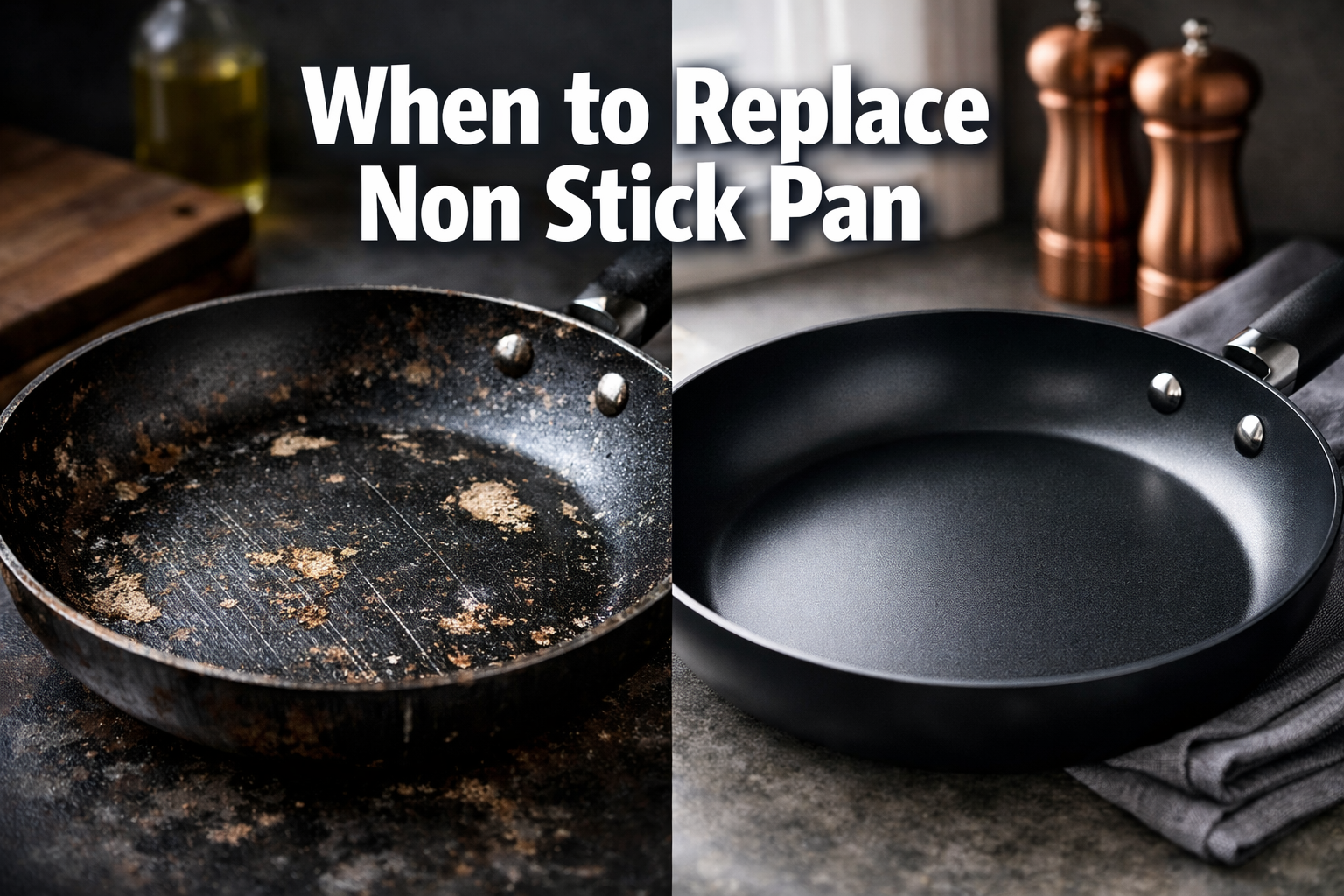
When to Replace Non Stick Pan
Latest Update: March 5th 2026
I’ll never forget the morning I cracked an egg into my favorite non-stick pan and watched tiny black flecks float into the whites. That sickening realization, I’d been cooking with a damaged pan for weeks, sent me down a research rabbit hole that completely changed how I think about cookware safety.
If you’re wondering When to Replace Non Stick Pan cookware in your kitchen, you’re asking one of the most important questions for both your health and cooking performance.
The truth is, most of us hold onto our non-stick pans far longer than we should. Whether it’s attachment to a trusted kitchen companion or simply not knowing the warning signs, delaying replacement can compromise both food safety and cooking results.
In 2026, with increasing regulatory scrutiny around cookware chemicals and new alternatives emerging, understanding When to Replace Non Stick Pan cookware has never been more critical.
Key Takeaways
- Replace immediately if you see any chips, scratches, or flaking in the non-stick coating—compromised surfaces can shed particles into your food
- Traditional non-stick pans typically need replacement every 2-3 years under normal use conditions, while ceramic coatings may lose effectiveness within 6-12 months
- Proper maintenance including using wooden or silicone utensils, avoiding high heat, and gentle cleaning can significantly extend your pan’s lifespan
- New regulations in states like Colorado (2026) and proposed New York legislation are changing the cookware landscape, making PFAS-free alternatives increasingly important
- Cost-benefit analysis shows that investing in more durable alternatives like durable non-stick frying pans or traditional cookware may save money long-term
Visual Signs It’s Time to Replace Your Non-Stick Pan
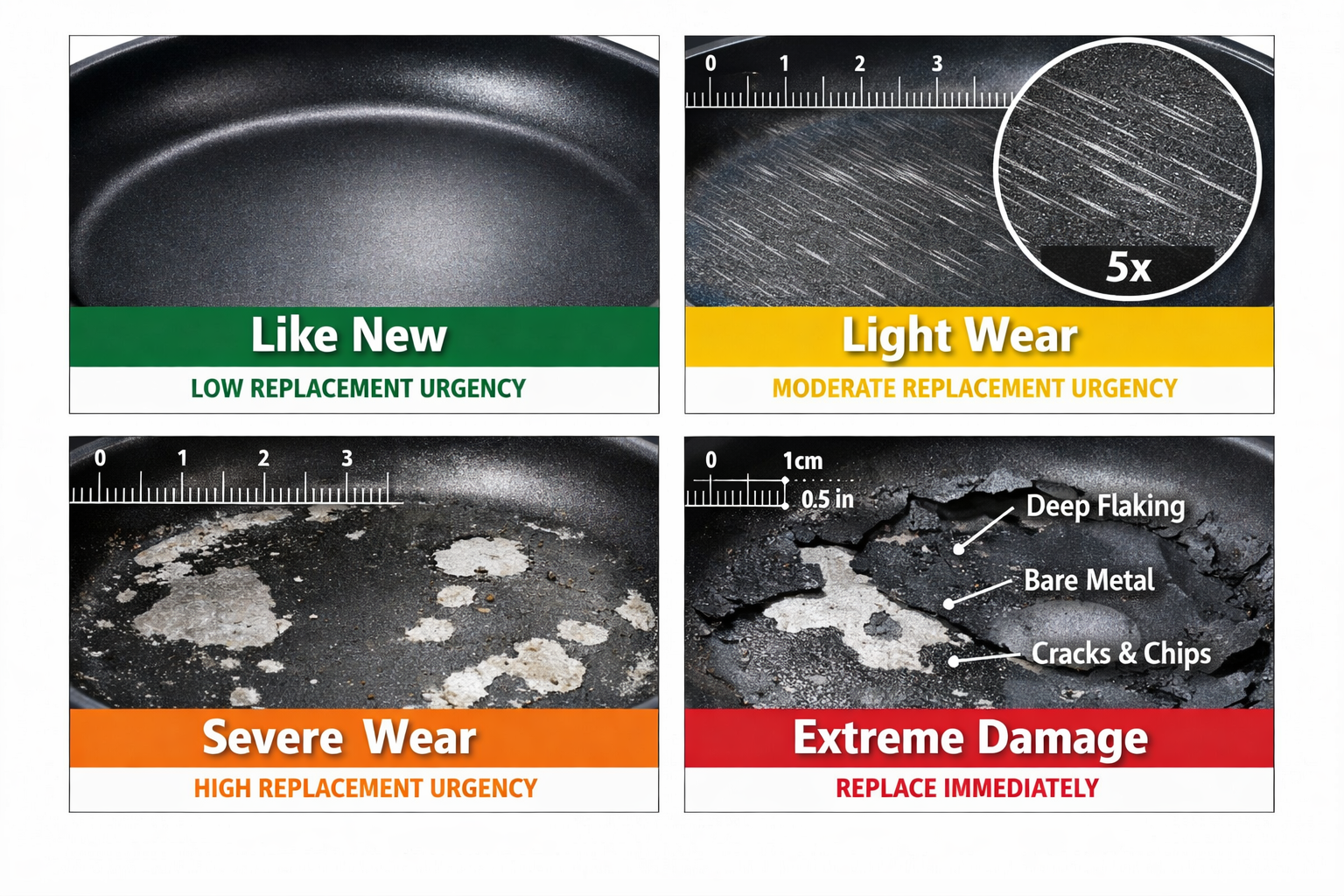
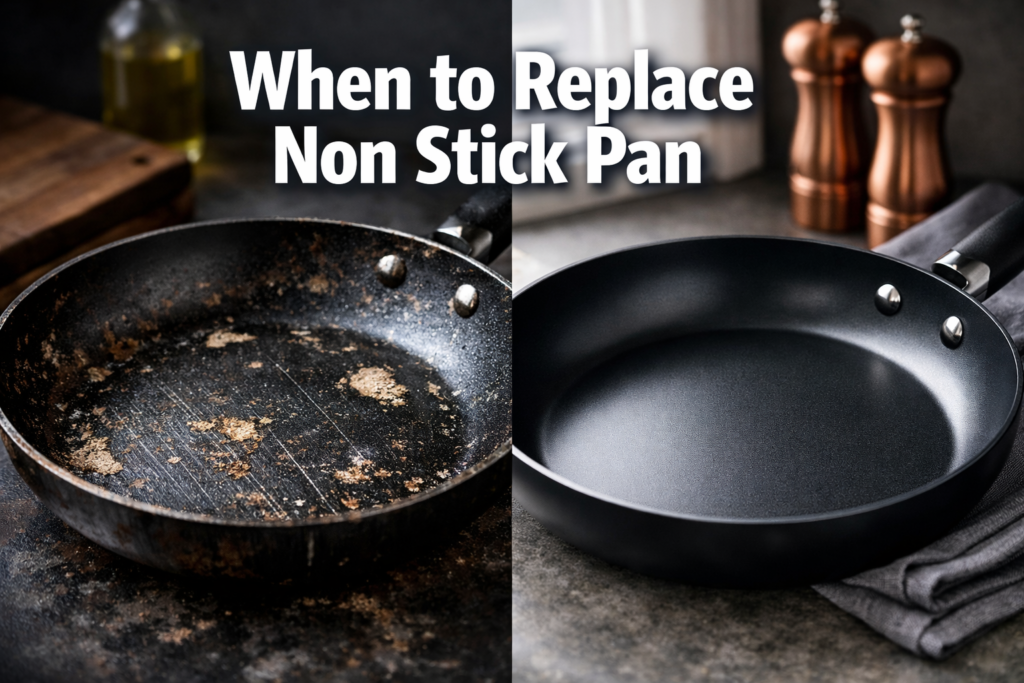
The most obvious indicators that you need to replace your non stick cookware are visible damage signs. According to Breann Chai, who leads cookware testing at Consumer Reports, “If a nonstick pan has any chips or scratches, it should be thrown away and replaced”. This isn’t just about performance, it’s about safety.
Critical Damage Indicators 🚨
Coating deterioration manifests in several unmistakable ways:
- Scratches and scoring: Even minor scratches compromise the coating’s integrity, creating pathways for further degradation
- Flaking or peeling: Any visible flaking means particles are likely entering your food
- Discoloration: Dark spots, rainbow patterns, or uneven coloring indicate chemical breakdown
- Exposed metal: If you can see the base metal through the coating, replacement is overdue
- Warping: A pan that no longer sits flat on your cooktop distributes heat unevenly and signals structural failure
I learned this lesson the hard way. After years of using metal spatulas on my non-stick skillet, I noticed the surface had developed a spiderweb pattern of fine scratches.
Within months, those scratches became visible gouges, and eventually, the coating began flaking off in small black pieces.
Consumer Reports testing revealed that one pan marketed as “PFOA-free” actually still contained PFOA when tested, highlighting that you can’t always trust manufacturer claims about safety.
Performance Degradation Signs
Beyond visible damage, performance issues signal it’s time to consider when to replace non stick pan cookware:
Food sticking consistently is the clearest functional indicator. If eggs no longer slide effortlessly or you’re reaching for cooking spray every time, the non-stick properties have degraded. This happens even without visible damage, particularly with ceramic non-stick cookware, which can lose effectiveness within months of use.
Uneven heating creates hot spots that burn food in some areas while leaving it undercooked in others. This typically indicates warping or coating breakdown affecting heat distribution.
Stubborn residue buildup that won’t come off with normal washing suggests the coating has become porous, trapping oils and food particles in microscopic crevices.
Understanding Non-Stick Pan Lifespan and When to Replace Non Stick Pan
The question of When to Replace Non Stick Pan cookware depends heavily on the coating type, usage frequency, and maintenance practices. Most traditional non-stick pans need replacement every few years under normal use conditions, but this timeline varies significantly.
Traditional PTFE-Coated Pans
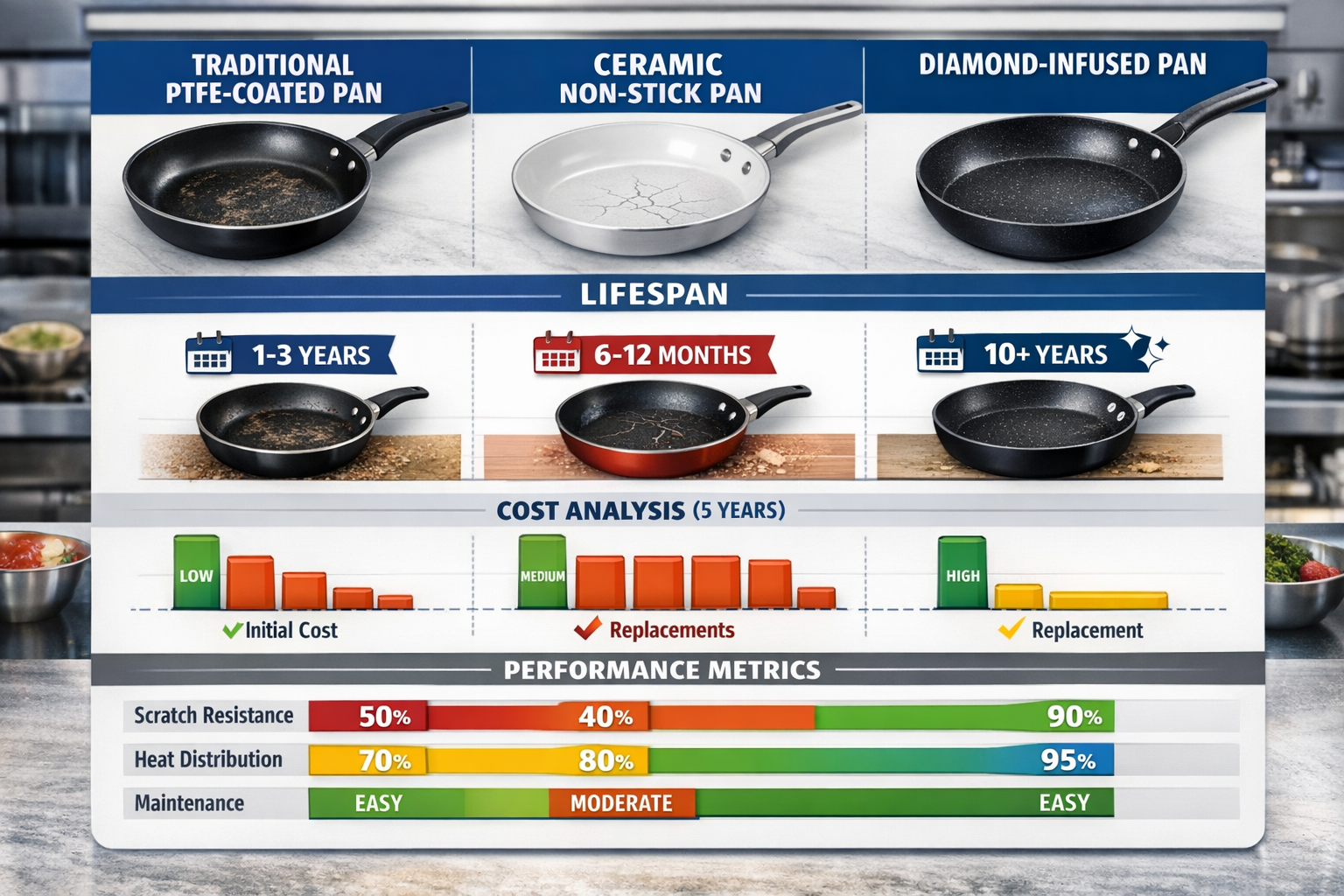
Polytetrafluoroethylene (PTFE) pans, commonly known by the brand name Teflon, typically last 2-5 years with proper care. Higher-quality pans with reinforced coatings can extend toward the upper end of this range, while budget options often fail sooner.
The lifespan depends on several factors:
- Usage frequency: Daily use accelerates wear compared to occasional cooking
- Heat exposure: Consistently high temperatures (above 400°F) break down PTFE coatings faster
- Utensil type: Metal utensils create scratches that dramatically shorten lifespan
- Cleaning methods: Abrasive scrubbers damage the surface
However, regulatory changes are reshaping this landscape. New York State proposed legislation to ban PTFE in cookware effective January 2026[4], while Colorado implemented a PFAS ban in 2026.
These regulations reflect growing concerns about the newer PFAS replacement chemicals used in modern non-stick coatings.
Ceramic Non-Stick Alternatives
Ceramic coatings marketed as PFAS-free alternatives face a different challenge: they lose their non-stick properties within 6-12 months of regular use. This creates a frustrating replacement cycle that generates more waste and potentially higher long-term costs.
A French consumer study by 60 Millions de Consommateurs tested 14 popular frying pans and found that ceramic pans using silicone-based coatings performed well for chemical safety. However, even these higher-quality options require more frequent replacement than traditional PTFE pans.
When considering ceramic non-stick durability, factor in this shorter lifespan when calculating true cost-per-use.
Emerging Alternatives with Extended Lifespans
Vacuum-brazed diamond cookware represents a newer technology that fuses diamonds to the pan surface at a molecular level, offering resistance to scratches, even heat distribution, and a lifespan of decades without PFAS. While the initial investment is higher, the extended durability changes the replacement equation entirely.
Traditional alternatives like cast iron and carbon steel require regular seasoning but offer indefinite lifespans when properly maintained. These pans develop naturally non-stick properties through seasoning and actually improve with age, the opposite of coated non-stick cookware. For guidance on maintaining these alternatives, see our cast iron seasoning guide.
Maintenance Strategies to Extend Your Pan’s Life
While every non-stick pan eventually needs replacement, proper maintenance can significantly extend the timeline and help you maximize your investment. I’ve personally doubled the lifespan of my current pans by implementing these professional techniques.
Daily Use Best Practices
Temperature management is crucial. Never preheat an empty non-stick pan—always add oil or food first. Keep heat at medium or lower settings, as temperatures above 400°F begin breaking down non-stick coatings. This single change extended my pan life by over a year.
Utensil selection matters more than most people realize. I switched exclusively to wooden spoons and silicone spatulas, and the difference was remarkable. Metal utensils create microscopic scratches that accumulate into visible damage over time.
Proper preheating prevents thermal shock. Allow pans to heat gradually rather than placing them on high heat immediately. Similarly, never plunge a hot pan into cold water—this temperature shock can warp the pan and crack the coating.
Cleaning and Storage Techniques
Gentle cleaning preserves the coating. Hand wash with soft sponges and mild dish soap—never use abrasive scrubbers or harsh chemicals. I learned this after ruining a pan with a “heavy-duty” scouring pad that seemed harmless at the time.
Complete cooling before washing prevents thermal stress. Let pans cool naturally to room temperature before cleaning.
Protective storage prevents scratches when pans are stacked. Use felt pan protectors or paper towels between stacked cookware. This simple step eliminated the storage-related scratches that plagued my previous pan collection.
Professional Chef Techniques
Professional kitchens replace non-stick pans more frequently than home cooks, but they also employ specific techniques to maximize performance during a pan’s useful life:
Seasoning non-stick pans can restore some slickness. Lightly coat the pan with oil and heat it for a few minutes, then wipe clean. This fills microscopic scratches and can extend performance.
Rotation systems distribute wear across multiple pans. Rather than using one pan exclusively, rotating between 2-3 pans reduces individual wear rates.
Task-appropriate selection preserves your best pans. Use older pans for acidic foods or high-heat searing, saving newer pans for delicate tasks like eggs and fish.
For comprehensive guidance on what considerations are important when selecting cookware, understanding these maintenance requirements before purchase helps set realistic expectations.
Cost-Benefit Analysis: Replacement vs. Maintenance
Understanding the economics of non-stick pan replacement helps make informed decisions about when to replace non stick pan cookware versus attempting to extend its life.
Calculating True Cost Per Use
A $30 non-stick pan lasting 2 years with weekly use provides approximately 104 uses, or roughly $0.29 per use. A $60 pan lasting 4 years drops to $0.14 per use, nearly half the cost despite the higher initial price.
However, ceramic alternatives requiring replacement every 6-12 months dramatically change this calculation. A $40 ceramic pan lasting only 8 months provides about 35 uses at $1.14 per use—significantly higher than traditional non-stick.
This analysis explains why affordable nonstick pans aren’t always the most economical choice. Initial price matters less than lifespan and performance retention.
Environmental Impact Considerations
Disposal frequency creates environmental costs beyond purchase price. Traditional non-stick pans lasting 2-3 years generate less waste than ceramic pans requiring annual replacement. Over a decade, you might dispose of:
- 3-5 traditional PTFE pans
- 10-20 ceramic pans
- 0-1 diamond-infused or cast iron pans
For environmentally conscious cooks, exploring sustainable cookware options and eco-friendly alternatives provides longer-lasting solutions that reduce replacement cycles.
Investment in Premium Alternatives
Higher-end non-stick options ($100-200) with reinforced coatings can last 5-7 years, offering superior cost-per-use compared to budget options. These typically feature:
- Multi-layer PTFE coatings
- Reinforced construction
- Better heat distribution
- Manufacturer warranties
Traditional cookware like stainless steel, cast iron, or carbon steel requires higher initial investment but offers indefinite lifespans. A $150 stainless steel pan lasting 20+ years costs approximately $0.01 per use with weekly cooking—dramatically lower than any non-stick option.
I made this calculation after my third non-stick pan failed in five years. Investing in a quality stainless steel skillet and properly seasoned cast iron eliminated my replacement cycle entirely for most cooking tasks, reserving non-stick only for specific applications like eggs.
Making the Replacement Decision: A Practical Framework
When facing the question of when to replace non stick pan cookware, use this decision framework to evaluate your specific situation:
The Immediate Replacement Checklist ✅
Replace immediately if you observe:
- ✓ Any visible flaking or peeling coating
- ✓ Chips or deep scratches exposing base metal
- ✓ Significant warping preventing flat contact with cooktop
- ✓ Persistent metallic taste in food
- ✓ Dark particles appearing in cooked food
These conditions pose potential health risks and cannot be remediated through maintenance.
The Performance Evaluation
Consider replacement soon if you notice:
- Food consistently sticking despite proper technique
- Uneven heating creating hot spots
- Discoloration or rainbow patterns across the surface
- Difficulty cleaning with normal methods
- The pan is 3+ years old with regular use
These indicators suggest the coating has degraded significantly, even if not visibly damaged.
The Maintenance Extension Option
Continue using with enhanced care if:
- The pan is less than 2 years old
- No visible damage exists
- Performance remains acceptable
- You can implement better maintenance practices
- The pan sees only occasional use
Implementing the maintenance strategies outlined earlier can often extend lifespan by 1-2 years when damage isn’t yet present.
Choosing Your Replacement
When replacement becomes necessary, consider your cooking style and priorities:
For frequent non-stick users: Invest in higher-quality PTFE pans with reinforced coatings from reputable manufacturers. Look for options with warranties and proven durability records. Our guide to choosing the right pots and pans provides detailed selection criteria.
For health-conscious cooks: Explore PFAS-free alternatives including quality ceramic options, diamond-infused cookware, or traditional materials like cast iron and carbon steel. Review our comparison of ceramic cookware pros and cons for detailed analysis.
For budget-conscious households: Calculate cost-per-use rather than initial price. Sometimes affordable cookware sets under $100 provide better value than premium single pans, depending on your needs.
For sustainable living: Prioritize long-lasting alternatives that minimize replacement frequency. Cast iron, carbon steel, and stainless steel offer indefinite lifespans with proper care.
Health and Safety Considerations in 2026
The regulatory landscape around non-stick cookware continues evolving, making when to replace non stick pan cookware increasingly important from a health perspective.
Understanding PFAS Concerns
While manufacturers no longer use the original C8 PFOA chemical in US production, modern non-stick coatings rely on newer PFAS replacement chemicals facing increasing regulatory scrutiny as of 2026. The FDA continues monitoring cookware chemicals but doesn’t yet mandate full PFAS ingredient lists on product packaging.
This regulatory gap means consumers can’t always verify manufacturer safety claims. Consumer Reports testing found that one pan marketed as “PFOA-free” actually still contained PFOA when tested, demonstrating that labels alone provide insufficient assurance.
State-Level Regulations
Colorado’s 2026 PFAS ban makes it illegal to sell certain non-stick cookware in the state[2], while New York’s proposed PTFE ban scheduled for January 2026 signals growing regulatory concern about these chemicals.
These regulations don’t necessarily mean your current cookware poses immediate danger, but they do suggest that replacement with PFAS-free alternatives aligns with emerging safety standards.
Minimizing Exposure Risk
Until replacement, minimize potential exposure by:
- Never heating non-stick pans above 400°F
- Discarding pans immediately upon visible damage
- Ensuring adequate kitchen ventilation during cooking
- Avoiding preheating empty pans
- Replacing pans proactively rather than waiting for failure
For comprehensive information on safe cookware options, explore our guide to healthy non-toxic bakeware and cookware for healthy cooking choices.
Conclusion: Taking Action on Your Non-Stick Cookware
Understanding when to replace non stick pan cookware comes down to balancing safety, performance, and economics. The clear answer: replace immediately if you see any coating damage, plan for replacement every 2-3 years with traditional PTFE pans, and consider transitioning to longer-lasting alternatives that eliminate frequent replacement cycles entirely.
I’ve transformed my own kitchen by implementing a hybrid approach, maintaining one high-quality non-stick pan exclusively for eggs and delicate fish, while handling most cooking tasks with cast iron, carbon steel, and stainless steel. This strategy minimizes my exposure to PFAS chemicals, reduces waste, and actually improved my cooking results.
Your next steps:
- Inspect your current pans using the diagnostic checklist provided above
- Replace any damaged cookware immediately—don’t wait
- Implement proper maintenance for pans still in good condition
- Research alternatives that align with your cooking style, budget, and values
- Create a replacement timeline for aging pans before they fail
The cookware landscape in 2026 offers more options than ever before. Whether you choose premium non-stick with extended durability, PFAS-free ceramic alternatives, innovative diamond-infused technology, or traditional materials with indefinite lifespans, making an informed decision protects both your health and your wallet.
Don’t wait for that sickening moment of seeing coating flakes in your food. Take control of your cookware safety today by evaluating what’s in your kitchen and making proactive replacement decisions.
Your future self, and everyone you cook for, will thank you.



Leave a Reply
You must be logged in to post a comment.