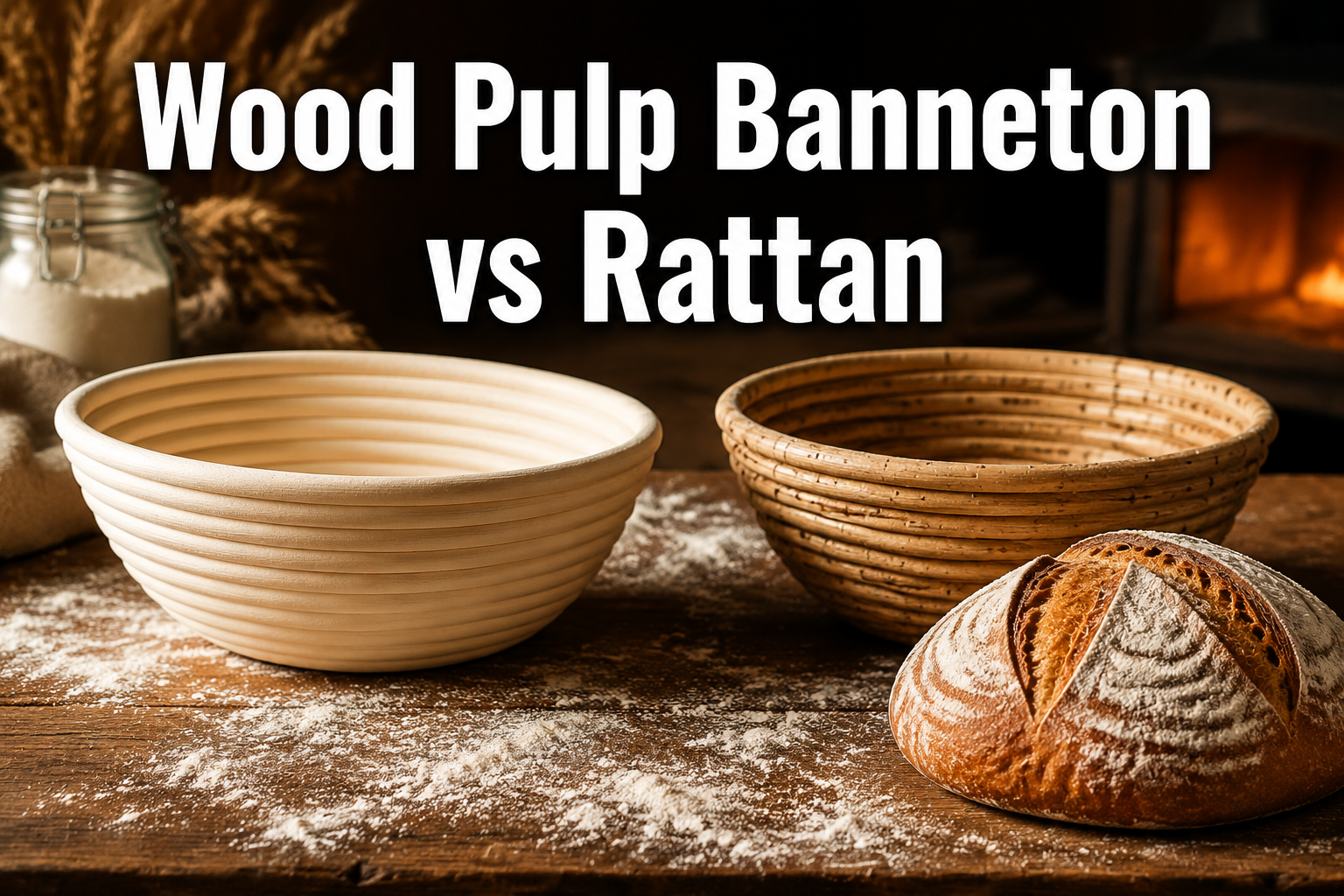
Wood Pulp Banneton vs Rattan
Last updated: July 2, 2026
Quick Answer: Wood Pulp Banneton vs Rattan, the Wood Pulp Banneton outpeform, for moisture management and crust development, making them the better choice for high-hydration sourdoughs. Rattan baskets cost less upfront and are easier to find, but they absorb less moisture and typically produce softer crusts. If you bake wet doughs regularly and want a crisp, crackly crust, a wood pulp banneton, particularly from Bulka or Flourside, is worth the premium.
Key Takeaways
- Wood pulp bannetons are made from compressed spruce fiber and wick moisture away from the dough surface more aggressively than rattan, resulting in a thinner, crispier crust.
- Rattan bannetons are generally cheaper and more widely available, but they are less effective at moisture control and can leave dough sticking in high-hydration situations without a linen liner.
- Neither material should be washed with water; both require brushing and dry-heat care to prevent mold.
- Bulka offers five wood pulp banneton options ranging from $38.95 to $39.95, covering small oval, small round, medium oval, large round, and large oval shapes.
- Flourside’s wood pulp bannetons are priced at $32.00 each and offer a comparable German-made spruce pulp construction at a slightly lower price point.
- Loaf size matters: match your banneton to your dough weight, 500 g doughs need a small basket, 750 g a medium, and 1 kg a large.
- Wood pulp is biodegradable and chemical-free, making it the more sustainable choice for eco-conscious bakers.
- For beginners on a tight budget baking lower-hydration loaves, a Rattan banneton with a linen liner is a practical starting point.
Check Price and Availability on Amazon <—-
Quick Comparison Table
| Product | Price | Size / Capacity | Interior Pattern | Best For |
|---|---|---|---|---|
| Bulka Large Oval Waffle 1kg | $39.95 | Large oval / 750–1000 g | Waffle | Large batards, artisan bakers |
| Bulka Large Round Waffle 1kg | $39.95 | Large round 9″ / 750–1000 g | Waffle | Classic boules, enthusiast bakers |
| Bulka Small Round Plane 500g | $38.95 | Small round 8″ / 350–500 g | Plain | Small households, beginners |
| Bulka Small Oval Plane 500g | $38.95 | Small oval / 350–500 g | Plain | Small batards, home bakers |
| Bulka Medium Oval Groove 750g | $39.95 | Medium oval / 500–750 g | Groove | Versatile mid-size sourdough |
| Flourside Round & Oval Collection | $32.00 | Various / varies | Various | High-hydration doughs, value buyers |
What Is a Wood Pulp Banneton and How Does It Differ from Rattan?
A banneton (also called a brotform or proofing basket) holds shaped dough during its final fermentation, giving the loaf structure and imprinting a surface pattern. The material it’s made from directly affects how the dough behaves at the surface.
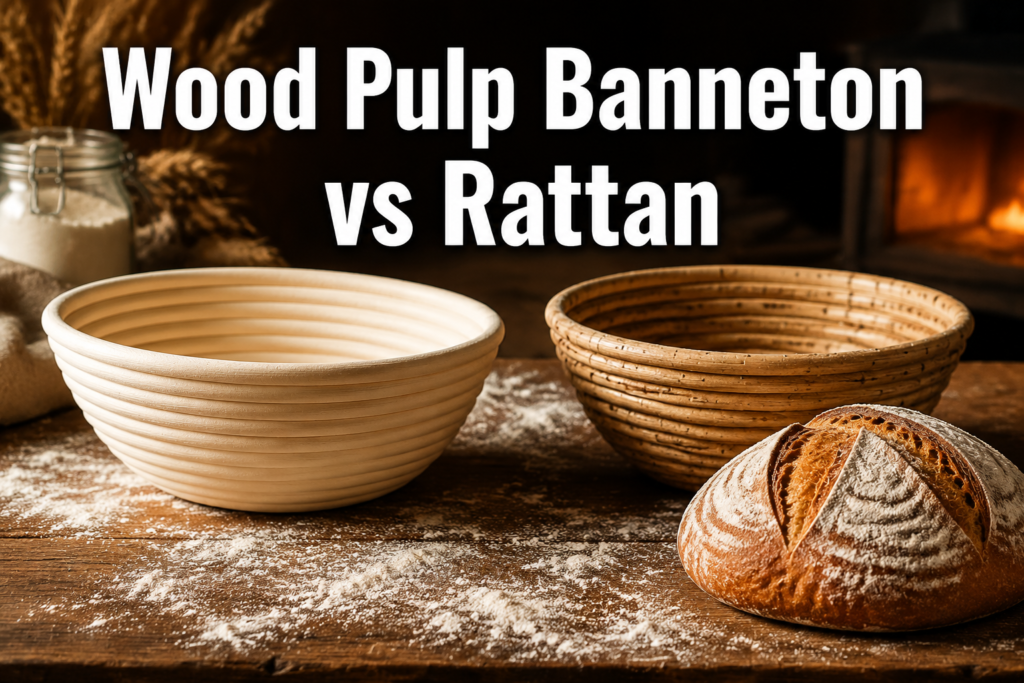
Rattan bannetons are woven from the cane of the rattan palm. The spiral weave creates the classic ring pattern on sourdough loaves. Rattan is breathable but only moderately absorbent, so bakers often use a linen liner to prevent sticking, especially with wetter doughs.
Wood pulp bannetons are molded from compressed spruce wood fiber. The walls are thick and solid rather than woven, which means they absorb moisture more evenly across the entire dough surface. This accelerated surface drying creates the conditions for a thinner, crispier crust and makes release easier without a liner.
The practical difference: if you’re baking a 75–80% hydration sourdough, a wood pulp banneton will handle that dough with less drama. Rattan at that hydration level often requires a linen liner and careful flouring to prevent tearing on release.
Individual Product Reviews
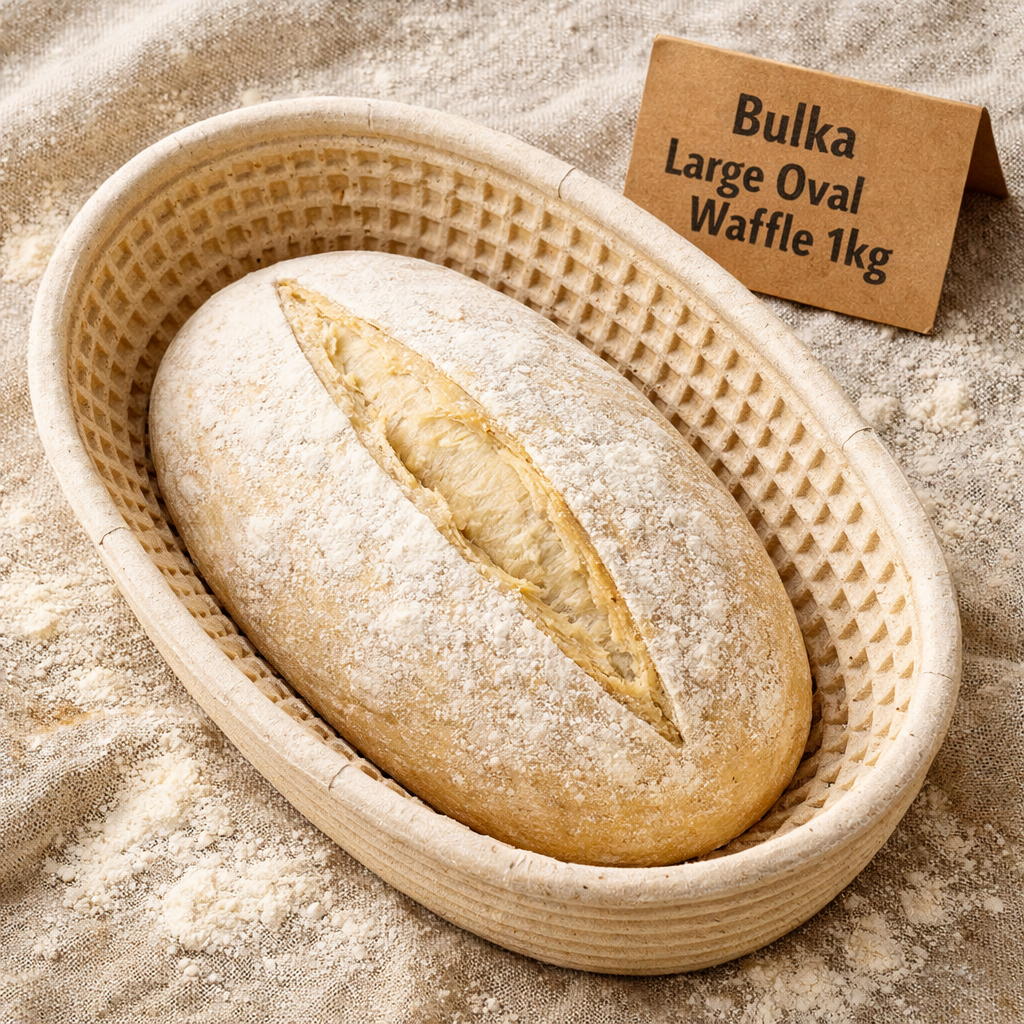
Bulka Wood Pulp Banneton – Large Oval Waffle 1kg
The Bulka Large Oval Waffle banneton is built for serious sourdough bakers who regularly bake 750 g to 1 kg batards. It’s the right tool if your go-to recipe produces a large oval loaf and you want consistent crust performance bake after bake.
Key Features:
- German-made spruce wood pulp construction
- Waffle interior texture for subtle surface patterning
- Thick, breathable walls for temperature-stable proofing
- Supports 750–1000 g loaves
✅ Pros:
- Thick walls keep dough temperature consistent during final proofing, which stabilizes fermentation in cooler kitchens
- Spruce wood pulp absorbs surface moisture effectively, improving scoring and producing a thin, crackly crust
- Naturally non-stick when properly floured, reliable release even with high-hydration doughs
- Sustainable, chemical-free, and biodegradable
- Handmade in Germany using traditional brotform techniques
❌ Cons:
- Higher upfront cost than entry-level rattan baskets, with no budget tier available
- Requires dry storage and periodic oven-drying; cannot be rinsed with water
- Single-purpose tool, harder to justify for occasional bakers
Best for: Home and artisan bakers who bake large oval sourdoughs regularly and want the moisture-wicking advantage of wood pulp. If you’re already baking at a consistent cadence and want to improve your crust, this basket pays for itself quickly.
Check Price and Availability on Amazon <—-
Bulka Wood Pulp Banneton – Large Round 9″ Waffle 1kg
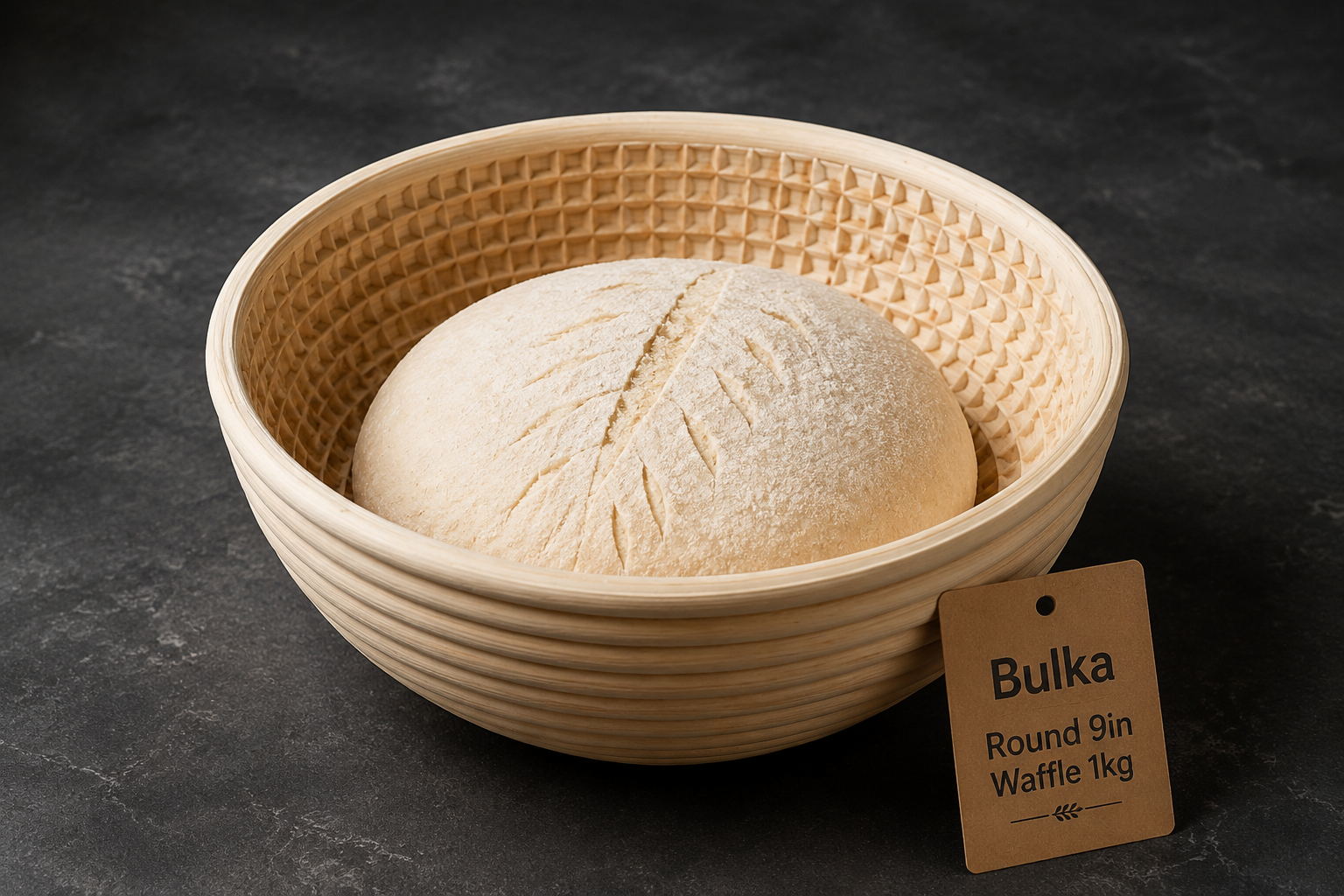
The Large Round Waffle is the boule baker’s equivalent of the oval above. At the same price point and capacity, it’s the right choice when your primary shape is a round loaf rather than a batard.
Key Features:
- 9-inch round format for classic boule shapes
- Waffle interior pattern
- Spruce wood pulp with thick breathable walls
- 750–1000 g capacity
✅ Pros:
- Even proofing support and consistent dough temperature across the full round base
- Wood pulp absorbs surface moisture for a crisper crust compared to rattan
- Naturally non-stick once seasoned with flour
- Suits classic sourdough boules and other slow-fermented round breads
❌ Cons:
- More expensive than entry-level rattan, which may deter beginners
- Requires a specific care routine, no washing, regular flouring, and occasional oven-drying
- Sold individually with no bundle discount
Best for: Enthusiast and professional bakers who primarily bake round sourdough and want the moisture management and crust performance of wood pulp over rattan. If you already own a Dutch oven and a good scoring lame, this basket completes the setup.
Bulka Wood Pulp Banneton – Small Round 8″ Plane 500g
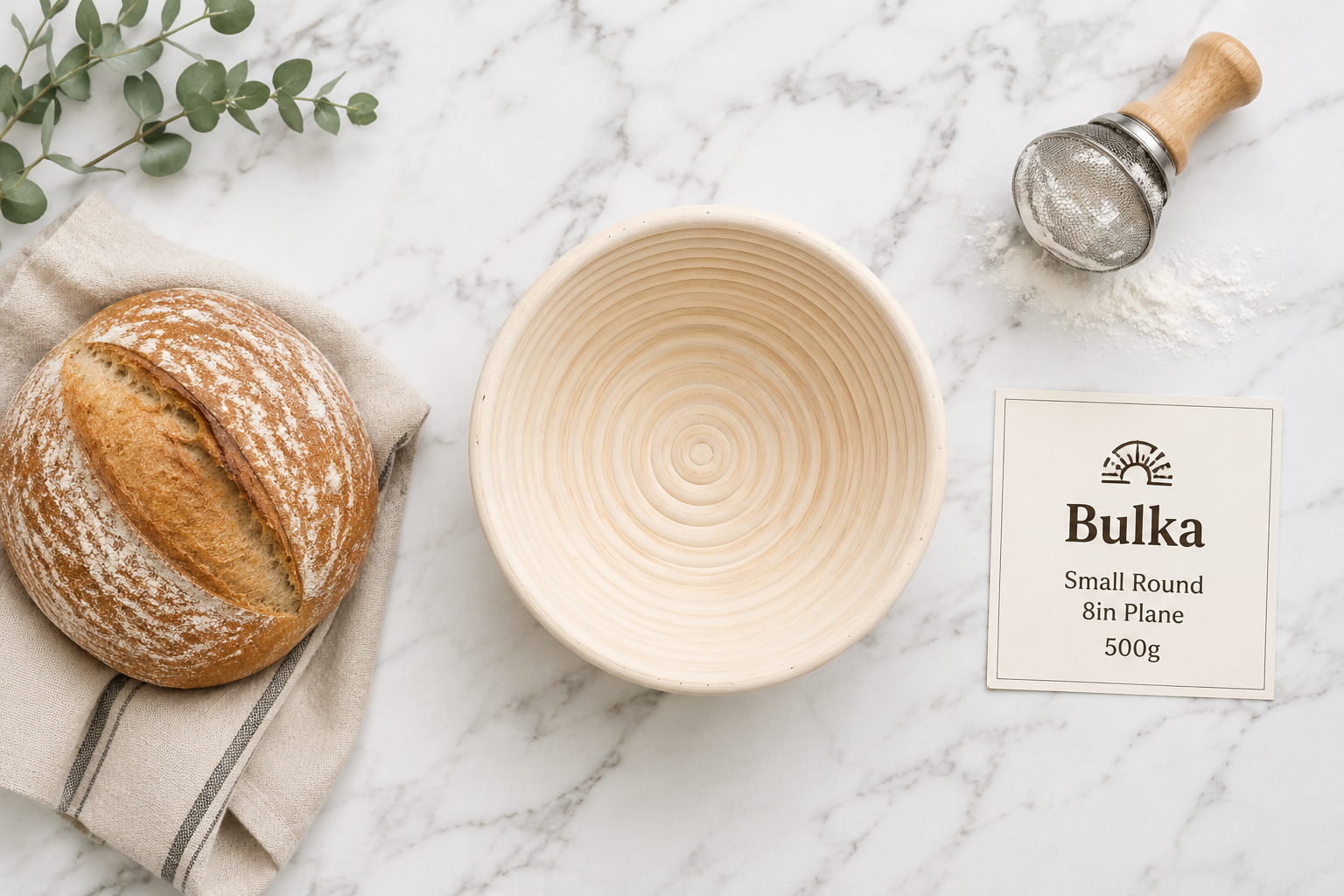
The Small Round Plane is the right fit for single-person households or bakers who prefer smaller, more manageable loaves. At $38.95, it’s only a dollar less than the large versions, which reflects the handmade manufacturing cost rather than a significant size discount.
Key Features:
- 8-inch round format
- Plain (smooth) interior — no spiral or waffle pattern
- 350–500 g capacity
- Spruce wood pulp construction
✅ Pros:
- Compact size is ideal for 350–500 g loaves, right for one or two people
- Thick walls maintain dough temperature and structural support during proofing
- Natural wood pulp wicks moisture from high-hydration doughs, reducing stickiness
- Eco-friendly, chemical-free, and biodegradable
❌ Cons:
- Higher cost relative to small rattan baskets, given the limited capacity
- Requires dry-heat cleaning rather than conventional washing
- Plain interior doesn’t imprint the traditional spiral flour rings, a visual trade-off for some bakers
Best for: Beginner to intermediate bakers who bake smaller sourdough loaves and want the handling advantages of wood pulp, particularly for wetter doughs. Also a good choice for bakers who prefer a clean, unembossed crust surface.
Check Price and Availability on Amazon <—-
Bulka Wood Pulp Banneton – Small Oval Plane 500g
The Small Oval Plane mirrors the small round in price and capacity but supports batard shapes. If you prefer elongated loaves but bake in smaller quantities, this is the right pick.
Key Features:
- Small oval format for batard-style loaves
- Plain smooth interior
- 350–500 g capacity
- Spruce wood pulp, German-made
✅ Pros:
- Sized specifically for small oval sourdoughs and batards
- Wood pulp composition promotes moisture absorption and crisper crusts than rattan
- Naturally non-stick when well-floured for clean dough release
- Sustainable, biodegradable construction
❌ Cons:
- Premium price relative to basic rattan baskets used with linen liners
- Care instructions discourage water contact — brushing and oven-drying only
- Less versatile than a medium or large round basket for bakers who vary their shapes
Best for: Home bakers who frequently bake small batards or oval sourdoughs and want superior moisture management. If your household eats through a 500 g loaf in two days and you prefer an oval shape, this basket is a natural fit.
Bulka Wood Pulp Banneton – Medium Oval Groove 750g
The Medium Oval Groove hits the sweet spot for many home sourdough recipes. A 500–750 g loaf is the most common target weight in home baking guides, and the grooved interior adds a subtle visual element to the finished crust.
Key Features:
- Medium oval format with groove interior pattern
- 500–750 g capacity
- Spruce wood pulp, breathable thick walls
- Subtle groove imprint on the loaf surface
✅ Pros:
- Versatile mid-range capacity suits the majority of home sourdough recipes
- Grooved interior defines loaf shape and imprints a light pattern while the wood pulp absorbs moisture
- Thick walls maintain dough temperature and stability during final proof
- Eco-friendly, chemical-free construction
❌ Cons:
- More expensive than comparable rattan bannetons
- Requires specific care — no washing, brushing, and oven-drying to maintain the basket
- Sold individually with no volume pricing
Best for: Committed sourdough bakers who want a versatile mid-size wood pulp banneton for medium batards. This is arguably the most practical size in the Bulka lineup for everyday home baking.
Check Price and Availability on Amazon <—-
Flourside Wood Pulp Banneton – Round & Oval Collection
Flourside’s entry into the wood pulp banneton space offers the same German-made spruce construction as Bulka but at $32.00 per basket — a meaningful $7–$8 savings per unit. For bakers who want multiple baskets or are price-sensitive, Flourside is worth a close look.
Key Features:
- 100% sustainable spruce wood pulp, German-made
- Available in round and oval forms with various textures
- Thick walls for temperature-stable proofing
- Engineered for high-hydration dough release
✅ Pros:
- Crafted from 100% sustainable spruce wood pulp, consistent with eco-conscious baking values
- Designed specifically for high-hydration doughs with high absorbency for easy release
- Evenly wicks moisture from the dough skin for a consistent, beautiful crust
- Thick walls support steady fermentation and structural integrity
- Made in Germany with over a century of European brotform tradition behind the material
❌ Cons:
- Still pricier than basic rattan bannetons, so the upfront investment is real
- Requires brushing and dry-heat care; improper drying can allow mold if moisture lingers
- Natural color and pulp consistency variations are cosmetic but may bother bakers who expect a uniform appearance
Best for: Bakers who work with high-hydration doughs and want reliable release and crisp crusts at a slightly lower price than Bulka. Also a strong option for bakers equipping a full proofing setup across multiple basket sizes.
Check Price and Availability on Amazon <—-
Buying Guide: What to Consider Before Choosing a Banneton
Match basket size to your dough weight
This is the single most important spec. Using a basket that’s too large lets the dough spread and lose shape; too small and the dough overflows the sides during proofing. A general guide:
- 350–500 g dough: small round or small oval
- 500–750 g dough: medium oval
- 750–1000 g dough: large round or large oval
Choose your shape based on your preferred loaf style
Round baskets produce boules; oval baskets produce batards. Both shapes work equally well in a Dutch oven, but the oval often fits a standard loaf pan or long Dutch oven more naturally. If you bake both shapes regularly, consider one of each.
Wood pulp vs. rattan: the practical decision
Choose wood pulp if you bake high-hydration doughs (above 70% hydration), want a crisper crust without a liner, or prioritize eco-friendly materials. Choose rattan if you’re a beginner on a budget, bake lower-hydration loaves, or prefer the traditional spiral ring pattern on your crust.
For more context on building out a complete sourdough baking setup, the bakeware essentials for new bakers guide covers the core tools worth investing in early.
Interior pattern: waffle, groove, or plain
The interior pattern affects the surface texture of the finished loaf, not the bake quality. Waffle and groove patterns leave a subtle imprint; plain interiors produce a smooth crust surface. This is largely an aesthetic choice, though some bakers find that grooved or waffle interiors release slightly more easily because the contact surface area is reduced.
Care and maintenance commitment
Both wood pulp and rattan require a no-water care routine. You brush out flour residue after each use and periodically dry the basket in a low oven (around 100°C / 212°F for 10–15 minutes) to prevent moisture buildup and mold. If you’re not prepared for that routine, a cloth-lined rattan basket with a removable linen liner is more forgiving, you can wash the liner separately.
Budget considerations
Bulka’s bannetons range from $38.95 to $39.95. Flourside’s are $32.00. Entry-level rattan baskets can be found for $15–$25, though quality varies. If budget is the primary constraint and you’re just starting out, the affordable baking tools to try resource is a useful reference for lower-cost alternatives that still perform well.
For bakers who want to pair their banneton with quality baking surfaces, a baking stone for sourdough can complement the crust development you get from a wood pulp basket.
Common Mistakes to Avoid
- Under-flouring the basket before loading dough. Both wood pulp and rattan require a thorough dusting of rice flour (or a 50/50 rice and all-purpose flour blend) before each use. Rice flour resists absorption better than wheat flour and significantly reduces sticking.
- Storing the basket while still damp. After use, let the basket air dry completely before storing. Enclosing a damp banneton in a bag or cabinet is the fastest way to grow mold.
- Using the basket before it’s properly seasoned. New wood pulp bannetons benefit from several uses before they develop a reliable non-stick surface. Expect the first one or two bakes to require extra flour.
- Buying a basket that’s too large “to grow into.” An oversized basket produces a flat, spread-out loaf. Match the basket to your current dough weight.
FAQ
Can I use a wood pulp banneton for rye bread or other non-sourdough loaves?
Yes. Wood pulp bannetons work well for any slow-fermented bread that benefits from surface moisture control, including rye, spelt, and enriched doughs. The key is matching the dough weight to the basket size.
Do wood pulp bannetons need to be seasoned before first use?
They don’t require a formal seasoning process like cast iron, but you should flour them thoroughly before each of the first several uses. Over time, a thin layer of flour builds up in the pores of the wood pulp, which improves non-stick performance.
Can I put a wood pulp banneton in the freezer for cold retarding?
Yes. Cold retarding in the refrigerator (typically 8–16 hours at 3–5°C) is standard practice for sourdough and works well with wood pulp bannetons. Freezer retarding is less common but technically possible. Make sure the basket is well-floured before loading and allow it to dry fully after removing the dough.
How long does a wood pulp banneton last?
With proper care, regular brushing, no water contact, and periodic oven-drying, a quality wood pulp banneton can last several years of regular home baking use. The material is durable when kept dry.
Wood Pulp Banneton vs Rattan: FAQs
Is the Flourside banneton the same as the Bulka banneton?
Both are German-made spruce wood pulp bannetons with similar construction principles, but they are separate products from different brands. Flourside is priced at $32.00 versus Bulka’s $38.95–$39.95. The core material and care requirements are comparable; the differences lie in specific shapes, patterns available, and price.
What’s the difference between a plain, waffle, and groove interior?
These are surface texture variations on the inside of the basket. Plain interiors leave a smooth crust surface. Waffle interiors imprint a grid-like pattern. Groove interiors leave parallel lines. All three perform equally in terms of moisture absorption and proofing function — the choice is aesthetic.
Can I use a linen liner with a wood pulp banneton?
You can, but it largely defeats the purpose. The primary advantage of wood pulp over rattan is direct moisture wicking from the dough surface. Adding a liner between the dough and the wood pulp removes that advantage. Use wood pulp without a liner for best results.
Why is rice flour recommended over all-purpose flour for dusting?
Rice flour doesn’t absorb moisture as readily as wheat flour, so it stays loose and powdery on the basket surface longer. Wheat flour can hydrate and become sticky during proofing, which increases the risk of the dough adhering to the basket. Many experienced sourdough bakers use a 50/50 blend of rice flour and all-purpose flour.
If you’re also evaluating other bakeware for your sourdough setup, the healthy non-toxic bakeware guide covers Dutch ovens and baking vessels worth pairing with a quality banneton.
Final Verdict
Best overall for serious sourdough bakers: Bulka Medium Oval Groove 750g ($39.95). The 500–750 g capacity covers the most common home baking range, the oval shape suits both batards and Dutch oven baking, and the groove pattern adds a professional finish. It’s the most versatile single basket in the Bulka lineup.
Best for large loaves: Bulka Large Oval Waffle 1kg or Large Round Waffle 1kg (both $39.95), depending on your preferred shape. Both deliver the same moisture-wicking performance at the 750–1000 g range.
Best for small households: Bulka Small Round Plane 500g ($38.95) for round loaves, or the Small Oval Plane 500g ($38.95) for batards. Both are well-suited to 350–500 g doughs.
Best value: Flourside Round & Oval Collection ($32.00 each). If you want German-made wood pulp quality at a lower price per basket — especially if you’re buying multiple sizes, Flourside is the practical choice.
When to choose rattan instead: If you’re a beginner baking lower-hydration loaves (below 70%), on a tight budget, or want the classic spiral ring pattern on your crust, a rattan banneton with a linen liner is a perfectly capable tool. The wood pulp advantage becomes most apparent at higher hydration levels and when crust crispness is a priority.
For bakers building out a complete artisan baking station, pairing a wood pulp banneton with a quality baking stone or Dutch oven makes the most of the moisture management these baskets provide. The baking stone for sourdough guide is a useful next step.