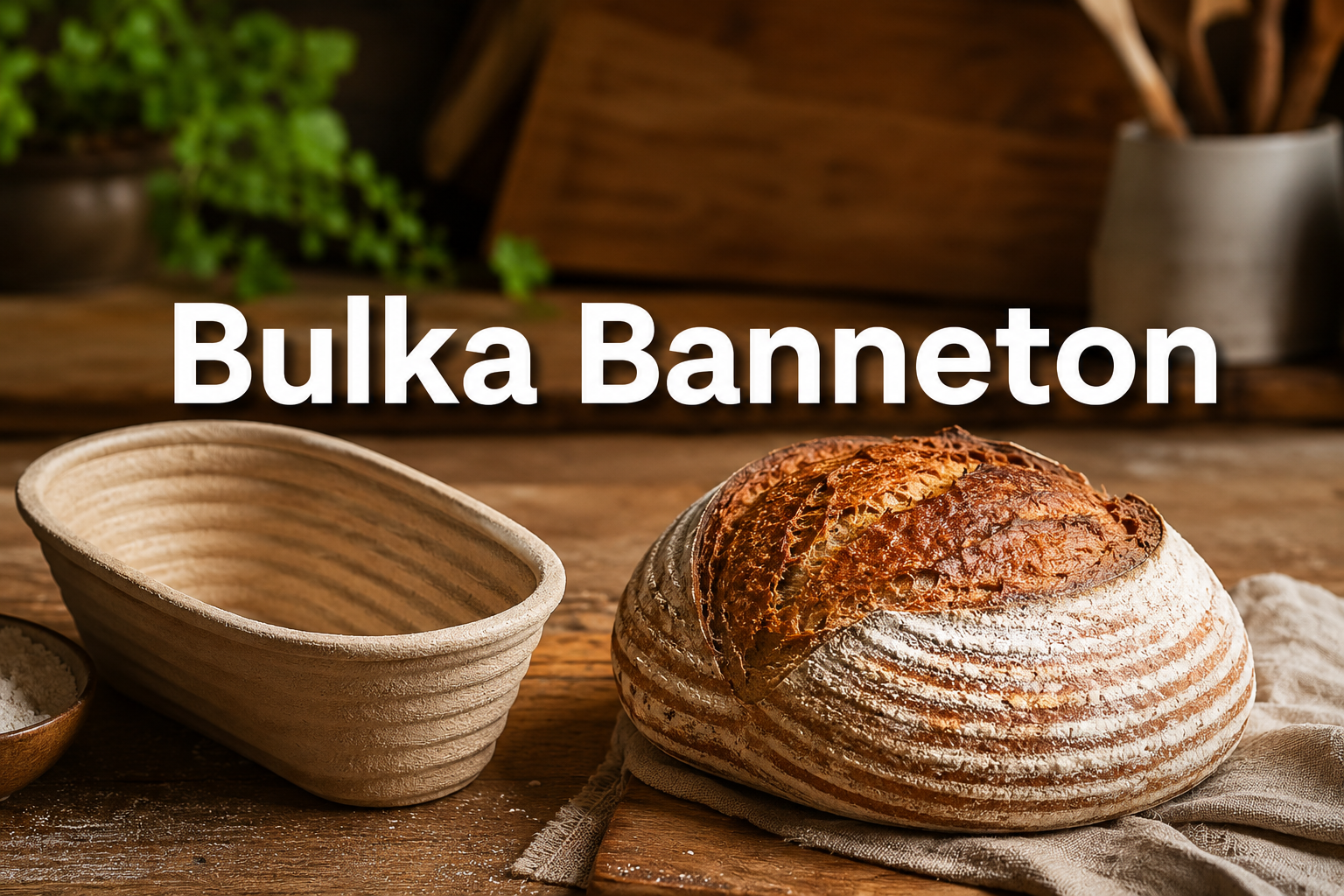
Bulka Banneton
Last updated: July 1, 2026
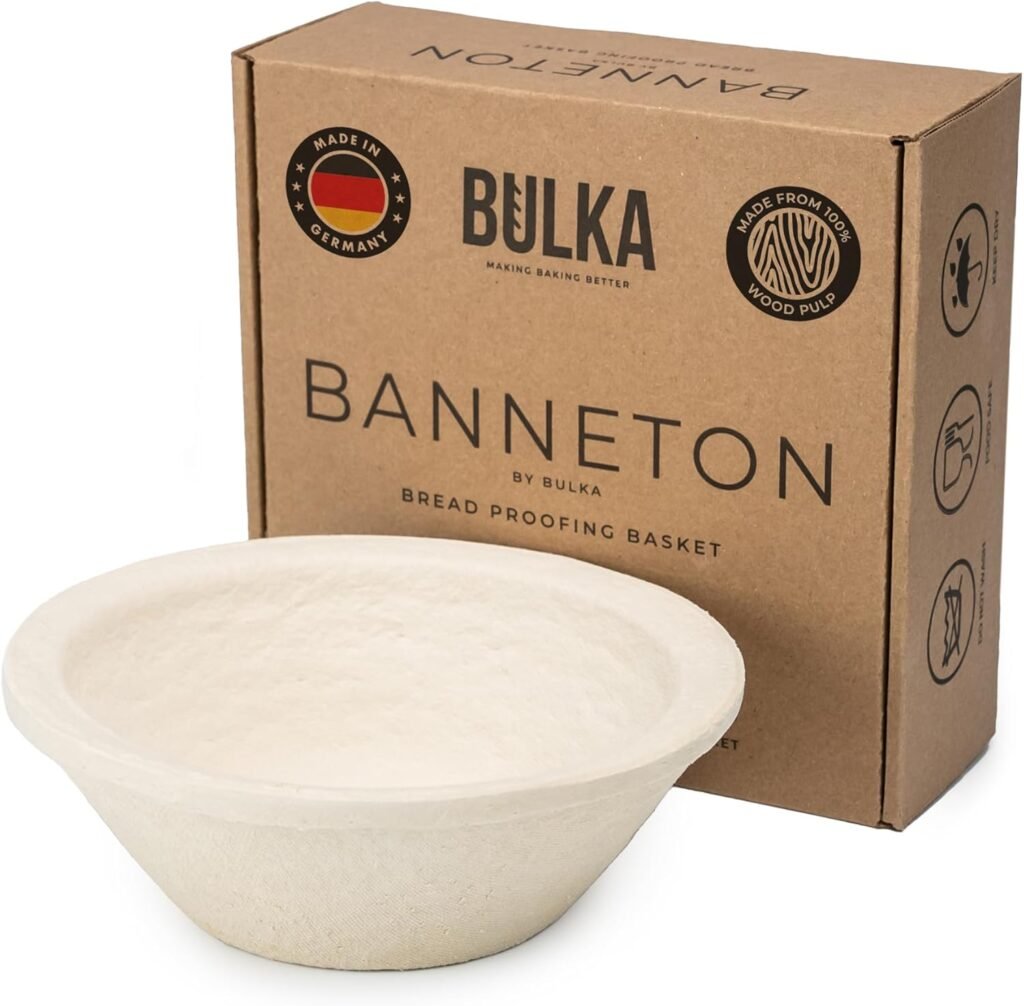
A Bulka Banneton is a premium sourdough proofing basket made from pressed wood pulp in Germany. You use it to hold shaped dough during its final proofing stage, which helps the dough maintain its structure, regulates moisture, and creates a beautiful pattern on the crust. Home bakers choose Bulka baskets because they handle high hydration doughs exceptionally well without requiring a fabric liner.
Key Takeaways
- Bulka Bannetons are made from sustainable, chemical free pressed wood pulp.
- They do not require a fabric liner, making them easier to use for sticky, high hydration doughs.
- The breathable walls draw out surface moisture, resulting in a thinner, crispier crust and better oven spring.
- You must flour the basket before use to prevent sticking, even with non stick wood pulp.
- Cleaning involves brushing out dry flour and occasionally wiping with a damp cloth, never soaking.
- A Bulka banneton is a worthwhile investment for home bakers who bake frequently and want professional results.
Check out the Bulka Banneton on Amazon. <—-
What is a Bulka Banneton and How Do You Use It?
A Bulka Banneton is a specialized bread proofing basket crafted from pressed wood pulp in Germany, designed to support sourdough dough during its final proof.
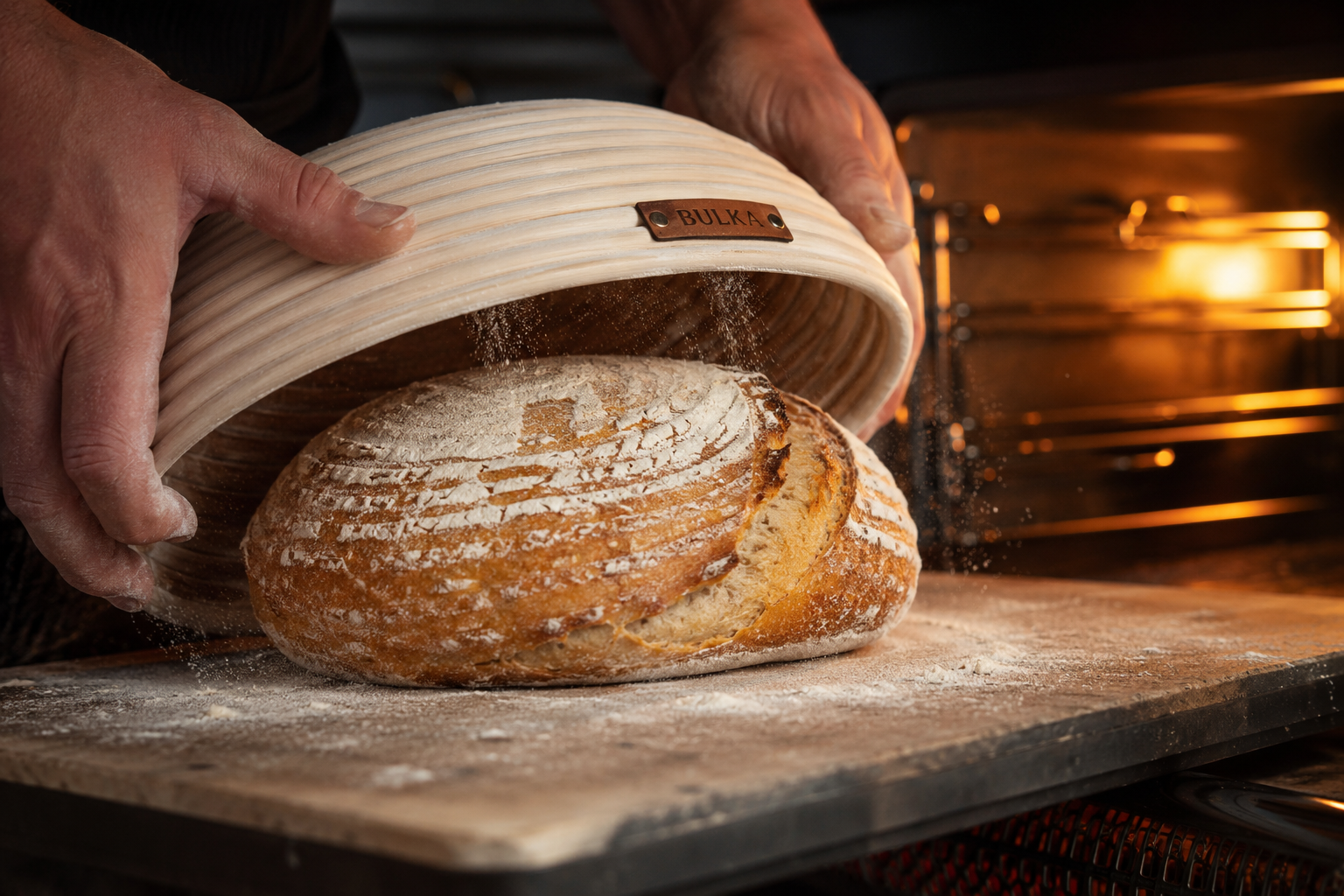
You use it by placing your shaped dough inside the basket, seam side up, letting it proof, and then turning it out onto a baking surface before scoring and baking.
I remember my early sourdough days, using a bowl lined with a tea towel. The dough would spread out into a puddle, resulting in a flat, dense loaf. A banneton solves this problem by providing structural support.
The Bulka banneton, specifically, stands out because its thick, breathable walls draw a modest amount of surface moisture from the dough. This process makes scoring easier and helps produce a thin, crackly crust and an open crumb structure [2].
You can use a Bulka banneton for sourdough, yeasted bread, or any dough that requires a final shaped proof. The baskets are designed to mimic traditional German brotforms but offer a modern, eco friendly approach.
The breathability of the wood pulp helps regulate dough temperature, which is crucial for consistent fermentation. When you turn the dough out, the basket leaves a beautiful, distinct pattern that elevates the visual appeal of your artisan bread.
Bulka Banneton vs Regular Banneton Basket: Wood Pulp vs Rattan vs Linen
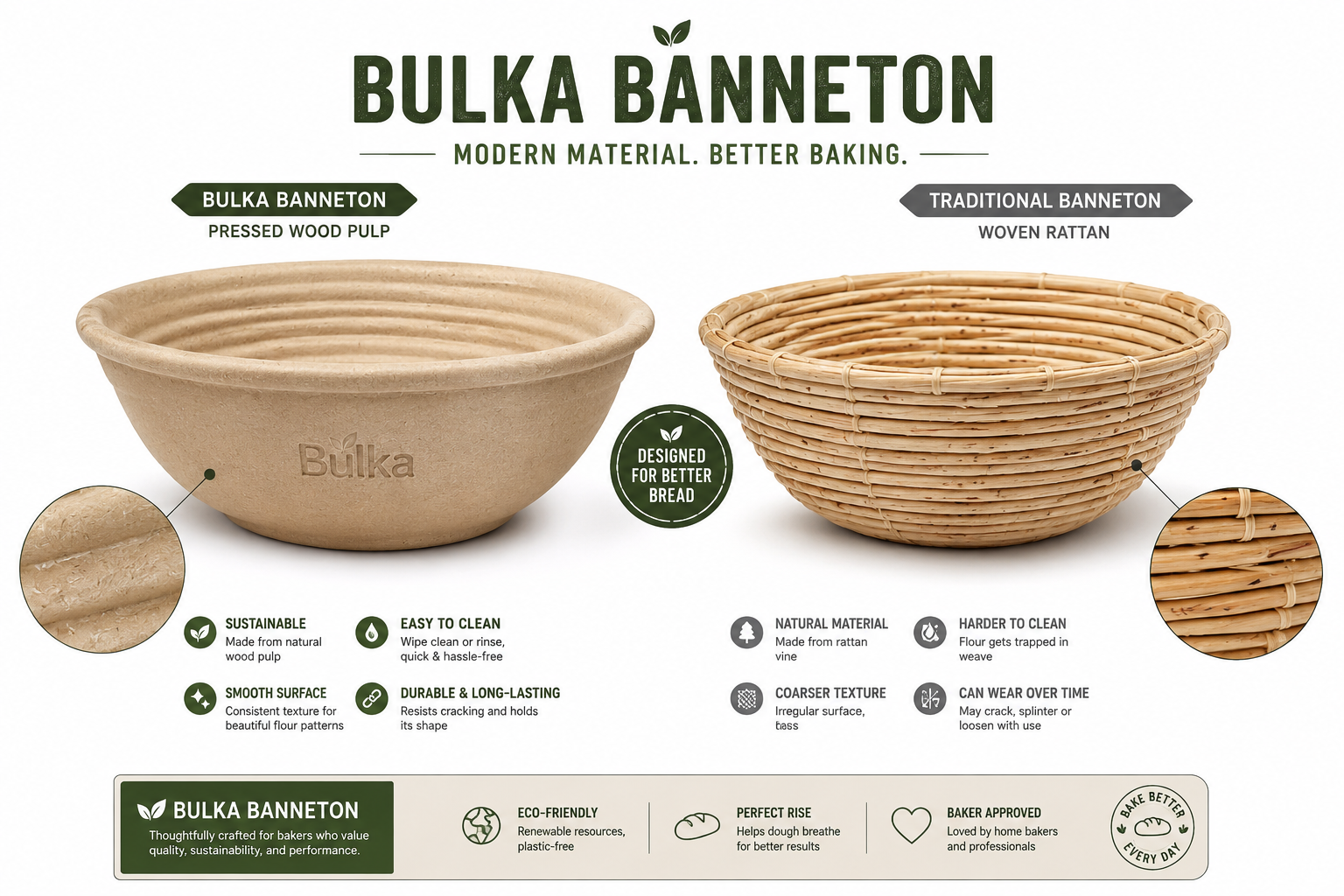
A Bulka banneton differs from a regular rattan basket by using pressed wood pulp instead of woven wood, which eliminates the need for a fabric liner and handles high hydration doughs better. When comparing banneton materials, the choice comes down to dough hydration, maintenance, and desired crust characteristics.
Decision rule: Choose a Bulka wood pulp banneton if you bake high hydration, sticky sourdough and want to avoid using a liner. Choose a rattan banneton if you prefer the traditional woven look and bake lower hydration doughs. Choose a linen lined basket if you want a perfectly smooth crust without any texture marks.
Bulka bannetons are made from sustainable, chemical free, and biodegradable wood pulp [1]. Unlike rattan, which has gaps between the spirals where dough can get stuck, the pressed wood pulp creates a smooth yet textured surface.
This design means you do not need a liner, which simplifies the workflow significantly. Many sourdough educators recommend wood pulp bannetons for consistent proofing and moisture management [4].
From a sustainability perspective, pressed wood pulp is an eco friendly material that breaks down naturally at the end of its life. Rattan is also sustainable but often requires more processing and chemical treatments to prevent mold.
Linen covers are durable but require frequent washing, using water and energy. The Bulka banneton offers a low maintenance, environmentally conscious option for home bakers.
If you are just starting out, check out our bakeware essentials for new bakers to round out your kitchen setup.
Check out the Bulka Banneton on Amazon. <—-
| Feature | Bulka Wood Pulp Banneton | Rattan Banneton | Linen Lined Basket |
|---|---|---|---|
| Material | Pressed wood pulp | Woven rattan | Fabric over bowl |
| Liner Needed | No | Often yes | Yes |
| Best For | High hydration dough | Low to medium hydration | Smooth crusts |
| Maintenance | Brush and wipe dry | Brush, occasional air dry | Wash regularly |
Where to Buy and How Much Does a Quality Bulka Banneton Cost?
You can buy a Bulka Banneton directly from the manufacturer’s website or through select online retailers, with prices typically ranging from $30 to $50 depending on the size and shape.
The cost reflects the German manufacturing, sustainable materials, and premium positioning of the brand.
Bulka offers a stable range of six main baskets, including small 500g round and oval options, medium 750g oval baskets, and large 1kg round and oval designs with waffle and groove patterns [1].
The brand prominently advertises over 600 five star reviews, indicating strong customer satisfaction and ongoing market relevance [1].
When looking for the best place to buy, consider retailers that specialize in baking equipment. You can explore top places to buy quality bakeware online to find reputable stores.
While some users on social media describe Bulka baskets as “spendy” compared to generic alternatives, the quality and ease of use justify the investment for many home bakers [2].
To understand the return on investment, consider the cost of failed loaves. A single batch of high quality organic bread flour, water, salt, and starter can cost around $5 to $8. If you ruin two loaves a month due to poor proofing containers, you have already spent the cost of a Bulka banneton.
Over a year, the basket pays for itself by reducing waste and improving your success rate. The durable construction means you will not need to replace it for years, making the cost per use incredibly low.
Check out the Bulka Banneton on Amazon. <—-
Bulka Banneton Sizes and Proofing Time: How to Use It
Bulka banneton sizes range from 500g to 1kg capacities, and you should proof dough in them for 2 to 4 hours at room temperature or 8 to 16 hours in the refrigerator.
The exact size you need depends on your recipe yield, and the proofing time depends on your dough fermentation speed and ambient temperature.
To use a Bulka banneton, you must flour it before adding the dough. Even though the wood pulp is naturally non stick, a light dusting of flour ensures the dough releases cleanly.
Use rice flour or a mix of all purpose flour and rice flour, as rice flour does not absorb moisture as quickly and prevents sticking.
Step by step integration:
- Dust the Bulka banneton generously with flour.
- Shape your dough and place it seam side up into the basket.
- Cover the basket with a damp towel or plastic lid.
- Proof at room temperature or in the fridge.
- Turn the dough out onto a sourdough baking pan or baking stone for sourdough.
- Score the dough and bake.
Seasonal and climate considerations also play a role in proofing. In the humid summer months, dough ferments faster and can become sticky. You may need to reduce the room temperature proofing time or use a slightly cooler spot in your home.
In the dry winter, the breathable wood pulp might draw out too much moisture, creating a dry skin on your dough.
To counter this, ensure you cover the banneton tightly with a damp cloth or a shower cap to trap humidity. For more details on the types of baskets available, read our comprehensive sourdough proofing baskets guide.
How to Clean and Maintain a Bulka Banneton
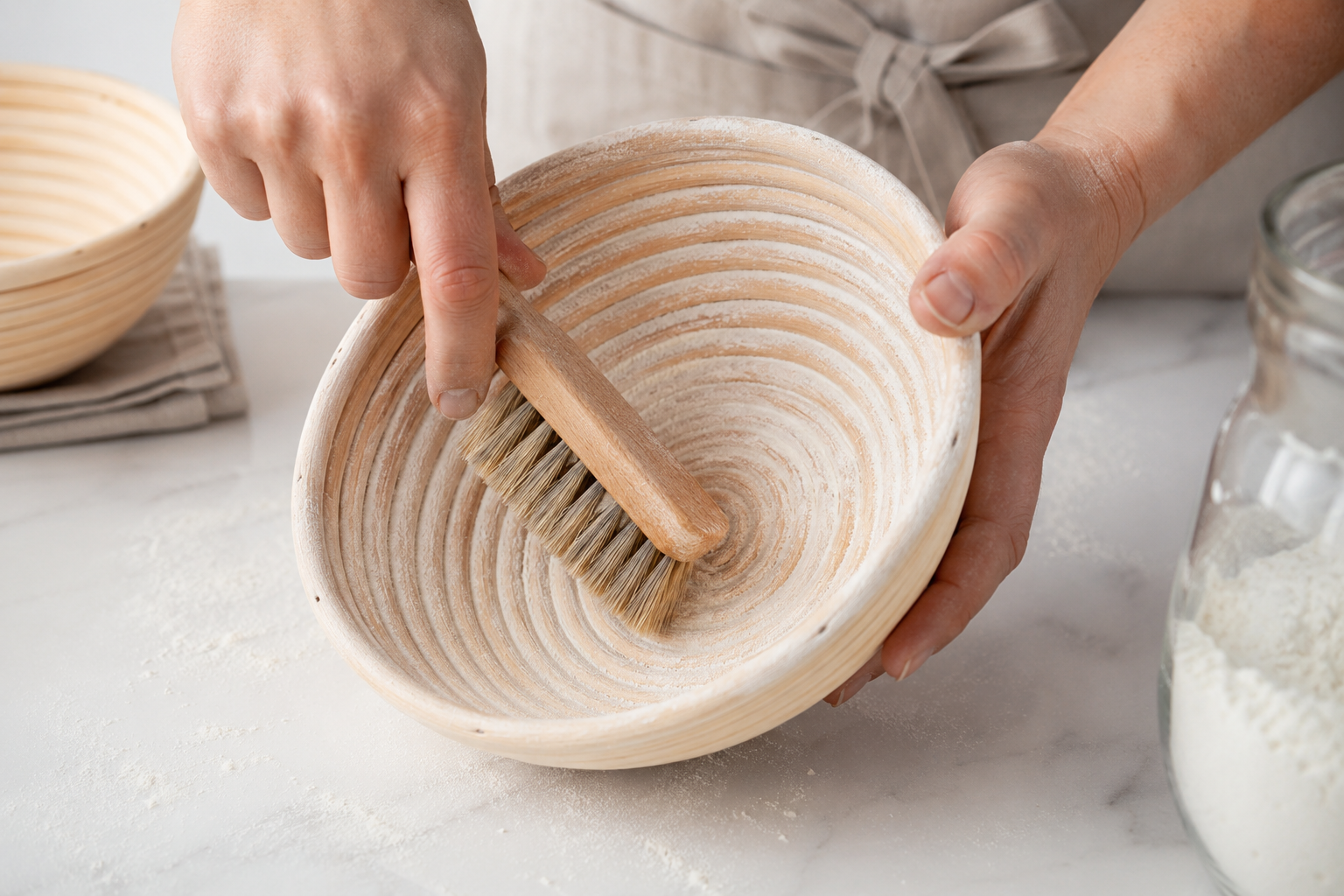
You clean a Bulka Banneton by brushing out excess dry flour with a stiff brush and occasionally wiping the inside with a damp cloth, but you must never soak it or put it in the dishwasher.
Proper maintenance ensures the basket lasts for years and remains naturally non stick.
After baking, let your banneton air out completely. Do not seal it in a plastic bag. I usually leave mine on the counter overnight to dry.
If the basket gets a bit dirty, you can use a damp cloth to wipe it clean, then let it dry in a well ventilated area.
Common mistake: Do not wash your wood pulp banneton with water. Soaking the basket will ruin the pressed wood pulp material and cause it to lose its shape.
If dough sticks and dries, let it harden and then scrape it off with a dull edge or a stiff brush. For more general cleaning tips, check out our guide on simple ways to keep your bakeware spotless.
A well maintained Bulka banneton can last for several years. You will know it is time to replace your basket if the walls begin to crack, the texture wears smooth and no longer holds flour, or if it develops a persistent mold smell that does not air out.
Because the material is biodegradable, you can compost the old basket, making it a sustainable choice from start to finish.
Check out the Bulka Banneton on Amazon. <—-
Bulka Banneton Not Working: Bread Sticking Solutions and Common Mistakes
If your bread is sticking to your Bulka Banneton, the most likely causes are insufficient flouring, over proofed dough, or a dirty basket. You can solve this by dusting the basket with rice flour, reducing your proofing time, or ensuring the basket is completely dry before use.
Beginners often make a few common mistakes with bannetons. The biggest error is not using enough flour. Another mistake is letting the dough over proof, which causes it to collapse and stick to the sides. High hydration doughs are notoriously sticky, but the Bulka banneton handles them well if you flour properly.
Quick troubleshooting flow:
- Is the dough sticking? Add more rice flour to the basket.
- Still sticking? Your dough might be over proofed. Try a shorter proofing time or colder fridge temperature.
- Is the dough spreading after turning it out? The dough might be under proofed or too warm. Let it firm up in the fridge for another hour.
Pairing your banneton with the right bread oven is also crucial. A Bulka banneton works best when paired with a vessel that traps steam, like a Dutch oven or a nitrided carbon steel bread oven.
The moisture drawn out during proofing helps form a skin on the dough, which expands beautifully when it hits the steamy environment of a covered oven. This combination maximizes oven spring and promotes a deep Maillard reaction on the crust.
Alternatives to Bulka Banneton and Is It Worth It for Home Bakers?
Yes, a Bulka Banneton is worth it for home bakers who frequently make high hydration sourdough and want a reliable, liner free proofing experience. Alternatives include traditional rattan baskets, linen lined bowls, or even a simple mixing bowl lined with a floured kitchen towel.
The main advantage of the Bulka banneton is its ease of use and excellent moisture management. The thick, breathable walls help create a superior crust compared to standard bowls [2]. While you can use alternatives, they often require more maintenance or result in a less defined loaf shape.
If you are serious about artisan bread making, investing in a quality banneton like Bulka saves you from the frustration of ruined loaves. The ROI is clear: fewer failed bakes mean less wasted flour and time. For home bakers looking to elevate their bread, the Bulka banneton is a highly recommended tool [3].
Whether you bake Tartine style high hydration loaves or prefer a standard sandwich loaf, the right proofing container makes a significant difference.
The Bulka banneton provides the structure and moisture control needed for open crumb sourdough, making it a valuable addition to your home sourdough baking toolkit.
Check out the Bulka Banneton on Amazon. <—-
FAQ
What is a Bulka Banneton?
A Bulka Banneton is a sourdough proofing basket made from pressed wood pulp in Germany, designed to hold dough during its final proof.
How do you use a Bulka Banneton?
Dust the basket with flour, place the shaped dough seam side up inside, let it proof, then turn it out onto a baking surface.
Do I need to flour a Bulka Banneton before use?
Yes, you should always dust the basket with rice flour or all purpose flour to prevent the dough from sticking.
How long do you proof dough in a Bulka Banneton?
You can proof dough for 2 to 4 hours at room temperature or 8 to 16 hours in the refrigerator.
Can you use a Bulka Banneton for sourdough or just bread?
You can use it for any shaped dough, but it works exceptionally well for high hydration sourdough.
How do you clean a Bulka Banneton?
Brush out the dry flour and wipe with a damp cloth if necessary. Never soak it or put it in the dishwasher.
What sizes do Bulka Bannetons come in?
They come in 500g, 750g, and 1kg capacities in round and oval shapes.
Is a Bulka Banneton worth it?
Yes, it is worth the investment for frequent bakers who want better crust development and easier handling of sticky doughs.
Why is my dough sticking to my Bulka Banneton?
Your dough is likely sticking because of insufficient flouring, over proofing, or a damp basket.
What is the difference between a Bulka Banneton and a rattan basket?
A Bulka Banneton is made of pressed wood pulp and does not require a liner, while rattan baskets are woven and often need a linen cover.
Conclusion
Choosing the right proofing basket is a critical step in mastering home sourdough baking. The Bulka Banneton offers a premium, sustainable solution that simplifies the baking process, especially for high hydration doughs.
By investing in the right size, maintaining it properly, and avoiding common beginner mistakes, you can consistently produce bakery quality loaves with beautiful crust and excellent oven spring.
Ready to upgrade your baking setup? Check out the Bulka Banneton on Amazon. <—-
References
[1] bulkabread – https://bulkabread.com
[2] The Best Sourdough Bannetons And What To Skip – https://thatsourdoughgal.com/the-best-sourdough-bannetons-and-what-to-skip/
[3] Best Proofing Baskets 5086921 – https://www.thespruceeats.com/best-proofing-baskets-5086921
[4] Bulkabanneton – https://www.breadandhappiness.com/tips/bulkabanneton