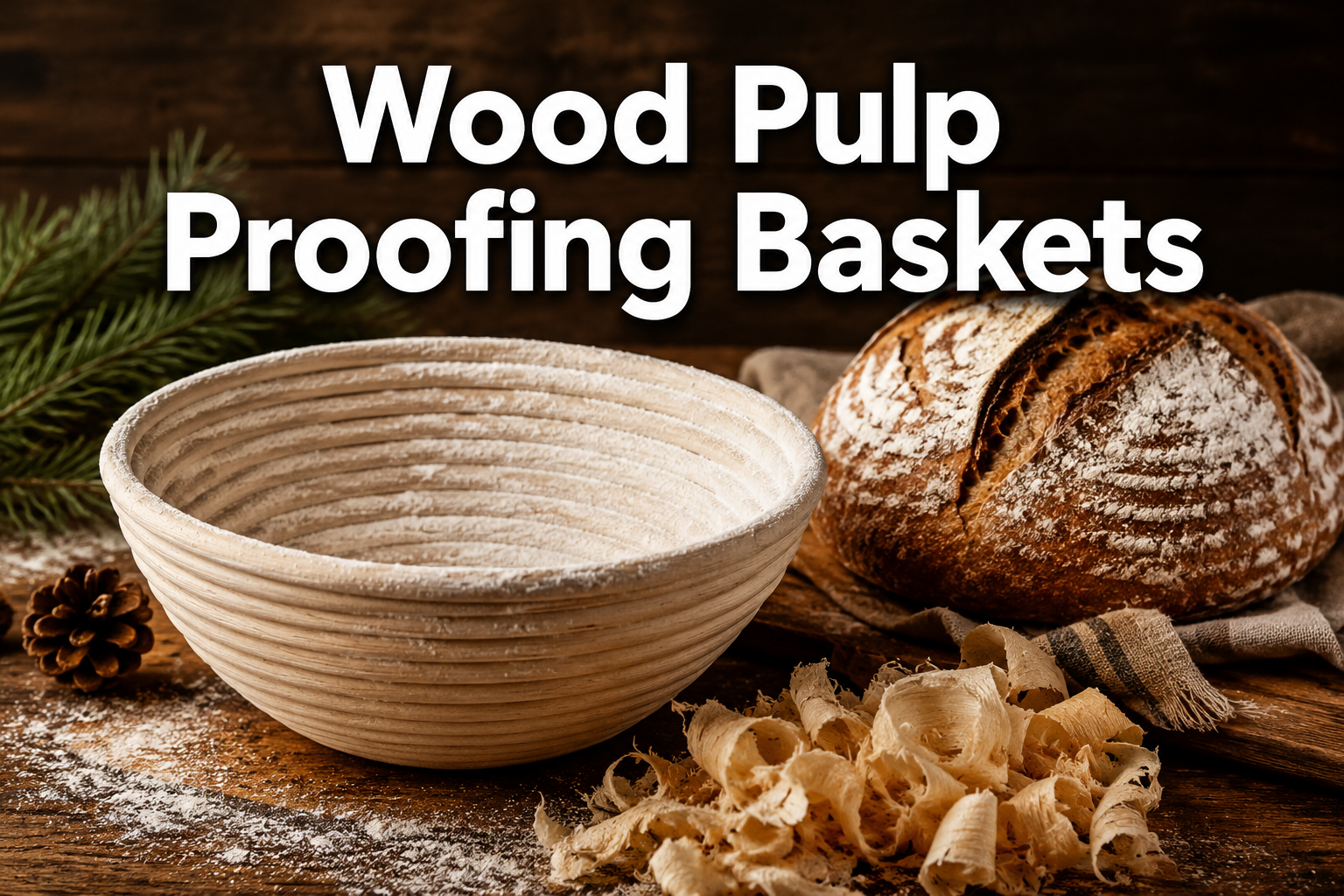
Wood Pulp Proofing Baskets
Last updated: July 1, 2026
Wood Pulp Proofing Baskets are traditional European baking tools made from pressed spruce fibers that wick moisture away from dough, creating a firmer crust and easier release. They outperform rattan and plastic in moisture management, making them the preferred choice for high-hydration sourdough in 2026. If you are looking for reliable, sustainable bread proofing equipment, these baskets offer professional results for home bakers.
Key Takeaways
- Wood pulp proofing baskets are made from sustainably sourced spruce fibers, offering superior moisture-wicking compared to rattan.
- They create an ideal microclimate for dough fermentation, resulting in a crunchier crust and tender crumb.
- Always flour your basket with rice flour or semolina to prevent sticking, especially with high-hydration doughs.
- Never put a wood pulp banneton in the oven; it is strictly a proofing tool, not a baking vessel.
- Cleaning involves brushing out excess flour and using residual oven heat to sanitize and dry the basket.
- Sizes range from 750g to 1000g and beyond, so choose based on your typical dough weight.
- Authentic German-made wood pulp baskets last for years with proper care, unlike cheaper paper composite imitations.
Get Your Professional Wood Pulp Proofing Basket Today <—-
What is a wood pulp proofing basket used for?
A wood pulp proofing basket, also known as a brotform or banneton, is used to hold and shape bread dough during its final rise before baking. It supports the dough, preventing it from spreading outward, forcing it to rise upward instead. This creates the tall, well-structured loaves that artisan bakers seek.
These baskets are made by pressing natural spruce wood pulp into molds. This material is highly absorbent, drawing moisture away from the surface of the dough.
According to specialty retailers, this creates a sterile, breathable environment that helps develop a thicker, crunchier crust compared to other materials [4]. The texture of the wood pulp also leaves a subtle, beautiful spiral pattern on the dough, though many bakers use cloth liners for a smooth finish.
How do you use a proofing basket for bread?
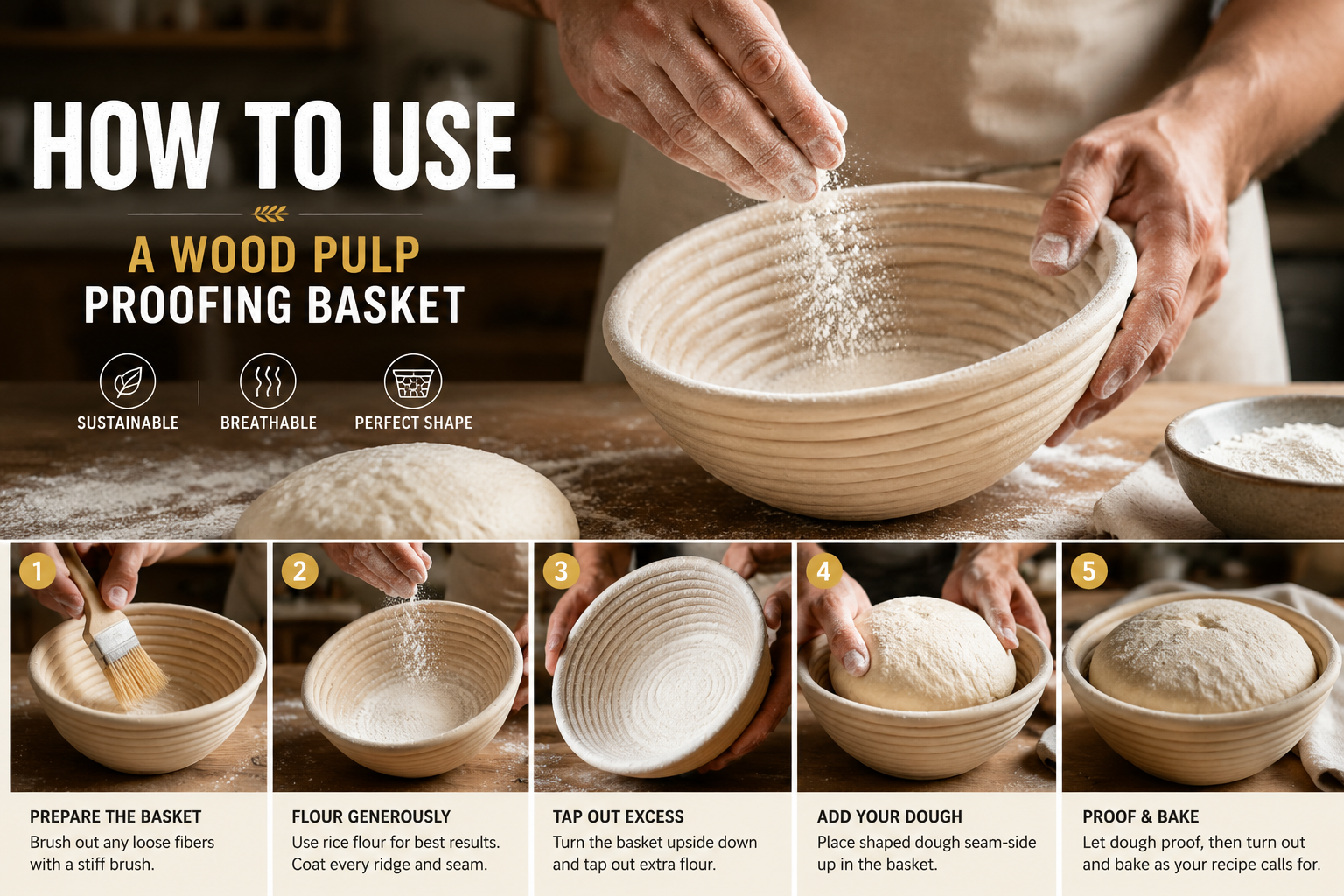
To use a wood pulp proofing basket, you flour the basket, place your shaped dough inside seam-side up, let it proof, and then invert it onto a baking surface. The process is simple but requires attention to detail to prevent sticking.
Here is a step-by-step guide:
- Prepare the basket: Generously dust the inside of the wood pulp proofing basket with rice flour or a 50/50 mix of rice flour and all-purpose flour. Rice flour does not absorb moisture the same way wheat flour does, making it an excellent release agent.
- Shape the dough: After your bulk fermentation, shape your dough into a tight ball or oval.
- Place the dough: Put the shaped dough into the basket with the seam facing up.
- Proof the dough: Cover the basket with a damp cloth or plastic bag to prevent the dough from drying out. Let it proof at room temperature or in the refrigerator for a cold retard.
- Invert and bake: When ready to bake, gently invert the basket onto a piece of parchment paper or a baking peel. Score the dough, then transfer it to a preheated Dutch oven or baking stone. For more tips on perfecting your bake, check out our Sourdough Baking Pan Guide: Perfect Loaves in 2026.
Wood pulp vs banneton proofing baskets difference
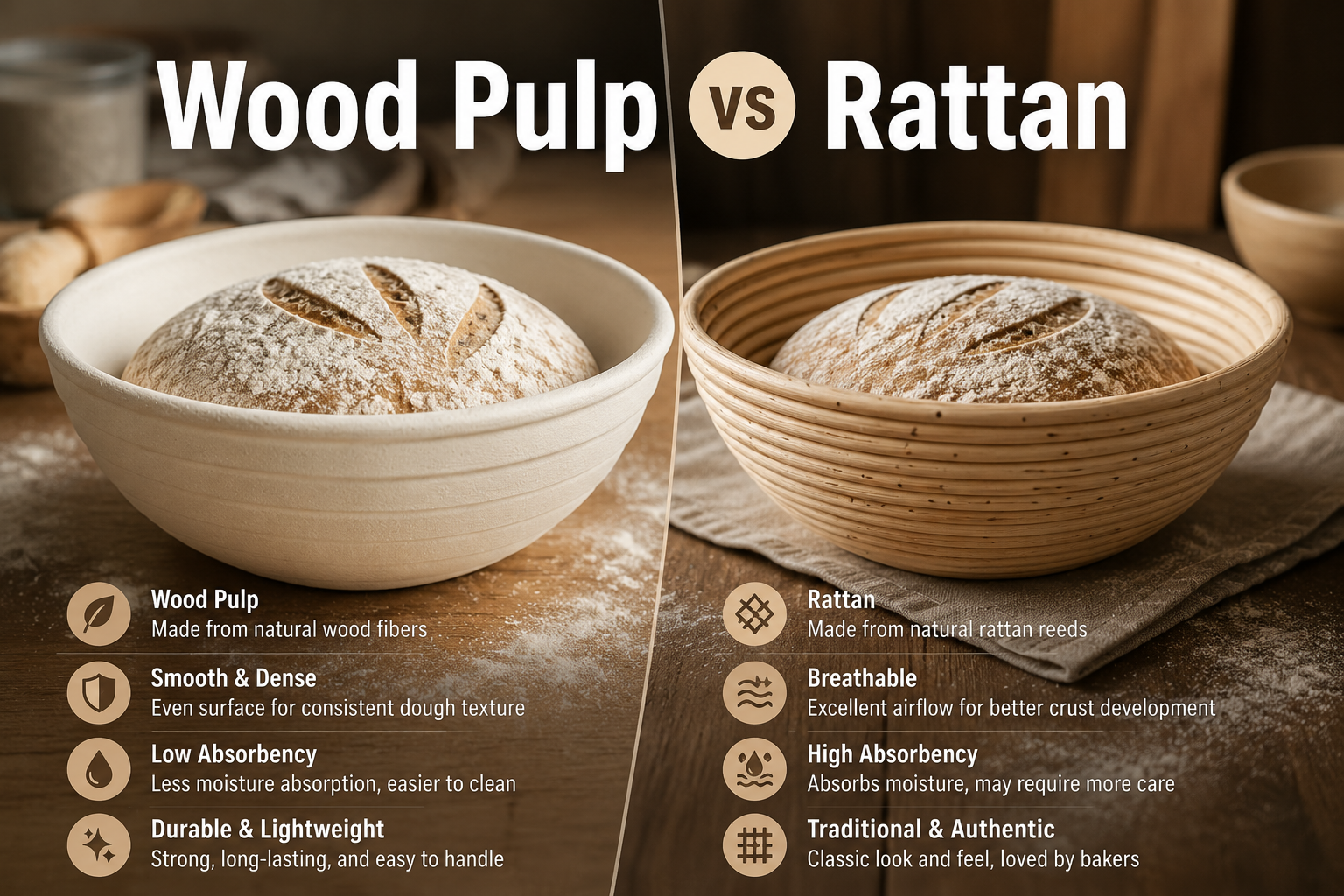
The main difference between wood pulp and traditional rattan banneton proofing baskets is the material structure: wood pulp is a dense, pressed composite that wicks moisture rapidly, while rattan is woven wood that allows more airflow but retains natural oils. Wood pulp generally produces a drier crust and is less prone to mold.
| Feature | Wood Pulp Baskets | Rattan Baskets |
|---|---|---|
| Material | Pressed spruce wood fibers | Woven rattan cane |
| Moisture Wicking | High, absorbs moisture quickly | Moderate, retains natural oils |
| Crust Quality | Crunchier, drier crust | Good crust, slightly less firm |
| Mold Risk | Low, dries quickly | Higher, can trap moisture in seams |
| Durability | Very high, dense structure | Moderate, can unravel if broken |
| Price | Moderate ($15 – $30) | Varies widely ($10 – $40) |
Sourdough communities have noted that switching from cane or rattan to wood pulp produced noticeably firmer, easier-to-score loaves [1]. However, some experienced bakers still prefer lined rattan, arguing that the woven grooves create airflow channels that help cure the crust [10].
Ultimately, wood pulp is superior for high-hydration doughs, while rattan works well for standard doughs and soft rolls [5].
Best wood pulp proofing basket brands
The best wood pulp proofing basket brands are those that source authentic spruce pulp and manufacture in Europe, such as Bulka, Rosehill Sourdough, and Crust & Craft. Buying from reputable brands ensures you get a dense, durable basket rather than a cheap paper composite imitation.
Sourdough communities have actively warned against “fake” wood pulp bannetons made in China that use generic molded paper. These imitations may shed fibers and absorb water poorly [2].
To get the best results, look for brands that explicitly state they use German spruce wood pulp. If you are ready to upgrade your baking setup, you can shop for highly-rated wood pulp proofing baskets here.
How much does a wood pulp proofing basket cost?
A quality wood pulp proofing basket typically costs between $15 and $30. The price depends on the size, shape, and whether the basket comes with accessories like a cloth liner or a specialized cleaning brush.
While this is slightly more expensive than basic plastic bowls, it is highly competitive with, or even cheaper than, premium rattan baskets [5]. When evaluating the cost, consider the return on investment.
A well-maintained wood pulp basket can last for years, making it a more sustainable and economical choice than repeatedly buying cheaper, less durable alternatives. For those building a collection, investing in essential bakeware for beginners is a smart move.
Do I need to flour a wood pulp proofing basket?
Yes, you absolutely need to flour a wood pulp proofing basket before adding your dough. Even though wood pulp is naturally non-stick compared to plastic or metal, high-hydration sourdough will stick to an unfloured basket.
The best flour to use is rice flour. It has a different protein structure than wheat flour, meaning it does not hydrate and form gluten. This creates a slick barrier between the dough and the basket.
You can also use semolina or a mixture of rice flour and wheat flour. King Arthur Baking School emphasizes that thorough flouring is critical, especially for high-hydration doughs, to ensure a clean release [9].
Get Your Professional Wood Pulp Proofing Basket Today <—-
Wood pulp proofing basket how to clean and maintain
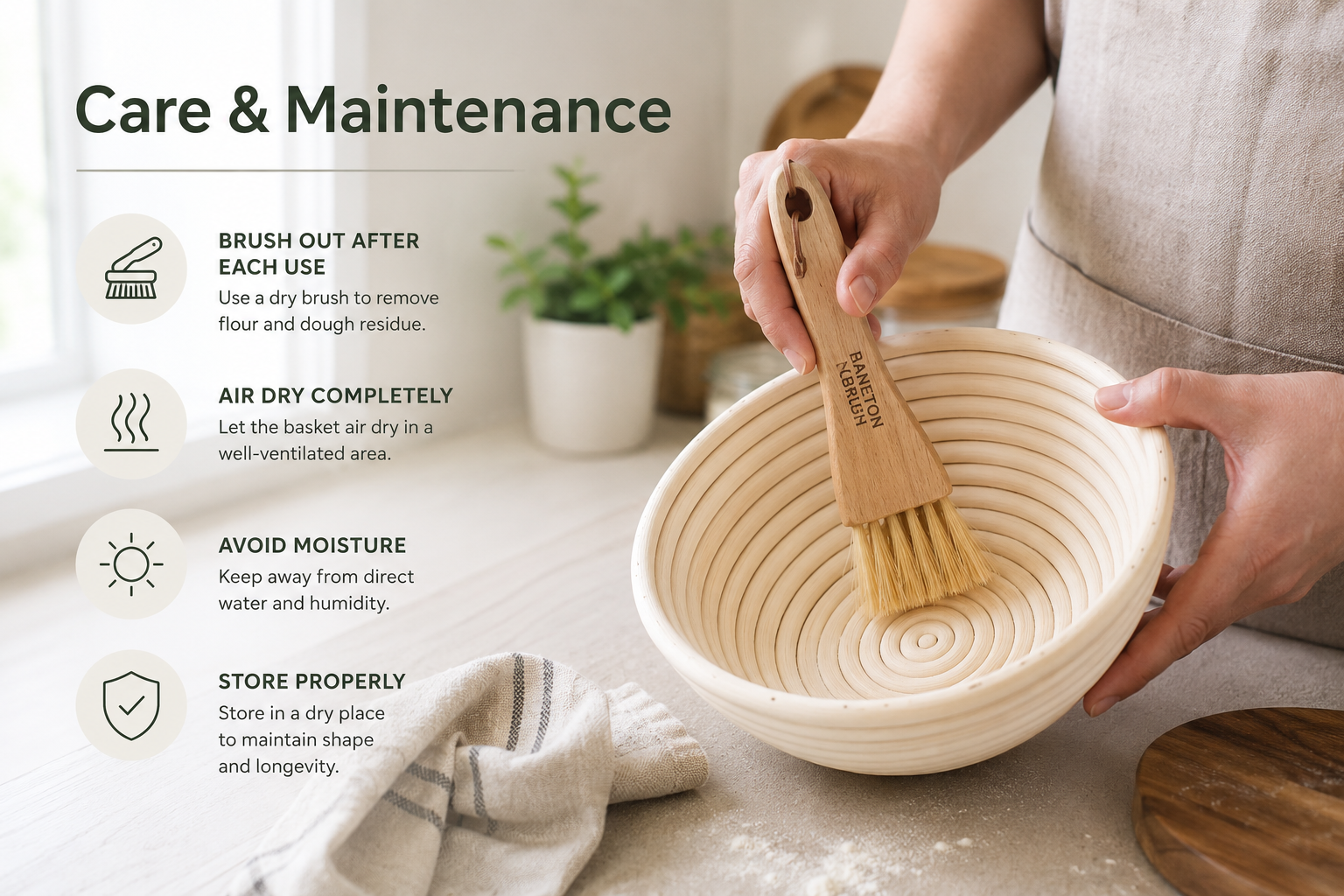
To clean and maintain a wood pulp proofing basket, you should brush out excess flour after each use and periodically dry it using residual oven heat. Never submerge the basket in water or put it in the dishwasher, as this will destroy the pressed wood pulp structure.
Here is the proper maintenance routine:
- Daily cleaning: After inverting your dough, tap the basket firmly to remove loose flour. Use a dedicated stiff-bristled brush to sweep out any remaining flour from the grooves.
- Deep cleaning: If the basket develops an odor or visible residue, place it in a preheated oven that has been turned off. The residual heat (around 100 to 120 degrees Celsius) will sanitize the basket and thoroughly dry out any trapped moisture [3].
- Storage: Store your baskets in a dry, well-ventilated area. Do not store them in airtight containers, as any residual moisture can cause mold. For more general tips on keeping your kitchen tools in top shape, see our guide on simple ways to keep your bakeware spotless.
Can you use a wood pulp proofing basket in the oven?
No, you cannot use a wood pulp proofing basket in the oven. These baskets are strictly for room temperature or refrigerator proofing. Placing a wood pulp basket in a hot oven will cause it to scorch, burn, or catch fire.
Once your dough has finished its final proof, you must invert the basket to drop the dough onto a baking stone, a baking sheet, or into a preheated Dutch oven. The actual baking must take place on oven-safe bakeware. If you want to learn more about the best surfaces for baking bread, read our Baking Stone For Sourdough: Complete 2026 Guide.
Wood pulp proofing basket alternatives
The main alternatives to wood pulp proofing baskets are rattan bannetons, plastic bowls, and sugarcane or bamboo composites. Each material has different properties regarding moisture management, durability, and environmental impact.
- Rattan: The most common alternative. It is traditional and creates nice spiral patterns, but it is more prone to mold and can be harder to clean [5].
- Plastic: Cheap and easy to wash, but it does not wick moisture at all. Dough proofed in plastic often develops a wet, sticky surface that is difficult to score.
- Bamboo/Sugarcane: Emerging eco-friendly options. While sustainable, they often lack the dense structure of spruce wood pulp and can shed fibers or deform over time [6].
If sustainability is a priority for your kitchen, you might also be interested in discovering eco-friendly cookware options for sustainable cooking.
Wood pulp proofing basket sticking problems
If your dough sticks to your wood pulp proofing basket, it is usually because the basket was not floured adequately, the dough was too wet, or the dough over-proofed and collapsed into the basket. Addressing these three factors will solve most sticking issues.
Troubleshooting Guide:
- Problem: Dough sticks to the bottom of the basket.
- Solution: Ensure you are coating the basket with a thick layer of rice flour. Focus on the bottom and the seams where dough is most likely to settle.
- Problem: Dough sticks to the sides.
- Solution: Your dough hydration might be too high for an unlined basket. Try using a cloth liner dusted heavily with rice flour, or reduce the water in your recipe slightly.
- Problem: The dough fuses to the basket after a long cold retard.
- Solution: The flour layer may have hydrated over time. Apply a fresh, thicker coat of rice flour right before adding the dough.
What size wood pulp proofing basket should I get?
You should choose a wood pulp proofing basket size based on the weight of your dough. A general rule is that the basket should be slightly larger than your dough weight to allow room for the dough to expand during the final rise.
Here is a quick guide to banneton sizes:
- 750g basket: Best for dough weights around 500g. This yields a modest, personal-sized loaf.
- 875g basket: Ideal for dough weights around 600g to 700g. A good middle ground for couples.
- 950g basket: Suitable for dough weights around 700g to 800g.
- 1000g basket: Best for dough weights around 800g to 900g. This is a standard size for families and produces a large, impressive loaf.
If you are scaling up your baking, consider our smart cookware storage solutions for small kitchens to keep your growing collection of baskets organized.
Get Your Professional Wood Pulp Proofing Basket Today <—-
Are wood pulp proofing baskets better than plastic?
Yes, wood pulp proofing baskets are significantly better than plastic for artisan bread making. Wood pulp is a breathable, natural fiber that wicks moisture away from the dough, while plastic traps moisture, leading to a sticky crust and a weaker dough structure.
When dough proofs in a plastic bowl, the moisture from the fermentation has nowhere to go. It condenses on the surface of the dough, creating a wet layer that makes scoring difficult and can result in a gummy crumb.
Wood pulp draws that moisture into its fibers, creating a dry “skin” on the dough that holds its shape and expands beautifully in the oven [8].
How long does a wood pulp proofing basket last?
A high-quality wood pulp proofing basket can last for many years, often a decade or more, provided it is maintained correctly. The dense spruce fibers are highly durable, but their lifespan depends entirely on how you clean and store them.
The main threat to a wood pulp basket is moisture. If you wash it with water or store it in a damp environment, it will warp or grow mold. By sticking to dry brushing and occasional oven sanitization, the basket will remain rigid and functional for thousands of bakes.
This longevity makes them a superior investment compared to cheaper baskets that may need replacing every year. For a broader look at long-lasting kitchen tools, see our beginner’s guide to durable cookware.
Conclusion
Wood Pulp Proofing Baskets represent the pinnacle of traditional European baking tools, offering unmatched moisture management, durability, and crust development for sourdough enthusiasts.
By understanding how to select the right size, flour the basket properly, and maintain it with dry brushing and residual oven heat, you can elevate your home baking to professional standards.
Avoid cheap imitations and invest in authentic German-made spruce wood pulp to see a noticeable difference in your loaves. Ready to transform your bread baking? Get Your Professional Wood Pulp Proofing Basket Today <—- and start baking better bread.
FAQ
What is a wood pulp banneton?
A wood pulp banneton is a bread proofing basket made from pressed spruce wood fibers. It is used to support dough during its final rise, wicking away moisture to create a firmer crust.
Can I wash my wood pulp proofing basket with water?
No, you should never submerge a wood pulp basket in water. Water will break down the pressed fibers and ruin the basket. Clean it by brushing out flour and using residual oven heat to sanitize.
Why does my dough stick to my wood pulp basket?
Dough usually sticks because the basket was not dusted with enough rice flour, or the dough hydration is too high. Always use a generous coating of rice flour to prevent sticking.
What size wood pulp basket do I need for a 1kg loaf?
For a 1kg (1000g) dough weight, you typically need a basket rated for 1000g or slightly larger to allow room for expansion.
Is wood pulp better than rattan for proofing?
Wood pulp is generally better for high-hydration sourdough because it absorbs moisture faster and is less prone to mold. Rattan is still a valid choice for standard doughs and soft rolls.
Do wood pulp proofing baskets leave a pattern on the dough?
Yes, if used without a liner, the texture of the wood pulp will leave a subtle spiral or pattern on the crust of the baked bread.
Get Your Professional Wood Pulp Proofing Basket Today <—-
References
[1] Best Proofing Baskets 7255833 – https://www.foodandwine.com/best-proofing-baskets-7255833
[2] facebook – https://www.facebook.com/groups/sourdoughgeeks/posts/25207796895556583/
[3] How To Use A Wood Pulp Banneton – https://crustandcraft.eu/how-to-use-a-wood-pulp-banneton/
[4] Brotform Wood Pulp Vs Banneton What S The Difference – https://bannetonman.com.au/blogs/news/brotform-wood-pulp-vs-banneton-what-s-the-difference
[5] Review How Does A Wood Pulp Banneton Compare With A Rattan – https://sourdoughsupplies.com/blogs/bread-blog-only-the-best-recipes/review-how-does-a-wood-pulp-banneton-compare-with-a-rattan-
[6] Banneton Material Guide – https://bulkabread.com/pages/banneton-material-guide
[7] Comment Page 4 – https://rosehillsourdough.com/product/proofing-basket/comment-page-4/
[8] Trendy Wood Pulp Banneton – https://www.accio.com/business/trendy-wood-pulp-banneton
[9] Bannetons Brotforms Proofing Baskets – https://www.kingarthurbaking.com/blog/2023/01/25/bannetons-brotforms-proofing-baskets
[10] Sourdough Bakers Whats The Best Banneton Basket – https://www.reddit.com/r/Sourdough/comments/1ibsac8/sourdough_bakers_whats_the_best_banneton_basket/